

Wireless Performance
Pairing
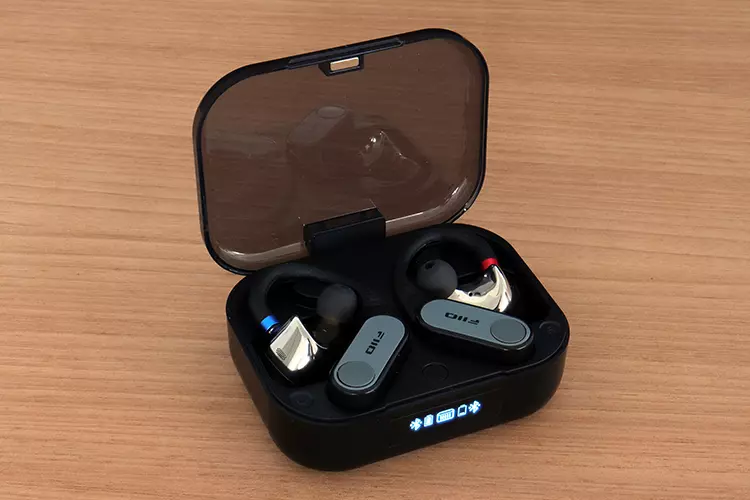
Instead of talking about what gear would be best to feed the FiiO LINK TWS, I would say anything that can transmit LDAC at the 990kbps bit rate. Or even better, a device that can transmit aptX Lossless.
As far as IEMs, I found that the FX17 revealed a small amount of hiss. However, the Flare Studio, which tends to hiss, did not. I have a feeling the impedance match affects this test.
If you reseat the set with the FX17, the his levels tend to vary from zero to slightly audible at the highest volume levels.
I notice an added amount of driver control when switching over to something like the FD5 or the FD7. Distortion levels were reduced, mostly at high volume levels.
Stability & Range
On a couple of occasions, the two LINK TWS pods would lose synchronization with each other, and one would gallop along some milliseconds ahead of the other side.
This happened to me when I removed the two pods simultaneously and quickly. But if you reset and take them out one by one, the problem seems to be remedied.
There were times that the pairing would not take place, and I would also have to reset the pods within the cradle to get them to pair up with configured devices. Other than that, stability was excellent, and once paired, you never lose connection.
Latency
Yes, on some high-end codecs, you will notice a slight amount of lag, but not much. To be honest, you have to be aware and look for it to notice it.
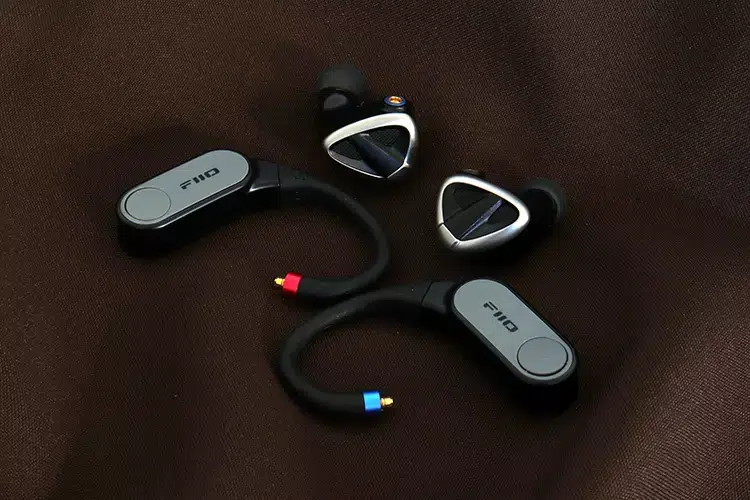
The LINK TWS does aptX low latency, but it looks like the game mode selectable within the Control app does the same thing.
The game mode didn’t seem to drop to a lower codec, but I couldn’t verify that for sure, since the set doesn’t tell much about what codec is being used. Again, for that, you have to rely on software and/or the source.
Power Output
If you look up the AK4333, you find that it has impedance matching, as previously mentioned. That ensures most IEMs will perform similarly to each other when it comes to the power output of the LINK TWS.
The volume level these pods are capable of is almost scary. But with some multi-driver models, the distortion levels climbed quickly as you raised the volume past the party animal level.
I’ll be honest here. Most modern-day dongles will surely outperform the LINK TWS in power output capability, but to lose the cord is the point here, and the LINK TWS offers one of the best ways of doing so.
Selected Comparisons
FiiO UTWS5
Technical
FiiO upgraded all the hardware on the LINK TWS, starting with the main Bluetooth component, which was upgraded from the QCC5141 to the QCC5181. Not much changed on the 2025 variant since it used the same chip as the UTWS5.
The UTWS5 works over a 5.2 radio and is capable of running all the codecs that the LINK TWS runs, except for LDAC at first, which was a low point for the UTWS5. It was implemented later on one of their firmware updates, version 1.74.
The equalizer within the Control app was also inoperable when the UTWS5 was first released. The LINK TWS had the equalizer up and running within the FiO Control app on day one.
The DAC used on the UTWS5 is the AK4332, which sits right below the AK4333. What’s funny is that this chip has a higher 88mW output, compared to the AK4333’s 60mW at the same 8Ω load.
Design
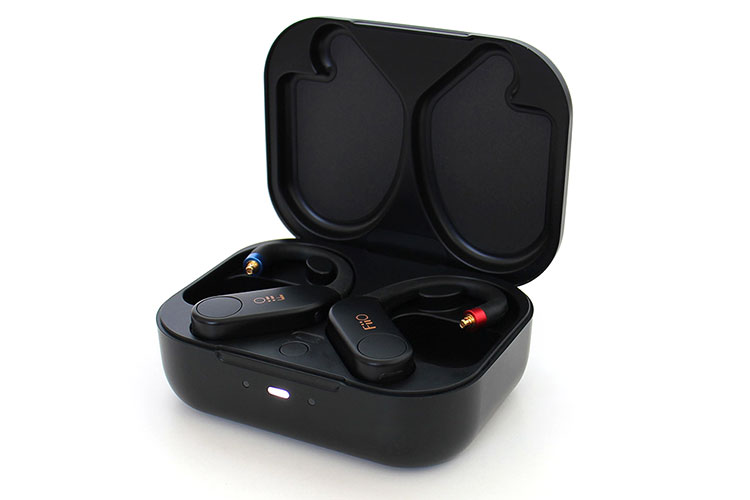
Not much has changed in this category. The cradles look the same, except for the LINK TWS’s front-mounted digital display.
The cavity where the IEMs sit has changed a small amount, and FiiO reworked that part of the design to tighten up some of the design’s aspects, so that everything fits tightly, with tighter tolerances.
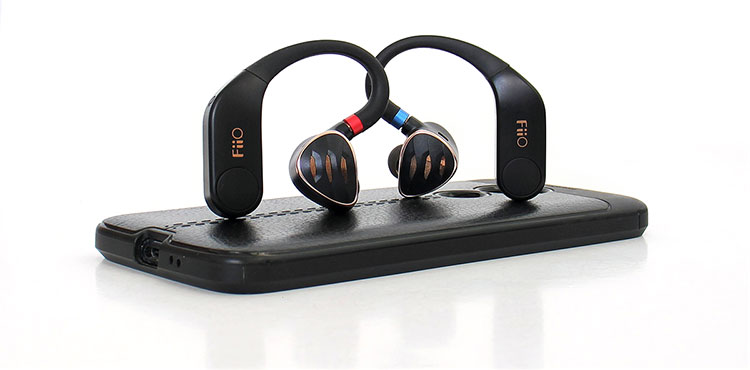
If you wanted to use IEMs with the 0.78mm dual-pin connection, with the UTWS5, you’re out of luck. However, the LINK TWS comes with removable ear hooks, and the box brings two sets, including a 0.78mm set.
Performance
I was perhaps the only person who publicly said that they liked the UTWS3 over the UTWS5. There was a sterility in the UTWS5 sound signature.
Meantime, the UTWS3 sounded warmer and more musical. Sonic details were up on the UTWS5, but the LINK TWS excels in that respect, offering lots of it.
It must have been the fact that the UTWS3 was the only model at the time that could receive aptX Lossless, which made a difference in the overall sonic profile.
The UTWS5 was introduced with some features disabled or inoperable, which was another reason I like the UTWS3 over the UTWS5. It just seemed more complete and refined to me.
But if you were to ask me today which is the more complete package, my obvious answer would be to just get the LINK TWS since it has all the features that the other ear hook models did not come with at launch time.
iFi audio GO pod
Technical
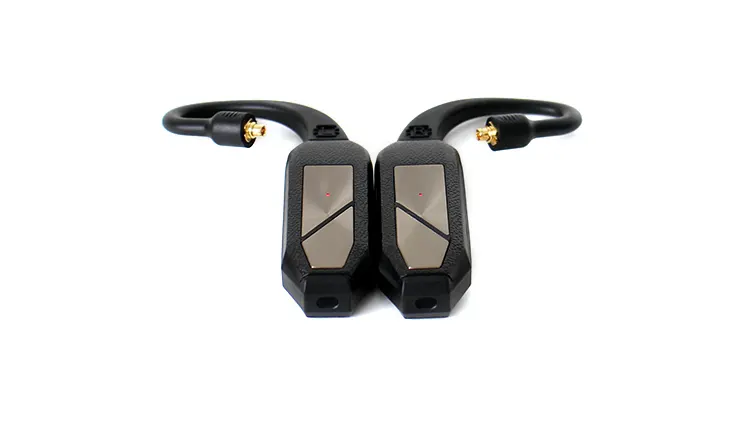
The iFi audio GO pod is the luxury model in this comparison. It uses a fancy FPC-type high-gain antenna to receive Bluetooth transmissions over a 5.2 GHz radio.
The GO pod uses CS43131 DACs in each ear pod, which are basic chips according to today’s standards, and are superseded by the CS43198.
The GO Pod supports all Bluetooth codecs, including LDAC, but not aptX Lossless. It should, since it’s rather pricey. Only the max supports aptX Lossless.
Where does all the money go, as they say? Ifi doesn’t skimp on parts and uses Kemet Tantalum caps along with some TDK caps, along with an advanced power management system.
Design
When I first got the iFi Audio GO Pod, I immediately noticed the bling factor. LED lights adorn the innards as soon as you open the cradle, which is larger than the LINK TWS’s cradle.
The rugged body of the GO pod is adorned with metal plates and made to last. But they have contact points to charge them up, and that tends to be a weak spot in this type of gear.
FiiO avoids that by using a magnetic system with wireless charging.
Performance
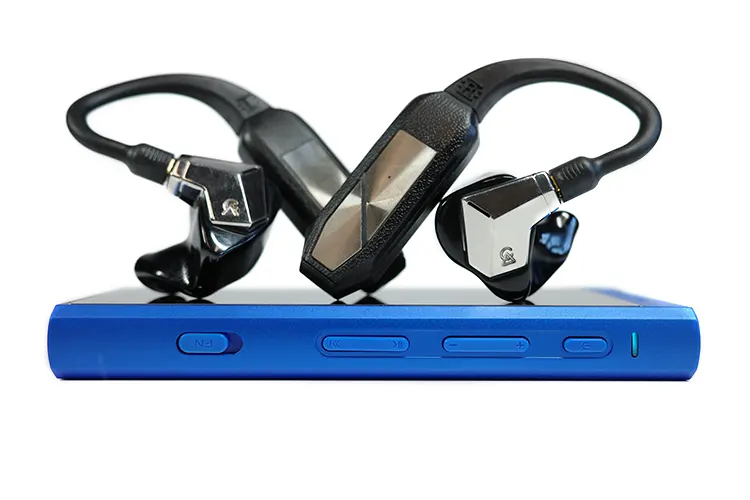
When it comes to software, FiiO is in the pole position, hands down. The GO pod only counts on firmware updates via the Gaia app, and it has no sound shaping capability.
The ability to tweak the overall sonic profile takes the LINK TWS ahead of most earhook dongles out there. The GO pod offers one sonic profile.
That GO Pod’s sole profile is a neutral tune that relies on the sonic capabilities of the IEMs being used more than anything else. It can overpower the LINK TWS for sure, but the LINK TWS somehow sounds more musical to me.
My opinion is that the recent iFi switch to the CS series of DACs and abandoning their tried-and-true Burr-Brown DACs with custom firmware hurt their bottom line, and they went from lifelike to lifeless, unless you engage their XBass and XSpace features.
The FiiO LINK TWS is a bargain when you consider that they run all present Bluetooth codecs and come with a full-featured app for less money. And I have not pulled out the web interface yet, which is worth even more extra brownie points for the LINK TWS.
My Verdict
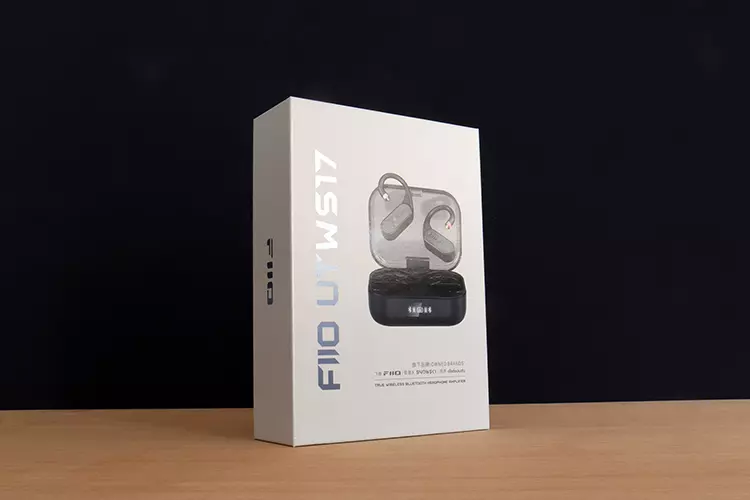
The FiiO LINK TWS takes another step forward in this genre and offers more features and some sound improvements over their previous models. It’s a statement piece that represents FiiO’s commitment to improving upon what was already good.
FiiO at this time has this market cornered and ironically is its own competitor in this genre.
The problem lies in who’s gonna buy the still available UTWS3 or the UTWS5 now, with the LINK TWS out on the market?
FiiO LINK TWS Technical Specifications
- Product type: True wireless IEM adapter
- Bluetooth version: 6.0
- Bluetooth chip: Qualcomm QCC5181
- Supported codecs: LDAC, LHDC, aptX Lossless, aptX adaptive, aptX low latency, SBC, AAC
- DAC: AK4333
- Amplifier: Integrated
- Connectivity: MMCX + .78mm
