

Wireless Performance
Bluetooth 6.0 on the EH11 delivers a confident and stable wireless experience. Dual-device pairing works reliably between a phone and a laptop, with clean priority switching when audio activity shifts between sources.
The range in real-world use extended comfortably beyond 10 meters without dropouts. The LDAC connection held steady throughout testing without the intermittent stuttering that can affect higher-bandwidth codecs on older Bluetooth implementations.
Latency was acceptable for video playback; a quick YouTube latency test showed the EH11 with a latency of around 20-40ms, which was enough for me to watch videos and movies without any issues.
Select Comparisons
FiiO SNOWSKY Anytime
Technical
The SNOWSKY Anytime is a fully wireless closed-back on-ear headphone with a 40mm dynamic driver, Bluetooth 5.4 with SBC and AAC support, active noise cancellation, and a 500 mAh battery rated for up to 58 hours.
Compared to the EH11, the Anytime steps back significantly on codec quality, offering no LDAC, but compensates with a substantial battery life advantage and the addition of active noise cancellation, a feature the EH11 does not offer.
The EH11 counters with Bluetooth 6.0, LDAC support, and a meaningfully lighter 92-gram build versus the Anytime’s 155 grams.

Design
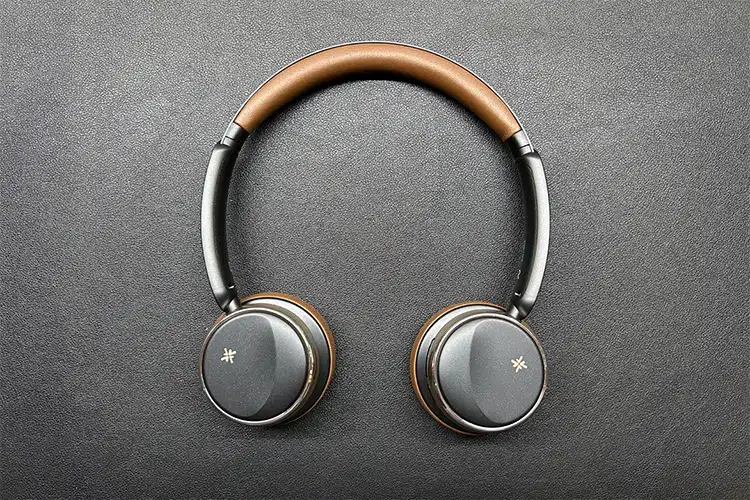
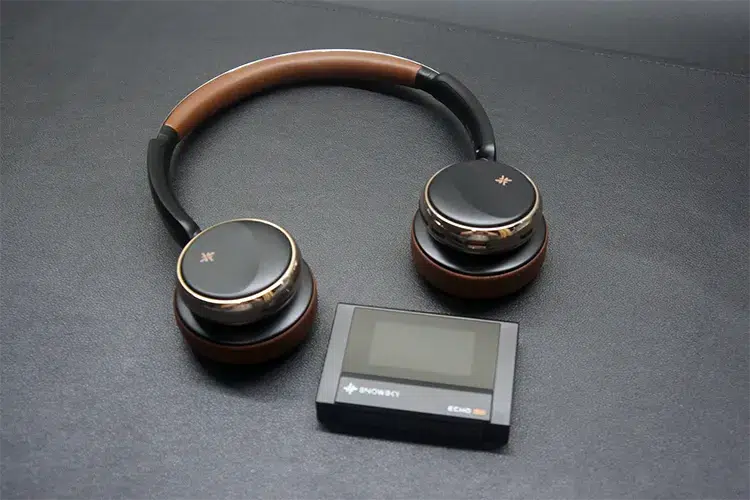
The SNOWSKY Anytime opts for a modern, lifestyle-oriented aesthetic with matte plastic earcups, a mirror-finish accent ring, brown synthetic leather pads, and a steel headband with swiveling yokes that allow the cups to lie flat for storage.
It is clean, stylish, and well put together, though its design language is conventional by current consumer electronics standards.
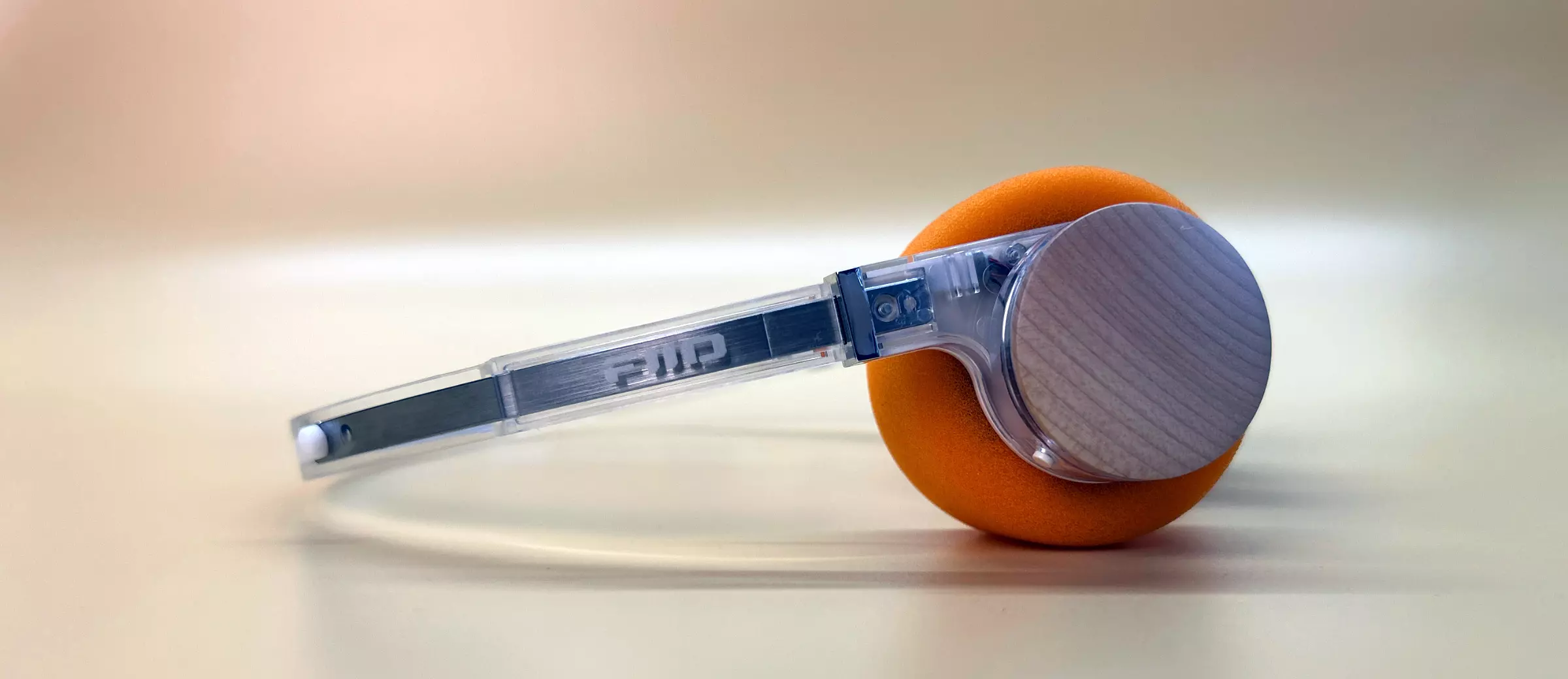
The EH11, by contrast, makes a far bolder visual statement with its wooden earcups, transparent plastic housing, and physical rotary knobs, a deliberately retro presentation that stands apart in a sea of look-alike wireless headphones.
The Anytime’s synthetic leather pads are non-detachable, while the EH11’s foam pads are replaceable and come with a second color option in the box.
The EH11’s 92-gram build makes it substantially lighter and more comfortable during extended wear, whereas the Anytime’s leatherette pads can trap heat during warmer conditions.
Performance
The SNOWSKY Anytime delivers a V-shaped tuning with elevated bass and treble and a noticeably recessed midrange. Its sub-bass reach is a highlight, though impact leans soft rather than precise, and mid-bass can feel lean in rhythm-heavy genres.
The EH11 offers a somewhat more cohesive low-end presentation, with mid-bass that feels less hollow and a midrange aided by the semi-open design that breathes more naturally than the Anytime’s closed-back tuning allows.
Despite both headphones having a V- shaped sound signature, the EH11’s midrange performance significantly outclasses the Anytime. In comparison,’ the Anytime’s midrange sounds compressed, hollow, and fatiguing to listen to.
Treble on both is energetic, though the EH11 manages occasional peakiness with slightly better control. Where the Anytime holds a decisive practical advantage is in its ANC, a feature that the EH11 simply cannot replicate.
For commuters and travelers who rely on noise attenuation, the Anytime remains the more versatile everyday tool. For listeners who prioritize sound quality and wireless codec performance, the EH11 makes a stronger case.
FiiO SNOWSKY Wind
Technical
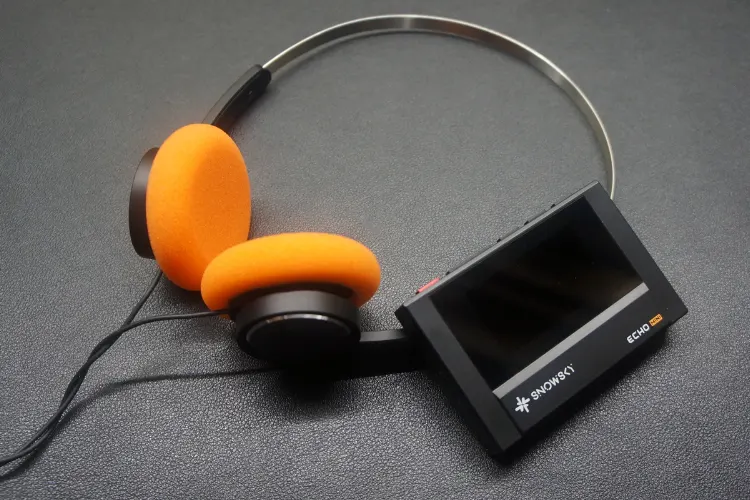
Since the SNOWSKY Wind is a traditional pair of wired headphones, I paired it with the SNOWSKY Retro Nano wireless DAC/AMP for feature parity.
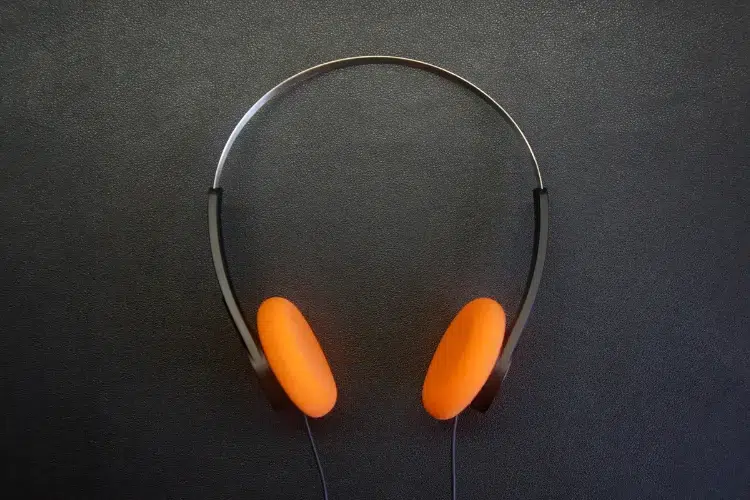
The SNOWSKY Wind is a pair of on-ear headphones that feature a 40mm dynamic driver with a semi-open design, a sensitivity of 106dB, and a relatively low impedance of 32Ω, making it easy to drive with virtually any device.
Paired with the Retro Nano, I found it was able to maximize the wind’s sonic performance without any issues
The FiiO EH11, on the other hand, is a pair of wireless on-ear headphones that make use of a semi-open design.
Like the Wind, it uses a 40mm dynamic driver that has been specifically tuned in line with FiiO’s years of experience in the audio space.
Since it is a pair of fully wireless headphones, its sensitivity and impedance ratings are not publicly listed.
Design
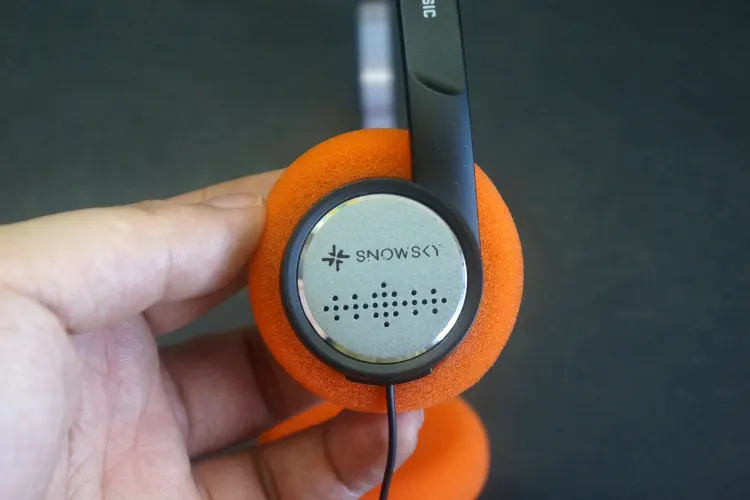
The SNOWSKY Wind embraces a stripped-down retro-utilitarian aesthetic with a thin metal headband, plastic yokes, and compact circular earcups in a deliberately minimal form.
Its overall construction is lightweight and no-frills in a way that feels intentional rather than cheap.
The EH11 takes a richer design approach with wooden earcup elements, transparent structural components, and tactile rotary knobs.
Both headphones are lightweight, but the Wind is the slimmer and less complex of the two.
The EH11’s wireless self-contained design makes it a more practical everyday carry despite being marginally heavier, eliminating the cable and dongle setup that the Wind requires.
Performance
The SNOWSKY Wind has a bright, treble-forward tuning that leans aggressive and can become fatiguing over longer listening sessions.
Its bass response is noticeably lean, with limited sub-bass extension and restrained mid-bass weight. Kick drums and bass guitars lack the sense of punch and authority needed to anchor rhythm-heavy genres convincingly.
The midrange is relatively clear but carries a slightly grainy texture, particularly noticeable on string instruments and piano, and female vocals can edge into sibilance due to the elevated treble presence.
The EH11 outperforms the Wind across most of these areas. Its sub-bass reaches deeper and with more authority, its mid-bass provides better rhythmic weight, and its treble, while energetic, is more controlled and less prone to the harshness that the Wind exhibits at the top end.
The shared semi-open acoustic design gives both headphones a comparable sense of spatial openness, which is where the Wind competes most favorably.
But in terms of overall tonal balance, low-end presence, and listening comfort over extended sessions, the EH11 is the more accomplished and enjoyable headphone of the two.
Koss KPH30i
Technical
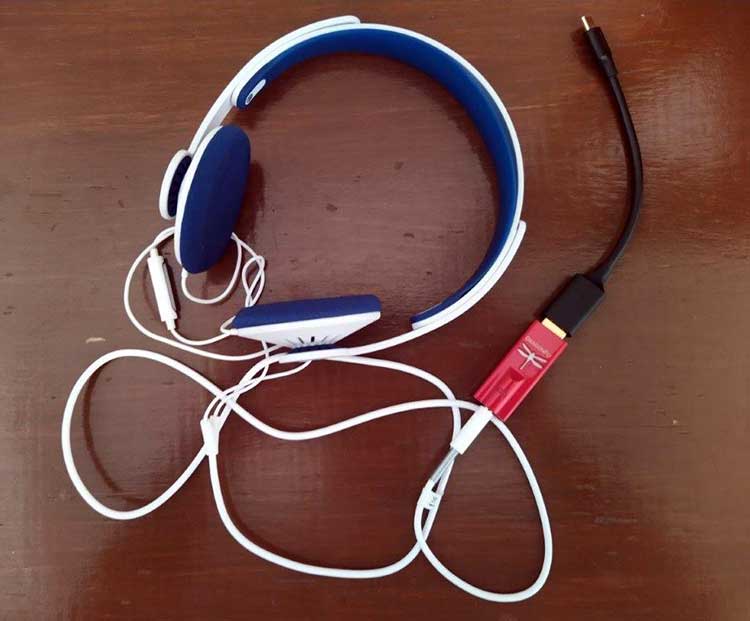
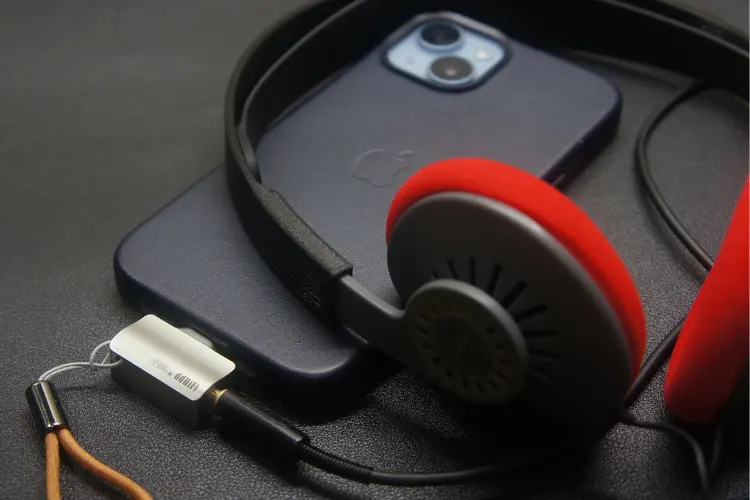
Just like the previous comparison, I paired the KPH30i with the SNOWSKY Retro Nano DAC/AMP to give a better point of comparison against the Anytime.
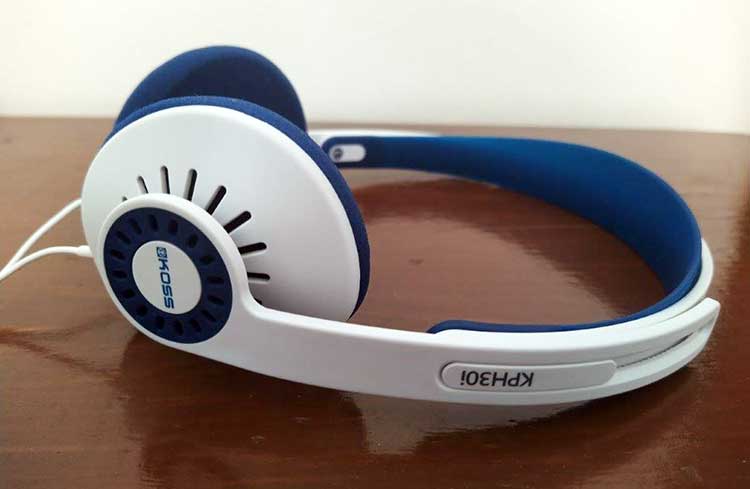
The Koss KPH30i is equipped with a 30mm dynamic driver and a semi-open design, presenting an impedance of 60Ω and a sensitivity of 101 dB SPL, making it easy to drive with virtually any device.
The EH11 is a fully wireless on-ear with a larger 40mm driver, Bluetooth 6.0, and LDAC support. As is typical for wireless models, detailed sensitivity and impedance ratings for the EH11 are not prominently disclosed in its official specifications.
Design
The Koss KPH30i wears its utilitarian vintage identity openly with a suspension-style headband, soft foam pads, and a lightweight plastic build that prioritizes function entirely over aesthetic statement. It is unmistakably retro but without any deliberate stylization.
The EH11 takes a richer approach with wooden earcups, transparent housing, and rotary knobs that frame retro as an active design choice rather than a legacy holdover.
In terms of practical comfort, the KPH30i edges ahead due to its lower clamp force and highly breathable foam pads, which suit extended listening sessions well.
The EH11’s 92-gram build narrows the comfort gap considerably compared to heavier wireless alternatives, but the KPH30i’s open suspension design and softer pads remain the more effortless long-wear experience of the two.
Performance
The KPH30i’s midrange is the standout strength. It is warm, well-articulated, and natural, with vocals and acoustic instruments rendered with a presence and tactile realism that the EH11’s tuning does not fully match.
Male vocals in particular feel fuller and more grounded through the KPH30i, while string instruments convey individual plucks and harmonics with a sense of texture that the EH11’s mids can lack.
Bass on the KPH30i carries better texture and tactility, making individual bass hits feel more distinct and defined. The EH11 counters with deeper sub-bass extension and a stronger sense of physical weight in the low.
In terms of soundstage, both benefit from their semi-open designs, and the two headphones are more evenly matched here than in tonal character.
The KPH30i’s imaging is slightly more precise, aided by its better overall resolution, while the EH11 offers a marginally wider lateral spread.
Treble on the EH11 is more energetic, while the KPH30i’s softer top end contributes to a more relaxed and fatigue-free presentation that I found preferable during longer listening sessions.
For critical listening and musical enjoyment, the KPH30i is the more satisfying headphone. For wireless convenience and LDAC performance, the EH11 wins without contest.
My Verdict
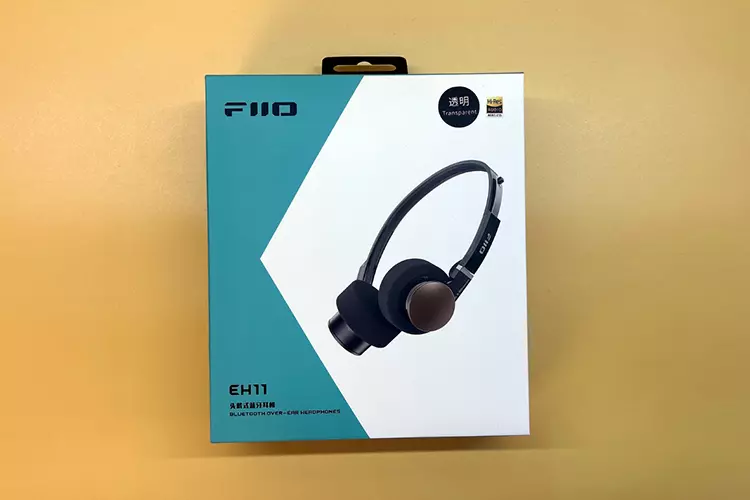
The FiiO EH11 is an enjoyable and competitive wireless headphone for its price, with a trendy retro design, pleasing tuning, and Bluetooth 6.0 with LDAC for less than $50.
Physical rotary controls are a tactile highlight, and the 1.5-hour charge time keeps daily logistics simple.
Its limitations, such as a limited passive isolation, a moderately recessed midrange, and no ANC, are real but manageable for the right listener.
What truly elevates the EH11 beyond its price class is parametric EQ support. PEQ gives users direct control over the headphone’s tuning shortcomings, and the growing library of community-uploaded profiles means you don’t need to be an audio engineer to benefit
For a sub-$50 headphone, this is a remarkable capability that most competitors don’t offer. Load in the right profile, and the EH11 punches well above its price range.
FiiO EH11 Technical Specifications
- Driver: 40mm long-throw dynamic, high-damping composite diaphragm
- Bluetooth: 6.0, supports SBC, AAC, LDAC (up to 990kbps)
- Acoustic Design: Semi-open
- Frequency Response: 17Hz – 40kHz
- Battery: 30 hours of playback, 1.5 hours of recharge via USB-C
- Weight: 92g
