

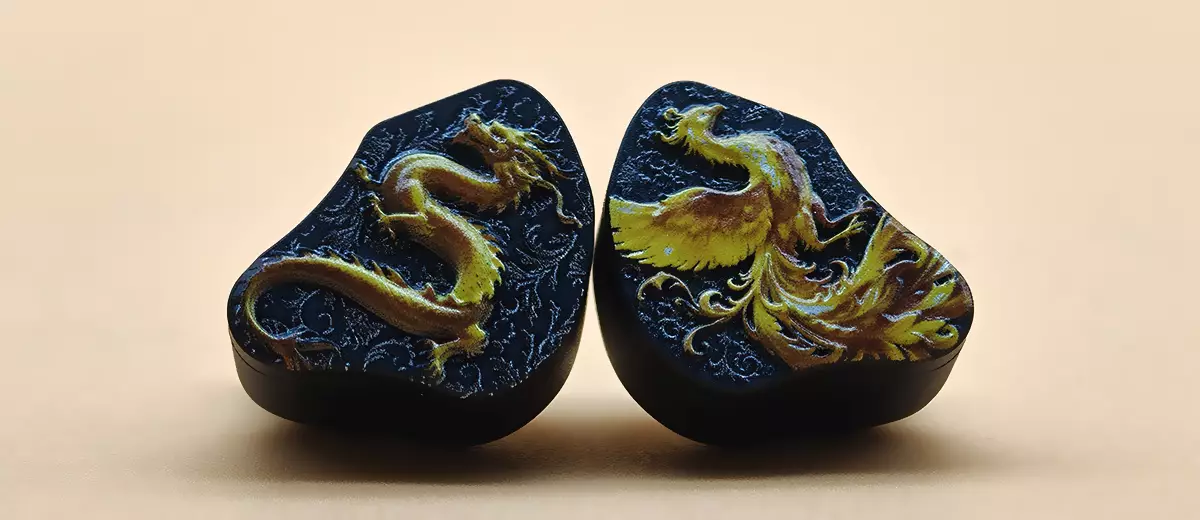
Synergy
Efficiency
At 15.5Ω and 101 dB/Vrms sensitivity, the MYTHERA is easy to drive from any source, including phones and basic dongles, reaching comfortable volumes without any strain.
The heavy bass tuning does benefit from a cleaner source, though, as weaker outputs tend to make the already loose low end feel even less controlled.
The modular 0.78mm 2-pin cable with screw-lock 3.5mm and 4.4mm plugs gives the set flexibility across source types without needing a cable upgrade. Swapping between plugs is straightforward and secure, with the screw-lock holding firmly once tightened.
At lower volumes, the bass loses some of its physical weight but remains dominant, while the midrange and treble thin out noticeably and lose what little clarity they have at normal listening levels.
The presentation at quiet levels is an already compromised version of what MYTHERA offers at its best.
Pushing the volume higher brings more physicality to the bass and adds some edge to the treble, but it also amplifies the low end’s tendency to overwhelm the rest of the mix.
The MYTHERA doesn’t scale in a meaningful way beyond that, with the bass being the only clear beneficiary of additional power while everything else either stays flat or tips further out of balance.
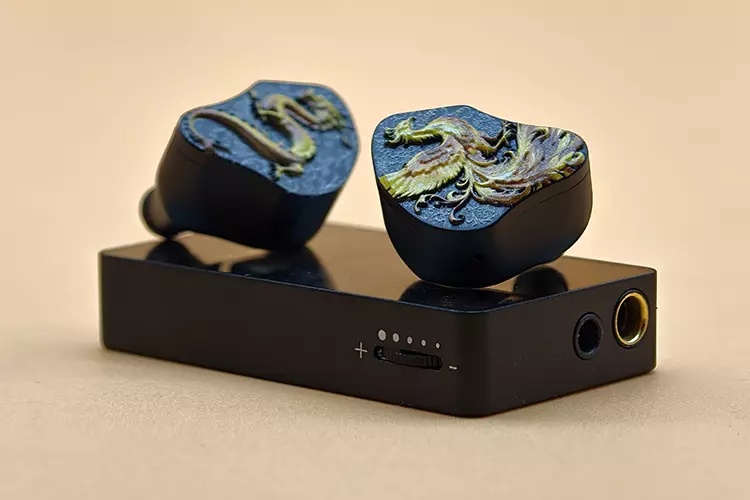
Pairings
Running the MYTHERA from a phone’s 3.5mm output keeps things functional but flat, with the bass dominating even more noticeably at this level due to the compressed dynamic range.
It’s listenable, but it puts MYTHERA’s weaknesses front and center without doing anything to address them.
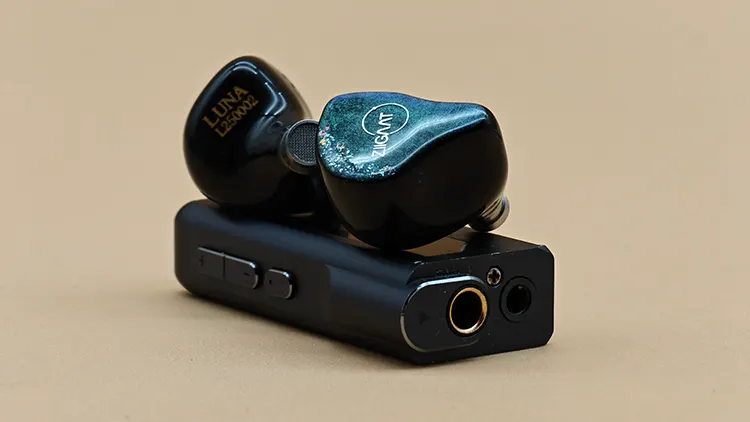
Switching to the FiiO JA11 adds brightness and upper midrange energy, which brings vocals slightly more forward but also sharpens the already aggressive treble.
For a set that already leans bright up top, this pairing pushes things closer to the edge of comfort rather than improving the overall balance.
The Colorfly CDA-M2 offers the most technical improvement of the four, tightening up separation and giving the treble a cleaner and more articulate edge.
It doesn’t solve the bass dominance issue, but it at least gives the midrange and treble a better chance to breathe within the mix.
The Heartfield R1 is the most listenable pairing, adding warmth that smooths out the treble aggression and gives the overall presentation a slightly more cohesive feel.
The mid-bass bump it introduces compounds the low end’s existing dominance, but the smoother upper midrange makes longer sessions noticeably more tolerable.
Selected Comparisons
INAWAKEN Twilight-DS
Technical
The INAWAKEN Twilight-DS packs a 12-driver hybrid configuration per side, combining four coaxial dynamic drivers with eight custom balanced armatures managed by an RC precision-controlled four-way crossover.
A 4×4 Equal Division Matrix Architecture sits alongside it, keeping phase alignment tight across all driver groups.
The four dynamic drivers are housed in a CNC-machined aluminum alloy module in a counter-oriented coaxial setup, while the eight balanced armatures split responsibilities across the midrange, highs, and ultra-high range, with four drivers assigned to each region.
Design
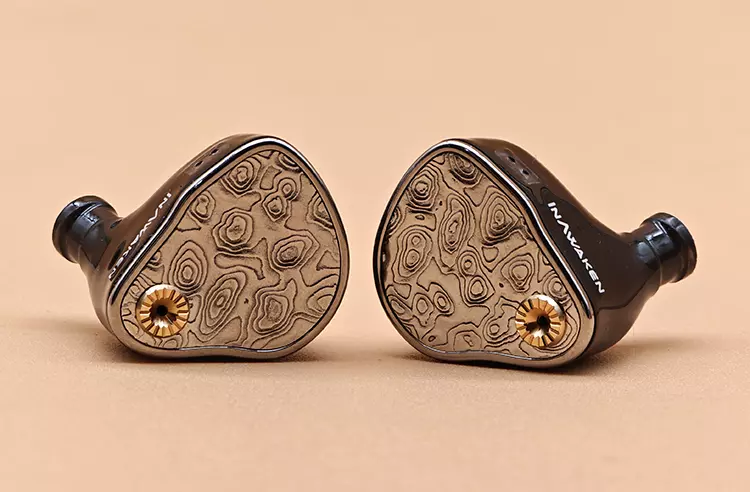
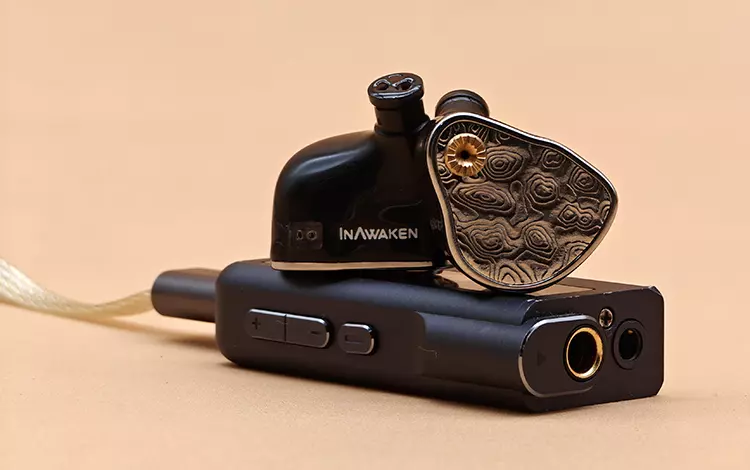
Real Damascus steel makes up the faceplate of the Twilight-DS, with a swirled pattern unique to each unit that sits over a CNC-machined titanium alloy frame paired with a medical-grade 3D-printed resin back cavity.
A distinctive gold circular vent sits on the lower corner of the faceplate, serving as both a pressure relief port and a sharp visual contrast against the silver steel.
Its recessed 0.78mm 2-pin connector and short stainless-steel nozzle with a mesh filter complete the build, keeping the physical profile clean and purposeful throughout.
Performance
Both IEMs hit hard in the bass, but the Twilight-DS brings considerably more texture, control, and definition to its sub-bass, where the MYTHERA floods the mix with a wide, all-consuming low end that prioritizes presence over precision.
The sub-bass quantity between them is roughly equal, but the quality gap is noticeable.
Mid-bass energy does swing in MYTHERA’s favor, hitting with more immediate slam and potency than the Twilight-DS manages at that range.
That advantage is difficult to appreciate, though, when the rest of the low end is already dominating everything around it.
The Twilight-DS midrange delivers forward and natural vocals with a lifelike timbre that the MYTHERA cannot match under the weight of its bass bleed.
Male vocals highlight the gap most clearly, sounding grounded and convincing on the Twilight-DS while falling flat and lifeless on the MYTHERA.
Treble also goes to the Twilight-DS, which brings sparkle and clean extension without ever tipping into sibilance.
The MYTHERA’s top end carries an aggressive edge and closes in rather than opening up, feeling narrow and underwhelming next to the Twilight DS’s more confident delivery.
Neither IEM offers an expansive soundstage, with both sitting at an average and intimate presentation that doesn’t push outward in any meaningful way.
Separation, layering, and dynamics all favor the Twilight-DS, though, as it handles busier mixes with considerably more composure, while the MYTHERA starts losing its footing when arrangements get demanding.
ZiiGaat Luna
Technical
The ZiiGaat Luna is ZiiGaat’s first all-balanced armature design, moving entirely away from the hybrid configurations used across the rest of their lineup.
Six drivers per side are split between Sonion and Knowles units, with dual Sonion 39AY008 woofers handling the lows, two Knowles 32873 units covering the midrange, and two Knowles 33518 tweeters handling the top end.
No crossover architecture is disclosed, though the three-way driver split strongly implies a conventional separation between lows, mids, and highs.
ZiiGaat designed the Luna around a studio reference target, tuning for accuracy and precision rather than consumer-friendly coloration.
Design
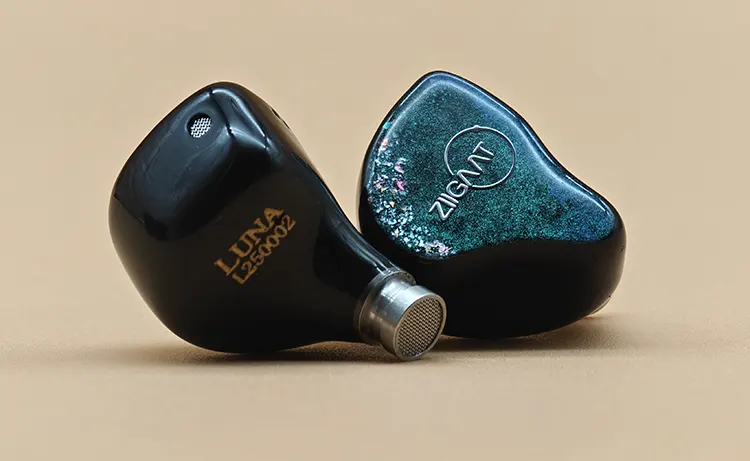
A hand-poured faceplate gives the Luna one of the more visually distinctive looks in ZiiGaat’s catalog, with each unit carrying a unique pattern of swirls and flecks that shifts under different lighting.
It sits over a fully opaque black medical-grade resin shell, 3D-printed and finished with a glossy surface that contrasts cleanly against the colorful faceplate.
Markings are printed in gold on the inner shell, with the serial number prefixed by L or R for channel identification.
Recessed 0.78mm 2-pin connectors sit flush into the shell, with a short stainless-steel nozzle capped by a fine mesh filter and a raised lip to keep tips locked in place.
Performance
Bass is where the MYTHERA asserts itself clearly, hitting with far more sub-bass rumble and mid-bass slam than the Luna can offer.
The Luna’s low end plays a supporting role rather than a driving force, staying clean and controlled but never generating the kind of energy that makes tracks feel lively and full.
Speed and precision are what the Luna brings to the bass instead, with notes resolving quickly and cleanly in a way the MYTHERA cannot replicate.
One prioritizes impact, the other prioritizes detail, and switching between them makes that difference immediately obvious.
Vocals are a clear Luna win, offering natural timbre and strong clarity that MYTHERA can’t match due to its bass bleed. Male and female voices alike sound grounded and convincing on the Luna, whereas on the MYTHERA, they come across duller and harder to follow.
The Luna’s treble shows clean extension, sparkle, and air that the MYTHERA simply cannot reach. Instead, the MYTHERA closes in and carries an aggressive edge, whereas the Luna reveals fine detail without ever becoming harsh or sibilant.
Unfortunately, everything else goes to the Luna as well, with a wider and more precise presentation that holds its layering and separation together even on demanding tracks.
The MYTHERA keeps things pulled tight with dynamics that scale almost exclusively for the bass, while the Luna distributes its performance far more evenly across the board.
My Verdict
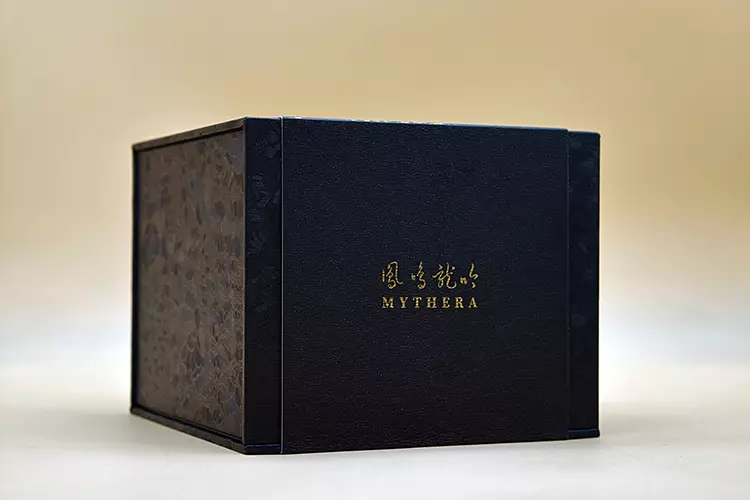
Few IEMs at this level arrive with the kind of unboxing experience the CVJ MYTHERA puts together, from the blind embossed box to the gloves, the premium carrying case, and a Furukawa copper cable that most brands would charge extra for.
The great fit compounds that strong first impression, sitting flush and comfortable in a way that few dynamic driver hybrids manage at this size and driver count.
The bass is where MYTHERA makes its loudest argument, delivering an all-consuming and energetic low end that gives every track a strong sense of physicality and drive.
Although the treble and midrange don’t reach the same heights, the MYTHERA remains as CVJ’s most engaging IEM release to date.
CVJ MYTHERA Technical Specifications
- Driver Type: One (1x) 9.5mm DLC dynamic driver, four (4x) custom balanced armatures, one (1x) custom balanced armature, and one (1x) custom micro-planar driver
- Plug: 0.78mm 2-pin with modular 3.5mm and 4.4mm terminations
- Frequency Response: 20Hz – 20kHz
- Impedance: 15.5Ω
- Sensitivity: 101 dB/Vrms
