

Selected Comparisons
The following comparisons to the Chord Electronics Alto were completed using the Hugo TT2 and the WANDLA GSE as my main DACs, and a mix of HIFIMAN Susvara Unveiled and the Austrian Audio Composer as my main headgear.
Chord Electronics Hugo TT2
The Hugo TT2 was launched in 2018, but still feels as relevant today as it did 7 years ago. I reviewed it in 2021, and it went on to win our Top Gear 2021 award for Best Desktop DAC/Amp.
This comparison with the Alto will focus on the headphone amplifier performance of the TT2, but both units will use the TT2 DAC as their main source.
Technical
Both units can operate as headphone amplifiers with a pre-amp, though only the Alto can directly power speakers with rear-panel binding posts.
The Alto is a single-ended topology, despite offering a 4.4mm output, whereas the TT2 is balanced, though it only provides SE headphone output.
Both amplifiers offer 3-pin XLR line inputs on their rear panels, but there is a power difference between the SE RCA and the balanced XLR for the TT2’s line and pre-amp output.
The topologies also differ with the TT2 operating in pure Class A down to 30Ω loads and Class AB down to 4Ω. The Alto operates purely in Class AB with dual feed-forward error-correction amplifier technology, combined with Chord’s high-end ULTIMA circuit technology.
For headphone output power, the Hugo TT will deliver 288 mW into a 300Ω load up to 2.7W into 32Ω on the high-end. It also has a high/low gain setting, which is not available on the Alto.
The Alto offers 2250 mW into 100 Ω or roughly 7000 mW into a 32Ω load down to 750 mW for 300Ω. Of the two on paper at least, it is the Alto that offers more grunt for demanding low-impedance planars.
Both of these amplifiers offer multiple outputs, including dual SE 6.35mm and a single 3.5mm. Only the Alto offers a balanced 4.4mm out, though it’s still operating in a Single-ended mode for output, so the power rating is the same as SE.
Design
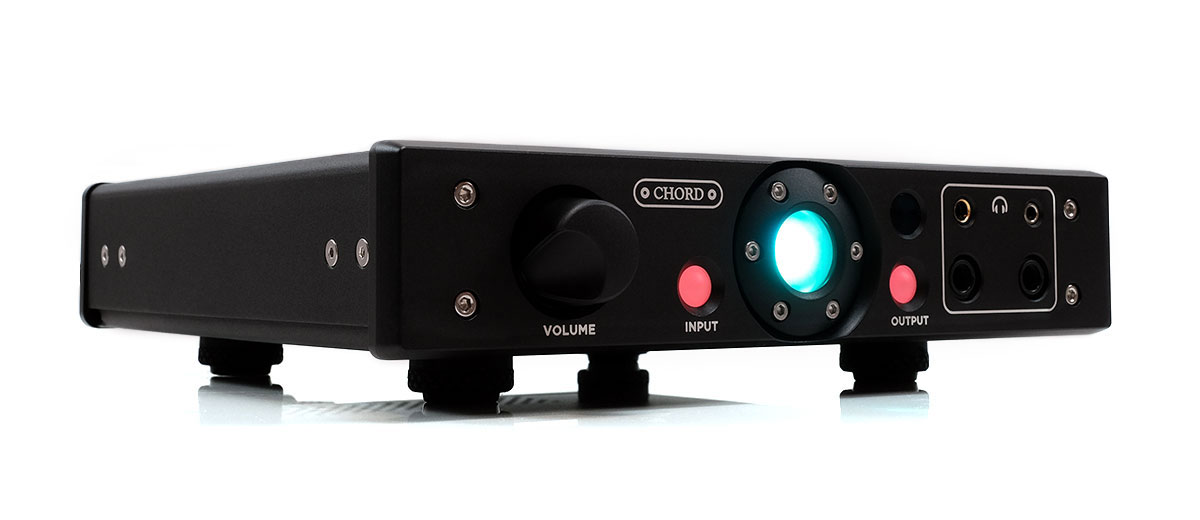
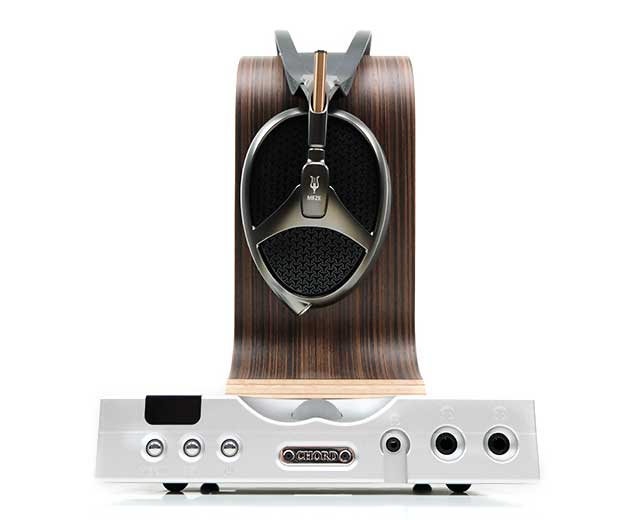
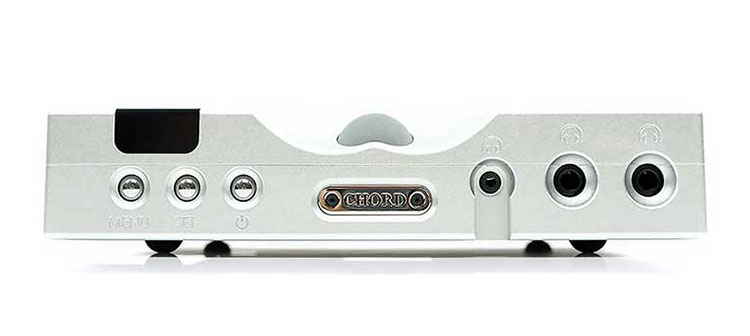
Although both units have an unmistakable Chord Electronics design language aesthetic, it is the TT2 that feels slightly more refined in its finishing.
That is not to say the Alto looks cheaper, but rather that the thrust of its finishing feels more industrial and perhaps more in keeping with its original Pro Audio target market.
Perhaps the switch from the TT2’s precision-machined 2-piece aluminum casing to a more traditional bolted-panel chassis was born out of a need for easier and faster maintenance work, a key demand from the Pro Audience target market that uses these devices as work tools rather than on display on an audiophile’s desktop.
However, as a desktop device, the black-only Alto is more compact and lighter and will take up less space than the Hugo TT2. You can stack them and pair them (Hugo TT2 DAC) with no issues, but the smaller Alto needs to be on top.
Due to the additional DAC inside, the control Orb control system is more complicated on the Hugo TT2 compared to the Alto.
Granted, the TT2 has a small LED display to the far left of the front panel to give you a quick idea of modes, but it always felt too cramped and limited in legibility to be very useful. Like the Alto, the TT2 comes with a more intuitive remote control, and in most instances, for HiFi use, this is my default control system.
I much prefer the classic volume control system on the Alto over the Orb system of the TT2. It’s stylish and more eye-catching, but remembering the dB levels of the orb color sequence is harder on the TT2 without checking the small LED screen for visual confirmation.
Performance
The Hugo TT2 has some noticeable differences from the Alto, with the two headphones I paired it with.
Overall, it has a slightly lighter low-end response, a slightly softer, more natural-sounding timbre through the mids, and a generally airier soundstage, particularly in terms of width.
The Alto is more of an ‘upright’ sound, for want of a better phrase. It has a more explosive and impactful sub-bass delivery and a cleaner bass-to-mids separation. It is arguably drier and more clinical in its delivery through the mids and though deeper for staging, not quite as wide as the TT2.
Some of those strengths work wonderfully well, and better than the TT2 with spare R’n’B mixes, where I found the bass tightness superior and the sub-bass presence more noticeable.
Synth low-end notes and lower-order instrumental fundamental frequencies in general are more noticeable for dynamic range and speed of impact.
The TT2 has more of a ‘presentational’ sound with enhanced mid-bass bias and lower-mids warmth coming through. The listening focus gently shifts upwards, and though the vocal delivery of the Alto is possibly more robust in terms of note body, the air and separation of the TT2 mids is more noticeable.
Once you start throwing in upper register percussion, then the TT2 is the more soothing of the two. For example, the Austrian Audio Composer lows were more palatable from the Alto, but the upper-mids tended to be a little too hard-edged compared to the smoother TT2 delivery.
For a headphone such as the 300Ω Atrium, the TT2 does a better job in terms of width and height, which is where you want to be with the vast soundstage of this headphone. However, the Alto wins on impact and depth, and at times, the vocal body sounds a little firmer and fuller.
Eleven (XI) Audio Formula S
The Formula S was launched sometime around 2018, with my review coming out the same year. It was also our Top Gear 2018 award winner for Best Desktop Amplifier.
Technical
Both amplifiers are single-ended, however, the Formula S uses a Class A, fully discreet BJT topology rather than the Alto’s Class AB MOSFET-based dual-feed forward error-correction with ULTIMA.
The key difference here is that the Alto design is voltage-controlled, whereas the Formula S’s BJT amp is current-controlled.
Whilst Xi Audio acknowledged that MOFSET is generally much easier to work with and more efficient, the BJT bipolar resistors were considered better amplifier parts than the FET equivalents and more consistent with the tonal output they wanted to achieve with the Formula S.
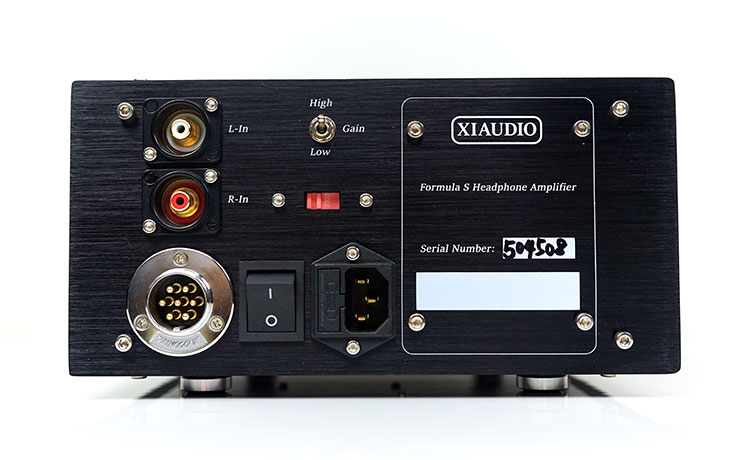
Despite both being single-ended, there is a deference to balanced connections with the Alto offering 4.4mm and the Formula S providing a 4-pin XLR output.
On balance, I would have preferred the Alto to have a 4-pin XLR output, but given its very compact size, I can understand why that was not considered.
There is, however, no pre-amp capability on the Formula S, with only a single set of dual RCA connectors as opposed to the Alto’s more complete set of I/O, including 3-pin XLR pre-amp out and 3-pin XLR line inputs.
The Formula S has an output rating of 2.1 watts into 46Ω or roughly 3W into 32Ω down to 322mW into 300Ω from all output ports on the front panel. The Alto has more headroom at all milestone points at roughly 7000 mW into a 32Ω load down to 750 mW for 300Ω.
Design
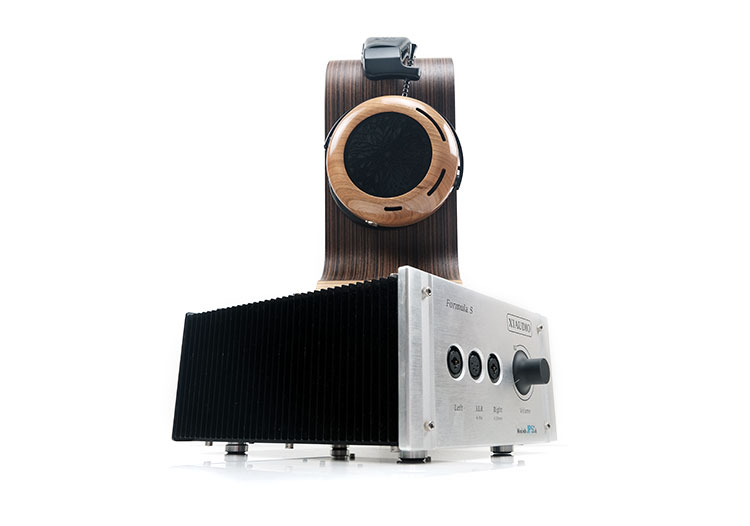
The Formula S is a brute of an amplifier when placed beside the far more compact Alto. I know there is a lot of breathing space inside the Formula S, so the actual circuitry only takes up a fraction of the housing space, emitting a hollow sound when knocked.
Everything else is about heat dissipation with colossal heatsink side panels as opposed to the more stylish honeycombed Alto L-shaped ventilation on the top and bottom panels.
Aesthetics belong to the Alto. It is a more modern desktop or rack design and can easily fit into a lot more spaces than the larger Formula S.
Since it lacks a pre-amp, the Formula S could be considered a much simpler design to control. It has no remote control; it’s purely manual dials and switches only with a marked volume dial to the front and a high/low gain switch on the rear panel.
Most will find the Formula S control setup more intuitive, while the Alto Orb system takes some time to get used to. However, providing a remote control for the Alto makes it more HiFi-friendly, and through frequent use, the Orb control system becomes second nature.
The Formula S’s 4-pin XLR output is a clear advantage, if only because the Alto has none. I can use some headphones with 4.4mm, but not all of them, and finding converters with decent resistance and similar writing can be a pain.
The long-term value of the Alto design is more on its flexibility. A pre-amp, a bypass, and a 4 PO headphone amp with more power in all directions provide more use-case scenarios than the Formula S’s headphone-only functionality.
Performance
The Formula S is a lighter, sweeter-sounding amplifier, whereas the Alto brings a firmer, full-bodied tone with a stronger fundamental frequency.
With the Susvara Unveiled, I found my listening bias more out wide and upwards with the Formula S, and conversely, the Alto is centered and downwards.
That is not to say the Alto is significantly darker-toned; rather, the Formula S is known for delivering some very ethereal highs and an expansive and tall soundstage, two areas which I would say the Altos is comparatively lacking.
What the Altos brings to the Susvara Unveiled that the Formula S does not is body and power, especially in the low-end response. It’s a firm sound throughout with thicker vocal performances, weightier percussion, and much more suited to the rhythmic demands of modern pop and EDM.
The Formula S is much more gentile in its bass expression. It’s not attenuated but rather it’s imbued with a lighter tone, which is consistent with its overall airy presentation.
With the Susvara Unveiled, the Formula S sounds more relaxed, less forceful through the mids and somewhat brighter in the highs. Give it some jazz, play some classical; this is where this particular pairing will thrive.
As for dynamic range and power, the Alto has more with a blacker background. Even with a SE pre-out from the Cayin N7, the Alto barely got pushed, whereas though Formula S felt in control, the volume dial was pushing harder northwards.
Ferrum OOR (HYPSOS)
The OOR was launched and reviewed by me in 2021, with it then going on to win our Top Gear 2021 Best Desktop Amplifier award.
Technical
Like the Alto, the OOR is an integrated headphone amplifier with pre-amp capability (including bypass capability), but rather than use a single-ended circuit, it has a fully balanced design offering balanced and single-ended inputs and outputs.
Unlike the Alto, it has no direct power amp capability for speaker connection, so you will not find any binding posts on its rear panel.
Both amplifiers use a modified Class AB design and are completely discrete, though the OOR has no dual-feed forward error-correction.
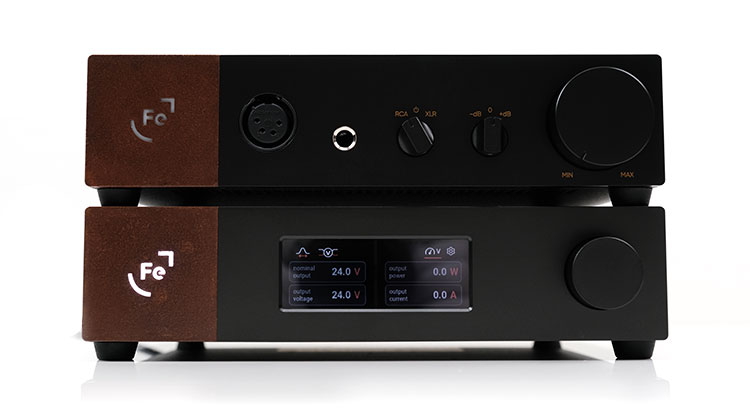
However, what it does have is a Ferrum Power Link (FPL) denoted by the Weipu DC coupler at the back of the OOR, allowing it to connect to Ferrum’s dedicated HYPSOS PSU, giving it a substantial uplift in dynamics.
These are two powerful headphone amplifiers. The OOR’s nominal rating of 8W into 60Ω balanced and 2W single-ended translates to around 10W into a 32Ω load balanced down to 3.75W SE into the same load.
The Alto is just a shade behind at 7W into 32Ω, but you have to remember this is a single-ended topology, so that is also 7W into an SE output, making it a far beefier single-ended output amplifier.
Both amplifiers will be more than capable of handling headphones such as the Susvara Unveiled, so I wouldn’t worry too much about which has the better headroom unless you are wedded to 4-pin XLR connectors only.
Design
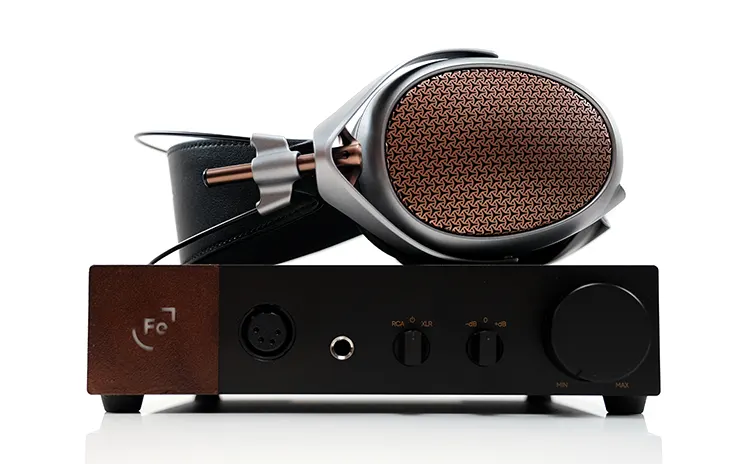
While the aesthetics are different, these two amplifiers have very similar form factors, and I can see them offering similar value to headphone audiophiles who value desktop setups.
Since the OOR has a weaker HiFi dimension, it lacks a remote control, which gives the Alto a bit of an advantage if you are considering a more spacious room setup. The OOR is much more touchy-feely with a simpler, though perhaps more intuitive, manual control system that requires you to be near it.
As a headphone amplifier, the OOR might seem more restrictive in terms of PO connectivity with one 4-pin XLR and one 6.35mm only. It is less adapted to 4.4mm users, an advantage the Alto holds but then surrenders due to the lack of 4-pin XLR.
Honors even here unless you plan on using the dual 6.35mm output heavily, something more useful in pro audio situations rather than relaxed audiophile listening scenarios.
The rear panels are more keenly fought with both units offering dual RCA and dual 3-pin line-in and pre-amp out. The main differentiators are the speaker binding posts on the Alto and the external PSU, as opposed to the OOR’s internal power supply.
The simpler OOR approach also extends to the control layout. It’s all done through two switches and a single volume dial. Granted, the bypass is on the OOR’s rear panel along with an additional LCD light controller, but that’s about it unless you own a HYPSOS PSU.
The Alto’s Orb system feels more in-depth, purely because the options available to the Alto are more in-depth. The remote control is your friend in this regard until everything becomes second nature.
Performance
Of all the amplifiers in this comparison, the Ferrum OOR is the closest competitor to the Alto, with tons of headroom and a very solid-state sound signature.
Like the Alto, it has a relatively rounded soundstage quality, though not quite the same depth. Its pairing sound signature leans more to the neutral than the ethereal or sweeter sound of the Formula S or the TT2.
Arguably, the OOR is very transparent, so sources will play a role. For this pairing, I went with the WANDLA GSE with a balanced output to both amplifiers and without any DSP to reduce the potential for overt coloration being introduced.
If anything, the OOR is more neutral-sounding than the Alto in this setup. The Alto has just a bit more bass bloom and sub-bass presence that colors the low-end a little warmer compared to the flatter, cleaner OOR low-end.
Not that the OOR can’t go low, it most certainly can with the right source and headphones. Rather, its treble tuning is more aggressive, and in being aggressive, it introduces a bit more contrast and brightness into the presentation.
Whereas the Alto is denser and a bit more rounded in its tuning with the paired headphones, especially with vocals, which I found more soothing when paired with clean-sounding headphones.
With the Composer, the OOR delivered a fairly dry but punchy and deep-sounding performance with an almost clinical-sounding set of mids and highs.
The Alto sounded a little more forgiving in the mids and highs, not quite as forceful in the upper mids, allowing it to reduce the potential for fizz in upper-register percussion notes more than the OOR.

My Verdict
As a headphone amplifier, the Chord Electronics Alto is a seriously heavy-hitting yet pleasingly transparent sounding.
It has the chops to handle anything you throw at it, and combined with the right DAC choice, more sensitive IEMs are also possible. It sounds big too, with excellent depth, a weighty bass response, and firm, upfront vocal performances.
It’s also a surprisingly compact desktop or rack device. Given its Pro audio heritage, the looks are typically tough and sturdy, so it feels like it can take a beating.
And yet, it’s undeniably a Chord Electronics design with copious brightly colored orbs and a remote control to save those who want the choices immediately clear to them out of the box.
This was a smart move from Chord to offer this amp to the wider audiophile community. Compact, powerful desktop amps that can drive big planar headphones with aplomb are a definite plus in my book.
Chord Electronics Alto Technical Specifications
- Output power (Speakers): 50 W into 4 Ω
- Output power (Headphones): 2250 mW into 100 Ω
- THD (Speakers): 0.003 % into 4 Ω
- THD (Headphones): 0.001 % into 100 Ω
- Signal-to-noise: 120 dB
- Frequency response: 6 Hz – 60 kHz
- Input maximum voltage: 6 V RMS
- Crosstalk: -95 dB
- Output maximum voltage: 15 V RMS into 8 Ω
- Operation voltage: 80-250 V AC auto-switching
- Dimensions: Length 215 mm, Width 200 mm, Height 57 mm
- Net weight: 1946 g
