

Selected Comparisons
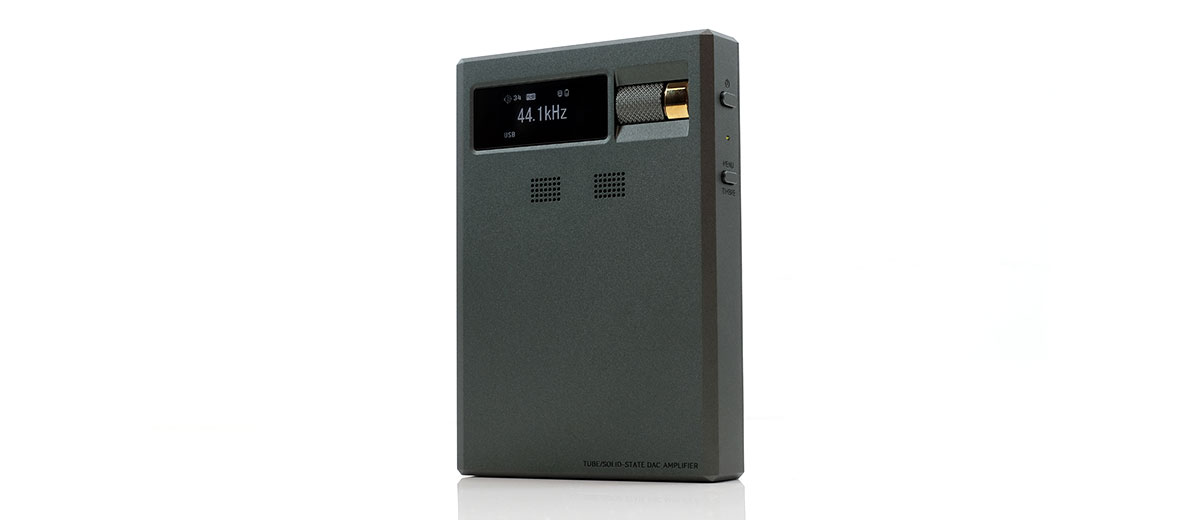
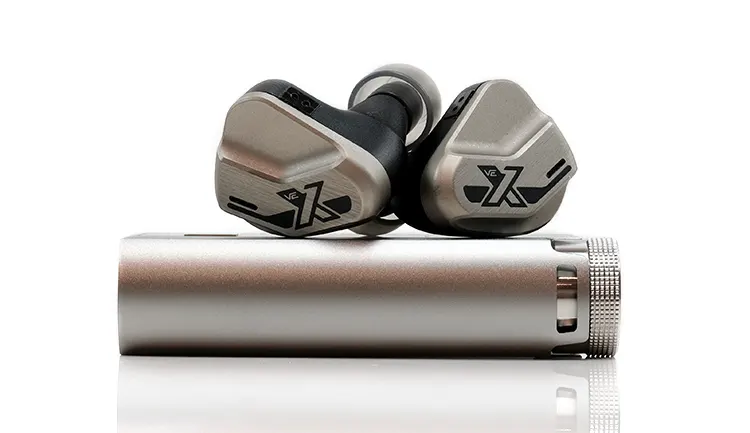
The following comparisons to the Cayin RU9 were completed using the Vision Ears VE10 and the Nostalgia Audio Durandal for headgear. A Samsung S23 Ultra was used as a source with the RU9 set to battery mode.
Cayin RU7
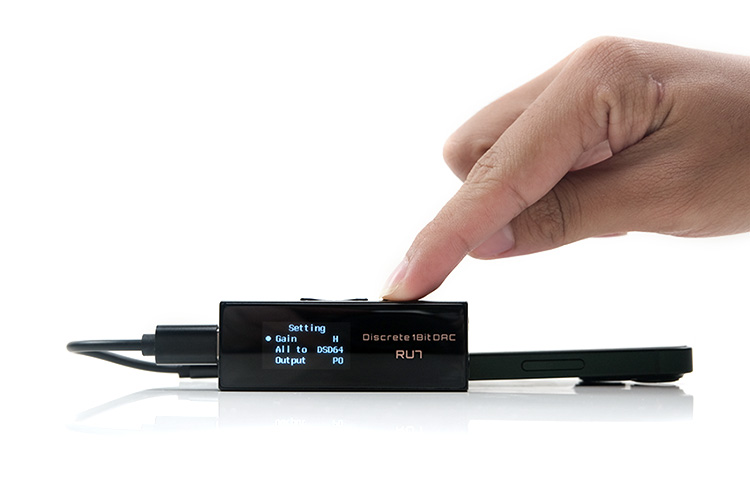
The Cayin RU7 was launched in 2023, taking a spot above the older R2R RU6 dongle as the flagship of the line before the RU9 was launched. The RU7 also won our Top Gear 2023 Award for Best Dongle/DAC.
Technical
Despite the shared nomenclature, these two units are very different beasts. The RU7 is a true dongle with no battery, whereas the RU9 is a portable amp with the ability to operate in dongle mode (without battery power).
Inside, the RU7 uses a discrete-designed 1-bit Ladder DAC in a 4 x 32 configuration for a true balanced implementation alongside dual solid-state amplification in parallel for a 4-channel output.
Whilst also balanced-engineered, the delta-sigma dual AK4493SEQ output of the RU9 is perhaps a little less emotive, more in the ‘mainstream’ for DAC engineering.
However, its NuTube/solid-state amplification output, alongside the triple timbre mode options, is not the norm, unless it’s another portable Cayin device.
The RU9 has the advantage for decoding at 32BIT/768 kHz in PCM and native DSD512, as well as offering wireless support up to LDAC via BT.
The RU7 is a bit lower at PCM 384 kHz and DSD256 but also offers ‘All-to-DSD’ upsampling for lower bitrate tracks up to DSD256, which can enhance the experience. It has no wireless, but as a dongle, it’s not necessary since almost all smartphones have wireless capability.
It is also no surprise that the RU9 has much more power and options to shape the power output levels.
The built-in battery not only prevents source battery drain, which happens with the RU7 setup, but it can also upgrade the output levels far beyond the RU7’s capability at 1W into a 32Ω on DC mode compared to a maximum of 400mW from the pure dongle.
Design
The benefits of each depend on how you wish to use each unit. The RU7 is the smaller, lower-profile unit and fits the dongle description perfectly. It’s easy to use, has a small but fairly legible screen, no battery, keeping it light, and offers single-ended and balanced PO/LO.
The RU9 is bigger and more robust, with more output power and a better screen. It offers more connectivity and menu options, and can operate in OTG dongle mode, pure battery, or with a smartphone/DAP, or powered by a DC input.
Outside of different sound signatures, I would keep the RU7 more for discreet listening with IEMs and tied to my smartphone.
I would switch to the RU9 if I wanted to introduce high impedance earbuds and headphones, and maybe move it around a bit more in terms of source connections, eg, a PC or MacBook.

Performance
Both units perform exceptionally well with sensitive IEMs, showing no clear signs of background hiss. However, from time to time, depending on the source, the RU9 can pick up some EMI interference. YMMV.
In all three timbre modes, the RU9 comes across as airier, more prominent, and detailed in the mids, sweeter in the timbre, and more extended and better defined in the low-end. That was obvious with both IEMs tested, the VE10 and the Durandal.
There might be a point of debate for preferring the analog tone of the RU7 over the more neutral-to-natural sound of the solid-state mode of the RU9. I do hear it as delta-sigma with a nice polish to an otherwise very balanced tonal quality.
However, technically, the RU7 pales in comparison to the RU9’s superior clarity and space. I hear a bigger staging quality from the RU9 with a little more treble sparkle and height, and sharper (in a good way) bass notes that hit harder and firmer.
If you want more sweetness, then move to the tube section of the RU9. Here, I would say the technical side of the RU9 is still very present compared to the RU7, with better dynamic range and more resolving.
The ‘denser’ RU7 tone sounds more intimate, but at the same time not quite as separated for imaging, and a slightly neutral to recessed midrange presence relative to the RU9’s vocal brilliance region, which has plenty of bloom from both IEMs.
iBasso Nunchaku
The iBasso Nunchaku review will be published shortly after this one, a dongle that has seen heavy rotation in my office. Price-wise, it is positioned just slightly below the Top Gear 2024 Award-winning DC-Elite.
Technical
The Nunchaku is another ‘true’ dongle in a similar fashion to the RU7. However, this one is more in keeping with some of the goals of the RU9 with a dual delta-sigma DAC design and a hybrid tube/solid-state output.
That being said, the levels of both DAC and tube output are a step lower, at least on a material level. The Nunchaku uses a dual CS43198 rather than the RU9’s dual AK4493SEQ and Raytheon JAN6418 micro-tubes instead of a more modern and quieter Korg Nutube 6P1.
Granted, the Nunchaku is cheaper, so we shouldn’t expect to see that level of components inside, but the goal is the same: a tube-flavored output with a solid-state alternative in balanced and single-ended mode.
On a decoding level, these two units are on par. Both can handle up to 32-bit/768 kHz in PCM and DSD512, and while on paper the 1W DC mode output far outmuscles the 500mW maximum output capability of the Nunchaku, you have to remember the iBasso unit is delivering that without a battery.
Once you switch to battery mode on the RU9, the gap is not so huge at 620mW into a 32Ω load compared to 500mW in tube mode on the Nunchaku. It’s more about the dynamic range, with the RU9 Modern Tube mode offering 6dB more than the iBasso’s tube performance.

Design
Pretty much all the design discussion points from the RU7 comparison also apply to the Nunchaku when compared to the RU9.
It’s a pure dongle; it has no battery and is thus lighter. It’s much smaller and more discreet, but also more limited in use since it requires a source via OTG, but can output via SPDIF if required.
Power output, whilst very impressive, is limited to the OTG connection, unlike the RU9’s battery output and DC mode input, which can dramatically enhance the output capability.
The RU9 is sturdier and more flexible; it can be wired or wireless, sit behind a phone or DAP, or stand on its own two feet via its built-in battery. If you have a DC input device, such as a power bank, you can enhance the lifespan during playback as well as enhance the output power.
The RU9’s larger form factor also means more physical controls, though both have nice ‘clicky’ analog volume dials operated by dedicated internal controllers that I much prefer over rockers.
Despite the size differences, both house a 1″ screen that operates similarly with a matching menu UI flow. Perhaps the RU9 is a bit more informative on its home screen, though not by much.
For some, the MagSafe functionality of the RU9 is a welcome bonus given its size. You will need to buy a MagSafe ring for the Nunchaku, though they are quite cheap.
Performance
The Nunchaku’s dual micro-tube design is more prone to microphonic tube ping than the RU9. However, both tend to be quite stable and quiet during playback. Less sensitive gear is unlikely to pick up on ping unless the Nunchaku takes an almighty knock.
Despite the multitude of timbres from both devices, I felt the core tuning had some consistent differences, most notably in vocal imaging, the upper-mids, and treble timbre.
The RU9 is a shade more relaxed and smoother sounding than the Nunchaku across all timbres. The treble is dialed back a little in terms of forwardness and influence on the midrange timbre, with a bit more bass bloom and warmth in the lows.
Vocals are slightly richer and creamier in tone, with the Nunchaku opting instead to bring in a bit more harmonic sheen and a marginally shorter note decay.
This is more noticeable in their respective solid-state modes: the Nunchaku opting for neutral-to-natural and a more linear bass response with heightened treble presence, and the RU9 enhancing the warmth, pushing a fleshier, more even-harmonic tone.
Of the two tube modes, I would say the Modern Tube option is closer in tone to the Nunchaku tube setting. It’s smoother than solid-state but a little tighter, airier, and cleaner in the highs than the rich and relaxed Classic mode.
The RU9’s slightly shorter decay and enhanced clarity and speed are more consistent with how I hear the Nunchaku with IEMs. If there is a difference, it is more in the vocal weight and positioning, and how much treble influence in the midrange timbre.
The Nunchaku is a little more neutral in positioning, with slightly enhanced upper-order harmonic overtones. The RU9 has a more pronounced fuller vocal note and a more liquid set of highs.
Chord Electronics Mojo 2
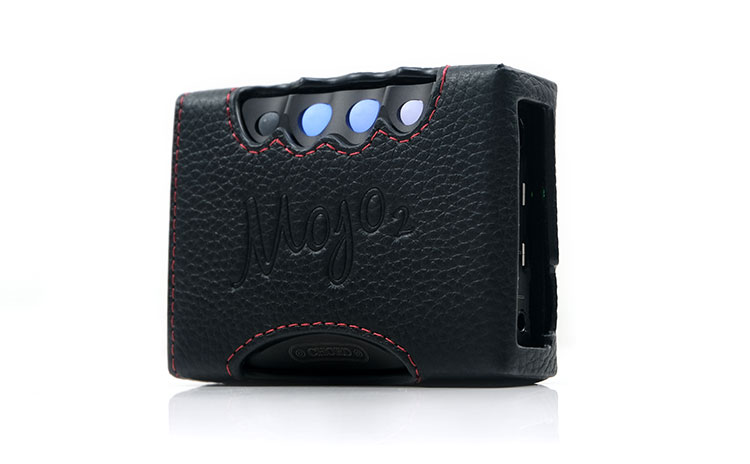
The Chord Electronics Mojo 2 was launched in 2022 and is still one of the most popular micro amps on the market. It won our Top Gear best portable DAC/Amp for the same year.
Technical
The Mojo 2 uses an in-house designed DAC based on a tap-based Xilinx Artix 7 FPGA chipset (XC7A15T) and an FPGA-driven WTA (Watts Transient Aligned) FIR filter implementation.
This is in direct contrast to the more mainstream delta-sigma dual AK4493SEQ DAC implementation inside the RU9.
The proposition from Chord is that the tap count of their in-house DAC for upsampling is higher (49,152) than a typical delta-sigma sub-500 tap count; therefore, more detail can be retained in the resulting output post-processing.
From a consumer perspective, there is no decoding ceiling difference. Both units can handle up to PCM 32BIT/768kHz; however, the Mojo 2 is a step lower for DSD at 256 natively compared to DSD512 for the RU9.
Another key difference is the lack of balanced amplification inside the Mojo 2. Single-ended is done on principle, with Chord arguing a good amplifier is just that, balanced doesn’t need to happen to make it ‘better’.
And yes, the Mojo2 is more powerful for single-ended use at 600mW into a 32Ω load compared to the RU9’s 420mW maximum using DC mode.
However, you can still go balanced in DC mode and get a big uplift to 1W if you choose to do so, or battery-only for an almost on-par 620mW of balanced output. You can also opt to change your timbre to tubes, a feature the very solid-state Mojo 2 does not have.
One final important mention is the Mojo 2’s onboard UHD DSP, which is far more dramatic than any DAC filter for changing the tonal balance of its output. It’s not the same as the RU9’s timbre modes, but it does offer some enhanced pairing flexibility.
Design
The RU9 and the Mojo 2 are gunning for a similar audience, and I suspect their usage scenarios are not that different either.
Both amps are more on the micro side in terms of dimensions. The RU9 is wider but flatter, and the Mojo 2 is taller but not as long.
They are also very sturdy devices built from unibody CNC-machined aluminum. However, the lack of an LCD panel and recessed orb controls on the Mojo 2 makes it especially durable.
However, orbs do tend to split the audience in terms of usability, especially with the onboard DSP. They are harder to learn and memorize unless you use the device daily.
The RU9’s more traditional LCD/side control layout and volume dial are more intuitive and quicker to learn and understand. They stay in the memory longer.
The Mojo 2 I/O is a curious case of old and new. It uses USB-C for OTG, which is on par with the RU9, and even has traditional optical and coaxial ports for HiFi systems as opposed to the 3.5mm SPDIF output on the RU9.
What holds it back for many is the micro-USB slot for charging, which is way behind the more advanced USB-C power system inside the RU9 with QC3.0 and PD2.0 quick charging and DC input.
No balanced 4.4mm on the Mojo 2, but a dual 3.5mm setup can be a fun alternative, and it is useful for comparing headgear simultaneously.
One important mention is wireless. The RU9 has BT built in up to LDAC. The Mojo 2 does not offer it unless you buy the additional Poly unit.
It’s a costly upgrade, but it also includes WiFi and hotspotting with local storage capability, creating a very capable, albeit complex, portable media device.
Performance
Neither of these two amps’ solid-state performances sounds cold or clinical to my ear with the VE10 and Durandal.
Both gravitate more to a natural sound with the RU9 solid-state pushing a bit more warmth and slightly smoother, more relaxed mids and highs. Whereas the Mojo 2 is neutral-to-natural, more upright and linear, and has slightly more treble presence.
Of the two, the Mojo 2 is more reference-like in its delivery, and the RU9 solid-state timbre errs more to the emotive side.
One thing to note the Mojo 2’s dynamic range and resolving capability can seem superior to the RU9’s solid-state performance, particularly how well notes on the very edge of the X-Axis resonate during playback.
I suspect the slightly stronger treble overtone gives them a bit more sparkle, as you can hear the same notes in the RU9’s playback. However, the RU9’s treble has a softer tone with lower-order dominant harmonic tilt in notes, which can dull the brilliance more with the VE10 and Durandal.
Once you switch to the tube modes on the RU9, the differences in their tonal qualities become more pronounced.
The Classic timbre has more bass bloom and a denser sub-bass presence, and not quite as tight and punchy as the Mojo 2. The Modern Timbre is airier, the bass is tighter with a sweeter, more flowing midrange compared to the drier, but faster sounding Mojo 2 mids.
I would pick the Mojo 2 for its stock solid-state performance with warmer or bassier IEMs. It keeps everything in check and delivers a clean and clear tone. However, for vocal-oriented performances, I would side with the RU9, especially with neutral IEMs.
My Verdict
The Cayin RU9 takes a legacy form factor, mixes it with modern audiophile needs to create a DAC/Amp with impressive, yet very ‘tweakable’ sound, excellent power output, and all inside a low-profile yet extremely sturdy design.
It’s been a while since I ‘stacked’ with my appetite diminished by modern dongles and TWS. This can do both, plus bring in the headphone user with that additional grunt that no dongle possesses.
It’s also better sounding than the N3Ultra, in my opinion. Use the N3Ultra if you want a good-performing local playback unit with tubes. However, with OTG to a smartphone and DC Mode, the RU9 opens up a much broader environment for connections and accessing your content.
I am hesitant to call the RU9 a modern audiophile solution from scratch because stackable micro amps have been around for ages.
Rather is a traditional idea, infused with modern features, and Cayin’s excellent timbre/power mode system that makes it ideal for today’s portable audiophile needs.
Cayin RU9 Technical Specifications
- Material: CNC-machined unibody metal chassis
- DAC: (2x) AK4493SEQ
- Decoding: PCM up to 768kHz/32bit, DSD512
- Bluetooth: v5.1 with LDAC, aptX HD, and aptX LL support
- Bluetooth Chip: Qualcomm QCC5125
- Battery: 2000mAh, polymer lithium-ion
- Connectivity: USB-C input
- Weight: 5oz
- Dimensions: 3.9″ x 2.7″ x 0.6″
