

Synergy
DAP & Portable Amplifier Pairings
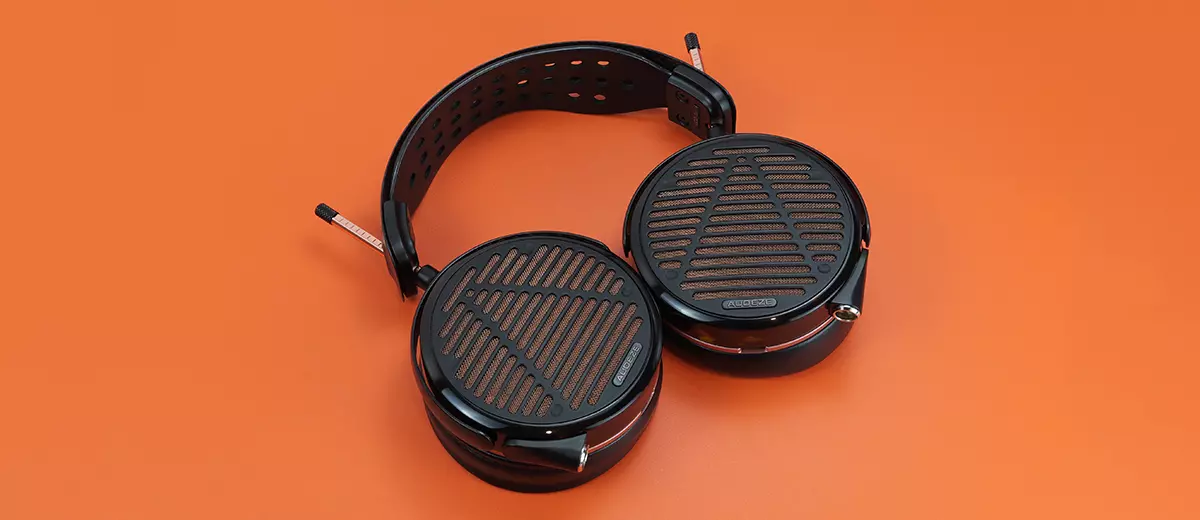
Those who switched to the LCD-5s primarily for the smoother sound will get a lot of satisfaction from DAPs such as the RS8 II, which produces a gorgeous vocal bloom, and the Cayin C9ii‘s excellent output power and tube timbre modes for the dynamic range.
My personal preference was for either high-energy solid-state or neutral offerings such as the DX340/AMP17 or the C9ii’s Hyper Mode.
What I was looking for was a pairing that accentuated the LCD-5s’s vocal presence, allowing them to cut through any heavy mix and create some impact, as well as keeping the lows tight and the treble maximized.
I was not necessarily after a duplication of the LCD-5 ear gain region, but just a slightly larger bump in the 2-4k region. The best DAP for that was the DX340/AMP17, which had a strong mix of dynamics and vocal presence with a cleaner sound, and the HiBy RS8 II for the warmer, bloomier vocal presentation.
The DX320 MAX Ti offered better dynamic range and resolution than the DX340, but it sounded almost too neutral for my taste. The FiiO M27 is very reference-level as well, with excellent imaging and a smooth vocal tone, but it feels too controlled, and I want the LCD-5s to sound joyful and ‘alive’.
The Cayin C9ii has a few options, including tube and solid-state, but these options are best combined with its Hyper mode, which lifts the LCD-5s’s dynamic range across the board.
I preferred the solid-state and Modern Tube timbre modes with the LCD-5s. The solid-state mode offers the best control and clarity, and the Modern Tube Mode is great for enhancing the mids and highs’ presence, combined with a smoother sound.
Desktop Amplifier Pairings
I attacked these pairings based on how tight and clean-sounding the bass response was, combined with a natural, life-like vocal performance.
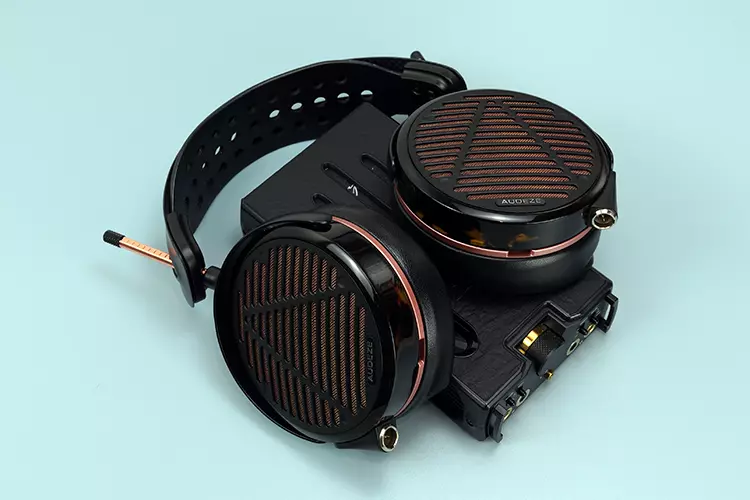
Pleasingly, all 5 amplifiers did a good job with the low-end. However, there were preferences in the lineup, including the Auris Audio Headonia 300B, the dCS Bartok Apex, Ferrum’s OOR, the Chord Electronics Alto, and the Feliks Audio Envy.
Between the two tube amplifiers, the Envy low-end was the most impactful and aggressive, but its center imaging felt tight and narrow, though vocal imaging cut through the mix well.
The Headonia 300B was smoother and more spacious-sounding. It did not have that Envy jackhammer bass response, but sounded more coherent with excellent dynamic range and staging depth from the LCD-5s.
Of the solid-state pairings, the dCS Bartok Apex was head and shoulders above the other amplifiers, which I would not be too surprised about, given its summit-fi status. To understand why, I need to first describe the Alto and OOR performances.
The Alto has more bass bloom and sounds slightly warmer than the OOR/LCD-5s pairing. It’s a smooth sound, but the heavier coloration in the lows softens the mids a little for my taste, leaving the balance slightly too bottom-heavy.
The OOR delivers a drier, more neutral tone to the LCD-5s, which I prefer for how well it controls the bass response, but the mids and highs might seem a little sterile and staging a bit too compact.
The Bartok Apex is a mix of both. You get the heavier low-end of the Alto but with the better control and contrast of the OOR. It’s not neutral; it’s quite natural to my ear with the LCD-5s, but it has a livelier, more resolving sound with superior dynamic range.
Selected Comparisons
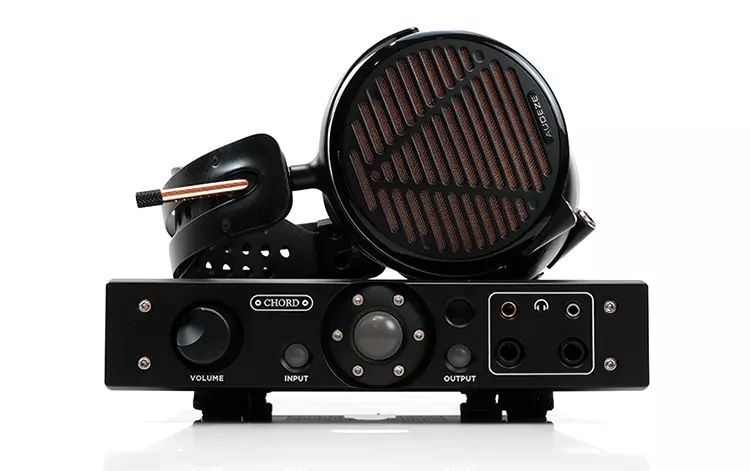
The following selected comparisons to the Audeze LCD-5s were completed using the Auris Audio Headonia 300B/Holo Audio Spring 2 DAC and the dCS Bartok Apex DAC and amplifier combo. All systems were set up in balanced mode.
Audeze LCD-5
The Audeze LCD-5 is the company’s former flagship model, launched in 2021 and now formally discontinued, with the LCD-5s serving as its direct replacement.
Technical
Since I have already done a considerable amount of comparison with the LCD-5, I will keep this section fairly brief.
Both open-back headphones use a 90mm planar driver with Audeze’s current Fazor waveguide, a nano-scale thickness diaphragm, and 14 Neodymium N50 magnets in a single-sided Fluxor magnet array.
The big changes are the introduction of SLAM technology in the LCD-5s for enhanced bass response, a revised chassis structure for the diaphragm (targeting the mids), and a more comfortable ear pad design.
There is a slight increase in load at 30Ω compared to the LCD-5’s 14Ω rating, but the sensitivity levels remain unchanged at 90 dB/mW.
Neither are hard headphones to drive impedance-wise, but both will excel with quality amps with good dynamic range.
Design
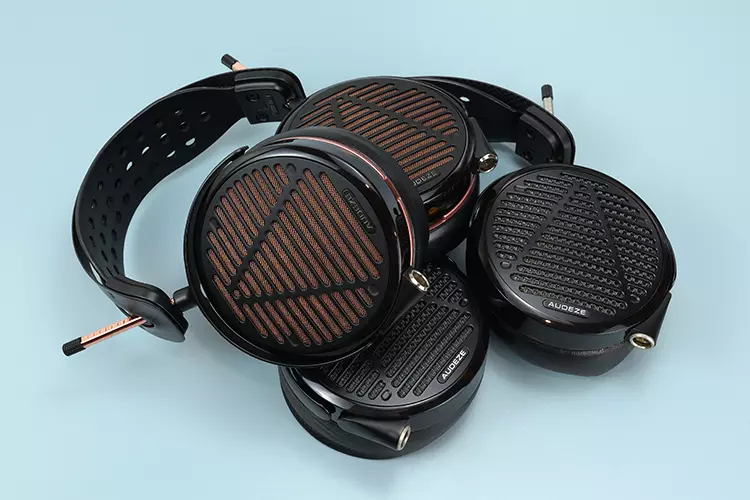
The interior reshuffle has a direct effect on the exterior, also. The visible SLAM ring between the LCD-5s’s pads and acetate cups is the most noticeable physical change for me, followed by the new pad shape and fitting experience.
Aesthetically, the LCD-5s looks more eye-catching with its coppery accents on the grill and rod adjusters. There is also a subtle reinforcement of the mini-XLR connectors, making them look snazzier and more durable than the original LCD-5 equivalent.
The form factor is unchanged, but the LCD-5s’s weight is 55g more than that of the original LCD-5. You can notice it a bit, but the more relaxed lateral clamp and lowered resistance from the headband mitigate the added weight significantly.
That feeling of additional comfort is enhanced by the softer, wider contact surface from the new fluted pads. The older pads’ fluting was more rigid, creating. a sharper point, which, combined with the stiffer clamping, made it more comfortable for longer periods.
The LCD-5s pads, whilst not at a level of supreme comfort, are closer to the LCD-4z experience than the older LCD-5 experience, making them acceptable for my head shape for lengthy listening sessions.

Performance
It’s not so much the low-end SLAM magic that leaps out at you first, but rather the smoother midrange. The 200Hz to 2k tuning is virtually unchanged; however, beyond 2k to almost 10k, everything will sound different.
The LCD-5s drops the mids elevation significantly, pulling down the 2-4k region with only a relatively mild bump compared to the hefty LCD-5 boost.
Neither has a huge treble boost, but because of the strength of the LCD-5’s amplitude in that 2-4k region, it does pick up more treble overtones and will sound slightly brighter than the LCD-5s.
The drop in upper-mids and lower-treble presence on the LCD-5s up to 7k is noticeable, with notes and imaging sitting further back and offering a fuller, warmer tone than the LCD-5.
The LCD-5s is more relaxing to listen to, but vocal imaging is less likely to cut through the mix than the LCD-5. Those who enjoyed the immediate impact of the LCD-5 vocal presentation might find themselves reaching for the volume on their amps to compensate when switching to the LCD-5s.
The lows are the next area of change on the LCD-5s, particularly from 50Hz down to 20Hz, which is noticeably more colored than the LCD-5 equivalent region. Technically, the drivers are the same, so the extension to my ear is unchanged.
What has changed is the enhanced volume and subsequent bloom from the LCD-5s sub-bass response, which, when called upon, is heavier and fuller-sounding than the LCD-5.
The older tuning is tight, does well with punchy rhythmic music, and perception-wise, might seem the faster of the two headphones in the low-end, with a degree more control and contrast.
However, it can also sound flatter and does not quite convey the same feeling of power as the LCD-5s on heavier low-end notes.
Audeze LCD-4z
The Audeze LCD-4z were launched around 8 years ago, and despite being listed as an audiophile series headphone by the company, they have also found a home in the pro audio community.
Technical
Both are open-back planar headphones, but arguably, the LCD-4z comes from the previous generation of design within the company.
It uses the larger 106 mm planar driver format and is surrounded by a double Fluxor™ Neodymium N50 magnet array rather than a single-sided design. As such, this is a bigger and heavier headphone than the LCD-5s at 560g.
Aside from the larger driver size, it also differs from the LCD-5s with its Nano-Scale Uniforce diaphragm; one of the previous iterations before Audeze launched its newer Parallel voice coil.
There is no SLAM technology inside the LCD-4z, but perhaps it does not really need it, given my review of its bass performance from 2024. Opinions may vary on this one.
Like the LCD-5s, the LCD-4z’s impedance is low at just 15Ω compared to 35Ω. At 98 dB/1mW SPL, the LCD-4z is more sensitive on paper than the LCD-5s’s 90 dB/1mW benchmarked measurement.
Neither really needs huge amps to sound good, but a good-quality amp will produce an optimal performance from both headphones.
Design
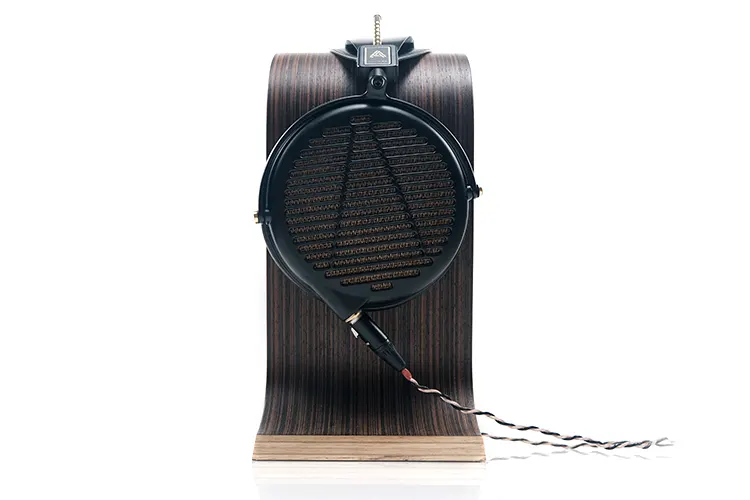
Both have killer design language, though the more compact driver inside the LCD-5s allows Audeze to shrink the cups’ relative size, making it the more compact and lighter unit.
Removing the pivot blocks with a soft sliding adjuster rod and streamlining the carbon fiber headband further modernizes the LCD-5s’s profile.
Switching to a ‘Tortoiseshell’ dyed and polished acetate also allows Audeze to gently shift away from pure wood or blacks with that gentle warm glow from a clearly lighter enclosure.
Props though to the LCD-4z, it has bling, a vibe, and a similar cool color accenting, though it’s more gold than copper.
Both headphones have a similar lateral pressure fitting experience despite the vastly different ear pad sizes and shapes.
The key difference really is the LCD-4z’s added weight, which creates more vertical pressure on the scalp, but other than that, I find both equally comfortable to wear for lengthy periods.
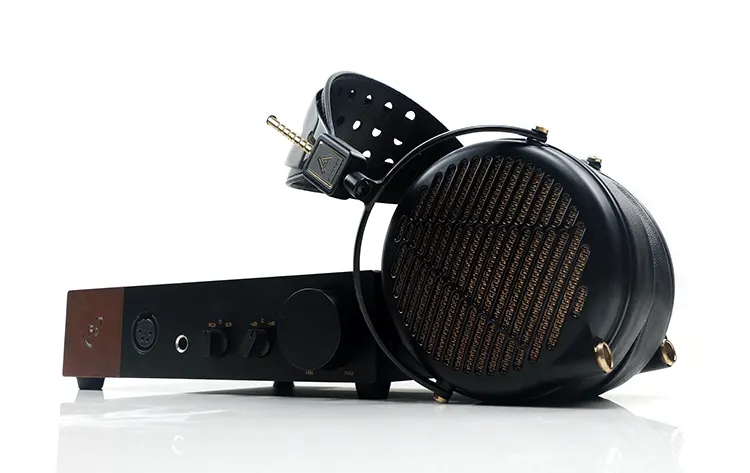
Both headphones have balanced 4-pin XLR-terminated stock cables. The cable wiring is consistent with 20AWG directional OCC high-purity copper inside, branded Rean mini-XLR connectors, and Neutrik plugs on the opposing side.
The LCD-4z cable has the same geometry, wiring, and connectors as the LCD-5s for the accompanying short 6.35mm adaptor cable.
Performance
I have to say I couldn’t declare a clear-cut winner or preference for one over the other in this comparison. Both headphones bring something different to the table, and I found myself gravitating to one then the other depending on what I was listening to.
Tonally, they are not miles apart, with a similar response from 200Hz up to around 2k. The key difference is 20Hz up to 200Hz, which is flatter but more ambient sounding on the LCD-4, and the 5-7k region, which is smoother on the LCD-5s.
Technically, the larger driver, aspects of the ear pad opening size, and driver distance create a stronger perception of width or a left-right traditional headphone listening experience on the LCD-4z.
The LCD-5s has a smaller soundstage relative to the LCD-4, but the smoother highs and deeper bass response provide a more powerful but darker and more intimate presentation.
Arguably, the sound feels a little less left/right, maybe more coherent for some, but for others, the superior spacing of the LCD-4z will appeal.
That peak at 5-7k on the LCD-4z changes the tonal qualities of notes through the mids and highs. It’s not as rounded and even-harmonic-biased as the LCD-5s; there is a degree of contrast and a slightly thinner note quality, particularly on percussion.
That might be more noticeable on brighter amplifiers, but with tube amps such as the Headonia 300B, the balance is excellent. The LCD-4z excels with big-sounding amplifiers.
I prefer the LCD-5s on the Bartok Apex. It sounds more driven in the lows with a slightly cleaner top end. The Bartok Apex’s tighter delivery works better with the LCD-5s’s more compact staging and imaging experience.
Audeze LCD-4
The granddaddy of the comparison section, 2015’s LCD-4 has long since been discontinued, but for many, this was peak Audeze’s old-school’ house sound.
Technical
The LCD-4 kind of belongs in the LCD-4z class of Audeze headphone generational designs, except it is nowhere near as efficient as either the LCD-4z or the LCD-5s.
The LCD-4 is equipped with Audeze’s classic 106mm driver, a double Fluxor Neodymium N50 magnet array, and a Nano-Scale Uniforce diaphragm with Fazor technology.
The LCD-4 came and went long before SLAM technology was introduced, but like the LCD-4z, there might be some who argue it is not needed.
The big difference here is the power requirement for the LCD-4, which is rated at a much higher 200Ω compared to 35Ω, though its rated sensitivity is better on paper than the LCD-5s at 97 dB/mW compared to 90 dB/mW.
The LCD-4 really needs a decent amplifier to sound optimal; it’s not as flexible as the LCD-5s in that regard.
Design
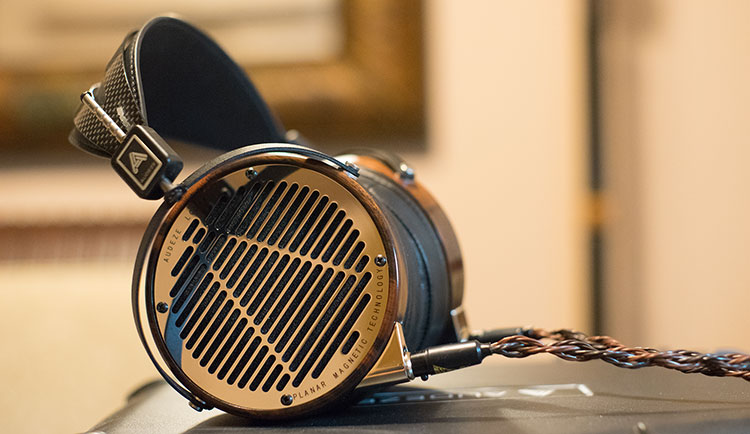
The LCD-4 is a classic Audeze design, and at 690g, it has that classic Audeze weight.
I have to say, though, despite an older design, the LCD-4 is gorgeous to look at with those 30-year-old Macassar Ebony wood rings, carbon fibre wide headband, and silvery branded grills.
It is every bit as much of a looker as the LCD-5s is, but with a classic, warm aesthetic appeal.
The LCD-5s is sleeker, with a more compact form factor, and the mix of acetate and copper accents is racier and more urban in its appeal. It looks and feels more modern with better articulation and far fewer individual elements required to bring it all together.
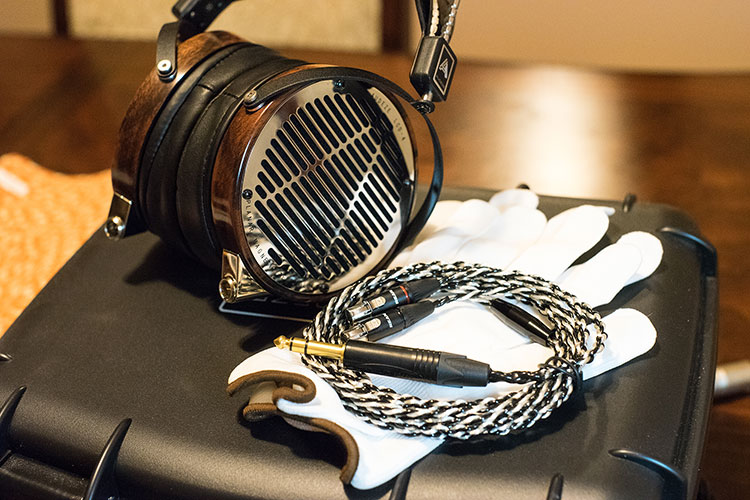
And that weight has a bearing on the LCD-4 fitting experience. It’s all vertical pressure with very light lateral effects due to the thick leather pads. Rapid movements of the head will result in the LCD-4 moving around a fair bit, though when steady, the LCD-4 is as comfortable on the head as the LCD-5s.
Still, when worn over lengthy listening sessions, the LCD-4’s weight wears me down a bit more, and it can be quite a relief when switching to the lighter LCD-5s.
Performance
I thought this comparison would be like the LCD-4z, six of one, half a dozen of the other, with some recordings suited to the LCD-5s and others for the LCD-4.
However, I never really felt the urge to decisively go with the LCD-4, save for the largest arena-like recordings. This is where it is at its strongest, with a larger, more ambient soundstage than the LCD-5s. If you need maximum height and width, then the LCD-4 does better in that regard.
The LCD-5s sound more coherent through the mids and highs, but not as wide. I just put that down to driver size and smaller cup/pad acoustics.
What really stops me from saying the LCD-4 is an equal throughout is the upper-mids and highs.
The LCD-4 does not necessarily have a peaky set of measurements from 5-8k, but it does have an uneven tuning with a dip in the 4-6k region and an elevated 10kHz response.
There is a certain rawness to the LCD-4 highs and a slightly metallic tone to percussion and upper-register vocal performances that I find unsettling with more neutral amplifiers.
Though the LCD-5s is arguably darker-sounding, it is more coherent through the mids and highs. I can find no inconsistencies in percussion and vocal timbre, staying resolutely smooth and easy on the ear through, albeit with a more rounded tone for percussion strikes.
And although the LCD-4 low-end is deep and ambient, perhaps more spacious sounding, it does not have quite the body and warmth of the elevated LCD-5’s bass. That gives the LCD-5s a more planted, authoritative sound despite having a more compact soundstage.
To my ears, the LCD-5s sounds like it has better fundamental frequency support and a richer note quality that is more consistent throughout.
My Verdict
The open-back planar driver Audeze LCD-5s sound is a satisfying mix of old and new. It combines SLAM with the excellent speed and technical capability of the LCD-5 driver and the more emotionally engaging, smoother sound of the older models.
This is the high-end Audeze headphone for you if you want a fuller low-end, smoother, more relaxing mids, and a more ‘joyful’ listening experience.
The ‘bigger’ headphones, such as the LCD-4z and LCD-4, will project a wider soundstage. If there is one critique of the LCD-5s, then it is the compact staging size, though if you are coming from the LCD-5, that should come as no surprise.
And since the legacy inspiration was the LCD-5, the LCD-5s are naturally smaller and lighter than the older ‘bigger’ headphones.
The new copper accents also give these headphones a snazzier look, but for me, the redesigned, comfier earpads are the biggest physical upgrade, making the LCD-5s a very comfortable headphone to wear.
An excellent high-end headphone by any standard, and one that I think will prove to be popular in the long run with Audeze fans.
Audeze LCD-5s Technical Specifications
- Style Over-ear (circumaural), open-back
- Transducer type Planar Magnetic
- Magnetic structure Fluxor™ magnet array
- Phase management Fazor™
- Acoustic management SLAM™
- Magnet type Neodymium N50
- Diaphragm type Nano-Scale Parallel Uniforce™
- Transducer size 90 mm
- Maximum SPL >130dB
- Frequency response 5Hz – 50kHz
- Impedance 35Ω
- THD <0.1% @ 100dB SPL
- Sensitivity 90dB/1mW (@Drum Reference Point)
- Minimum power requirement >100mW
- Recommended power level >500mW
- Maximum power handling 5W RMS
- Weight 475g
- Shipping Weight 9 lbs.
- Package dimensions 16 L x 14 H x 8 W in.
