

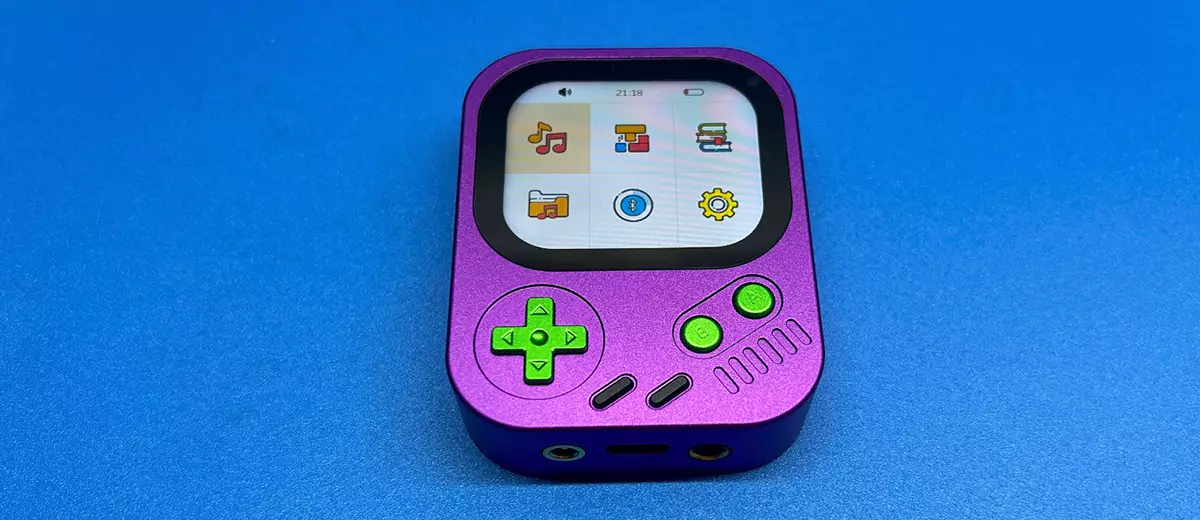
Meldrick reviews the Hidizs AP30 Music Boy, a Game Boy-inspired compact digital audio player with DSD256 and PCM 24bit/192kHz capability. It is currently priced at $129 MSRP, with Kickstarter pricing as low as $94 available for the Aluminum Edition.
Disclaimer: This sample was sent to me in exchange for my honest opinion. Headfonics is an independent website with no affiliate links or status. I thank Hidizs for their support.
Click here to read more about Hidizs products we have previously reviewed on Headfonics
Please note that this article follows our current scoring guidelines, which you can read in more detail here.
Hidizs built its name on more conventional DAPs such as the AP80 and its most recent release, the AP80 PRO MAX Copper Edition. So, the AP30 Music Boy is a genuine departure from the brand’s previous offerings.
Shaped like a shrunken handheld console, complete with a D-pad, A/B buttons, and a built-in puzzle game, it leans hard into ’90s nostalgia, trading subtlety for full-blown novelty.
Beneath the novelty shell sits a proper CS43198 DAC and RT6863 amplifier stage, DSD256 and 24-bit/192kHz decoding, dual 3.5mm and 4.4mm outputs, and Bluetooth 5.3, wrapped in either a lightweight plastic or CNC’ed aluminum body.
Priced at $119 for the plastic edition and $129 for the aluminum version, the AP30 sits in the mid-tier bracket of the portable DAP market where the likes of FiiOs’ ECHO and ECHO MINI as well as HiBy’s R1 reside.
To see how it compares against competitors within the same price bracket, read our full thoughts below.
Features
The Hidizs AP30 Music Boy pairs a Cirrus Logic CS43198 DAC with an RT6863 amplifier stage and an RKNANOD master chip, handling DSD256 playback and native 24-bit/192kHz PCM decoding, while offering both 3.5mm single-ended and 4.4mm balanced output.
Output power is comparatively modest for the segment, with the single-ended jack rated at 61 mW per channel at 32Ω, and the balanced output reaching 137 mW per channel at 32Ω.
Bluetooth 5.3 is onboard for wireless output, though notably transmit-only, and USB-DAC functionality is supported over the USB-C port for use with a PC or phone.
Beyond the core audio hardware, the AP30 also throws in a couple of nice-to-have novelty features: a built-in block puzzle game for idle moments, and a basic e-reader for text files.
Neither is essential to the DAP experience, but they add a bit of extra personality and utility that most dedicated music players don’t bother with.
Design
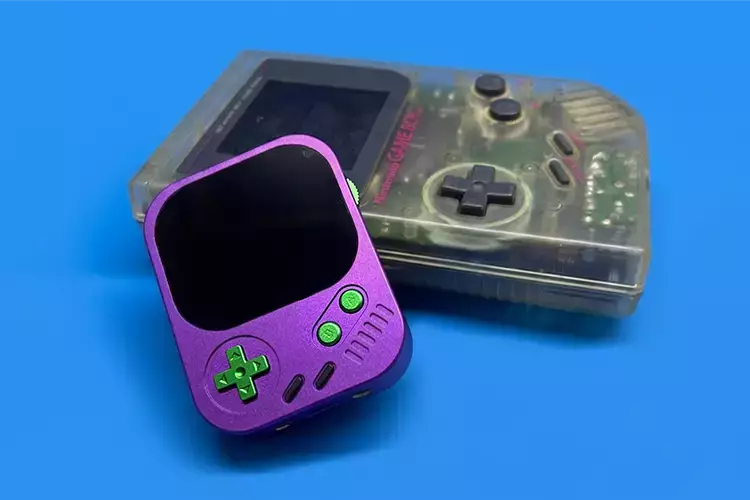
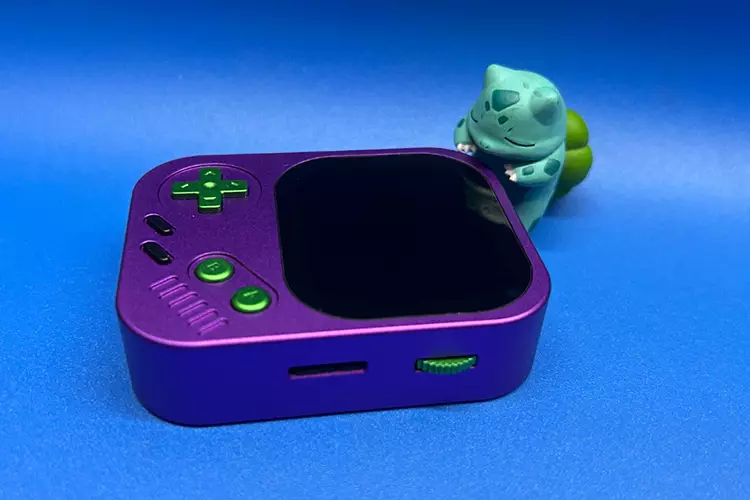
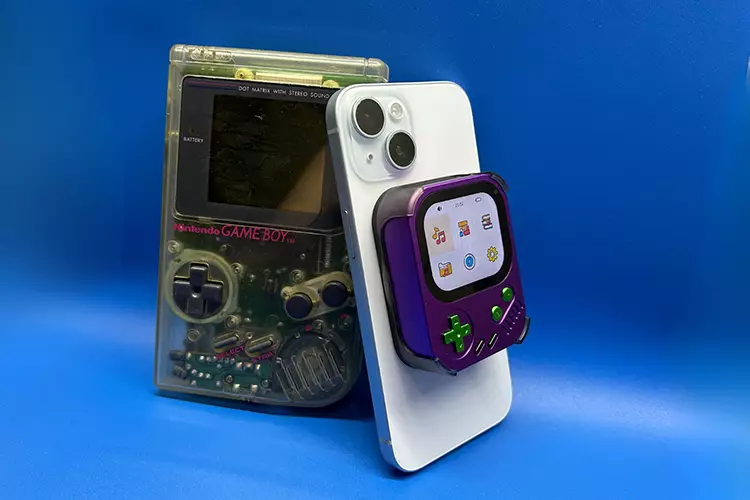
There is no mistaking what the AP30 is going for. The silhouette borrows unashamedly from a certain ’90s handheld console, right down to the D-pad and the two-tone shell split.
Hidizs offers the AP30 in two builds: a lightweight plastic edition available in White, Transparent Blue, and Transparent Black, and a CNC aluminum edition available in Purple and Black.
The aluminum unit I tested has a noticeably denser, more substantial feel than the plastic versions, though at a real cost in pocket weight.
At 68 × 53 × 17mm, the AP30 has a compact footprint for a device that offers dual outputs and a 2-inch display, but the aluminum edition weighs in at a noticeable 80 grams. The plastic edition, by contrast, comes in at just 56 grams.
The back panel carries a laser-etched whale motif, tied to a partnership with the Whale and Dolphin Conservation charity, a nice touch of personality beyond the retro gaming shell.
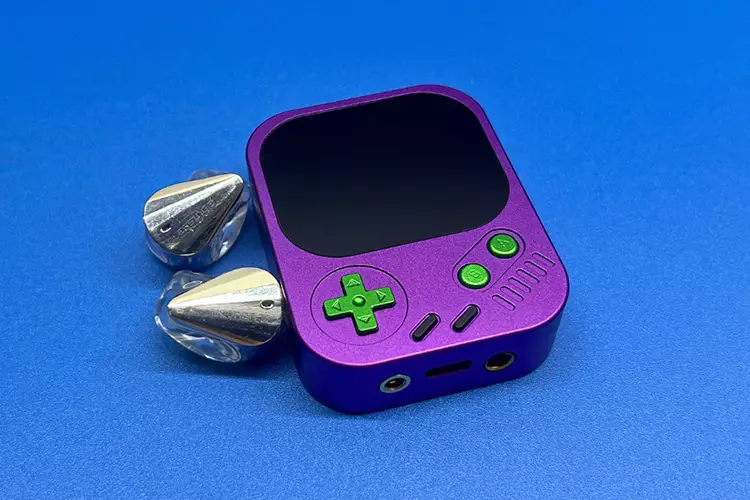
The front houses a 2.0-inch IPS display at 296×240, flanked by the D-pad and face buttons that dominate the design language.
The microSD slot sits on the right edge above the volume wheel, easily reachable without needing a tool or fingernail to eject, a small but appreciated bit of practicality on an otherwise novelty-forward device.
Compared to the more restrained retro-styled DAPs on the market, the AP30 trades subtlety for full Y2K retro-futuristic commitment.
Whether that reads as endearing or gimmicky will depend entirely on the listener, but there is no denying it is one of the most distinctive-looking DAPs on the market right now.
Controls
Rather than a conventional top-mounted button row, the AP30 goes all-in on its gaming inspiration: a D-pad on the left face, and A and B buttons on the right, with Select and Start buttons beneath them.
Navigation runs through the D-pad, with A confirming a selection and B backing out of a menu, a scheme that will feel instantly familiar to anyone who grew up with a certain grey handheld.
Volume is handled separately via an ALPS volume wheel on the right edge, which doubles as the power button when pressed and held. The wheel has a satisfying knurled texture and turns with clean, evenly spaced detents, making blind volume adjustment easy in a pocket or bag.
The D-pad and face buttons are tactile and precise, though the button spacing is tight given the AP30’s small footprint, and larger fingers may find the Select and Start buttons fiddly to hit accurately.
After you adjust volume on the volume wheel, the on-screen indicator lingers noticeably longer than it needs to before you can interface with the device again, like skipping to the next track. The AP30 makes you wait it out first, which adds an odd bit of friction.
On my aluminum edition in purple, the D-pad and face buttons also take noticeably more force to actuate than expected.
I/O
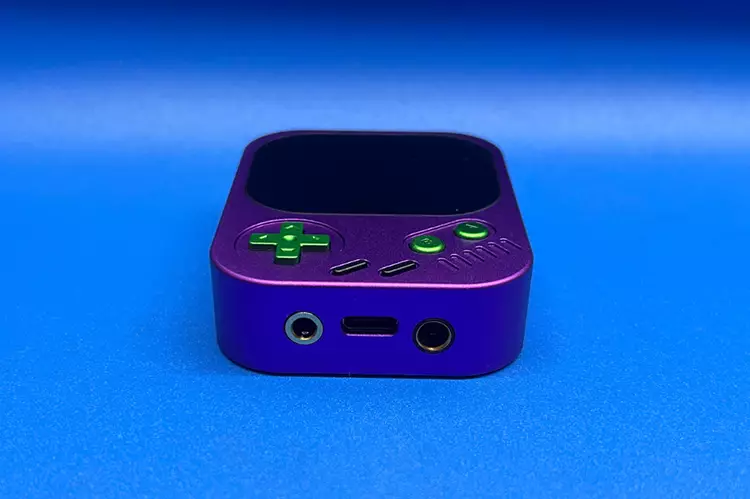
The bottom edge of the AP30 houses the USB-C port flanked by the 3.5mm single-ended and 4.4mm balanced outputs, keeping all connections conveniently along one plane rather than split across the chassis.
The microSD slot on the right edge supports up to 256GB, a fairly standard ceiling for this class of DAP. The AP30 will physically read larger cards, but the library scan itself will not index content past the 256GB mark, so oversized cards do not offer a practical workaround.
The USB-C port handles charging and doubles as a USB-DAC input, though the AP30 can only function as a USB DAC itself; it cannot accept an external DAC or amp downstream, a limitation shared by most DAPs in this price bracket.
There is no dedicated line-out, and the balanced output is the clear priority connection for critical listening given the power gap versus the single-ended jack.
One more USB-DAC quirk worth flagging: the volume wheel goes dead once you’re in DAC mode.
Volume must be controlled entirely from the connected source, which feels like an odd omission on a device that otherwise leans so heavily on physical controls as its identity.
Battery Life
The AP30 packs a 1,200mAh battery, a reasonably generous capacity for a device this compact, and Hidizs rates it for a full charge in about an hour over USB-C.
Playback estimates vary meaningfully by output: 10–12 hours over the single-ended jack, dropping to 8–10 hours via the more power-hungry balanced output.
In my testing, sticking mostly to the balanced output on low gain with IEMs, I landed close to the 8–10 hour estimates under normal listening volumes.
With Bluetooth active, playback dropped further to a claimed 6–8 hours, and my own testing tracked reasonably close to that range.
Given the AP30’s small size, the battery life on offer is respectable, though the balanced-output and Bluetooth figures both trail what larger-bodied DAPs in this segment can typically manage.
Packaging & Accessories
The AP30 arrived in a cardboard box nested inside a slightly larger outer box, a snug fit that is easier to remove from the bottom than the top.
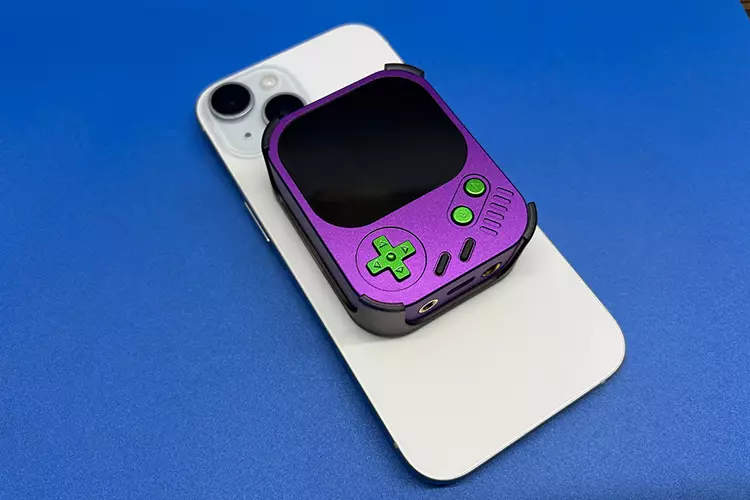
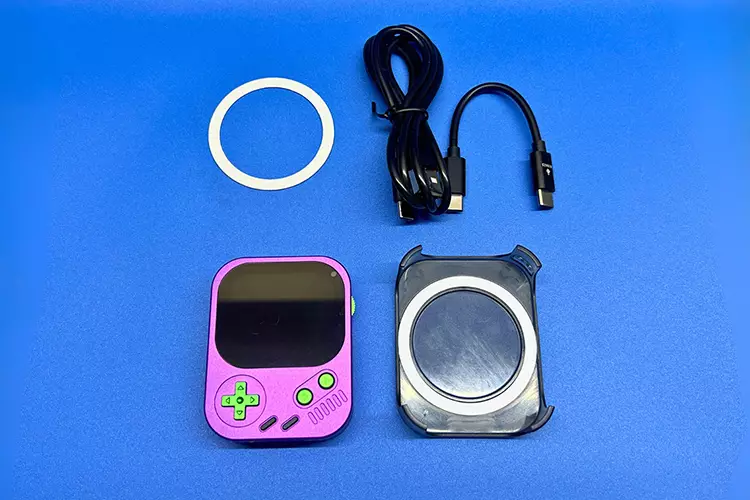
Inside, Hidizs includes the player itself, a USB-A to USB-C cable, a shorter USB-C to USB-C cable, a printed manual, a spare screen protector, a transparent protective case, and a metal magnetic ring for attaching the AP30 to phones or phone cases.
This is a notably generous accessory bundle for the segment, and it reflects the AP30’s “wearable” pitch: the case and magnetic ring exist specifically to support carrying the player clipped to a bag, worn on a strap, or snapped to the back of a phone.
The magnetic ring turned out to be genuinely useful rather than a gimmick. I attached it to the included AP30 case and used it as a USB DAC right off my iPhone 14, magnetically locked in place instead of dangling from a cable.
With headphone jacks long gone from modern phones, having a DAC that can physically anchor itself to the back of the device it’s feeding is a small thing that solves a real, everyday annoyance
It is a small but meaningful difference in philosophy, treating the accessories as core to the intended use case rather than an afterthought.
Software
Software Impressions
The AP30 runs on HidizsOS, a proprietary Linux-based system built specifically for this device, and it feels distinct from most other budget DAP software I’ve used. Boot-up takes a little under 10 seconds, which is respectable for the category.
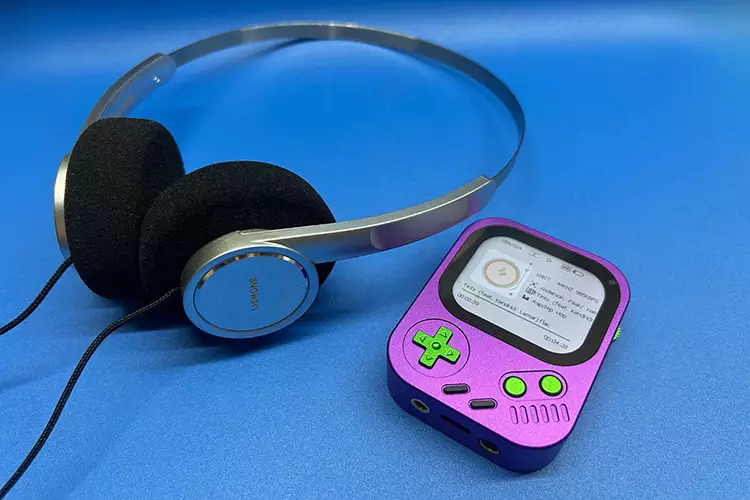
The home screen presents a row of icons: Music Library, a built-in pixel block puzzle game, an eBook reader, File Explorer, Bluetooth Settings, and System Settings, all navigated via the D-pad with the A and B buttons handling confirm and back.
The puzzle game is a bespoke creation rather than a licensed Tetris port. While it will not hold anyone’s attention for long, it is a genuinely charming inclusion that fits the AP30’s identity better than a gimmick usually would.
The top of the screen persistently displays a volume indicator, the time, and battery level, keeping key information visible without needing to dig into a dedicated Now Playing screen.
Album art is unfortunately a sore spot. Getting cover art to display on the ‘Now Playing’ screen proved harder than it should be, with correctly tagged files still showing up blank more often than not.
On a brighter note, one small software decision I appreciated: music keeps playing uninterrupted while you’re in the block puzzle game.
It’s a minor detail, but it means the game genuinely functions as a distraction layered on top of listening rather than something that pulls you out of the music entirely.
Navigation
Where the AP30’s software shows its lack of maturity is in menu depth and consistency.
Digging into gain settings, digital filters, or Bluetooth pairing requires navigating through nested screens that do not always follow the same logic from one menu to the next.
There are key functions that are only tied to pressing the select key when media is playing, and functions like SD card formatting and the screen-off timer sit in less intuitive submenus rather than a single consolidated settings page.
Sometimes double pressing the B button while on now playing brings you back to the media library, with another press of the B button bringing you back to the main menu.
But if you press it ever so slightly slower, the initial 2 presses just cycle between now playing and a list of available songs
Compared to more established players that have had a full product cycle and firmware updates to sand down their own menu quirks, the AP30’s software feels like exactly what it is: a first-generation implementation with real potential that has not fully caught up to the hardware yet.
Customization
The AP30 offers a genuinely deep customization suite for a device this size, including adjustable gain, a multi-band digital filter selection, and a built-in graphic equalizer with several presets alongside manual band adjustment.
Screen brightness and auto-shutdown timers are both adjustable, though the ranges are less generously documented in the menus than I would like.
The EQ implementation in particular stands out as more capable than what most DAPs in this price range offer, giving listeners real room to tune the AP30 toward a preferred signature rather than being stuck with the stock tuning.
I found a mild, few-dB bass shelf lift paired well with brighter IEMs, though I largely left the EQ flat for the sound impressions below to judge the AP30 on its own tuning merits first.
One thing the AP30 doesn’t yet offer is any real visual customization beyond the built-in theme.
Given how enthusiastically modding communities have picked up custom theme-making for other budget DAPs, I’m hopeful the AP30 sees that same kind of grassroots support once it’s in more hands.
Sound Impressions
The following sound impressions were completed using the MOONDROP Blessing 3, Kiwi Ears KE4, and Kiwi Ears Orchestra II IEMs, with headphone testing conducted on the Sennheiser HD 600, MOONDROP Old Fashioned, and the Koss KPH30i.
Summary
Overall, the Hidizs AP30 offers a neutral, forgiving signature that stays comfortable through most of the frequency range, with a touch of extra energy in the treble that gives cymbals, high-hats, and upper-register synths a bit more bite than a fully neutral tuning would.
Bass reaches deep without overwhelming the mix, the midrange is natural and unforced, and the treble carries a mild lift rather than a full roll-off.
It reads as forgiving overall, not too bright, but with a little sparkle up top, and background noise is essentially nonexistent even with sensitive IEMs.
Bass
The AP30’s bass quantity is good, reaching genuinely deep into the sub-bass without ever overwhelming the rest of the mix, a nice trait for a source at this price.
Sub-bass extension is a real strength here, digging in with more depth and presence than I expected given the AP30’s modest power output.
Mid-bass carries a light, controlled warmth rather than a heavy one; it adds a touch of body to bass guitar and kick drum without bleeding into the midrange.
Personally, I would have preferred a bit more mid-bass warmth here, though that’s a matter of taste rather than an objective shortcoming.
Texture and layering are acceptable but not a strong suit; dense bass lines in electronic and hip-hop tracks blend slightly rather than separating cleanly.
Mids
The midrange is the AP30’s clearest strength, rendered with a natural, unforced quality that avoids sounding thin or artificially boosted.
Vocals, both male and female, sit comfortably in the mix with a touch of added warmth rather than a strictly neutral cast. Male vocals in particular carry a pleasant density without becoming muddy.
Instrument separation is respectable rather than exceptional; acoustic guitars and pianos are rendered smoothly but without quite the last word in individual definition.
The overall tuning philosophy here favors coherence and ease over microscopic detail retrieval, and it largely succeeds at that goal.
Listeners who find strictly neutral mids a touch clinical will likely find the AP30’s midrange more immediately inviting, if less technically precise.
Treble
Treble on the AP30 leans a bit brighter than a fully neutral tuning, with a noticeable lift that gives cymbal strikes a little extra energy compared to more neutral sources.
That same lift extends to high-end synths and some wind instruments, both of which come through with a touch more shimmer and presence than I expected from a DAP with this otherwise forgiving overall character.
Despite that added energy, the AP30 stays on the right side of the line; I never ran into outright harshness or sibilance across any of my pairings, and the extra liveliness reads more as sparkle than fatigue.
For genres like jazz and acoustic music, that added air is a welcome trait, helping cymbal decay and instrument shimmer come through with more life than a purely rolled-off tuning would allow.
Staging & Dynamics
Soundstage on the AP30 is modest, with limited width and shallow depth, giving a more intimate, closed-in presentation.
Instrument separation holds up reasonably well in simpler arrangements, but denser tracks with multiple competing elements can sound compressed and slightly congested.
Dynamics are gentle rather than punchy; the AP30 does not deliver the same sense of transient snap or low-end authority that a higher-power source can provide.
Click on page 2 below for my recommended pairings and selected comparisons.
