

Bluetooth
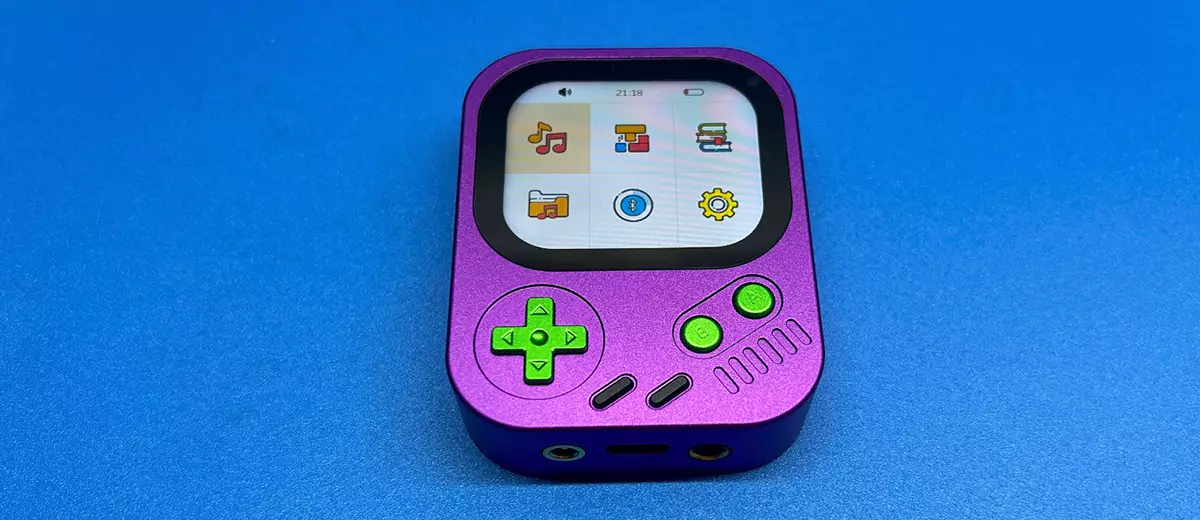
For Bluetooth testing, I paired the AP30 with the FiiO EH11 wireless headphones. The AP30 is limited to the SBC codec, but with an added restriction: it only functions as a Bluetooth transmitter, unlike other Hidizs AP-series devices that can also act as a receiver.
Pairing was straightforward, and the connection stayed stable throughout testing.
Sound quality over Bluetooth followed the now-familiar pattern: noticeably compressed resolution, softened dynamics, and a slight loss of the midrange warmth that defines the AP30’s wired signature.
Given the AP30’s own touch of treble energy, that compression tends to add extra edge to cymbals and upper synths rather than tame it, making Bluetooth the less flattering way to hear the AP30’s tuning.
It remains a clear step down from wired listening, and not a mode I’d choose for critical sessions.
Synergy
Power
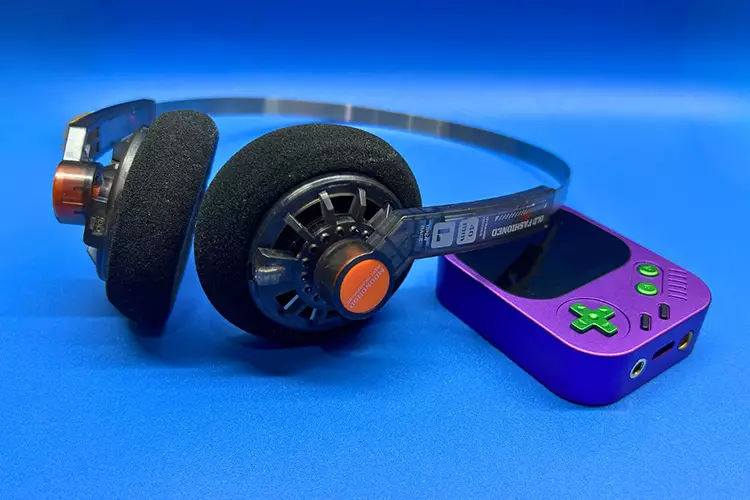
The following tests were done with the MOONDROP Blessing 3, Kiwi Ears KE4, and Kiwi Ears Orchestra II IEMs, with headphone testing conducted on the Sennheiser HD 600, MOONDROP Old Fashioned, and the Koss KPH30i.
At 61mW single-ended and 137mW balanced, the AP30 is meaningfully less powerful than several competitors in its price range on paper, and that gap is audible with harder-to-drive gear.
With the Moondrop Blessing 3 via the balanced output, I needed to switch to high gain and push to around volume level 40 to reach my usual listening levels, noticeably higher than I typically need on more powerful sources.
The Orchestra III was comfortable on the single-ended output around 55 on low gain, with no distortion, though headroom felt tighter than on higher-power alternatives.
With headphones, the gap widens further. The MOONDROP Old Fashioned was drivable but needed high gain to reach a satisfying volume, while the Koss KPH30i settled in around 55% volume on high gain single-ended, more headroom than I’d like to need from a source this size.
The Sennheiser HD 600 was simply a bridge too far; even on high gain via the balanced output, the AP30 could not deliver the low-end authority or dynamic scale the HD 600 needs, falling noticeably short of what a more powerful source could manage with the same pairing.
This confirms the AP30 as a player best suited to efficient IEMs rather than demanding full-sized headphones, more so than several competitors at this price.
Pairings
The AP30’s touch of treble energy makes it a natural partner for warmer or more laid-back IEMs that could use a bit of extra sparkle up top.
The Ko30i was an excellent match here. Its naturally warm, vintage-leaning presentation benefited from the AP30’s added treble liveliness, resulting in a more engaging, lived-in listen than the Old Fashioned manages entirely on its own.
The Kiwi Ears Orchestra II also paired well, with the AP30’s forgiving low end balancing out the extra air it brought to the IEM’s upper register.
Listeners running already bright or treble-forward IEMs may find the AP30’s added energy pushes things a touch too far; a more neutral-tuned source is the better match in that scenario.
Selected Comparisons
FiiO SNOWSKY ECHO MINI
Technical
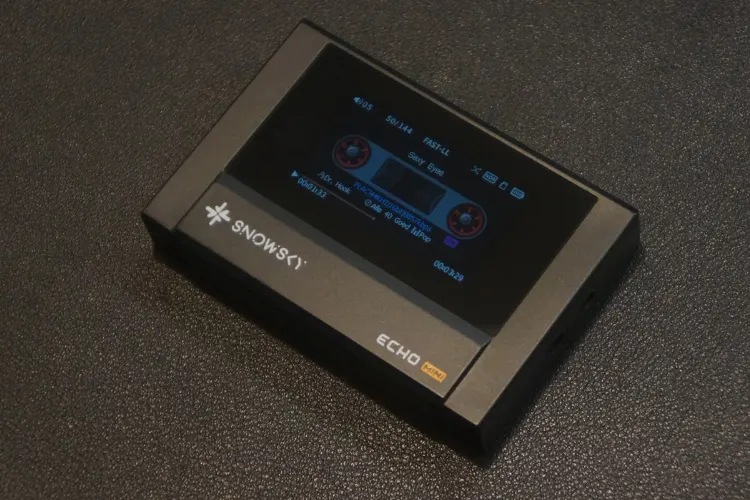
The ECHO MINI runs dual CS43131 DAC chips against the AP30’s single CS43198 and RT6863 amp stage, and despite the newer chip, the AP30’s power output trails badly: 61mW/137mW versus the MINI’s 100mW/250mW.
Both support DSD256 and 24-bit/192kHz playback. The AP30 adds Bluetooth transmit-only functionality and a marginally larger 1,200mAh battery, but the MINI now also has a USB-DAC mode (post firmware update) and stronger output.
Design
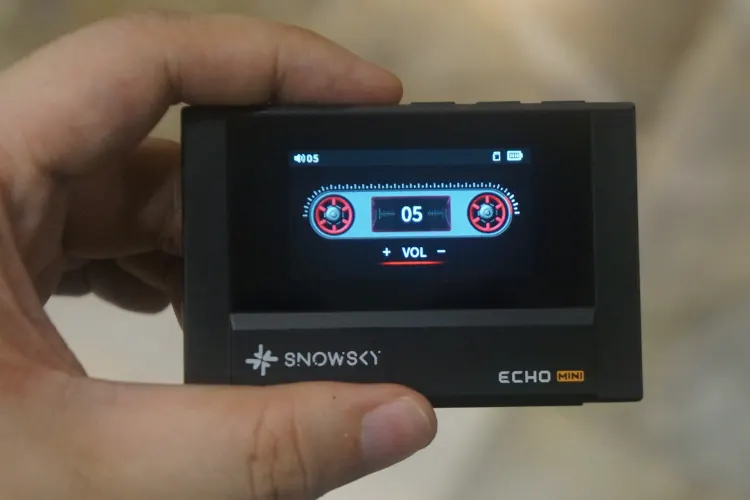
Both are retro-styled and plastic-first, but the resemblance ends there. The MINI takes cues from cassette players, while the AP30 leans fully into handheld gaming, D-pad and all.
The MINI is more pocketable and conventional at 55g; the AP30’s plastic edition is comparable at 56g, though the aluminum edition jumps to 80g. The AP30’s transparent colorways and gaming-console shape make it the more novel, conversation-starting object of the two.
Performance
Despite its chip disadvantage, the MINI’s higher power output gives it a slight edge in dynamics and low-end authority with harder-to-drive IEMs.
Tonally, the MINI leans warmer than the AP30, particularly through the bass and lower mids: bass guitars and low-end synths carry more fullness and width on the MINI, giving tracks a rounder, more relaxed low-end presence.
The AP30 counters with its own brighter treble tilt, so hi-hats and cymbals carry noticeably more energy and shimmer than they do through the comparatively reserved MINI.
Vocals and string instruments split the difference between the two: the AP30’s more neutral overall balance pulls them slightly more forward in the mix, while the MINI’s extra mid-bass warmth pulls a bit of that midrange presence back.
Detail retrieval is fairly close between the two, with the MINI having a very slight edge in resolution despite its older DAC chips.
HiBy R1
Technical
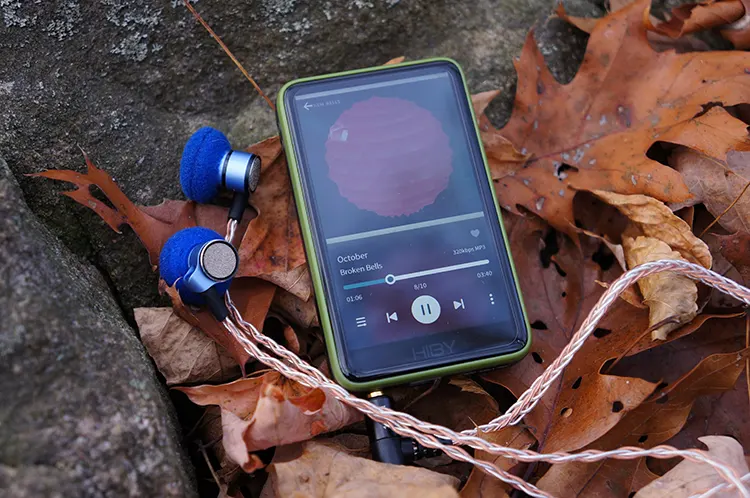
The HiBy R1 uses a single Cirrus Logic CS43131 DAC with only a 3.5mm single-ended output at roughly 101mW at 32Ω, no balanced connection at all.
The AP30’s CS43198/RT6863 pairing and dual-output design give it more flexibility on paper, and its 137mW balanced output outguns the R1’s single output entirely, even if the AP30’s single-ended figure alone is comparatively weak.
Both support DSD256, though the R1 edges ahead on PCM decoding, supporting up to 32-bit/384kHz versus the AP30’s 24-bit/192kHz ceiling.
Design
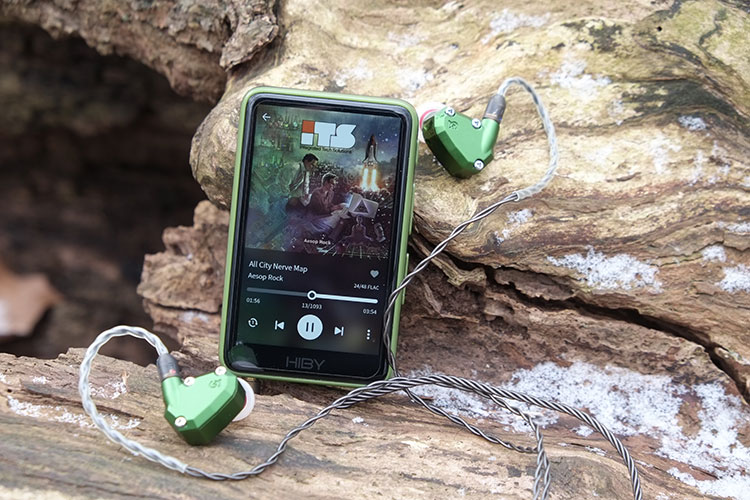
The R1’s 3-inch touchscreen and minimalist body represent an entirely different design philosophy than the AP30’s physical D-pad and button-driven interface.
The R1 is the more conventional, “serious” looking DAP of the two, while the AP30’s gaming-console aesthetic and included puzzle game make it a far more playful, personality-driven object.
Touchscreen fans will prefer the R1’s navigation; physical-control loyalists will gravitate to the AP30.
The AP30’s aluminum edition also gives it a build-quality option the R1 doesn’t offer outright, though the R1’s larger screen remains the more practical interface for browsing a large library on the go.
Performance
The R1 leans more vocal-forward and energetic, with sharper instrument separation aided by its more mature software ecosystem, while the AP30 favors a warmer, more forgiving low end and midrange, with a touch more treble energy than its relaxed bass might suggest.
The R1’s vocal-forward tuning puts more emphasis on midrange presence, so vocals and string instruments come across noticeably more upfront and immediate than they do on the AP30’s more evenly balanced presentation.
Where the AP30 pulls ahead is beneath that: bass guitars and low-end synths sound fuller and a touch wider through the AP30’s balanced output, aided by a stronger low end than the R1’s single-ended-only design can match.
Up top, both carry some brightness, but the R1’s energy reads more as overall liveliness across the frequency range, while the AP30’s shimmer stays more localized to hi-hats and cymbals specifically.
Neither is a powerhouse for demanding headphones, but the AP30’s balanced output gives it a practical edge for IEM listeners who want more headroom than the R1’s single-ended-only design allows.
FiiO SNOWSKY ECHO
Technical
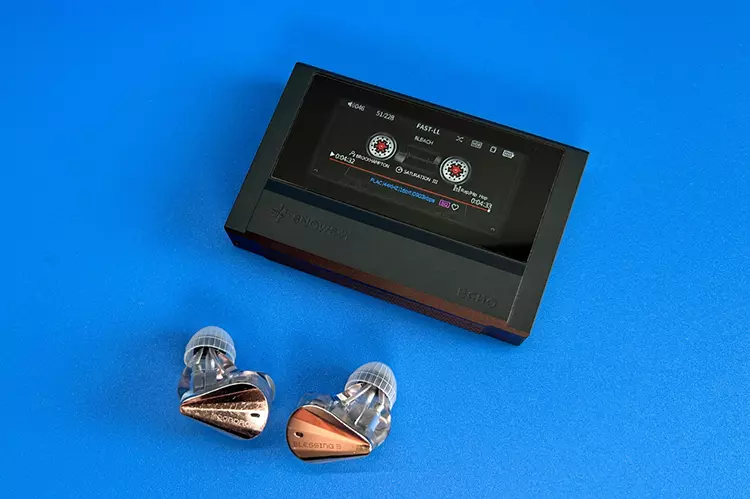
Both the ECHO and AP30 use the same Cirrus Logic CS43198 DAC, but the ECHO runs it in a dual-chip configuration versus the AP30’s single chip paired with the RT6863 amp, and it shows in the numbers: 120mW/260mW for the ECHO against 61mW/137mW for the AP30.
The ECHO also ships with USB-DAC mode active out of the box and a slightly smaller 1,100mAh battery. Both max out at DSD256 and 24-bit/192kHz, and both share the 256GB microSD ceiling.
Design
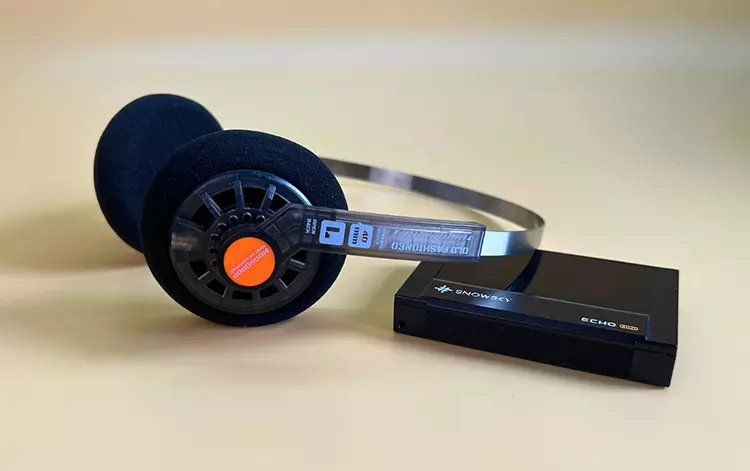
The ECHO’s CNC aluminum-magnesium chassis and the AP30’s aluminum edition both aim for a premium feel, but the ECHO’s 85g cassette-deck styling is more restrained than the AP30’s costume-forward gaming shell.
The AP30’s larger control cluster and D-pad make for a busier front face than the ECHO’s cleaner button-and-screen layout. The ECHO’s larger 2.39-inch display also outsizes the AP30’s 2.0-inch panel, though the AP30’s plastic edition undercuts the ECHO on weight.
Performance
This is the most lopsided pairing on the power front: the ECHO’s dual-chip configuration and near-double output give it a clear, audible edge in dynamics, bass authority, and headroom with harder-to-drive gear.
That extra power shows up most in the low end: bass guitars and low-end synths sound fuller and more anchored on the ECHO, benefiting from tighter sub-bass control and more headroom to work with.
Both units carry some treble energy, but the ECHO’s lift is smoother and more evenly extended across the upper registers, while the AP30’s hi-hats and cymbals carry a slightly sharper, more electric shimmer by comparison.
Vocals and string instruments come through more forward and present on the ECHO’s more neutral, resolving balance, whereas the AP30’s treble energy pulls a touch of attention away from the midrange and toward the top end.
The AP30 answers with a bit of extra treble energy that some listeners will simply prefer regardless of the technical gap. But in a head-to-head on resolving power and drive, the ECHO is the stronger performer.
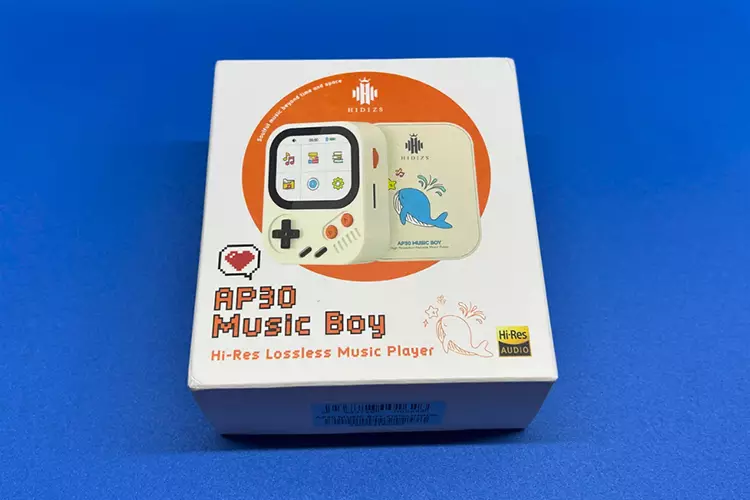
My Verdict
The Hidizs AP30 Music Boy isn’t chasing a spec-sheet win, and on a purely power-and-resolution basis, it isn’t the strongest performer in its price range.
What it offers instead is a gaming-inspired design, a forgiving and largely comfortable tuning with just enough treble sparkle to keep things from sounding dull, a deeper customization suite than most competitors at this price, and a more generous accessory bundle built around actually wearing the thing.
It is not without rough edges. The underpowered single-ended output and visibly early-stage firmware all keep it from being a clear technical win over its similarly priced competition.
The MagSafe compatibility g alone is worth calling out again here: in a world of jack-less phones, being able to snap a proper DAC straight onto the back of your handset rather than let it dangle off a cable is a genuinely practical touch, and one I found myself using more than I expected.
But for listeners who want a source that doubles as a personality piece, and who prioritize a comfortable, forgiving signature with a bit of top-end liveliness over outright resolving power, the AP30 is worth a listen.
Hidizs AP30 Music Boy Technical Specifications
- Dimensions: 68 × 53 × 17 mm
- Display: 2.0-inch IPS (296 × 240)
- Chassis: Plastic or CNC aluminum
- Weight: 56 g (plastic) / 80 g (aluminum)
- DAC: Cirrus Logic CS43198
- Amplifier: RT6863
- External Memory: Expandable via microSD up to 256 GB
- Formats: DSD64/128/256, FLAC/WAV (24-bit/192kHz), APE (24-bit/96kHz), ALAC, MP3, OGG, M4A, WMA
- Power: 61 mW × 2 (3.5mm SE @ 32Ω), 137 mW × 2 (4.4mm BAL @ 32Ω)
- Battery Capacity: 1,200 mAh
- Battery Life: Up to 10–12 hrs. (SE) / 8–10 hrs. (BAL) / 6–8 hrs. (BT)
- Bluetooth: 5.3, SBC (transmit only)
- Price: $119 (plastic) / $129 (aluminum)Weight: 85 g
