

Selected Comparisons
The following comparisons to the Volk Audio ÉTOILE were completed using a mix of the iBasso DX340/AMP15 combo, the ONIX Mystic XP1, and the Cayin N6iii with the R202 motherboard, all in balanced output low gain mode.
Noble Audio Shogun
The Noble Audio Shogun was launched earlier this year, and until the debut of the Kronos in the summer of 2025, was the company’s co-flagship offering alongside the Ronin and the Viking Ragnar.
Technical
Both earphones are quadbrid multi-driver universal IEMs with the key difference in the final ‘flavor’ of drivers, with the Shogun fitted with bone conduction and the ÉTOILE using magnetostatic planar drivers for the highs.
The rest is an overview with dynamic, BA, and EST, with both using a 10mm dynamic driver for the lows, 6 BA for the mids and highs in the Shogun as opposed to 4 in the ÉTOILE, and both using a quad Sonion electrostatic driver array for the ultra-highs.
The bone conduction inside the Shogun covers most of the audible frequency range and is used here for enhancing the listener’s perception of a complex and wide soundstage.
The magnetostatic driver inside the ÉTOILE is about keeping the highs as natural and detailed-sounding as possible, without resorting to unnatural attenuation in the curve.
The Shogun is rated at 23Ω impedance with an SPL of 110 dB/mW @1kHz, a slightly higher load than the ÉTOILE, but with the same sensitivity as the 110.6 dB/mW @ 1kHz ÉTOILE.
Design
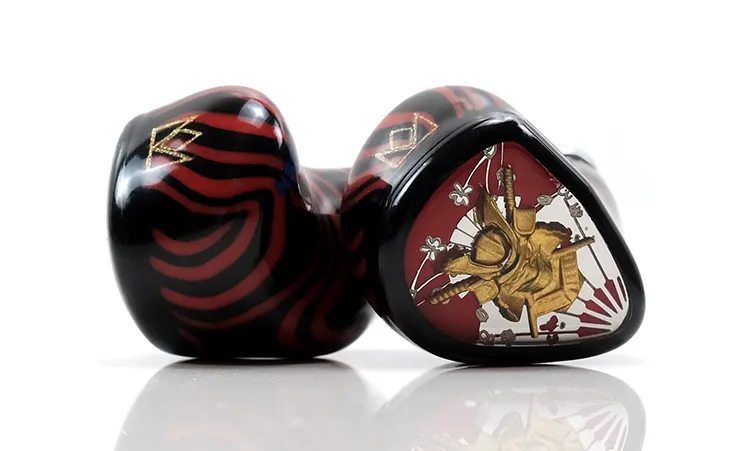
These are two IEMs with a hugely different design language, though both are above average in size and use resin builds. The ÉTOILE is a fatter-looking IEM from the top down, whereas the Shogun is more elongated with a longer nozzle.
The Shogun vials are very heavily themed on Japanese Shogun culture, as one might expect given the name. It’s a busy, brightly colored IEM full of intricate patterns and emblems of Shogun warrior culture.
It really stands out with a striking mix of black and red “menuki” stylings combined with a bold Gusoku armor faceplate theme on top and golden Noble logos on the rear.
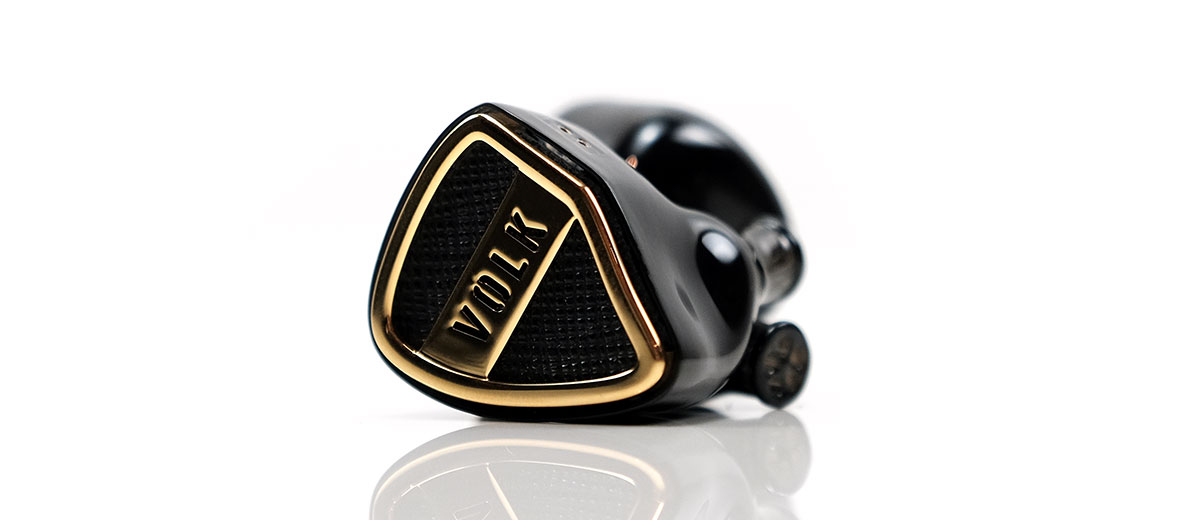
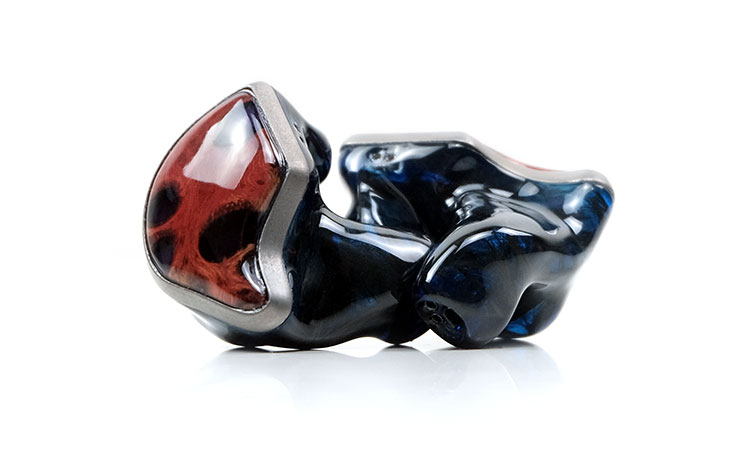
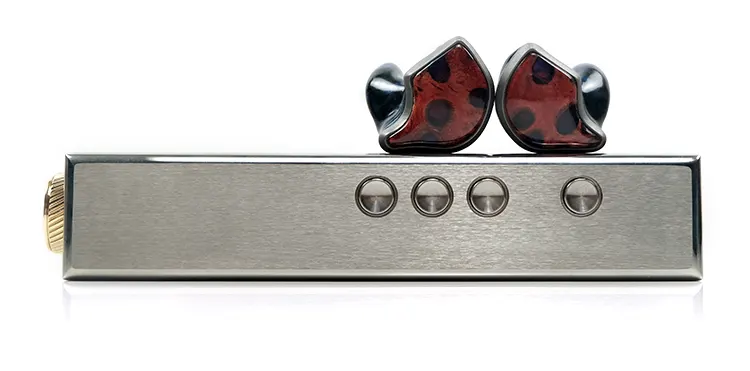
The ÉTOILE has a modern ‘bling’ vibe to it. It’s darker, more hipster with its lavish 24k gold fender plating and subtle Midnight Saffiano Leather insert on each plate.
The shell is a little plainer, though with pure anodized black, but it’s in keeping with what I consider to be a fairly masculine vibe from the ÉTOILE finish.
Bearing in mind fitting is anecdotal to my ear shape, I found the ÉTOILE to grip my ear canal a bit more and offer a slightly more pressured fit, creating a superior level of low-frequency passive isolation over the Shogun.
The Shogun digs a little deeper down the canal and also does not suffer from any instances of dynamic driver flex upon insertion, which can happen with the ÉTOILE.
Both have great cables. Again, hugely different approaches, but somehow the tactile feedback felt quite similar. Both are heavy cables with hybrid alloy wiring encased in thick but soft PVC jackets.
The key external difference aside from the color and theming is the ARC’s twisted design as opposed to the Shogun stock cable’s braided finish.

Performance
These are very different-sounding IEMs, and you really have to know your preference when choosing between these two because there are variations everywhere.
The Shogun is warmer, with more bass bloom, particularly from 50Hz up to around 250Hz, which colors the performance through the mids.
The ÉTOILE has excellent sub-bass presence, but with a mid-bass tuning more consistent with the Harman Target response. It’s going to sound less fulsome through the same range but extends just as deep with more control.
That results in a more neutral to natural midrange timbre from the ÉTOILE with a slightly reduced fundamental frequency level compared to the Shogun’s warmer, ‘bouncier’ sound.
I find the clarity from the ÉTOILE more attention-grabbing with heightened contrast and a perceived quicker pace, stronger attack focus, and shorter decay. The Shogun decay lingers a bit more; the note timbre is more rounded-sounding with a softer, more liquid attack.
You can argue that the Shogun has more depth, with some vocals sounding richer and more planted in their delivery. The ÉTOILE is cleaner, with better imaging separation and a slightly brighter timbre.
The Shogun mids sound comparatively darker, particularly for lower-register vocals around 800Hz to 1kHz that can fall behind a busy bass line. The ÉTOILE equivalent range is more forward-sounding to my ear, giving it more flexibility for male voicing in rock genres.
The Shogun’s 4-6k and 8-10k regions are softer-sounding and less consistent than the ÉTOILE’s equivalent region. It produces a relaxing, smooth sound, but in some parts, it can fall behind the stronger bass bloom dominance.
The Shogun has the macro staging points courtesy of the enhanced low-end presence and slightly better width, but I find the ÉTOILE’s speed and clarity more impressive for more nuanced staging cues, especially through the mids.
FIR Audio Radeon 6
The FIR Audio Radon 6 was launched in mid-2023 as a limited-run high-end universal IEM, and can currently be purchased as a custom format variant.
Technical
The Radon 6 has a very different ‘less is more’ technical philosophy compared to the more exotic configuration of ÉTOILE. The Radon 6 is a tribrid as opposed to a quadbrid, and consists of a tribrid mix of 6 drivers, including dynamic, BA, and EST with no magnetostatic tweeter.
Instead, the focus is on the lows, with a single Kinetic bass 10mm driver that opens out to the ear canal via a vented grill on the inner shell. This driver uses hybrid technology that delivers bone conduction and traditional air conduction at the same time.
The rest of the configuration follows a similar non-tubed or open theme, including 2 OpenDriver BAs for the mids, 2 for the mid-highs, and 1 for the highs.
The Radon 6 uses a single Sonion Electrostatic driver for the ultra-highs as opposed to the ÉTOILE quad array and magnetostatic tweeter for the region.
One further trick up the Radon 6’s sleeve is the Atom XS filter system, which targets harmful air pressure as well as varies the level of isolation and even the sound signature.
You get four filters ranging from 10dB to 17dB of passive isolation, with the red filter being my go-to for everyday listening due to its focus on clarity without loss of depth or power.
You do not get filters with the ÉTOILE, but it’s hardly required. Choice is a powerful persuader, but at $4k a pop, chances are, if you are buying, you already like the sound.
The FIR Audio Radon 6 has an impedance rating of 28Ω with no declared SPL. I find it slightly less sensitive than the ÉTOILE, using a balanced output low-gain setting from the iBasso DX340/Amp15, but the gap isn’t huge.
Design
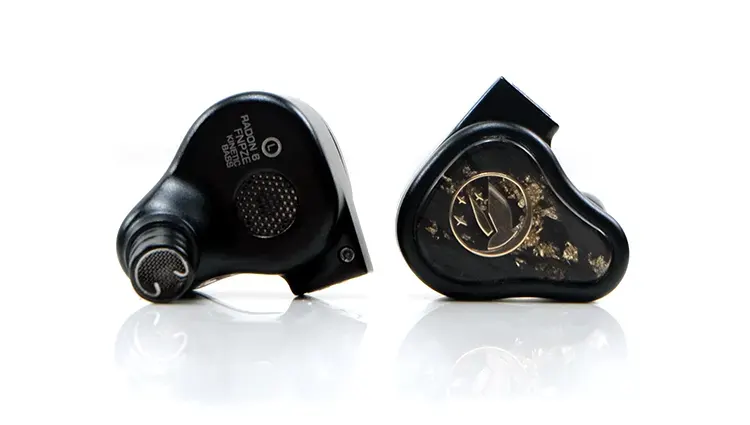
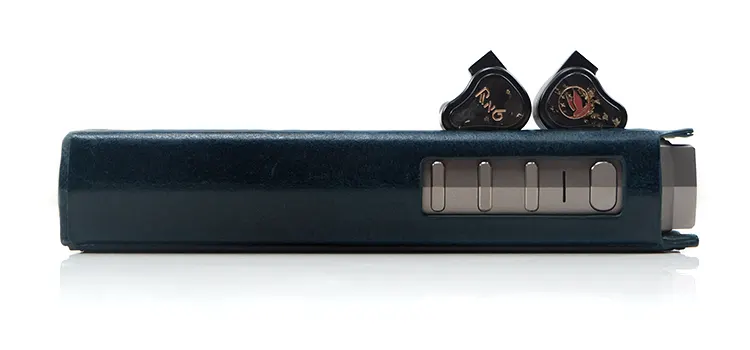
The Radon 6 shells are tiny compared to the bulkier ÉTOILE form factor, but given that the universal format was designed with a machined 2-piece aluminum shell, it is actually slightly heavier.
The design language of the Radon 6 is also black and gold, but not finished with quite the same bling as the ÉTOILE.
This is a bit more subtle, with a creative mix of gold flakes under a sapphire crystal glass faceplate, as opposed to 24k gold fenders and Italian leather underneath.
The Radon 6 has a minimalist industrial/modern shape to its aluminum shell with very little contouring on the inside compared to the ÉTOILE’s more aggressive curved resin shells.
Since they are metal shells as opposed to resin, and with a vented driver grill on the inside plate, the Radon 6 does not isolate as well as the ÉTOILE when in the ear using the red filter. You can enhance the isolation experience with the 20 dB yellow filters, but it will color the bass a lot more.
The Radon 6 shells sit flusher to the ear, given their compact size, but tips will do most of the isolating work with their included Symbio W’s working the best for me.
That’s the opposite of the ÉTOILE, which has excellent passive isolation and more comfort with the silicone tips as opposed to the Symbio foam tips.
Both offer attractive stock cables. The ÉTOILE ARC has a bit more visual pop and bling with its 24k gold rings on the barrels and sparkling wrap underneath the PVC jackets.
However, it is a heavier, thicker cable than the 48″ 26AWG 8-wire pure silver and copper stock Radon 6 cable. Both have low memory retention, though the Radon 6 cable feels a bit harder to the touch.
Performance
Starting with the mids, particularly from 500Hz up to 2k. This is where I swing from one IEM to the other depending on what is being played, as they sound very different, and play to different strengths.
There is a noticeable bump and forward imaging in this range when listening to the ÉTOILE, and a flatter or slightly dipped experience in the same range from the Radon 6.
That is not to say there is a lack of clarity from the Radon 6, but rather it is leaner in note weight, more delicate sounding, and distanced a bit further back from your ears than the more naturally weighted and robust delivery of the ÉTOILE.
Neither is a weakness per se, but rather they play better to certain genres as a direct result.
For example, the Radon 6/Red Filter is very nice and clean-sounding with delicate female vocalists, especially given that it has a little more treble fill from 2-8k that quickens the decay even more than the ÉTOILE and creates a stronger perception of air in and around the vocal imaging.
The ÉTOILE is much more suited to lower-register rock, metal, and male vocals, though I still find female vocals to have a more analog, natural tone to them over the Radon 6’s breathy performance.
The presentation is further complicated by a more forceful, almost percussive bass response from the Radon 6. It certainly adds more depth and power compared to the ÉTOILE’s more controlled low-end, though the sub-bass presence is quite evenly-matched at times.
Combined with a stronger drop into the mids and a heightened presence beyond 5k, the Radon 6 is more emphasized at both ends of the spectrum, whereas the ÉTOILE sounds more neutral across the spectrum, save for its 500Hz to 2k bump.
Unique Melody Multiverse Mentor
The Unique Melody Multiverse Mentor was launched in 2022 and comes in a custom or a $500 cheaper universal IEM format. It also won our Top Gear 2022 Best Custom IEM Award.
Note, the version I have here is the custom format design, and as such, there will be some tuning and fitting variations from the universal version.
Technical
Both IEMs are hybrid multi-driver creations, though arguably, the Multiverse Mentor keeps it a lot simpler with a mix of BA and bone conduction as opposed to the ÉTOILE’s fusion of dynamic, BA, EST, and Magnetostatic drivers.
The precise configuration of the Multiverse Mentor is 12 BA and one bone conduction driver per side with 4 BA drivers for the lows, 2 for the mids, 2 more for the mid-highs, and 4 for the highs and ultra-highs with a 5-way crossover.
The bone conduction driver has no specific targeted frequency range, so the scope seems to be 20Hz to 20KHz; therefore, adding a layer of coloration on the 12 BA drivers by targeting note texture and staging properties.
The ÉTOILE’s trump card is the magnetostatic tweeter, working also to enhance the texture and tonal coloration of the highs, but unofficially, if you know Jack’s designs, you will know that the subwoofer is always a potent player in the audible mix.
The Unique Melody Multiverse Mentor has an impedance rating of 22Ω with an SPL of 114 dB @1KHz, so slightly more load but a little more sensitive than the 8Ω, 110.6 dB/mW @ 1kHz ÉTOILE.
Design
I won’t dwell too much on this part because of the obvious advantages of a custom-designed shell over a universal form in terms of a more precise fitting and superior passive isolation. The lack of tips also usually means a more consistent sonic experience.
So, points to the Multiverse Mentor in that regard. However, the stock design of the UM creation is not without controversy, as the original graphics showed a very explosive combination of colors, whereas the reality was rather more muted.
I believe the final resin-coated plate insert is inspired by Banksia Seeds, and their various openings along the stem didn’t quite catch some people’s imagination as they hoped it would. Whereas the ÉTOILE’s visual pop is faithfully delivered.
The above applies primarily to the fixed universal format design, as you can change the colors to Ceramic Black or Rose Gold for the custom variant.
The Multiverse Mentor uses some excellent materials, including titanium as opposed to 24k gold for its fenders and a fairly durable carbon fiber shell as opposed to the ÉTOILE anodized black pure resin shells.
The bundled cable with the Multiverse Mentor is beautiful, and I might prefer its visual design slightly more than the ÉTOILE’s ARC. Called “Deep of Universe”, it has a braided blue fabric finish with matching color for the splitters and barrels.
The writing inside is a bit simpler with a 4-core 26AWG independently shielded ultra-pure copper and silver-plated copper wire as opposed to the ÉTOILE’s ARC, a more exotic and complex mix of alloys and geometry.
Both handle really well, but the ARC seems to have even lower levels of microphonics and memory retention than the Deep of Universe cable.
Performance
The Multiverse Mentor is a warmer-sounding monitor, particularly through the mids and highs, with slightly more bass bloom and a different quality to its BA sub-bass response compared to the ÉTOILE’s dynamic driver.
The ÉTOILE has more treble sparkle, not as rounded in tone through the mids, with more contrast and a more neutral weight to midrange instrumentation.
Its fundamental frequency can be stronger. Where there is absolute depth and weight sub-50Hz in the recording, the ÉTOILE is better at digging it out with more physicality and natural decay. The Multiverse Mentor delivers it politely.
I find the Multiverse Mentor’s boosted 100-500Hz to offer a more fulsome sound, hence the enhanced warmth in its coloration through the mids.
Whereas the ÉTOILE leans a little leaner, with more attack emphasis and a drier decay with instrument and vocal separation enhanced courtesy of a stronger 500-1kHz boost.
The Multiverse Mentor has a stronger lift from 2-4k, which can work to its advantage for upper-register vocal deliveries. The vocal body can offer more weight and smoothness when required, though there is a noticeable dip in gain from 5k onwards, with less sparkle than the ÉTOILE.
I have to give credit to UM for producing an incredible soundstage with the custom version of the Multiverse Mentor. It might have quite the same depth or sparkle as the ÉTOILE, but it sounds very wide and immersive courtesy of a mild upper-treble lift around 8k.
I think if you are going for an intoxicating type of sound, a very smooth, forgiving delivery with excellent detail and an expansive soundstage, the Multiverse Mentor is the right pick.
If you want something cleaner-sounding, with more sparkle and vocal emphasis, and with a stronger, more natural sub-bass response, then I would recommend the ÉTOILE.
My Verdict
The Volk Audio ÉTOILE feels like the return of an old friend, a long-lost pal, matching my personal preferences to a tee, but at the same time introducing something new.
This is a world-class sounding universal IEM, but it achieves that by resisting going for the jugular; not too much bass, easy on the treble sparkle, vocals are natural-sounding with top-tier clarity.
It’s hard to find any sort of recording that the ÉTOILE would struggle with unless you are a diehard basshead who needs a heavy fix of mid-bass or detest any form of vocal presence in your music.
Throw in a rock-solid level of passive isolation, excellent comfort, a very cool punboxing experience for the Founder’s Edition, and you have one seriously impressive high-end IEM offering here for 2025.
Volk Audio ÉTOILE Technical Specifications
- 10-Driver Quadbrid System
- 1× M10 10mm Subwoofer – Sub-Bass, Bass
- 4× Balanced Armatures – Mid, Mid-High
- 4× Electrostatic Drivers – High, Ultra-High
- 1× M8 8mm Magnetostatic Driver – High, Ultra-High
- 6-Way Crossover
- 5 Precision-Cut Sound Bores
- Impedance: 8.8Ω @ 1kHz
- Sensitivity: 110.6 dB @ 1kHz
- Frequency Response: 10Hz – 50kHz
