

Synergy
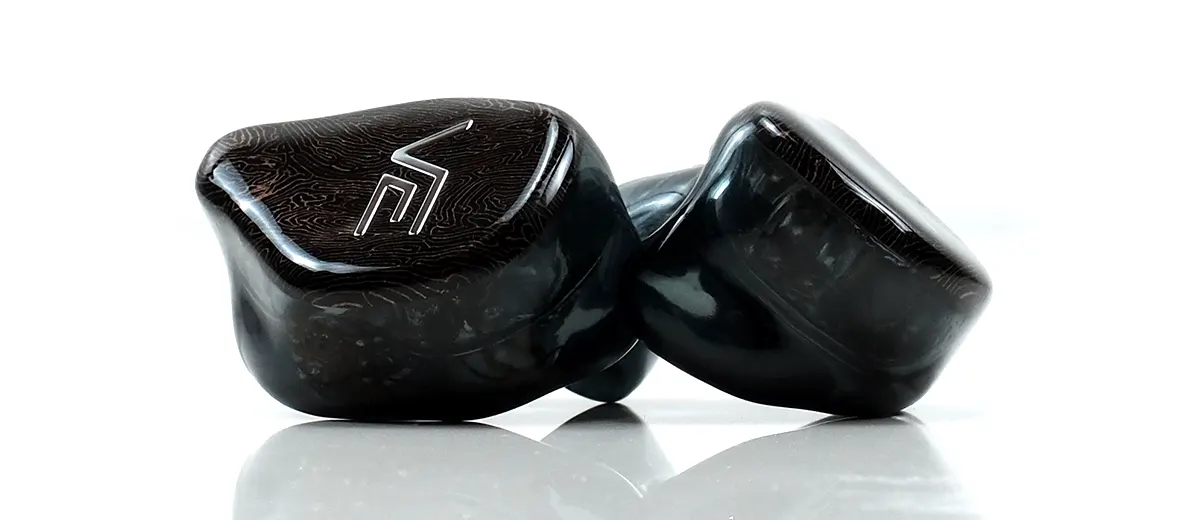
The Vision Ears VE PURE is rated at 12Ω for impedance, and though there is no official SPL rating, the original VE7 did at 116 dB/mW @1kHz.
I would have to assume that is relatively unchanged, and indeed, from my subjective listening tests, it is a relatively sensitive IEM, though not quite as sensitive as the 118.6 dB/mW rated flagship ZEN.
Safe to say you will not need a lot of power to drive the PURE, and most modern DAPs and dongles will provide a low enough noise floor to avoid distracting hiss.
My one critique is if you are using iBasso’s stepped potentiometer from devices like the DX320 MAX Ti, D17 Atheris, or the DC-Elite. You might find the incremental bumps in volume too high or too low when adjusting.
I suggest you combine the Attenuator control with the digital DAC volume from your source for better granular volume control when listening with the PURE.
DAP & Portable Amplifier Pairings
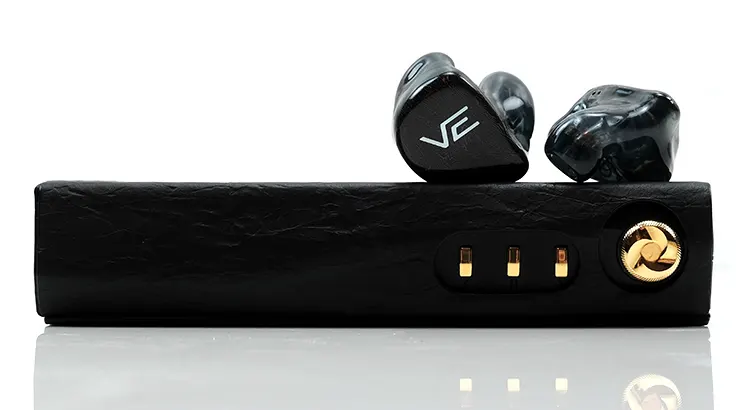
I tested the VE PURE with 4 DAPs and one portable amplifier, including the Cayin C9ii, the iBasso DX340/AMP15, the DX320 MAX Ti, the Cayin N6iii/R202, and HiBy’s R8 II.
I honestly preferred the VE PURE when paired with neutral, reference-type sound signatures, or at least those that pushed the envelope in terms of resolution and staging.
DAPs such as the DX340 and MAX Ti got my vote, with the R202 1-bit performance of the N6iii coming in just behind.
All three sound signatures produced a relatively clean tone that enhanced the PURE’s midrange timbre contrast and promoted the PURE’s strengths in staging and micro-detail without compromising its smooth sound.
The key difference between the Dx340 and DX320 MAX Ti was the incisiveness of the latter over the former, particularly in the staging depth and spaciousness, and the vocal presence.
The DX340/AMP15 was just a shade softer in the equivalent areas, but some might argue it’s a smoother listening experience as a result.
The 1-Bit mode of the N6iii/R202 also plays to the VE PURE strengths, more so than the R2R mode, unless you are heavily into a thick and rich vocal timbre above all else.
The Cayin C9ii (with the DX340/AMP15 line out) will deliver several sound signatures with the PURE. Class A, combined with the Classic tube, produces the smoothest set of highs and is ideal for bright mixes.
Switching to Modern tube emphasizes the mids and highs, a mode I am ok with if the amp Class stays on Class A. Once you move to hyper or solid-state, I felt the highs get a bit peakier with some unwanted harmonic dissonance over the PURE’s upper mids and lower treble.
Dongle Pairings
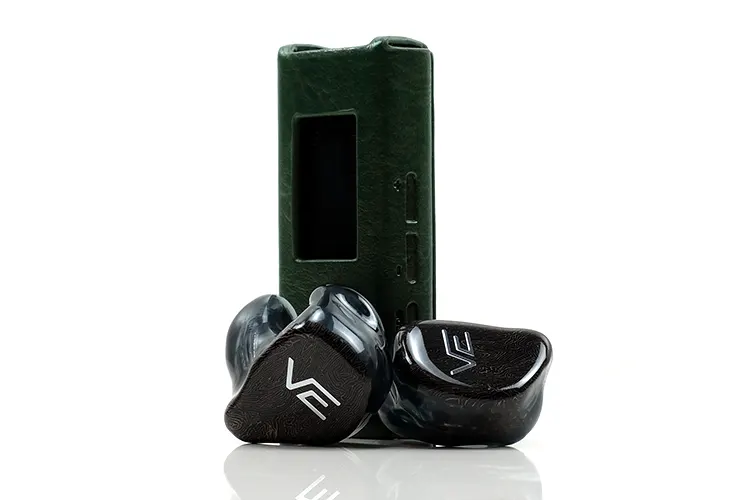
I tested 3 dongle DACs with the PURE, and each brought its own unique traits to the PURE’s overall performance.
The DC-Elite is the most incisive and dynamic of the three dongles. It creates a cleaner sound signature with more vocal bloom and a punchier mid-bass along with it. Of the three, the DC-Elite would be my pick if you want clarity and energy.
The Cayin RU7 introduces a more analog overtone to the VE PURE timbre and keeps the soundstage wide with additional sub-bass presence, which I welcomed with R’n’B and pop recordings on the PURE.
However, its vocal imaging is more laid back with a slightly rounded tonality, so singers didn’t leap out at me as much as they did with the DC-Elite.
The iBasso Nunchaku tube mode keeps the soundstage pleasingly holographic, with the strongest weight on the lows of the three dongles.
However, the overall timbre was too soft for my liking, with the mids and highs lacking the same sparkle as the DC-Elite or RU7. The solid-state mode was flat, thin, and uninteresting.
Selected Comparisons
The following selected comparisons to the Vision Ears VE PURE were completed using the iBasso DX320 MAX Ti and the Cayin N6iii/R202 combo DAP. Both DAPs were connected using the VE Premium 4.4mm balanced cable in low-gain mode.
Vision Ears VE7
The VE PURE is the direct replacement for the VE7, which was launched in 2021. Since then, driver technologies have evolved, so recent buyers of the VE7 might not notice a difference in the performance, but for 2021 owners, the story might be different.
Technical
The VE7 and the VE PURE are the same in terms of driver count and type. Both are 7 BA driver custom monitors with a 5-way passive acoustic/electric crossover. The driver split is the same for both, with a dual array for the lows, 2 for the mids, 2 for the highs, and 1 super tweeter for the ultra-highs.
From my VE7 review notes, the first VE7 consisted of Sonion BA drivers for the lows and mids, with a new Knowles driver used for the super tweeter.
To the best of my knowledge and with feedback from Vision Ears, the drivers in the VE PURE are unchanged in terms of brand and type.
There seems to be no factual change in the impedance rating; both are pegged at 12Ω, and since the VE7 sounds subjectively the same SPL-wise, I would assume the 116 dB/mW @1kHz rating from 2021 is valid for both.
Design
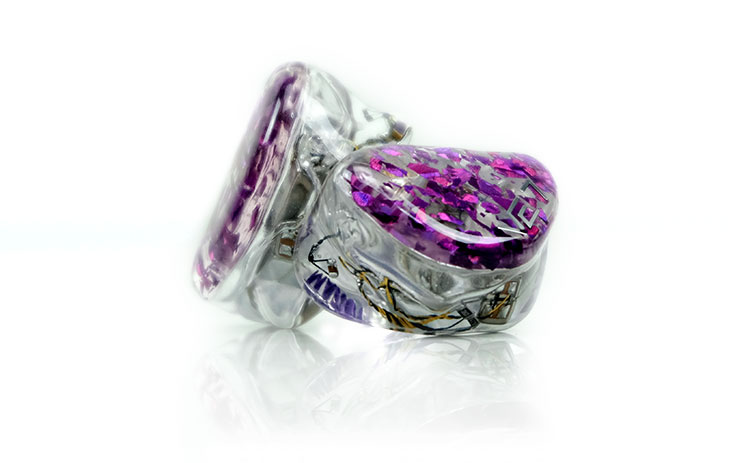
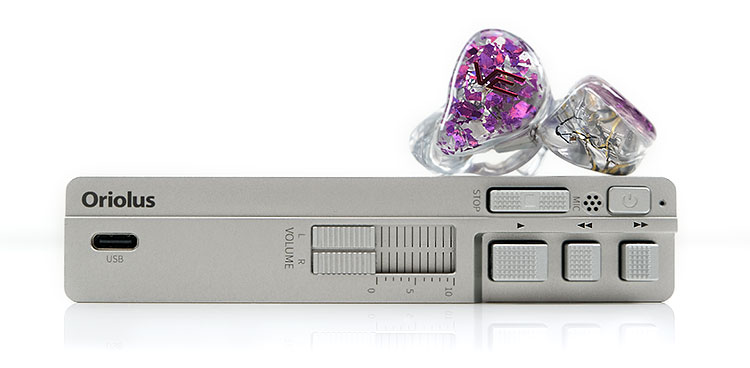
The two visuals could not be any more different. The launch VE7 has a clean transparent shell with a cherry blossom-like scattering of purple flakes adorning the plates. It’s a bright design, but with the purple hue still very much a Vision Ears statement piece.
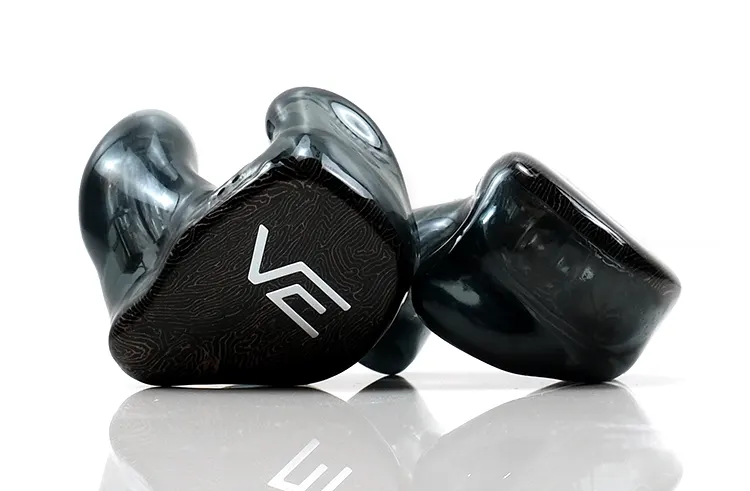
The VE PURE sample I have here is a darker affair with the subtle tones of the Copper Maze Carbon plates on top of the midnight shell. Though just as intricate, the VE PURE design is not as transparent as the clear acrylic shell of the older VE7, appealing to a more mature audience in many respects.
The good news is that if you liked the original VE7 design, you can still buy it as part of the customization checkout process on the VE website.
The more significant external change for me is the shape or form factor. The original VE7 is quite a bit larger than the new PURE. I would say more of a bias to width than shell depth; in fact, the shell depth is shallower when placed side by side.
The 2-pin connectors are now more central compared to the VE7’s positioning further to the rear of the shell. I presume that adds a bit more stability to the shell when inserting the cable pins.
The benefit of the smaller VE PURE form factor is the increase in the ease of insertion. Both monitors fit perfectly, and the passive isolation is on the high end of excellent.
The key difference is the VE7 tactile feedback on initial insertion, which feels a little more stilted and uncomfortable until fully fitted, then it feels the same as the PURE.
Both models have the same cables. Bear in mind, I am referencing the last iteration of the VE7 and not the original, which came with a thinner OFC 4-wire copper in a PVC jacket and a 3.5mm jack.
Performance
This may be entirely anecdotal since my VE7 unit was a launch review unit, but there are some noticeable differences between it and my VE PURE sample.
The VE PURE sounds beefier in the lows, a little warmer, and more elevated through the upper-bass and lower-mids, a slightly more relaxed yet smoother vocal imaging experience (though not by much), and a wetter treble overtone.
My older VE7 does indeed sound like an older BA driver setup with a typically brighter and slightly drier timbre, less weight and more punch in the lows, and stronger treble overtones in the upper-mids.
The VE PURE is the easier listening experience. It does not have quite the same level of contrast, particularly on vocal and percussion notes, but the richer, more liquid presentation makes it more flexible.
Combined with the noticeable, fulsome sound of the bass response, it’s a weightier sound in general and not quite as in-your-face as my VE7 launch unit.
In deference to my VE7, it sounds livelier, perhaps a little more stretched in staging width, with a vivid, intimate vocal delivery and a more energetic treble presence.
My 0.02c would say the VE PURE tuning is more symbolic of how the Vision Ears house sound is meant to be and more in keeping with the generally smoother sound of the ZEN and XCON tuning.
That is not to say current VE7 owners will not get the same sound either, but rather my launch sample has some tuning differences that might have gradually evolved into the VE PURE sound in the VE7 over the years.
Vision Ears VE XCON
The Vision Ears VE XCON is also a refreshed custom monitor in VE’s new lineup. It is a replacement for the old VE6 XControl and is positioned one step higher price-wise than the VE PURE in the new range.
Technical
The XCON is also an all-BA driver custom monitor, but with 6 drivers rather than 7.
Both monitors use the latest dual-chamber back-vented drivers, with the XCON using 2 for the lows, two full-range drivers for the mids, one for the mids and highs as opposed to 2 inside the VE PURE, and a super tweeter for the ultra-highs; all with a 4-way crossover instead of a 5-way.
The biggest differentiator, though, is the XCON switchable tuning through the new magnet system, giving it two distinct sound signatures as opposed to the PURE’s 1.
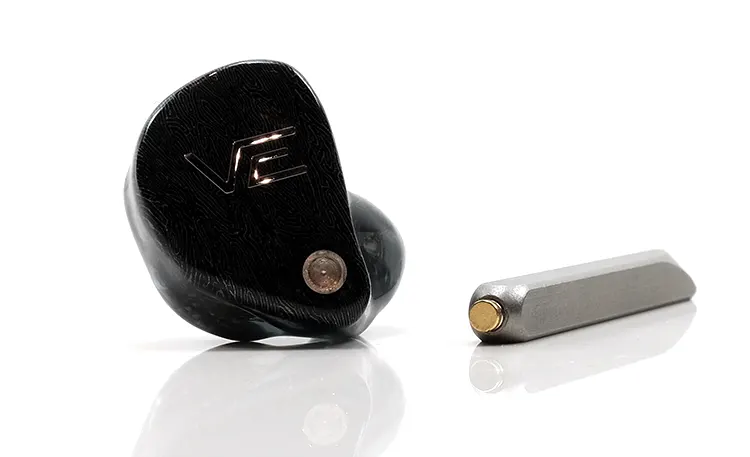
The XCON switch system has been updated from the older VE6 XControl’s traditional micro dip-switch to a new magnetic-based ‘cap’ system, where the magnet is inserted to produce the ‘punchier’ tuning (X1) and removed to provide the ‘reference sound’ (X2).
The XCON has a 21Ω impedance rating with an SPL of 115 dB/mW @1kHz, so slightly heavier load and marginally less sensitive on paper, though I found the XCON to be the more sensitive of the two using the DX320 MAX Ti.
Design
Since it is a custom monitor, you have lots of designs to choose from, and with similar form factors and no bass port venting, there is a negligible difference in the fit, passive isolation, and relative comfort levels between the VE PURE and the XCON.
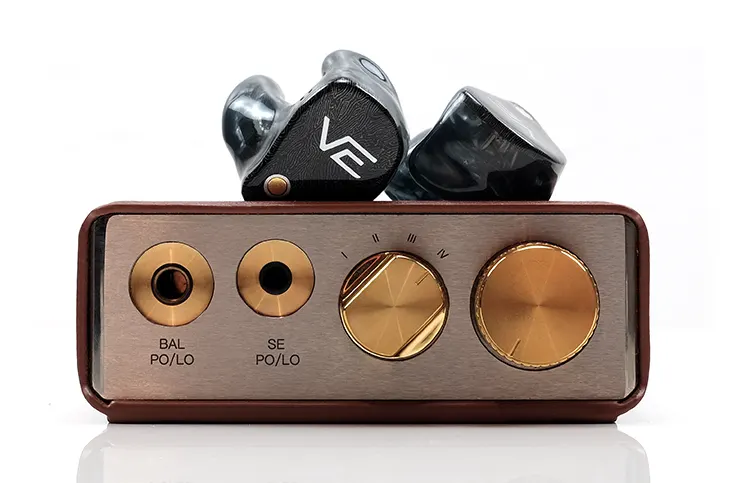
The difference between the two designs on the samples I have here is subtle rather than overt. Both come from the same Maze Carbon family of plate designs, with my nod going to the VE PURE’s Copper variant over the Steel alternative. YMMV. Since both have midnight black shells, the effect is exactly the same.
If there is one major design difference, it’s the XCON’s magnet switch system, which is indicated by the gold circular disc on the bottom of the faceplate in the picture above.
To remove it, you need the small magnet tool, which works very well indeed; however, this means you need to take it with you if you want to switch tuning.
That can be a con for some, as you don’t need it with the VE PURE, but the additional sound signature flexibility can be seen as a pro to others.
Both monitors come with the same stock 1.35m 4-wire 26AWG Litz geometry cable, with a mix of 7N Ultra-High Purity Single Crystal Copper and 7N Ultra-Pure Copper Extruded Silver.
Performance
Coloration-wise, the VE PURE sound signature sits somewhere between the XCON X1 and X2 position, with enhanced low-end weight and warmth over X2, but less punch and aggressiveness compared to X1, which has a bit more amplitude from 100-300Hz.
Second, the VE PURE highs are more extended, creating an airier, more ethereal quality to the upper-treble, but the midrange imaging is a little more laid back from 2-4k than either of the XCON switch positions.
You get a more intimate midrange vocal performance on the XCON, regardless of switch position, but one that has more contrast in its harmonic balance.
The VE PURE vocal and percussion have a sweeter tone but slightly less dynamic impact, melting into the general mix a bit more, which in turn creates a stronger perception of a more spacious soundstage.
X2 has far less depth and sounds brighter and slightly more reference-like compared to PURE. The VE PURE tuning is more emotive, with stronger depth and ambiance in its staging presentation.
Overall, the VE PURE seems to project a bigger and more complex-sounding staging quality, but it is presented in a slightly gentler, softer manner with a sparkling overtone rather than the XCON’s directness and enhanced midrange contrast.
Vision Ears VE ZEN
The flagship Vision Ears VE ZEN is an entirely new custom monitor, but its origins are drawn from the VE10, which was launched in 2023. The universal VE10 is now called the VE ZEN 10th Anniversary Edition and can be purchased for €2,780.
Technical
The VE ZEN is one of 3 new hybrid models in the new range, with a 10-driver design consisting of a single 8mm dynamic driver combined with an acoustic low-pass and 9 balanced armature drivers, 8 of which are 4 duals and 1 super tweeter.
Using a 5-way crossover, the precise diver configuration is the 8mm dynamic driver for the lows, two dual BAs for the low/mids, a dual for the mids, another for the mid/highs, and the super tweeter for the ultra-highs.
I believe the BA drivers are also dual-chamber designs, but lack the back-vented implementation of the VE PURE BA drivers. The super tweeter is likely the same for both models.
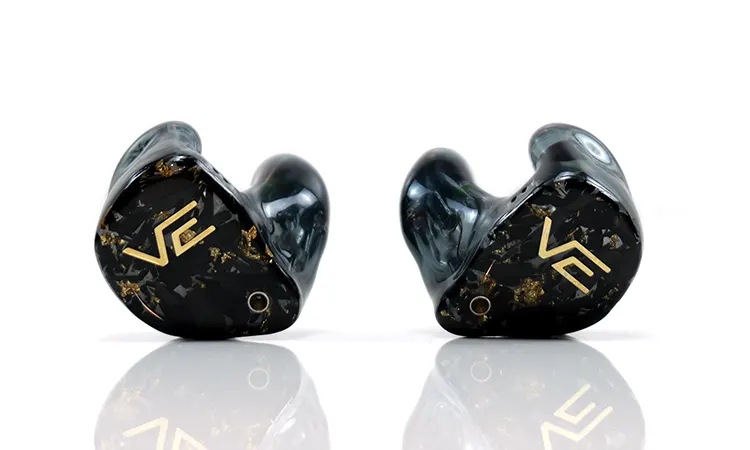
The one significant addition to the VE ZEN’s acoustic design is a pressure relief valve, or PRV for short, which is integrated into the faceplates and is designed to create the correct pressure balance in the shells. You can see the valve on the front of the ZEN faceplate.
The VE ZEN is rated at 8.4Ω @1kHz with an SPL of 118.6 dB @100mV @1KHz. When referencing from a DX320 MAX Ti, I find it a little more sensitive subjectively than the VE PURE’s 14Ω 116 dB/mW rating.
Design
The VE ZEN signature design is perhaps my favorite out of the new series models I have reviewed thus far.
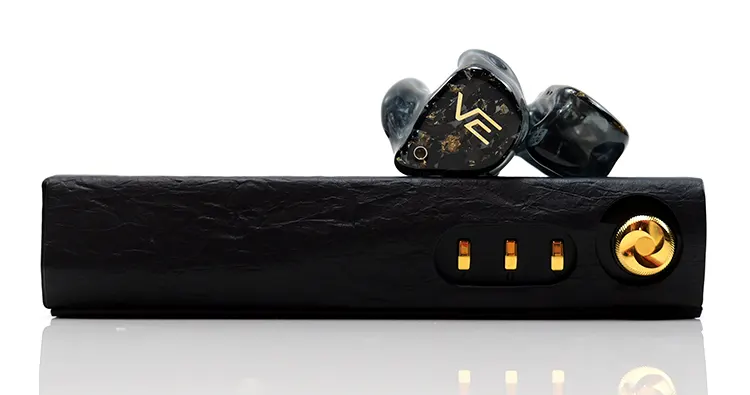
The midnight main shell with a translucent, smoky finish is the same as the VE PURE sample I have here, but the new Obsidian Gold faceplate is a bolder affair. It will stand out a bit more than the VE PURE’s more muted Copper Maze Carbon.
Of course, you can select the Obsidian Gold faceplate for your VE PURE design, so you are by no means limited to one choice.
The VE ZEN form factor is larger, with a denser feel in the hand and ear, compared to the VE PURE shells. That is understandable, given that it has more and bigger drivers inside its shells. The fit is still excellent, by the way, with a nice balance between canal pressure and comfort.
And because the VE ZEN uses venting for the dynamic driver to breathe, the level of passive isolation is a shade lower than the VE PURE’s performance.
My VE ZEN sample stock cable is Vision Ear’s premium upgrade cable, which has a composition similar to that of the Titan cable that came with the VE10, but finished in a darker smoky tone.
However, checking the online configurator on the Vision Ears Website, I believe that it is an optional extra for which you have to pay a fee. If you do not wish to do then the cable is the same as the one that ships with the VE PURE.
Performance
As a flagship, you should expect more of everything from the VE ZEN. And that is definitely the case here.
You get the ethereal staging quality and airy extension of the VE PURE, the more aggressive low-end, and the elevated vocal presence of the XCON X1.
With the additional drivers, you also get a bit more detail and resolution, especially in the low-end note texture and vocal harmonic balance, which shine beautifully on the ZEN.
The inclusion of the dynamic driver creates an additional dimension to the ZEN performance, creating a stronger perception of depth and weight over the XCON X1 and more power and warmth from 20Hz through to almost 500Hz compared to the equivalent range of the VE PURE dual BA woofer low-end.
One could argue, however, that the more relaxed vocal imaging of the VE PURE and the more controlled, balanced armature bass tuning help create a more tranquil listening experience.
Not everyone wants a strong bass and vocal presence, so the VE PURE will satisfy those who want a more ambient, relaxed delivery without sacrificing the highs.
The ZEN is all about total immersion, and as such, it is the more attention-grabbing of the two custom monitors.
My Verdict
The Vision Ears VE PURE is a smooth, expansive-sounding all-BA custom monitor that will find a home with those who like a refined and detailed listening experience.
Consider it a bit like Vision Ears’s equivalent of a classic tube amplifier performance, ranged against the solid-state sound of the punchy XCON delivery. It has a certain relaxing quality to its coloration and general performance.
As for everything else, well, it’s Vision Ears, so high marks for consistency in terms of finishing, aesthetics, and an excellent fit and top-class passive isolation.
This might be the first public VE PURE review, though I am quite sure it has found a happy home with many a customer. I encourage you to give it a demo if you can, if the budget will not stretch to the ZEN, because the performance is excellent.
Vision Ears VE PURE Technical Specifications
- 5-way system with 7 drivers (BA)
- 2x Bass driver
- 2x Bass/mids driver
- 1x Mids driver
- 1x Mids/highs driver
- 1x Super highs driver
- Impedance 12Ω @ 1 kHz
- Frequency 10 Hz – 22 kHz
