

Synergy
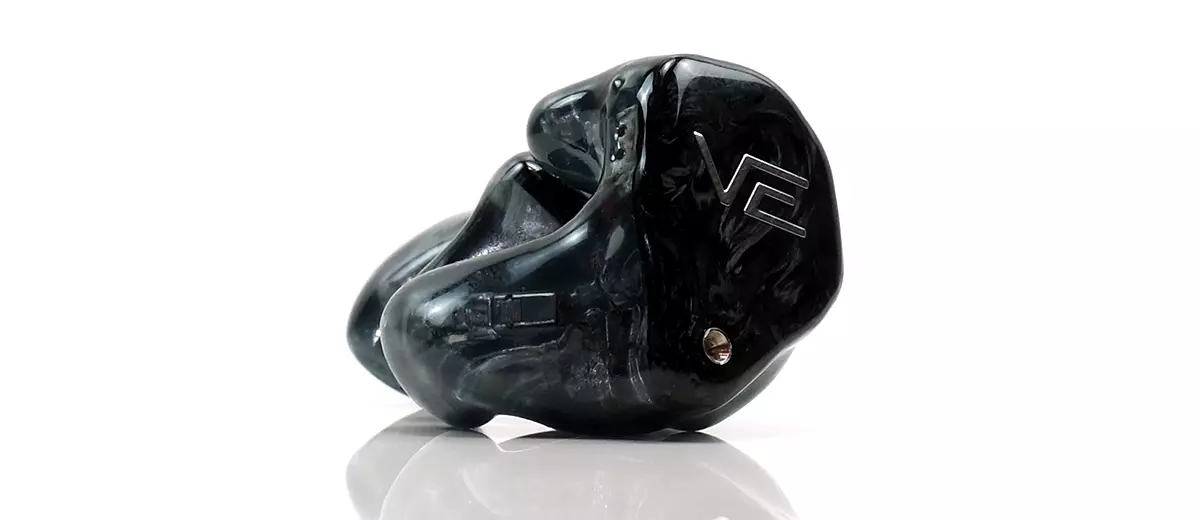
The Vision Ears VE Pro is rated at 6.8Ω for impedance with an SPL of 111.3 dB/mW @1Khz, and to be honest, it’s not going to differ much, if at all, from the rest of the company’s custom monitor lineup in terms of power demands.
With an SPL of 118.6 dB, only the VE ZEN sounded significantly more sensitive than the VE PRO, though the additional drivers can help solidify that perception. T
The VE PURE is rated on paper as being more sensitive, but at times I felt its more relaxed sound needed more volume for impact compared to the VE PRO.
In short, like all VE IEMs, the VE PRO is an easy-to-drive monitor, requiring only a DAP or dongle DAC (balanced output preferred) to sound good.
DAP & Portable Amplifier Pairings
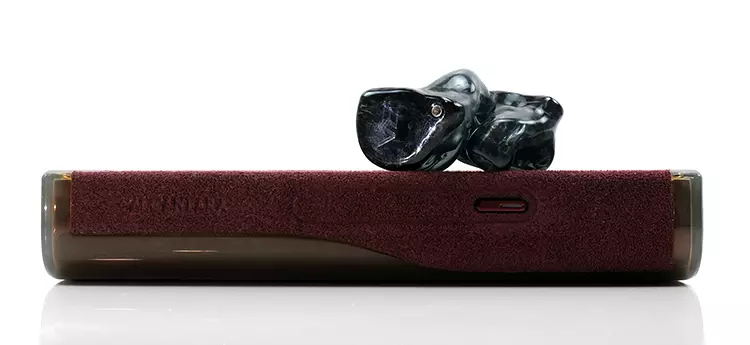
I tested the VE PURE with a mix of the HiBy R8 II, the Cayin N6iii/R202 combo, the iBasso DX340 with AMP15, and the Chord Electronics Mojo 2 portable DAC/amp.
I felt the VE PRO was most true to its sound signature and the VE house sound in general with the 1-BIT mode from the R202/N6iii combo.
The DX340/AMP15 casts a wider soundstage and sounds airier with better separation from the VE PRO. The HiBy R8 II enhances the monitor’s low-end above the N6iii pairing’s performance with excellent depth and power in Turbo Mode.
However, it’s the natural coloration from the VE PRO’s midrange and vocal performances that make the N6iii/R202 mode stand out for me the most. It has a smoothness and rich texture that the others failed to deliver.
The balance between the vocal performance and controlled low-end sounded perfectly balanced to my ears, giving it a very flexible genre-crossing capability.
I was less impressed with the R2R mode, unless you like a strong midrange. The VE PRO low-end sounded flabby and soft with diminished sub-bass presence.
The R8 II’s downfall is the neutral midrange imaging. The VE PRO presentation felt dominated by the lows and lower-mids, leaving vocals stuck in neutral gear, so to speak.
The Mojo 2/VE PRO pairing sounded comparatively claustrophobic compared to the DAP performances. It’s clean, punchy, and with excellent detail, but the staging dimensions felt boxy and walled off.
Dongle Pairings
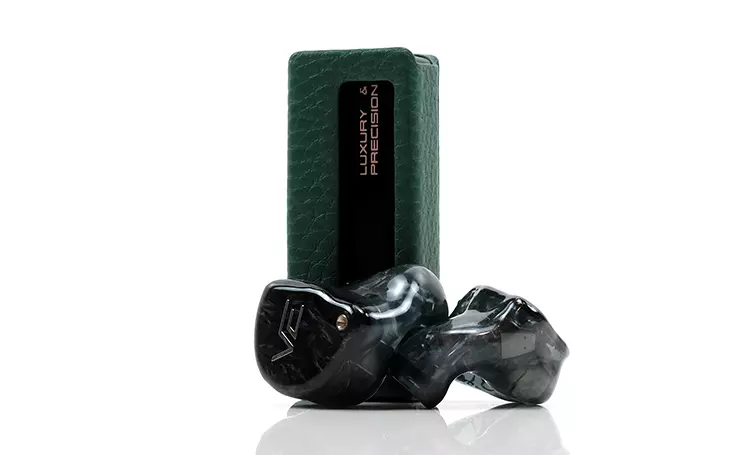
Tested the VE PURE with the iBasso DC-Elite, Nunchaku, the Luxury & Precision W2, and the Cayin RU7.
This was a close call between the dynamic range, insight, and precision of the DC-Elite and the more expansive natural, analog sound of the RU7.
Both dongle DACs I could live with paired to the VE PRO. The DC-Elite is the better pairing for energetic recordings, where mid-bass punch and a more intimate, higher contrast vocal tone are required. Of the two, the resolution sounded more convincing.
The RU7 has a bit more sub-bass density when paired with the VE PRO. It sounds slower paced as a result, with the dynamic driver depth coming to the fore. Vocals are more laid-back but provide more space to shine. It’s a great pairing for classic rock, arena recordings, and live music with the VE PRO.
The W2 is more like a DC-Elite ‘lite’. The VE Pro has the punch and energy of the DC-Elite pairing, but lacks the dynamic range and quality of separation, resulting in mids and highs that are slightly flatter in comparison.
The Nunchaku/VE Pro pairing has some excellent staging depth and delivers the VE smooth sound in tube mode, but lacks the insight and clarity of the DC-Elite, leaving me feeling ‘cut adrift’ from the action.
This combo was perhaps a little too soft for my liking in tube mode, with solid-state mode too sterile-sounding.
Selected Comparisons
The following selected comparisons to the Vision Ears VE PURE were completed using a mix of the Cayin N6iii/R202 and the HiBy R8 II DAPs.
Vision Ears VE PURE
The VE PURE was our most recently reviewed custom monitor in the lineup and is positioned just above the VE PRO from a pricing perspective.
Technical
The VE PURE is more of a traditional Vision Ears creation. This is a 7-driver all-BA design as opposed to their newer hybrid slant with the VE PRO.
That means 7 BA drivers and a 5-way crossover as opposed to 4-way and 4 drivers, with a precise grouping of 2 for the lows, 2 for the mids, and 2 for the highs, and a super tweeter for the ultra-highs.
Vision Ears makes mention of using dual chamber back-vented BA drivers for the VE PURE, but there is no mention of the VE PRO having the same type of BA alongside the 8mm dynamic driver.
The VE PURE does not use any PRV system similar to the one installed in the VE PRO. Therefore, like most BA custom monitors, it is completely sealed and also does not require any driver porting.
At 12Ω for impedance with an SPL of 116 dB/mW @1kHz, the VE PURE is a little bit more sensitive on paper than the VE PRO’s SPL of 111.3 dB/mW @1Khz, despite it having a lighter 6.8Ω impedance rating.
In reality, with the N6iii/R202 combo in low gain, I found the VE PRO to sound more dynamic at lower volumes, which could be more due to its stronger bass and pinna gain emphasis than anything else.
Design
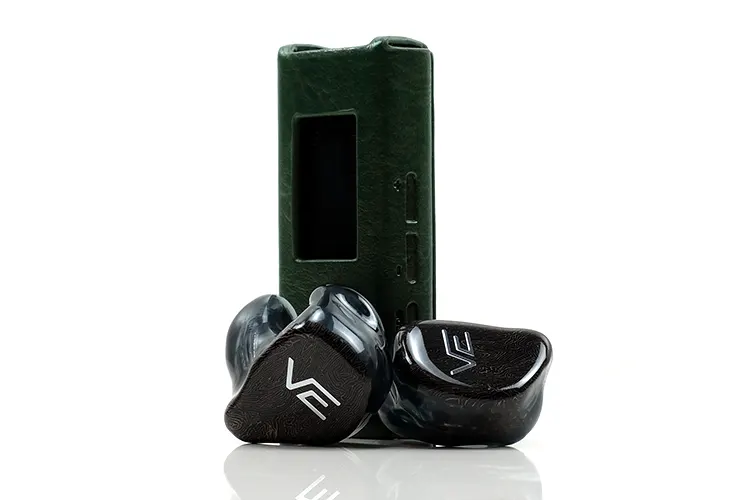
Since the monitors are custom, the shell comparisons are designed specifically for the samples sent to me, but they are the signature plates and shells used by VE for promoting the two IEMs.
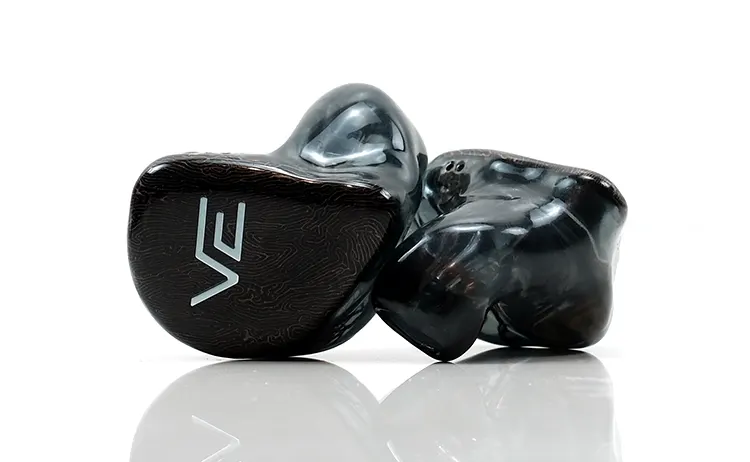
The new plates and shell aesthetics are both quite subtle, though the Carbon Glow finish of the VE PRO stands out a little more than either the Copper or Steel Maze Carbon variants when there is some strong light shining directly on them.
I find the Copper Maze Carbon plates of the VE PURE more intricate, but you do have to have to be quite close up to them to see that intricacy at work, as the pattern work is low-key.
Both samples use the Midnight finish for the main shells, so they look quite similar, save for the different internal wiring and driver configuration, which you can see under good lighting.
The form factor is almost identical to a similar fitting experience. Both monitors have a little more girth and canal pressure than my more relaxed VE ZEN model, but the result is the same: a secure, comfortable fit.
Passive isolation is a notch below the VE PURE. The VE PRO’s hybrid venting for the dynamic driver to breathe means you can hear slightly more background noise when in the ear, but it’s still a cut above the norm for a hybrid custom design.
Performance
The VE PURE is the more complex and technically proficient, but there is something about the balance of the VE PRO that grabs my attention a bit more.
Not just in terms of the additional weight and density of the dynamic driver lows, but also the coloration from the stronger 1-4k ‘pinna gain’ section, which creates a stronger element of separation and pushes the vocal presence further forward.
The VE PURE’s equivalent 1-4k range is flatter, south of neutral, and colored by a more elevated 200Hz-1k tuning that introduces more warmth and smoothness to the midrange.
Vocals sound eloquent, with more textured detail, but sit further back in the mids, meaning your attention is on the entire stage and not just the vocal.
With the VE PRO’s more intimate vocal positioning, instruments are tucked a bit more behind, especially on the lower-mids, which dip a bit more relative to the VE PRO’s curve from 200Hz up to around 700Hz.
Hence, staging can seem wider and more ethereal on the VE PURE compared to the touchpoint emphasis of bass and mids of the VE PRO. Both are very appealing but to different audiences.
The VE PURE is more relaxed and chilled. It’s not as dense on the lows, nor as focused in the mids, but you can pick up on the additional detail and note body quite quickly when vocals do come through.
With the VE PRO, the tone is more natural-to-neutral in its timbre, a little more midrange and lower-treble tonal contrast that creates what some will hear as a more dynamic sound.
I would go with the VE PURE for easy listening, jazz, and complex recordings, and throw on modern pop and rock with the VE PRO or anything that requires a strong fundamental frequency.
Vision Ears VE XCON
The VE XCON was received by us a few weeks ago and is the penultimate monitor in Vision Ears’ new custom lineup.
Technical
Like the VE PURE, the VE XCON is another all-BA monitor and a striking contrast to the hybrid triple BA and single 8mm dynamic driver inside the VE PRO.
This is a 6-driver monitor with a twist. It uses back-vented dual chamber BAs, 2 for the lows, 2 for the mids, 1 for the highs, and a super tweeter for the ultra-highs.
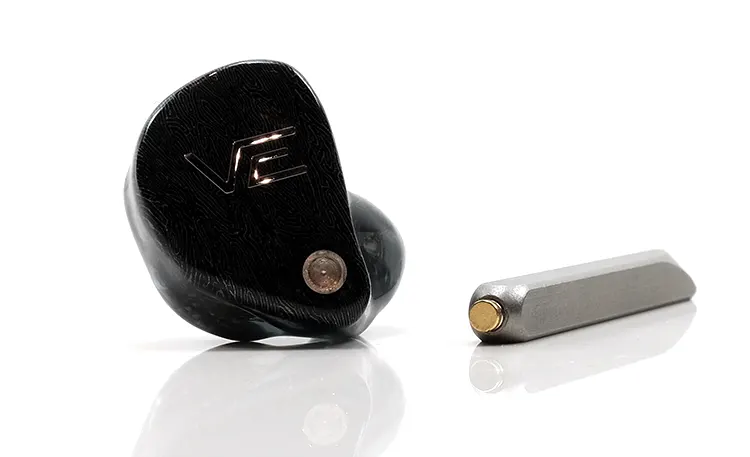
The performance, however, has a split personality with two distinct sound signatures courtesy of a magnetic switch system that allows you to alternate between a beefier X1 tuning and he more reference-like sound of the X2 position.
The use of a magnetic cap-like process eliminates the older dip switch system for durability purposes, but it means you need to carry a special magnetic ‘pick’ with you at all times to switch between X1 and X2 and back again.
The VE XCON has a 21Ω impedance rating with an SPL of 115 dB/mW @1kHz, so it’s a slightly heavier impedance load but more sensitive than the VE PRO, meaning volume levels have to be tweaked slightly to match.
Design
The VE XCON sample sent to me was finished with the semi-transparent Midnight shell and the Steel Maze Carbon face plate, which is part of VE’s new signature design series.
Compared to the VE PRO’s Carbon Glow design, it’s a similar effect as the VE PURE’s Copper Maze Carbon finish, but perhaps even more muted, as it has less of that colorful glow from the VE PURE’s coppery finish.
The Carbon Glow needs strong light to highlight its patternwork in an optimal manner, but side by side, it stands out a bit more than the VE XCON finish.
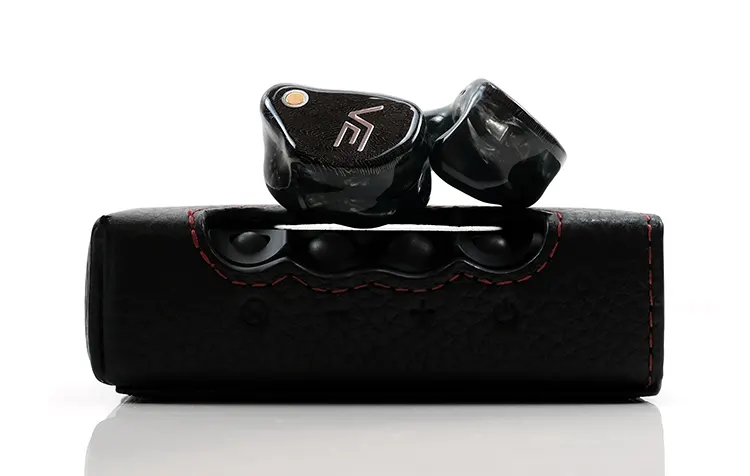
The form factor and build quality are the exact same, with a similar level of ear canal pressure when securely fitted. However, the XCON will isolate a little more as it has no driver port venting, unlike the VE PRO.
Aside from that, the two models come with the same accessory lineup, packaging, and stock 4-wire cable in either 3.5mm or 4.4mm format, depending on your preferences.
Performance
The VE XCON X1 position versus the VE PRO is an excellent example of two monitors aiming for the same profile of user, but separated by a different type of driver.
Both sound signatures have a lifted bass shelf, with the VE XCON X1 position possibly more lifted and extended up to 200Hz with a steeper drop to 1k than the VE PRO.
It does sound more forward, more aggressive, and to some extent more dynamic in its delivery compared to the VE PRO.
However, here is the kicker: the type of bass delivered between the X1 and the VE PRO is akin to two optimized 12″ subs in a car versus one big 15″ alternative. You can hear that enhanced density and elasticity from the larger dynamic driver diaphragm and a slightly slower, more deliberate pace along with it.
The X1 is shooting out bass punches rapidly, but it’s more presentational and less pneumatic, and you will notice the air shift a bit more with the VE PRO bass delivery.
The bass-to-mids separation is also more noticeable on the VE PRO. The X1 position shelf extends into the upper-bass, carrying a little more bloom with it. T
here is slightly less contrast in the mids, slightly less vocal presence, and a bit more resolution and complexity in the X1 mids and highs. The VE PRO is very balanced but slightly leaner-sounding through the same range.
With X2, you get a huge contrast with more mids and highs focus compared to the VE PRO and a much more linear, tighter bass line, more typical of a non-boosted BA low-end. It’s more reference-like, cooler in tone, and superior for detail and speed, but lacks the weight and power of the VE PRO tuning.
Vision Ears VE ZEN
The Vision Ears VE ZEN is the flagship monitor of the new lineup and was also recently given our 2025 Top Gear Award for Best Custom IEM.
Technical
Like the VE PRO, the VE ZEN is a hybrid custom monitor with a mix of dynamic and BA drivers. Except, the VE ZEN is on a whole different level with no less than 10 drivers as opposed to 4, and a 5-way crossover instead of a 4-way variant.
This includes a single 8mm dynamic driver similar to the VE PRO version, but it is combined with an acoustic low-pass and 9 balanced armature drivers instead of 3, 8 of which are 4 duals and 1 super tweeter.
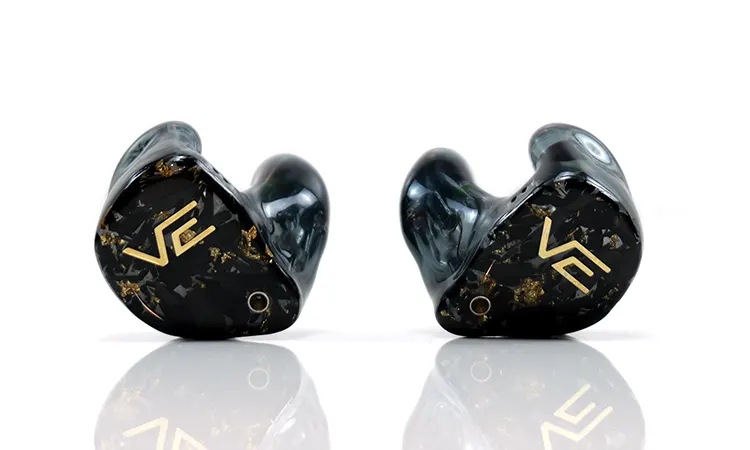
Both monitors use VE’s PRV pressure relief value system, so each monitor’s face plate design is punctuated with those little circular gold-plated valves in the corner.
The VE ZEN is rated at 8.4Ω @1kHz with an SPL of 118.6 dB @100mV @1KHz. It’s a little bit more sensitive than the VE PRO’s 6.8Ω for impedance, with an SPL of 111.3 dB/mW @1Khz, but both are quite easy to drive from dongles and DAPs.
Design
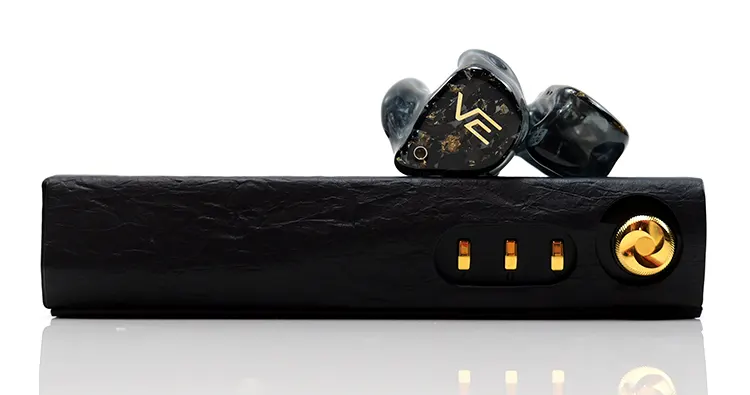
The signature design of the VE ZEN has plenty of pop, though, to be fair, it’s an optional plate for any custom design currently on offer from Vision Ears, so you can also have this one on your VE PRO if you wish.
And I do rate it higher than the Carbon Glow design that came with my VE PRO sample. The Obsidian Gold flake effect has a lot more flair and visual pop over the muted Carbon Glow theme, though with strong light, the VE PRO’s aesthetics become more dynamic to the naked eye.
Despite having all those additional drivers inside, the VE ZEN form factor has more or less the same dimensions as the VE PRO.
Custom monitors are never going to vary that much in size, given the precise requirements to fit one’s ear, but even so, the lack of additional girth is impressive. The only nod to the fact that there is more inside is the VE ZEN’s weight, which feels heavier and denser compared to the VE PRO sample.
Because both are vented hybrid models, the isolation performance is matched and slightly below their BA designs, such as the VE XCON and the VE PURE. Both are very precise and comfortable fits.
The ZEN packaging is the same as the VE PRO. In fact, the entire custom line has the same packaging and cable options, something which I would provide feedback to VE for the ZEN, particularly since the old VE10 came with the Titan cable, which I believe is superior.
Performance
The VE ZEN represents the upgrade path for any fan of the VE PRO, (more or less). It has that same signature dense low-end response courtesy of their respective dynamic driver implementations, combined with good vocal presence and a shimmery treble overtone.
What separates them is what the additional drivers inside the VE ZEN can offer, combined with an extended bass shelf and bloom from the dynamic driver tuning that creates a slightly lusher and warmer coloration.
The first aspect is really about detail and layering. I hear more information with the VE ZEN 9 BA complement, both within the fleshier note texture and then the dynamic range and staging depth.
The VE PRO is to the point, slightly brighter in the mids and highs, more controlled in the lows, and can also sound a little leaner in the lower-mids without the VE ZEN’s additional upper-bass bloom.
Save for the sub-bass performance and lower register notes, relative note body levels are a lighter touch with more treble contrast, providing a more neutral coloration overall, despite excellent low-end power.
Dynamic range and micro-detail retrieval are also superior on the VE ZEN, but then you would expect that, given its higher price point and greater complement of drivers.
The level of immersion from the VE ZEN is impressive, but it’s also enhanced by the heavier fundamental frequency, providing more slam and a stronger perception of low-end power with richer note texture from the additional BA drivers.
My Verdict
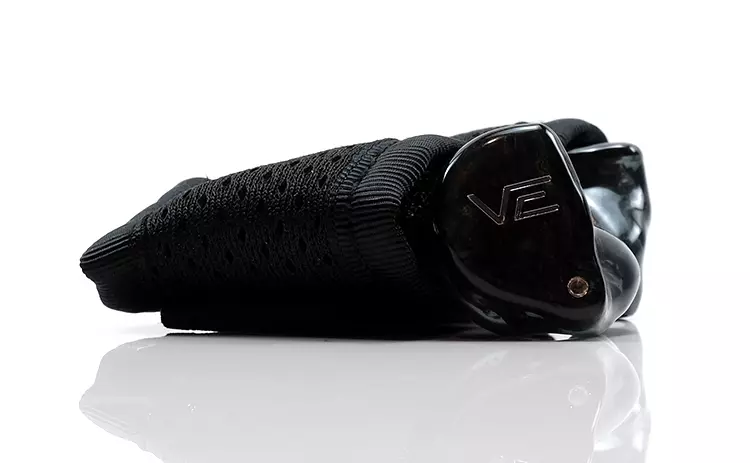
The Vision Ears VE PRO is the sweet spot in the company’s new lineup of custom monitors. It combined technical modernity with a hybrid dynamic and BA tuning, providing excellent depth and control with an impactful high-contrast vocal presence and refined highs.
I would call this the VE everyday carry for modern audiophiles. It blends so well with a wide range of genres, with only the VE ZEN’s out-muscling it on the lows for when you need that additional power.
As always, the fit and finish are top quality, but since it is a hybrid, it will not isolate quite as well as the all-BA VE PURE and VE XCON. Still, as hybrid customs go, this is one of the better ones for blocking out the noise.
If the VE ZEN is beyond the budget, and you need a custom monitor with some power in the lows, then the VE PRO is my recommended choice (unless the VE ONE blows me away in the final review in this series).
Vision Ears VE PRO Technical Specifications
- 4-way system with 4 drivers (Hybrid: BA + DD)
- 1x Bass (DD)
- 1x Bass/mids driver (BA)
- 1x Mids/highs driver (BA)
- 1x Highs driver (BA)
- Impedance 6.8 Ohm (at 1 kHz) F
- Frequency 10 Hz – 20 kHz
