

Synergy
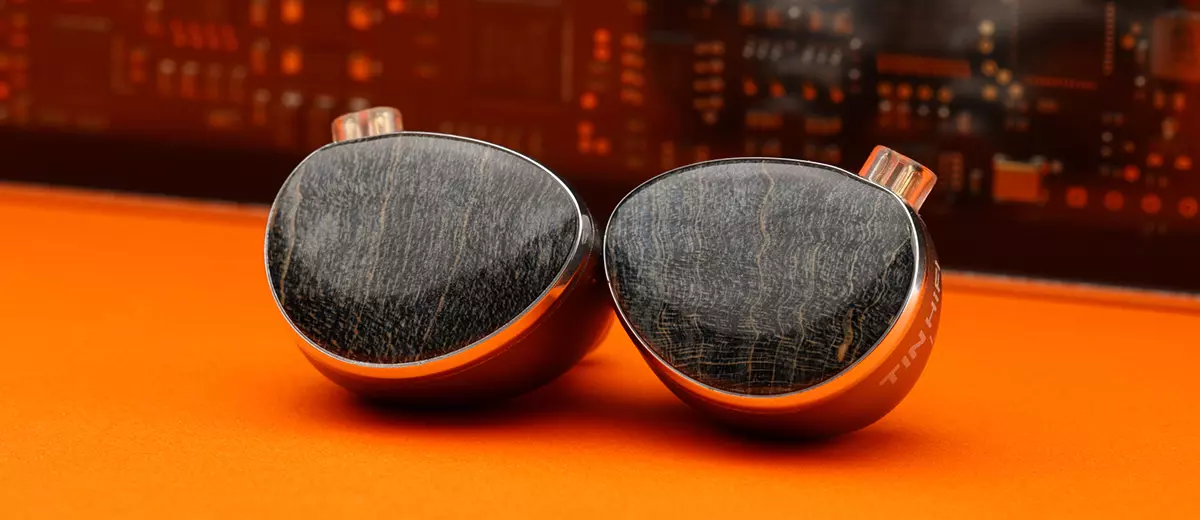
I’ve used the TinHiFi T6 in various situations: while walking, while listening at home, in a coffee shop, etc.
The T6 wasn’t sensitive enough to hear hiss across all the sources I paired it with; the cable never picked up any radio-frequency interference, and it never picked up the sources’ noise floor.
Even though the T6 is not the most sensitive, it is easily driven by low-power tail-style dongle DACs without issue. I never found an audio source in my inventory that would struggle to drive the T6.
Pairings
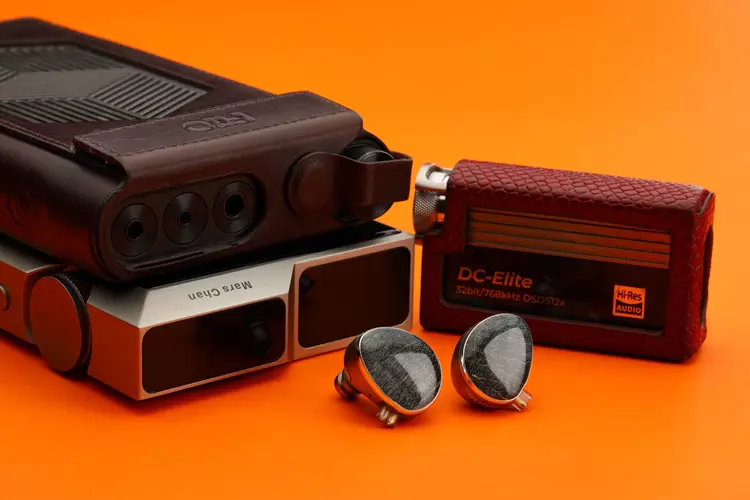
Using the T6 with various sources, including the iBasso DC-Elite, MUSE HiFi M6 Double, FiiO M15S, and many other sources not included in this review. I find it quite forgiving of the source’s deficiency, such as less-than-stellar resolution and detail retrieval.
However, I also find that the T6 does not reveal the minute differences of the sources’ sound characteristics. This makes the T6 generally easy to pair with just about any source, albeit not the most revealing.
I hear good bass tightness, control, and energy with the DC-Elite, but the treble detail is not as clear as I am used to. There is no issue with the loudness level; this pairing can go loud with nice bass without distorting.
When used with the M6 Double in tube mode, there is good bass tightness and control, and I can perceive the tube coloration in the sound. This pairing has good dynamics and can go loud without any issues.
Finally, with the M15S, I hear a very clean sound with excellent bass tightness and control; the bass is even more articulate, and the dynamics seem to have increased. Although this is the best pairing of all, the T6 pairs well with others.
Selected Comparisons
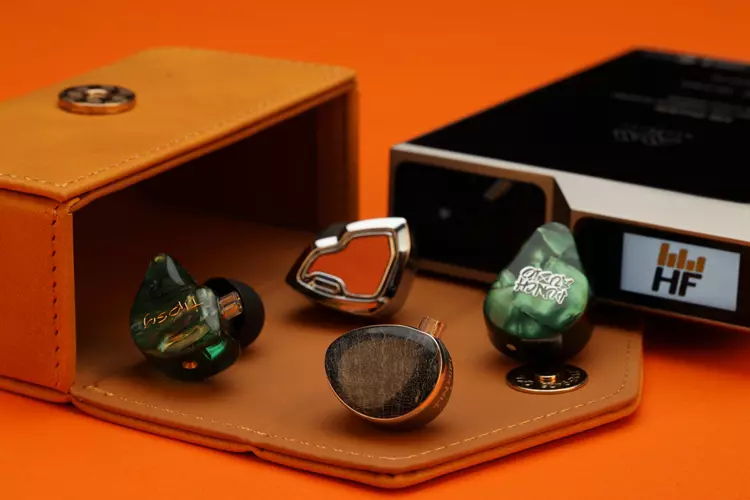
I used my usual sources for review: the iBasso DC-Elite, MUSE HiFi M6 Double, and FiiO M15s for these comparisons, and I often switched between them.
I used the iBasso DC-Elite mostly for this comparison, because I can discern differences more easily with its detailed sound, and they are all relatively easy to drive.
Punch Audio Portazo
Technical & Design
The Portazo is a hybrid set featuring a custom-made composite driver with liquid silicone and LCP dome diaphragm material for the lows, and custom dual Planar Magnetic drivers for the highs.
This is a nice combination of materials and driver use, but the main feature of the Portazo is its basshead tuning, which promises a 15 dB boost in the bass. It has an impedance of 10Ω and a sensitivity of 102 dB.
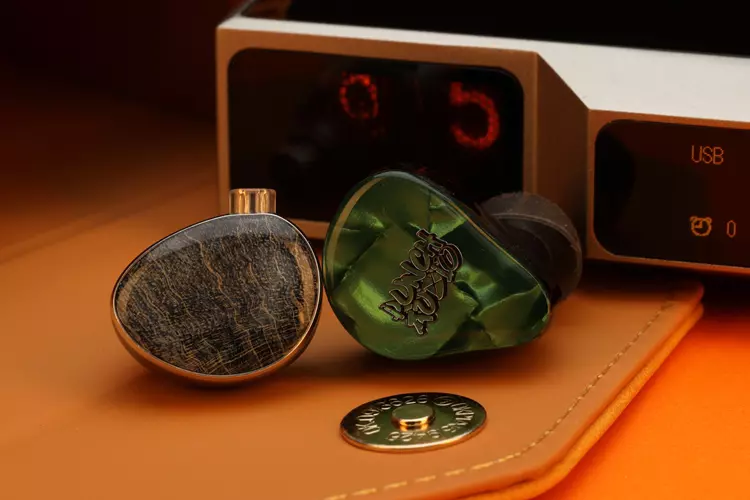
Portazo faceplate looks seemingly random, abstract, and pearlescent. A metallic Punch Audio logo completes the faceplate’s overall aesthetic. It is only available in green.
Portazo uses a mesh-style metal grill for its resin nozzles. There is a vent hole near the nozzle that acts as the pressure relief vent, and the serial number is marked with the Portazo text.
Performance
While the T6 borders on being a basshead set for its bass response, the Portazo is slightly more so, with its slightly higher bass elevation than the T6.
Portazo is V-shaped, with a more elevated treble that balances with the bass boost, making the bass boom and punch, and the treble tizz more proportional.
The T6 has a darker overall tone, with its overtly boosted bass, recessed upper and lower midrange, and somewhat neutral and relaxed treble by comparison.
They don’t differ much in soundstage size, which is above average; however, I find the Portazo has a wider stage, while the T6 has a narrower but deeper stage.
The Portazo has a more defined center image, better instrument separation, and front-to-back layering by a small margin.
Both the Portazo and the T6 are very dynamic and energetic; however, due to the treble elevation in the Portazo, I find it more energetic overall.
Tipsy M3
Technical & Design
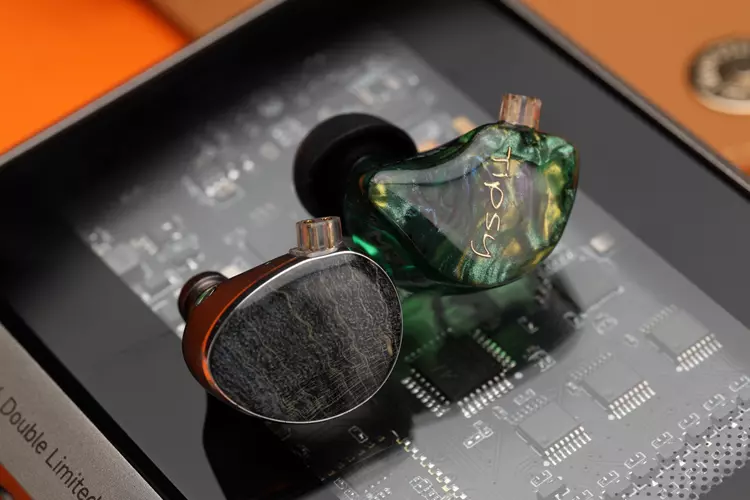
The Tipsy M3 is a hybrid IEM featuring a single dynamic driver and two BA units, with a 9.2mm PET-titanium-coated dynamic driver and two customized composite balanced armature drivers.
An independent tri-band acoustic partitioning design ensures precise separation between lows, mids, and highs. Sensitivity is listed as 105 dB/mW, and its impedance rating is 17Ω.
The M3’s shell is a 3D-printed resin, hand-painted with Light-reactive artistic designs crafted for uniqueness and visual depth.
The M3 uses metal nozzles with lips at the edges to prevent ear tip slippage and is covered by a perforated metal grill. There is a small hole near the nozzle and a bigger vent with a horn-shaped gold orifice near the QDC type 2 pin connector.
Performance
The Tipsy M3 is a V-shaped IEM with overtly boosted bass and treble; however, the T6 has slightly more bass elevation, while the M3 has much more treble presence, making it a brighter, V-shaped sound compared to the bassy, warm T6.
The M3 has a much more forward presentation due to its elevated upper midrange and lower treble, while the T6 is much more relaxed in that region.
And because of that, the M3 has apparently more defined imaging with better spatial projection and precision, making it more holographic, at the expense of an earlier onset of listener fatigue.
When it comes to soundstage, both have about equal size; the difference is that the T6 has a narrower but deeper stage, while the M3 has a much wider but shallower stage.
Dynamically, both are good, lively, and musically engaging. However, I find the M3 to be livelier by a wide margin due to its brighter sound, but again, at the expense of an earlier onset of listener fatigue.
Hidizs MS2 PRO
Technical & Design
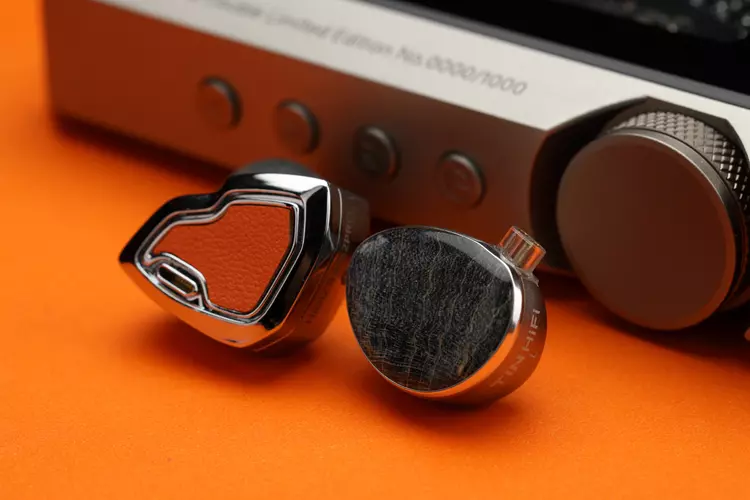
The MS2 PRO is a hybrid IEM that features a 10.2mm N52 Dual-Magnetic Circuit & Dual-Cavity Hybrid Driver PU+PEEK Composite Diaphragm with Nanoscale DLC Coating and Hidizs’ own design silver core BA™ High-Frequency Balanced Armature Driver.
The Hidizs MS2 PRO has a sensitivity of 111 dB and impedance of 17Ω.
The MS2 PRO features a full-metal zinc alloy shell with a mirror-finish design and a leather cover on the faceplate. My review sample is orange, but it is also available in black and blue.
Due to its use of a full metal shell, each weighs 13 grams, which is above average but not too heavy. Luckily, the shell size is average, and the nozzle width is also average at 5.9mm.
Performance
The MS2 PRO is a near-neutral, moderately V-shaped sound, with its mildly boosted bass and treble and a neutral midrange. The T6 is apparently bassier, warmer, and darker than the MS2 PRO.
The MS2 PRO has a neutral presentation, but compared to the T6, it sounds more forward, especially in the main vocals, without ever sounding fatiguing.
This forwardness helps the MS2 PRO in projecting a defined, accurate, and holographic image.
There is a slight haze in the treble of the MS2 PRO, similar to the T6, which prevents it from sounding highly transparent. However, the MS2 PRO’s treble is hazier by a tiny margin.
The T6 has a slightly laid-back vocal presentation, including the main vocal, and thus cannot accurately project the image. It’s not a poorly imaged IEM, though; it is above average, just not as good as the MS2 PRO’s imaging performance.
The MS2 PRO has a wider but shallower stage, while the T6 has a narrower but deeper stage. Both have above-average soundstage size.
Both are energetic and dynamic-sounding. The T6 is more dynamic in bass response, while the MS2 PRO is more dynamic and livelier in midrange and treble.
My Verdict
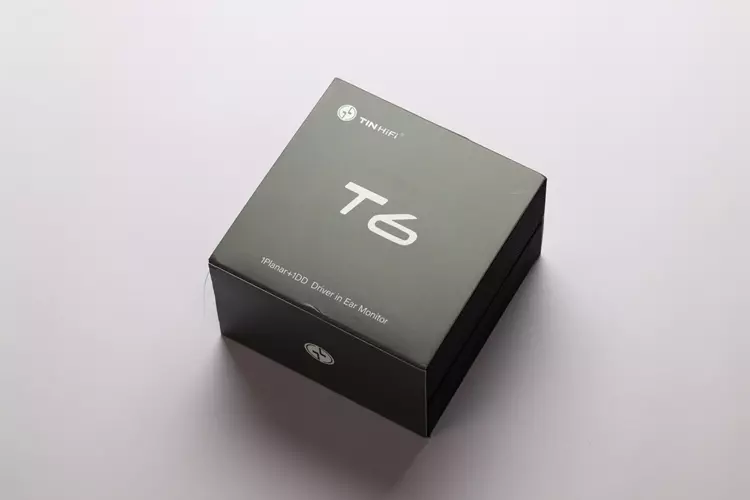
The TinHiFi T6 is a good premium entry-level IEM with above-average tonality, staging, and imaging performance. As the first TinHiFi IEM I’ve heard, it gives me high expectations for their future products.
Aside from the above-average sonic performance, I like the set’s design, build quality, and included accessories. It is nice that they include three types of tuning nozzles with extra foam, filter, and grill replacements.
As previously mentioned, a thin haze over the micro-details in the treble with the pink nozzles prevents the T6 from sounding highly transparent.
The treble could have been more transparent if I were using the black and green tuning nozzles, but I find them too bright for my taste.
I wish they tuned the T6 to achieve the sound signature of the pink nozzle without using highly dense tuning filters, to improve transparency.
TinHiFi T6 is a well-designed set that would suit a wide variety of music listeners, thanks to its sound-tuning versatility via replaceable tuning nozzles.
TinHiFi T6 Technical Specifications
- Driver Setup: 1dynamic driver + Micro Planar
- Style: In-Ear
- Impedance: 28Ω.
- Frequency Response: 20Hz~20kHz.
- Connector Type: 0.78mm 2-pin.
- Termination Plug: 3.5mm and 4.4mm, or USB-C
- Cable Length: 1.2m
- Weight: 6 grams each
- Nozzle diameter: 4 mm
