

Selected Comparisons
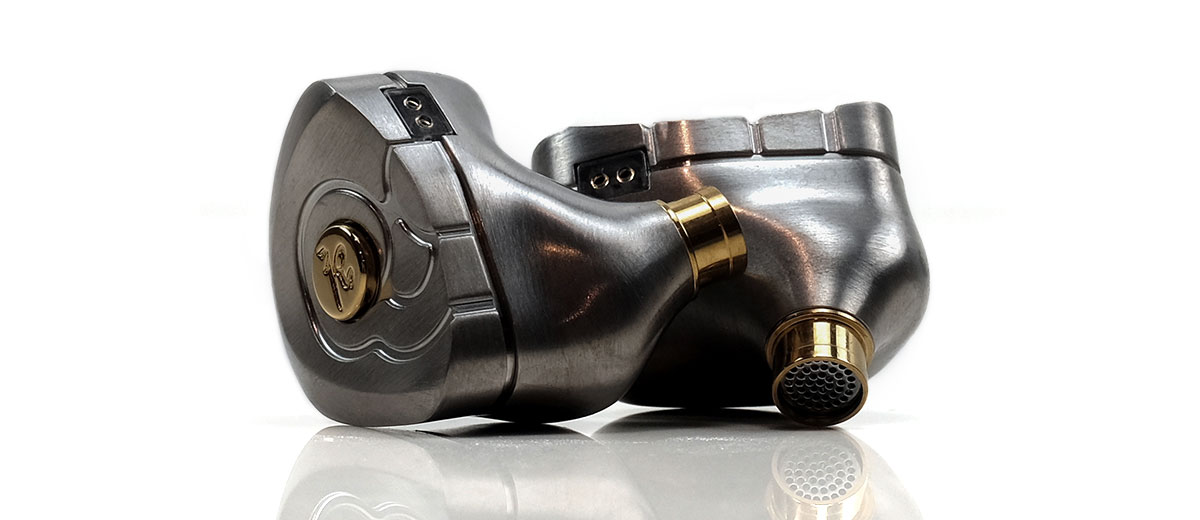
The following selected comparisons to the TANGZU The Monkey King were completed using a mix of the iBasso DX340/AMP15 and the Cayin N6iii with the R202 motherboard.
Campfire Audio Trifecta
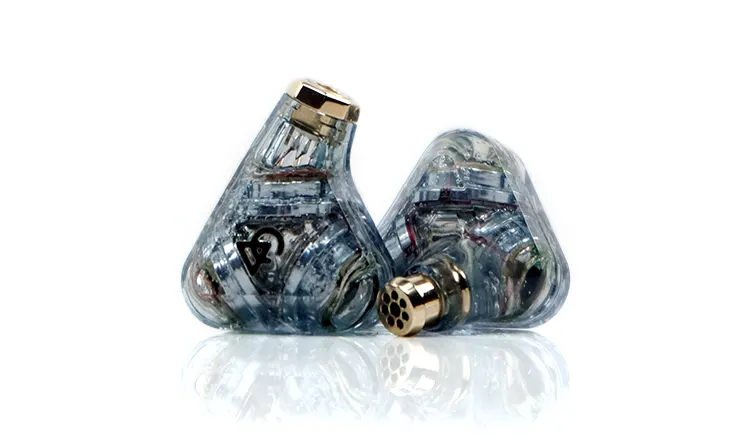
The Campfire Audio Trifecta was launched in May 2022 at the High End Munich Show and has gone through subsequent design iterations since then, with the current model called Trifecta ‘Amber Radiance’. This version is the “Astral Plane” Edition.
Technical
Both IEMs are multi-driver universal IEMs, but the driver configuration in each is vastly different.
The Trifecta uses 3 full-range 10mm A.D.L.C. dynamic drivers positioned in a unique triangular formation facing each other, firing into a central acoustic chamber and out via a wide nozzle or spout. They cover all frequencies and not just the bass region.
The Monkey King opts for one huge 14mm diamond diaphragm dynamic driver purely for the lows, with BA drivers for the mids and highs, and EST for the ultra-highs.
Campfire Audio uses a different benchmarking system to measure SPL, whereas TANGZU opts for a more traditional 1kHz weighting.
They are not directly comparable on paper with the Trifecta requiring 16.91 mVrms to hit 94 dB SPL @ 1kHz and the Monkey King at 112 dB/mW @ 1kHz. Impedance is directly comparable; both are quite low, with the Trifecta rated at just 6Ω and the Monkey King at 22Ω.
In my real-world testing using a low-gain balanced output from the DX340/AMP15 combo, it was the Trifecta that sounded more sensitive than the Monkey King.
Design
These are two very memorable designs for very different reasons.
The Trifecta is perhaps the most left-of-field, with a vertical design flow that creates a strong perception of a tall form factor. It is like nothing I have ever seen before in the IEM market, almost Alien movie-like in its layered nylon shell shimmer.
I had considered the Trifecta to be a reasonably large IEM, but beside the Monkey King, it looks tiny and feels very lightweight. That grooved titanium finish of the Monkey King feels far more robust, but you will notice the difference in size and weight right away.
Like the Monkey King, the Trifecta likes its bling with some striking gold PVD finishing on its elongated beryllium/copper ‘MMCX Capture’ stems, faceplate logos, and its stainless-steel spout.
The level of comfort from the lighter Trifecta is higher. However, I find the Monkey King’s excellent selection of tips gives it a bit of versatility for a wider range of ear canal shapes.
In my ears, the Monkey King did better blocking out lower MHz noise, such as aircons, whereas the Trifecta seemed to target higher frequencies better with its wide-bore silicone tips.
The Trifecta has more cable options, though, with three Time Series cables in SE 3.5mm/6.35mm and 4.4mm balanced. I prefer the style and finishing of the Monkey King stock cable, but if you need SE, you are going to have to buy an adaptor.
The Monkey King unboxing experience is supreme. You can tell a lot of money was put into the display box and tip options.
The Trifecta has a great unboxing experience with a cool stand in the shape of a hand to hang the IEMs and a great leather carry case, but it’s not as grandiose as the Monkey King’s package.

Performance
The lack of BA or EST drivers in the Trifecta creates a more coherent timbre throughout, perhaps a more analog-like tone to the note coloration that helps create a more natural vocal tuning. However, it’s a slower-paced presentation and not quite as resolving for micro-detail.
Let’s get the elephant out of the room right away. Both have very elevated bass responses; however, there is more bloom from the Trifecta courtesy of a curve that doesn’t really settle to around 500Hz.
The Monkey King drops down to neutral quicker, perhaps to around 200Hz, and stays fairly balanced and controlled without any dips or peaks up to 3k. The bass-to-mids separation is thus stronger, and the bloom is vastly reduced relative to the Trifecta.
I find the Monkey King’s sub-to-mid bass more noticeable as a result, with clear space between it and the mids’ presence. The Trifecta is more aggressive on the lows but has a loss of presence from 500Hz to 1k, giving it more of a sucked out lower mids and bass-dominant presentation.
The Trifecta has a slightly north of neutral 1-2k range, where its fuller-sounding vocals that pitch close to this can have more gravitas, but it’s only if the pitch is right. Blow or beyond it drops into various suck-outs up to 1k and 3-4k, and can fall much further back in imaging compared to the steadier Monkey King delivery.
From 3k onwards, the Monkey King is more consistent in its curve, with enhanced upper-mids and treble fill, whereas the Trifecta can sound a bit darker and less prominent.
The Monkey King’s more delicate BA and EST approach has noticeably better micro-detail and articulation with improved sparkle and presence, but they also deliver a lighter, drier note weight through the mids and highs than the Trifecta.
Empire Ears Legend EVO
The Empire Ears Legend EVO was launched back in 2021 and considered the successor to the very popular Legend X. It is also a Co-Awardee for our Top Gear 2021 Best Universal IEM.
Technical
Both monitors are hybrid multi-driver builds, with the Legend EVO ditching EST drivers and bringing in bone conduction instead with a 9-Way synX Crossover Network.
The driver grouping is a dual Weapon IX+ subwoofer for the lows (9mm as opposed to one 14mm) and 5 BA for the mids and highs instead of 6 in the Monkey King.
The Weapon X Bone Conduction Ultra Driver is a ‘layer’ right across the level response curve, 5Hz-35kHz, via Empire Ears’ Dual Conduction Architecture.
The Legend EVO uses Empire Ear’s A.R.C. technology, which is an Anti-Resonance Compound. This is a special type of damping coating used on the inside of Legend EVO’s shell. It is applied to virtually every component used, such as the drivers, tubes, and crossover boards.
Neither of these IEMs requires much in the way of amplification to sound optimal, though you will find the Legend X a little less sensitive at 103 dB/mW compared to the Monkey Kings’ 112 dB/mW rating.
There are no issues with impedance unless your device has a high-impedance output; both are low, with the Legend EVO rated at a very low 4.5Ω impedance and the Monkey Kin at 22Ω rating.
Design
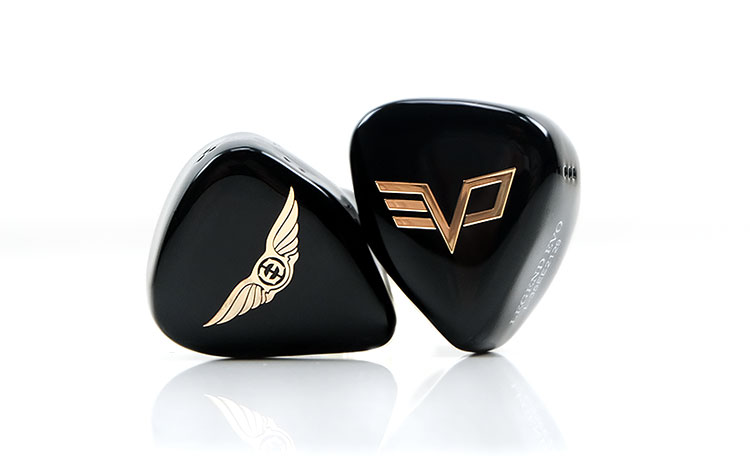
The all-black resin shell of the Legend EVO is an iconic color scheme well known to fans of the original Legend X. However, it looks a bit conservative compared to the Monkey King’s more flamboyant gold and titanium mix.
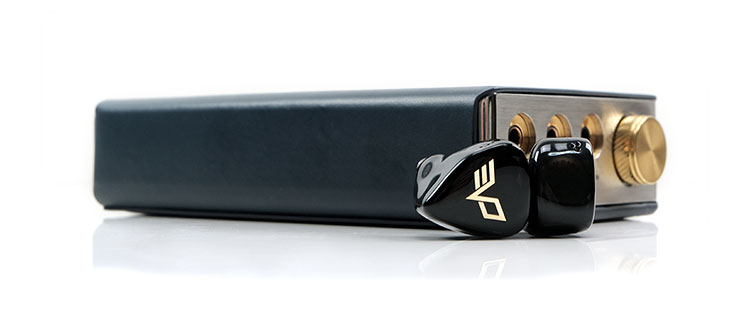
The form factors are quite similar, perhaps a shade shallower in the Legend EVO main body. The main difference is the lighter resin shells of the Legend EVO compared to the Monkey King, and you will feel that difference in handling and in the ear.
There has been some debate regarding the robustness of the recent EE shells, but in general, resin shells are not going to be as durable as Titanium.
What they generally excel in is comfort and fitting accuracy. I find the Monkey King to be the heavier of the two in my ear, but for isolation, they run pretty close to each other.
The one downside of the Legend EVO is the driver flex on insertion, something which the Monkey King does not suffer from.
The Monkey King is better equipped for tip choices, but if there is one tip I would have loved to have seen included in the package, it would be the Legend EVO Final E tips. I love those tips.
Both IEMs come with great cables. The Legend EVO cable is a collaboration with PW Audio called the “GENESIS”. This is a 24AWG Ultra-Pure OCC copper wire with a polypropylene reinforced core.
It’s perhaps not as exotic as the mix inside the Monkey King’s stock cable, and it uses the older, stiffer PVC jackets that most everyone designed with before switching to the thicker but comfier versions used by TANGZU.
For unboxing and packaging in general, no contest. The Monkey King offering is incredible at this price point.
Performance
Both of these IEMs are basshead warriors, but their presentations differ slightly. Like the Trifecta, the Legend EVO has more bloom, so while the sub-bass has equal amplitude to the Monkey King, the EVO’s mid-to-upper bass is north of neutral up to 500Hz.
The Monkey King drops its curve earlier, around 200-300Hz, damping down on the bloom and creating a tighter low-end with more bass-to-mids separation.
The EVO is thus fuller-sounding on the lows, but it’s a warmer, pillowy effect in its coloration compared to the cleaner, higher contrast sound from the Monkey King.
Both monitors bump the pinna gain 1-3k region to neutral or slightly north of neutral for the EVO, so vocals have a more consistent presence than the Trifecta. And because there is copious use of BA, the micro-detail and perceived articulation are very good on both IEMs.
However, beyond 5k, the EVO is more relaxed in its tuning compared to the Monkey King’s livelier upper-mids and highs. Particularly from 5-8k, the EVO has less percussion presence and attack and will be the more forgiving of the two IEMs for bright recordings.
The Monkey King sounds more filled-in and energetic across the highs, perhaps in part due to the EST tuning, which creates more noticeable extension and sparkle in its upper treble.
Staging-wise, the EVO is not as tall and airy as the Monkey King; both have equal amounts of depth, though the bloom in the EVO will create a stronger perception of body throughout the bass and lower-mids.
FIR Audio e12 (Electron 12)
The FIR Audio e12 made its debut in early 2024 and is part of the company’s Electron Series, which includes the smaller e10. Of the 3 IEMs compared to the Monkey King, this is the most price-sensitive option.
Technical
The e12 keeps things very simple internally with a single 12mm electro-dynamic driver as opposed to the 14mm diamond dynamic plus 6 BA and 4 EST inside the Monkey King.
However, it’s not just a single driver in a shell and good to go. Wedded to the 12mm driver is FIR’s Tactile Bass Technology and one of the main factors behind its bass grunt.
In a nutshell, this is a marriage of shell and driver in such a manner as to create a second transducer effect for the lows. The effect is similar to Krypton 5 and Radon 6’s Kinetic Bass, placing the e12 up there as a basshead option.
The e12 also comes equipped with FIR’s internal ATOM pressure system, equivalent to 17 dB for pressure isolation. This is one of their stronger modules for bass amplitude at +2 dB over their neutral silver ATOM filter benchmark.
There is no official SPL rating for the e12, so the comparison here on sensitivity is rather subjective. Out of the N6iii/R202 combo, the e12 is quite easy to drive, perhaps slightly more so than the Monkey King (112 dB/mW).
There isn’t a huge difference in impedance at 16Ω (e12) and 22Ω (Monkey King). Neither has any special considerations for amplification.
Design
Both of these IEMs are metal-based and robust, with the e12 using machined aluminum and finished in an anodized blue, creating a smooth and compact shell.
I would say the Monkey Kings grade 4 titanium material is more premium and eye-catching, but it’s a bigger and heavier unit than the e12 and sits further out of your ears as a result.
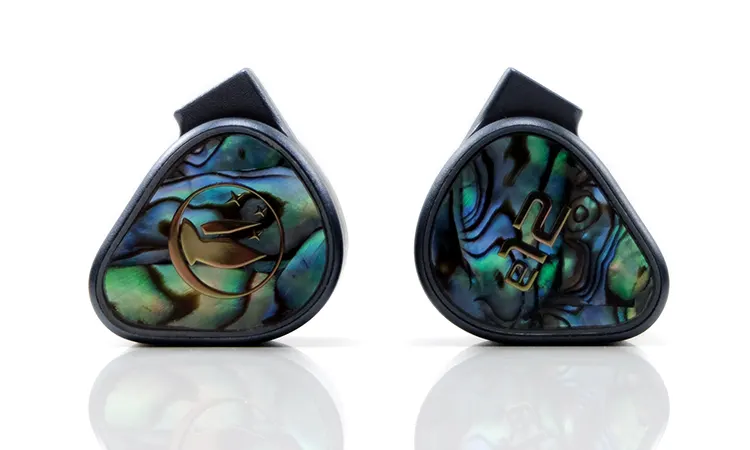
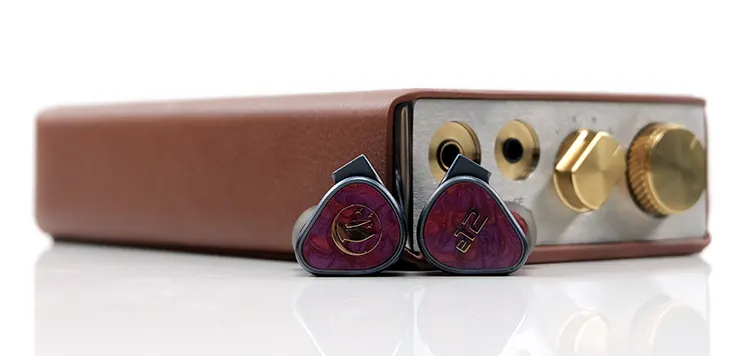
One trick of the e12 is its SwapX system, which allows you to change the faceplate inserts. It comes with two by default, including an Abalone blue finish and a wine red alternative. It makes for a nice changeup and keeps the design fresh.
Despite the metal materials, the Monkey King has better curves. The e12 body shape is a classic 64 Audio/FIR Audio legacy shape with less contouring. As I understand it, this is in keeping with FIR’s Rigid technologies and is built to take a hammering for stage use if required.
Still, I doubt the Monkey King will ever fall apart in a hurry, though I am not about to test them to the limit to see which one breaks apart first.
Comfort will depend on the tips with the e12. Given its compact size, the tips play a critical role in passive isolation and fitting, perhaps more so than the Monkey King tips, which focus more on tuning and comfort.
I went with foam tips on the e12 as they isolate the best and work well with the e12’s sound signature. However, recently I am in the more comfortable silicone camp, so I prefer the multitude of options that come with the TANGZU packaging.
Again, packaging is no competition. The e12 packaging is professional and compact, but nowhere near as eye-popping as the Monkey King box presentation.
Performance
Despite only having one driver, the e12 performs exceptionally well, and out of all the monitors compared to the Monkey King, this one comes the closest in terms of intent.
The e12 is more V-shaped with more bloom on the low-end from 80Hz-300Hz compared to the Monkey King, but it has decent control and doesn’t smear the mids in quite the same manner as the Trifecta.
It has a stronger sense of urgency than the Legend Evo, though not quite the same level of bass-to-mids separation as the Monkey King.
Still, if you want outright bass aggression, then the e12 edges it for me, but if you want a bit more balance and the same sub-bass depth, the Monkey King is the better choice.
The 5-10k range on both are tuned a little differently, and that creates a noticeable change in the treble timbre and presence in each monitor. I find the e12 a little peakier and more aggressive compared to the Monkey King highs.
The e12 peaks are a little more concentrated around 5k and 8k, an area where the Monkey King is more neutral and Harman Target consistent.
The effect is a smoother, almost sweet sound from the TANGZU tuning, for both vocal and percussion attack. I use the wide-bore foam tips with the e12 to keep this region in check. When I switch to silicone, it can become noticeably brighter and more abrasive.
One important note beyond timbre and balance is micro-detail. The e12 cannot match the Monkey King’s multi-BA and EST presentation in terms of resolution or imaging complexity.

My Verdict
The TANGZU ‘The Monkey King’ is a bassheads wet dream and a guilty pleasure for me when I want to kick back and let the hair down.
It delivers some seriously heavy-hitting sub-bass bombs with better fidelity than some loftier competitors. Impressive also is the balance it achieves with a clean and clear set of mids and highs.
It’s not for everyone, it will not win over reference-loving audiophiles, and it may be a stretch too far for TANGZU’s many price-conscious followers.
However, I have tested it against higher-priced IEMs, and for its pitch, sumptuous packaging, and excellent design, I find the Monkey King offers very good value indeed.
TANGZU The Monkey King Technical Specifications
- Driver Configuration:
- 1 Tangzu proprietary diamond diaphragm dynamic driver
- 2 Knowles mid-high frequency drivers
- 2 Knowles high-frequency drivers
- 2 Knowles mid-frequency drivers
- 4 Shengyang electrostatic drivers
- Sensitivity: 112 dB 1kHz
- Impedance: 22Ω ±20%
- Frequency Range: 20Hz-20kHz
