

Synergy
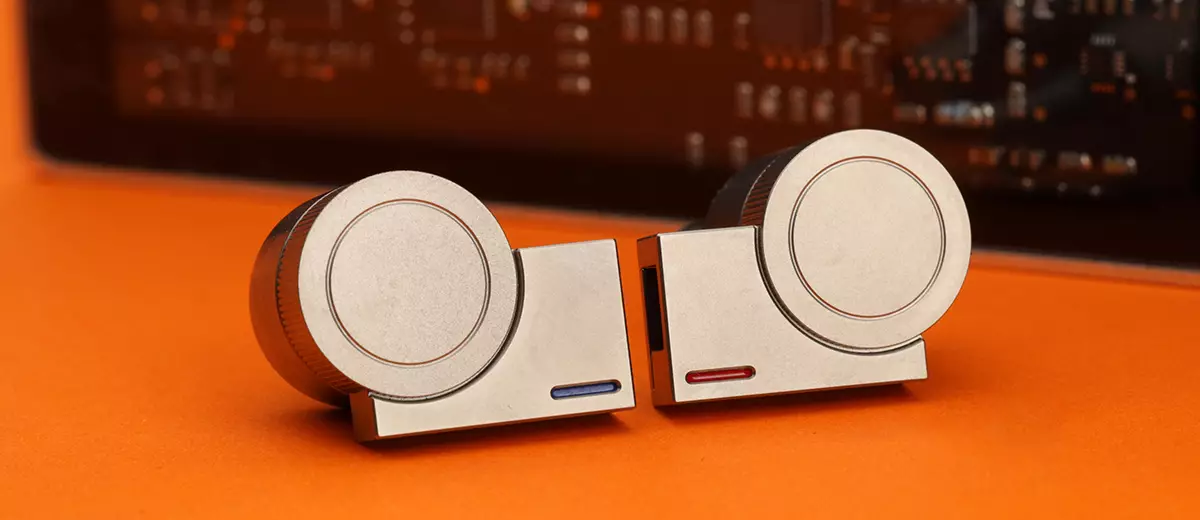
The EDGE is very sensitive, has above-average sensitivity, and is easy to drive, easily delivering bassy full-range sound, even with a modestly powerful source.
Despite its sensitivity, the EDGE never produced any noise with any of the sources I paired it with; the cable never picked up any radio-frequency interference and was not sensitive enough to allow the sources’ noise floor to be heard.
I noticed over the past few days, while listening to the EDGE, that it is not the most revealing IEM I’ve heard and it does not highlight the unpleasant sound of some poorly recorded music. The EDGE is rather a forgiving-sounding IEM.

Pairings
Paired with the iBasso DC-Elite, despite its modest maximum power output, I get effortless dynamics and maximum loudness, while delivering full-sounding bass without any distortion or compression.
The EDGE pairs very well with modestly powered sources, including those not in this review. The 128 dB/Vrms rated sensitivity must have some truth to it.
When paired with the MUSE HiFi M6 Double in tube-output mode, the bass is tighter, and I can detect the subtle upper-midrange forwardness of the M6 Double.
The energy is very good with plenty of headroom to spare, and the maximum loudness is very loud.
Finally, with the FiiO M15S, aside from being effortlessly dynamic and loud, it’s the best I’ve heard with any of these pairings. I hear a full, tight, well-controlled bass with plenty of details.
The mids and highs are very smooth, making this combination very suitable for long listening sessions.

Selected Comparisons
I have enjoyed the EDGE with all the sources mentioned in this review, as well as those not mentioned.
But since all the IEMs being compared are relatively easy to drive, I decided to compare them mostly using the iBasso DC-Elite for its highly detailed sound, with my phone, DAP, or laptop as sources.
DUNU Falcon Ultra
Technical & Design
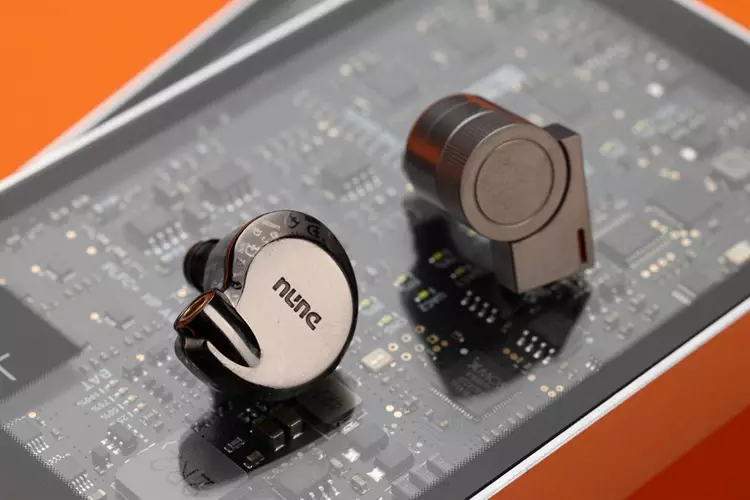
The DUNU Falcon Ultra uses a 10.7mm lithium-magnesium alloy dome fused to a soft, compliant suspension that forms its diaphragm. It combines the rigidity of harder magnesium with the damping of softer lithium metal.
The Falcon Ultra includes Interchangeable tuning nozzles. It has an impedance of 16 Ω and a sensitivity of 108 dB/mW.
The Falcon Ultra has a small shell with a substantial feel, as it is made entirely of stainless steel.
A polished titanium-like finish and a futuristic shape complete the Falcon Ultra Ti’s aesthetics. It includes a high-quality MMCX cable, but it is thin and prone to tangling.
Performance
Having been accustomed to the sound of the EDGE for several days of listening. The Falcon Ultra sounded brighter and more mid-centric, with a lighter overall tonal presentation, despite being a very neutral and slightly warm-sounding IEM in practice.
I should have given my hearing plenty more time to adjust, but this is a direct side-by-side comparison. Sorry, Falcon Ultra.
The EDGE has a cleaner overall sound, and, with its tremendous bass presence, it sounds much larger with a more spacious soundstage.
Both have a spherical soundscape and immersive sound, but the EDGE is even more immersive. However, when it comes to imaging performance, the EDGE can’t come close to the Falcon Ultra.
The EDGE simply can’t keep up with Falcon Ultra’s image definition, accuracy, stability, and holography. But remember, I use a third-party ear tip, the ePro EP00 medium, with the Falcon Ultra to achieve this level of imaging performance.
I find the EDGE sounds more dynamic, especially in the bass region; the difference between a neutral bass on the Falcon Ultra and the EDGE is impossible to ignore. They both have good energy in the mid and high ranges.
FiiO SNOWSKY OAK NANO
Technical & Design
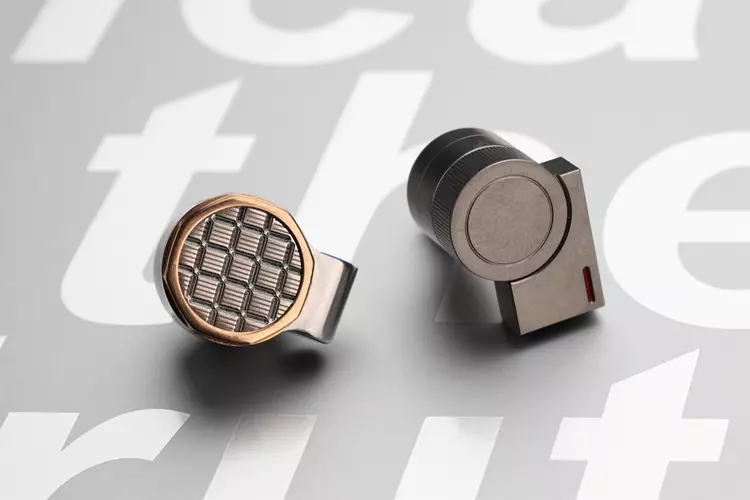
The OAK NANO uses a large 13.8 mm Beryllium alloy dome with a W-shaped diaphragm, a dedicated surround design, and a pure titanium chamber. Having a larger driver also enables a stronger-than-usual 1.5T external magnetic circuit.
Other features include airflow-optimized front and rear titanium chambers and a replaceable tuning nozzle system with two nozzle types. The OAK NANO has a 50Ω impedance and a sensitivity of 112 dB.
The OAK NANO’s design is the beautiful golden octagonal faceplate with a circular center section filled with a silver-colored matrix of carved-out four-lined squares. It’s difficult to describe, so you’ll have to look at the photos to see the unique design.
There is some channel labeling on the side for the color-coded; red for right and blue for left, 2-pin connector. Three vent holes are located near the junction of the face plate and the 2-pin connector outrigger.
The OAK NANO is made entirely of metal, with a mirror-like silver finish on most parts. Despite that, each weighs only 9.6 grams, which is within the average range for IEMs. The shell is medium in size, and the nozzle is 6.2 mm in diameter.

Performance
While neither is neutral, the OAK NANO is much closer to neutrality compared to the EDGE.
Both have boosted and extended bass, but the OAK NANO is much more accurate without sounding boring or dry, while the EDGE sounds like someone turned the bass control knob up by at least 9 dB.
Both are very clean in the midrange and treble, but the neutrality of the EDGE makes the vocals and instruments more accurate and intelligible, great for vocal lovers. The EDGE has a distant vocal and instrument presentation.
I love how both perform in staging; they have very spacious, spherical soundscapes. However, when it comes to imaging, the OAK NANO is more accurate, more defined, and more holographic, with better front-to-back layering.
The EDGE’s midrange recession makes the imaging somewhat diffuse and distant.
There is no shortage of dynamics with both the OAK NANO and the EDGE. Both can go loud when fed with power, with plenty of headroom to spare, and both have good energy to the sound and never sound lethargic.
Hidizs MK12 Turris Titanium Limited Edition
Technical & Design
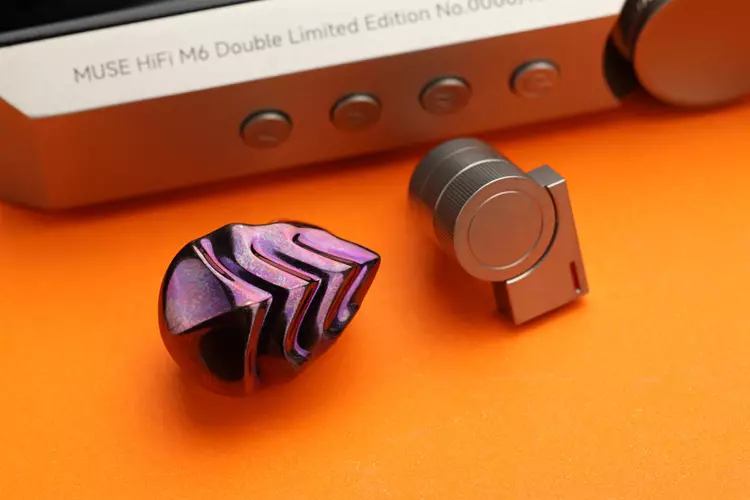
The MK12 Turris Titanium Edition features a 12mm dynamic driver with a 91% pure magnesium diaphragm and a powerful motor system that reaches 1.5 Tesla in the magnet gap, driving the larger-than-usual diaphragm.
The MK12 Turris Titanium Edition has an impedance of 32Ω and a sensitivity of 111 dB/mW.
Housed in a sleek titanium housing that went through precision CNC machining and was finished with an exclusive gradient-tint coating inspired by the Turritopsis dohrnii jellyfish—nature’s “immortal marvel”. The faceplate looks like the back of a sea creature.
Finished in a color-shifting chameleon paint, the paint shifts from purple to brown, similar to car paint that changes color depending on the angle of light. Hidizs calls this a Gradient-Tint finish.
Two cables are included: a 3.5mm and a 4.4mm plug. MK12 Turris Titanium Edition features silver-plated twisted-pair cables crafted from high-purity oxygen-free copper, ensuring low resistance and high conductivity.

Performance
Both the Turris Titanium Edition and the EDGE have tremendous bass presence and output.
The EDGE bass sounds like it is coming from a subwoofer with more subbass, while the Turris Titanium Edition’s bass sounds like it is being driven from a pair of big 3-way speakers with better subbass and mid-bass balance.
The EDGE has a recessed midrange while the Turris Titanium Edition’s is closer to neutral. But when it comes to the treble, I find the EDGE to be airier and more extended.
Overall, the Turris Titanium Edition has a darker, bassier sound, while the EDGE has a more balanced, moderately V-shaped sound.
The EDGE has a spherical soundscape with about equal height, width, and depth, while the Turris Titanium Edition has a narrower, deeper stage.
I find the imaging performance on the Turris Titanium Edition to be better, with greater definition and accuracy.
Thanks to the large drivers on both, both are very dynamic-sounding and can go loud with plenty of headroom to spare.
However, due to the more forward upper-treble presence in the EDGE, I find it sounds livelier than the Turris Titanium Edition; the Turris Titanium Edition never sounds lethargic, though.

My Verdict
I don’t say the word “audiophile” often, but to me, the Softears EDGE is made for true audiophiles who want to enjoy a proper bassy, audiophile-grade IEM with tight, subwoofer-like bass and clean midrange and highs.
I like the unique design of its compact, lightweight titanium alloy shells, which feel very comfortable and seem to disappear from my awareness, as if they weren’t in my ears.
Though the Softears EDGE have a spacious and natural soundscape, I wish the imaging were more defined and holographic; not really bad, though. Just pointing it out here because I have nothing else to nitpick about.
Softears EDGE is a good addition or upgrade for audiophiles looking for a good-sounding, bassy, moderately V-shaped, musically engaging set, and for that, it is well worth the price in my opinion.
Softears EDGE Technical Specifications
- Unit configuration: 11 mm dynamic driver
- Shell material: Titanium alloy
- Impedance: 16 Ohms
- Sensitivity: 128 dB
- THD: Less than 1%
- Frequency range: 15-40 kHz
- Effective frequency range: 20-20 kHz
- Plug: 2-pin 0.78 mm
- Cable: 4.4 mm balanced plug, 7N high-purity rotary forged OCC core, silver-plated dual-layer outer structure.
- Weight each: 7.6 grams
- Nozzle diameter: 5.6 mm
