

Synergy
Efficiency
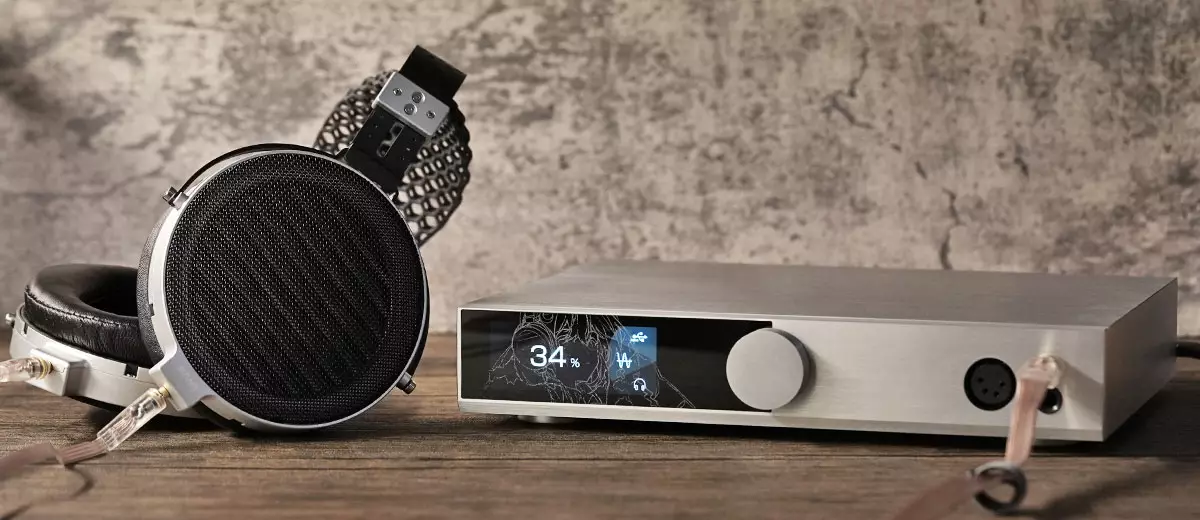
With extremely low output impedance and discrete Class A circuitry, the DHA15 can handle less sensitive, low-impedance loads well.
There is also sufficient shielding from outside interference, and at higher gain it also sounds dead quiet in the background, with the lower gain set to optimize sensitive IEM pairings.
The middle gain is most used; the highest gain level may get a bit loud if the paired gear is very sensitive to input power.
Power
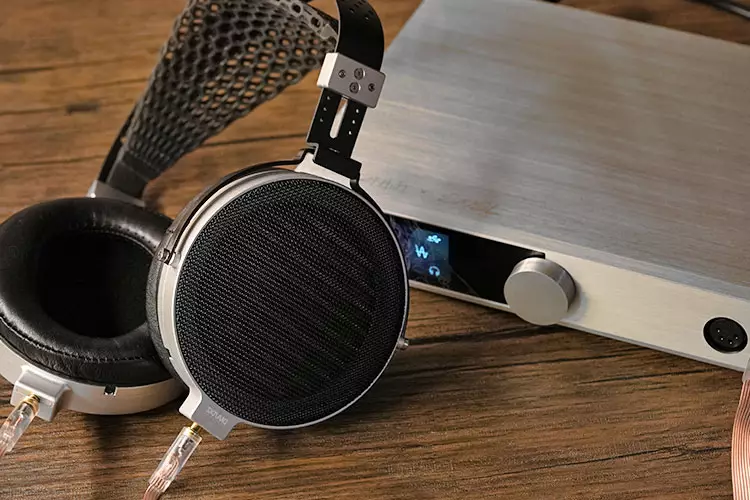
The 15W max output power is no joke. Turning to high gain to test the full potential of the DHA15 with the insensitive MOONDROP COSMO, the output doesn’t feel compressed.
In fact, it sounds more dynamic compared to many of its competitors; I consider it does a great job for its size. While the presentation still leans slightly towards the treble, PMEQ offers a quick fix, yielding a nicely balanced result that favors the vocal frequencies as well.
The DHA15 clearly boasts a robust current output, making it highly beneficial when paired with low-ohm, current-hungry headphones from MOONDROP.
It also pairs excellently with gear like the HD800S, with the headphones’ natural bass presence complementing the native tuning of the DHA15.
There is sufficient power for the bass to kick deep, letting you feel the drop and hear bass transients within a complex bass line clearly, which again proves its prowess in power delivery.
With a little help from equalization, this pairing delivers a more extended top end and a swifter, cleaner presentation right throughout the mids, sounding more refined overall.
Pairings
Despite its small size, the DHA15 is an impressively versatile powerhouse. Thanks to its smart gain level design, high power output, and dark background, it pairs effortlessly with everything from sensitive IEMs to demanding headphones.
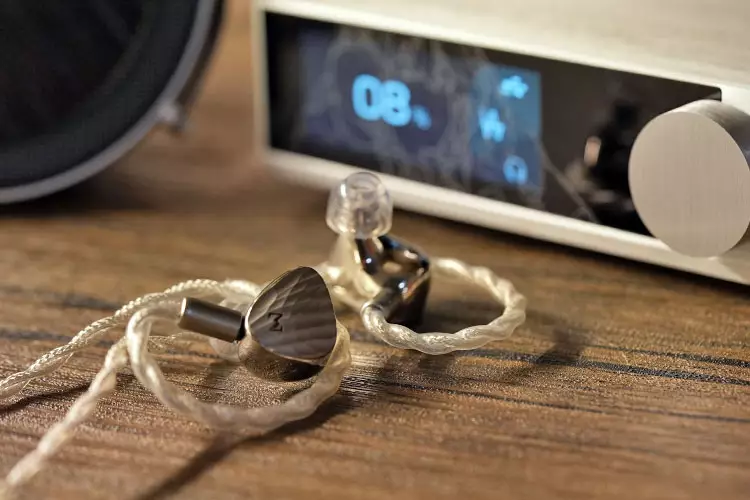
It maintains decent control, treble roundness, and vocal separation across all gain levels without flattening the dynamics in the output, more so with current demanding gear than very sensitive gear like the HiBy Zeta II.
Out of the box, the DHA15 delivers a balanced, dense, and natural presentation with clean bass attacks and smooth articulation, which works quite nicely with any pairing.
While the stock bass does not feel massive instantly, its dense imaging holds a lot of potential.
Equalization reveals the true capabilities of this unit because it easily handles boosted bass to deliver bigger punches, allowing you to manually refine the tuning for an even more engaging experience while maintaining its definitive power.
The DHA15 can drive current-hungry designs like the MOONDROP Cosmo quite nicely without sounding lean, and applying EQ adds fullness to the bass and vocals while smoothing out the mids for a less nasal presentation.
It achieves even better synergy with the MOONDROP Skyland, which is not as demanding, and it sounds more dynamic, textured, and balanced even without adjustment.
However, a touch of low-end EQ and boosting the vocal body makes pop and vocal tracks sound incredibly energetic and richer.
For the high-impedance Sennheiser HD 800S, the DHA15 provides a clean, speedy bass attack and smooth upper-end articulation.
Warmer IEMs like the EarSonics Elements sound dynamic, authoritative, and rounded, as the DHA15 complements their native bass presence beautifully while allowing EQ to effortlessly deliver pleasing clarity and power.
Selected Comparisons
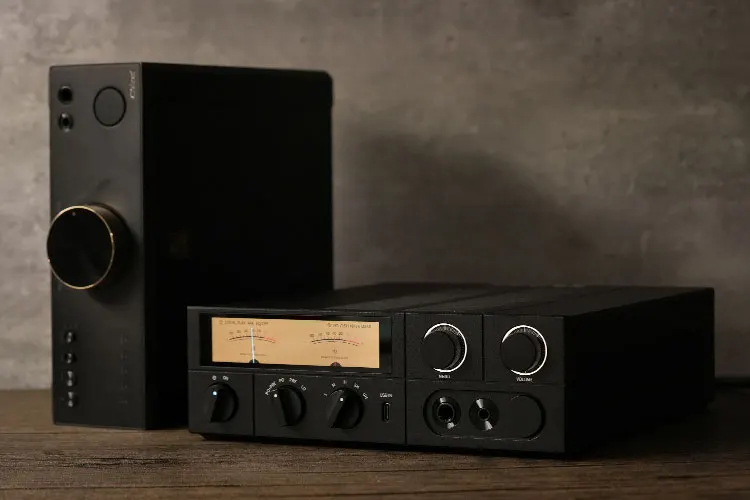
FiiO K17
Technical
The FiiO K17 features 2x 4499EX DACs and can decode PCM up to 32-bit/768kHz and native DSD512. The DHA15 isn’t as potent in decoding, and it is capped at 32-Bit/384kHz with the mid-tier CS43198 chipsets from Cirrus Logic.
For amplification power, the DHA15 is superior. Its output is close to 8 times that of the K17’s 16Ω load rating via its fully balanced discrete Class-A circuitry.
Design
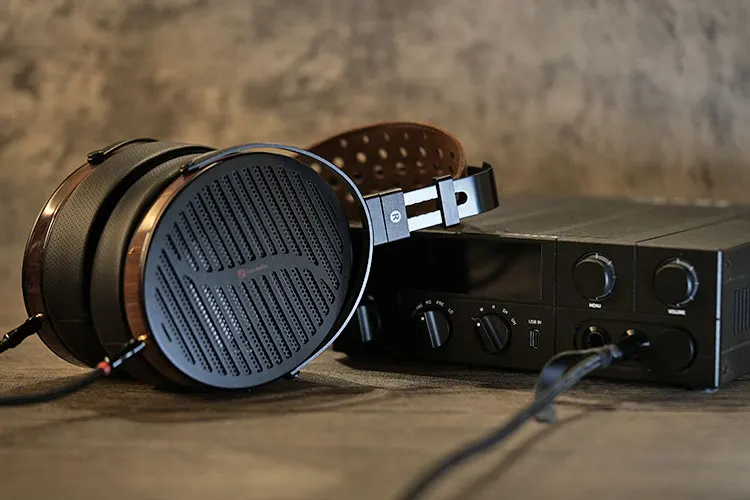
Both devices are cool in their own ways. The K17 is more elaborate with more controllable functions onscreen. The DHA15 is more minimalistic and feels more well-built with its solid aluminum enclosure.
The K17 clearly aims to be a Swiss knife, whereas the DHA15 focuses on amplification, so it depends on whether you want high versatility or dedicated function and performance.
Performance
The K17 is more focused on decoding, whereas the DHA15 is more focused on amplification, so their behavior when pairing with different gears is quite different, especially with gears and scenarios that demand high current draw to shine.
In short, the K17 can extract finer micro-details and sound more textured in the bass. Despite this, it lacks the sheer raw power of the DHA15 to punch as cleanly and airily, and may feel safer or more rounded when driving demanding loads that stress the current supply more vigorously.
The DHA15 may not feel as detailed when powering IEMs or less demanding gear, but when paired with planars, it delivers a stronger slam and a more substantial bass punch.
It fills the soundstage more richly and sounds more authoritative with its intense physical impact, making the overall experience more emotionally engaging. It is also more vivid and expressive in the upper mids.
Ultimately, the choice depends on the gear you want to pair them with and your desired feature set. The DHA15 works excellently as a dedicated amplifier for a decoding-focused source.
The K17 functions more like a Swiss Army knife, handling wireless input and offering superior decoding power.
Combining the K17 and DHA15 yields even better results, but strictly speaking, if you want to pick just one of the two for your current-hungry gear to sound more engaging, airy, and dynamic, the DHA15 takes the crown.
Luxsin X8
Technical
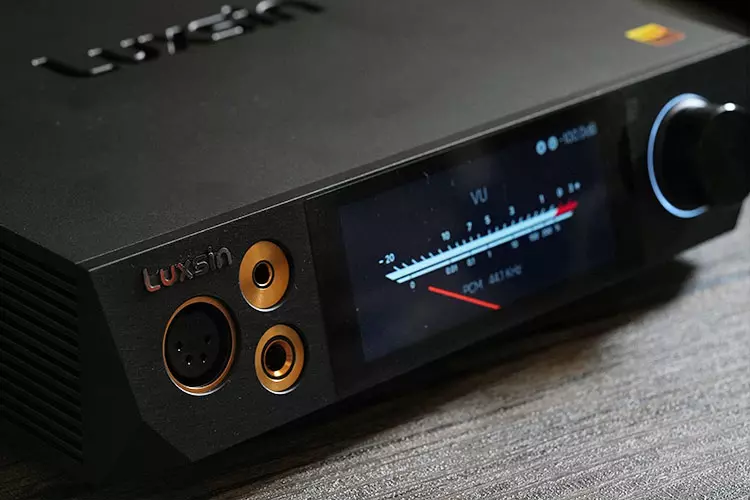
Both devices here are engineered around DSP/hardware PMEQ. As the Luxsin X8 is bigger in size, it can fit a bigger touchscreen on top and allows picking profiles on screen.
It also supports the AI-assisted EQ feature, which is very intuitive, and is built in with a lot of profiles, more than 2500+ models for many brands in the market. In addition, there are other digital filters, such as Crossfeed, you can choose from.
A fun observation is that both devices use the CS43198 DACs, though the X8 utilizes 8 pieces of the CS43198 for better THD+N.
Despite this, the DHA15 has a much more powerful output with its discrete Class A circuit compared to the OPA1612+TPA6120A2 combo on the X8.
Design
Both devices are housed in metallic casings and are very well built.
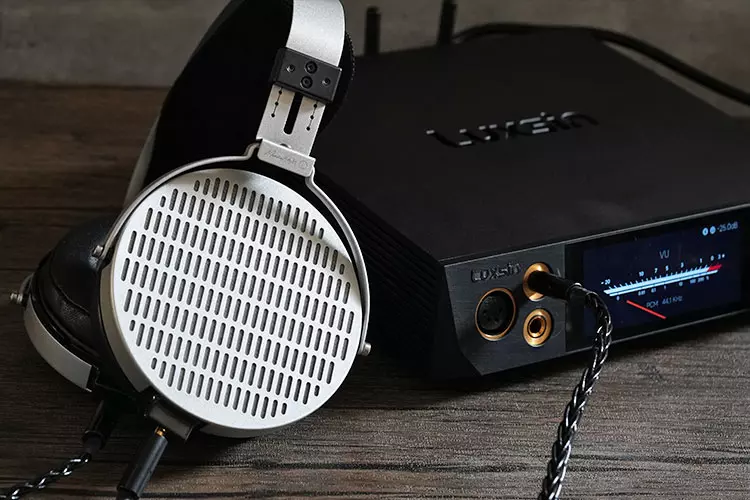
The X8 is thicker and bigger in size, featuring a bigger touchscreen and allowing some simple control, for example selecting EQ profiles, which makes it easier when you are switching between EQ profiles without the need to use the UI on apps/PC.
I can’t blame the DHA15 for lacking this, as it is very sleek in form, making it feel like almost 2/3 the size of the X8.
Performance
When comparing both devices using USB decoding, the distinction between the X8’s decoding superiority and the DHA15’s amplification strengths becomes apparent, affecting how they handle different power loads.
The X8 offers a more refined presentation with stronger detail extraction, giving it a clear advantage with common IEMs and moderately sensitive headphones.
This performance is further elevated by its broader DSP library coverage, which easily outpaces the more focused collection found on the DHA15, which, on the other hand, is more optimized for MOONDROP headphones.
On easier-to-drive gears, the X8 provides excellent control and finesse, whereas the DHA15 may not feel quite as resolving.
However, as power demands increase, the structural advantages of the DHA15 surface. Built with a robust amplification design, it delivers a firmer, more impactful attack with a strong sense of raw power.
Its exceptional current supply and voltage swing allow it to work better with low-sensitivity planar headphones that crave current to shine.
Under heavier loads, the DHA15 yields a more vivid, airy, and energetic presentation than the X8, which feels less characterized in the mids and not as energetic.
While it might lose a bit of detail compared to the X8, the DHA15 counters with a presentation that feels more vocal-optimized. It brings the midrange forward into a more intimate position, allowing vocals to sound engaging and lifelike.
When paired with demanding planars, this raw energy gives it the edge, sounding remarkably authoritative and well-controlled without ever losing its driving energy.

My Verdict
The DHA15 is a sleek, beautiful, and impressively compact DAC/amp, yet it ranks as one of the most powerful units of its size.
Despite this massive power, it maintains decent noise control and dynamics even when paired with very sensitive gear.
By merging MOONDROP’s DSP features with SMSL’s robust hardware, the device unlocks potential, though the library of headphone curves could still be further enriched for other brands’ items.
While the built-in DAC does not use a flagship chip, the DSP engine effectively bridges the gap, allowing you to apply profiles and match target curves to sound more engaging.
While pairing the DHA15 with a superior external decoder yields even better results, doing so will bypass the internal DSP engine, which holds it back from perfection.
Ultimately, this is a very space-saving desktop solution, and its modest decoding hardware can be forgiven, especially if you already own a feature-rich integrated DAC that suffers from a weak headphone output stage.
With its immense power reserves, it effortlessly drives a wide variety of demanding headphones well beyond MOONDROP’s own lineup. While the device has a few minor limitations, its strengths and convenience are undeniable.
If you are looking for a sleek desktop amplifier, or if you just acquired the MOONDROP Skyland or other planars and want a powerhouse that delivers high clarity, raw authority, and headroom, while still allowing future upgrades to be paired with a stronger DAC, the DHA15 is well worth a try.
MOONDROP X SMSL DHA15 Technical Specifications
- Input: XLR/RCA/USB
- Headphone Output: 4.4mm balanced / 6.35 / 4-pin XLR
- Pre-amp Output: 4.4mm balanced / 6.35 /4-pin XLR
- Output Power:
- 16Ω-15W x2 / 32Ω-7.5W x2
- 300Ω-1000mW x2 / 600Ω-550mW x2
- SNR: 131dB
- Dynamic Range: 131dB
- THD+N: -122dB, 0.00007% (1kHz, 32Ω)
- Input Impedance: 47kΩ
- Headphone Output Impedance: Close to 0Ω
- Pre-amp Output Impedance:
- Balanced interface – 44Ω
- Single-ended interface – 22Ω
- Frequency Response: 20Hz-50kHz(-0.5dB)
- Gain:
- Balanced interface – Low(-3.5dB)/ Medium(6dB) / High (19.7dB)
- Single-ended interface – Low(-9.5dB)/ Medium(0dB) / High(13.7dB)
- Power Consumption (EN60065): <50W
- Standby Power Consumption: <0.5W
- Size: 254x46x221mm (WxHxD)
- Weight: 2.04kg/4.5lbs
