

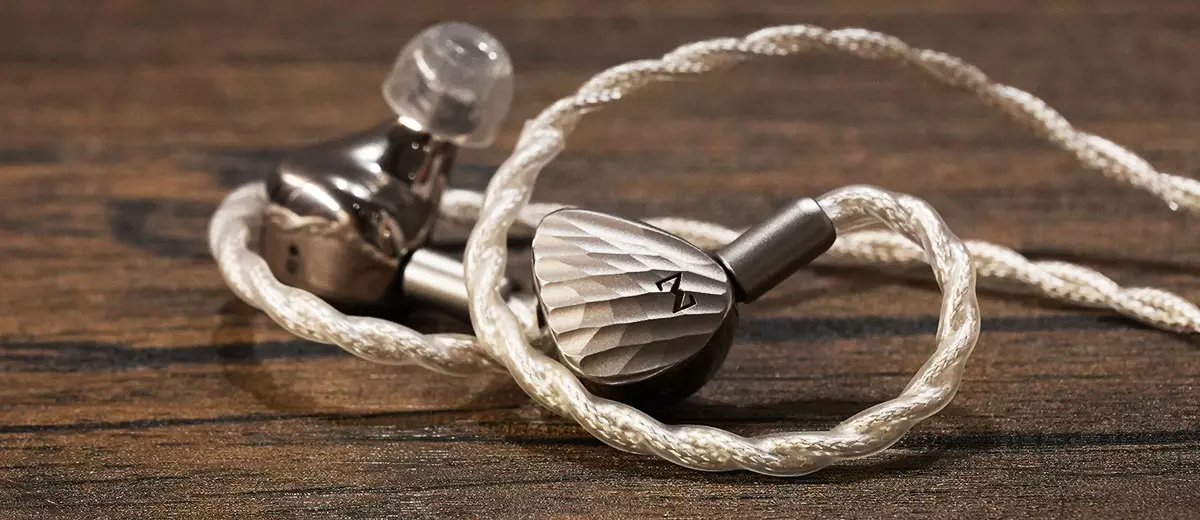
James reviews the HiBy Zeta II, a new high-end flagship dynamic, BA, planar, and electrostatic multi-driver universal in-ear monitor. It is currently priced at $1399.00.
Disclaimer: This sample was sent to me in exchange for my honest opinion. Headfonics is an independent website with no affiliate links or services. I thank HiBy for their support.
You can click here to learn more about the HiBy audio products previously reviewed on Headfonics.
This article follows our latest scoring guidelines, which you can read in more detail here.
It has been three years since I reviewed the original HiBy Zeta. This tribrid flagship combined a dynamic driver, balanced armatures, and EST drivers into a technically proficient yet musically engaging package, accentuated by its beautifully machined titanium enclosure that punched well above its price point.
Now, in early 2026, the Zeta II arrives as a more ambitious evolution. This newer rendition features a quadbrid configuration with nine drivers per side, including a micro-planar driver, while retaining the core strengths of its predecessor.
Priced at $1,399, it remains remarkably restrained compared to many similarly configured flagship IEMs that command several times the cost.
In this review, I will compare it to the original Zeta and the Empire Ears Odin MKII, assessing whether it represents a leap forward and how it fares against today’s hybrid competition.
Features
The HiBy Zeta II employs a quadbrid design and a true 5-way passive crossover with discreet pathways.
HiBy uses an 8mm DLC-coated dynamic driver with an HCCAW coil to handle the sub-bass region, three Knowles balanced armatures, including one dedicated tweeter, for smooth midrange performance, and a planar magnetic driver for enhanced treble penetration and power.
There are also four next-generation Sonion electrostatic tweeters to further extend the ultra-high frequencies up to 70kHz (in theory).
The impedance is quite low at 15Ω, with sensitivity measured at 109 dB/180 mV @ 1kHz, which is similarly efficient compared to the first gen on paper.
Design
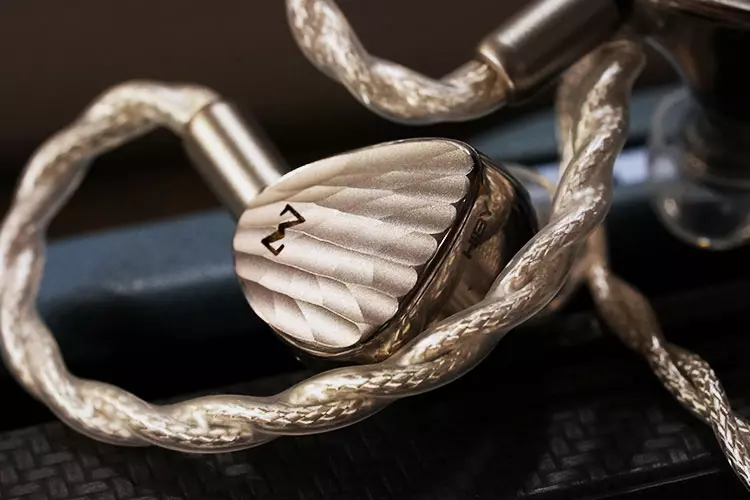
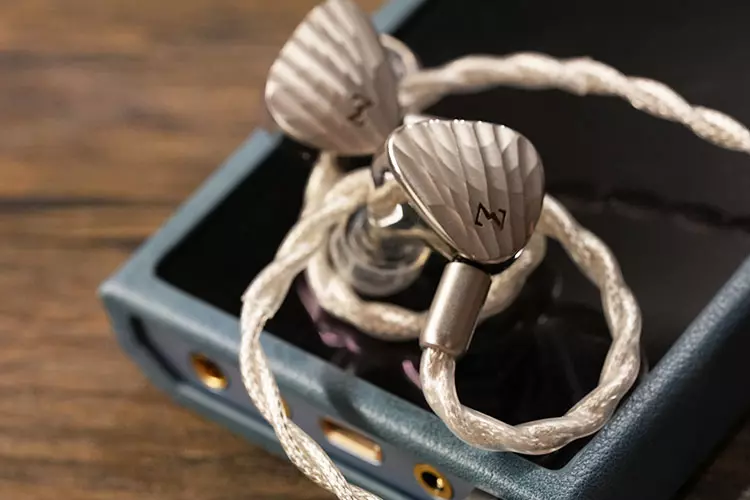
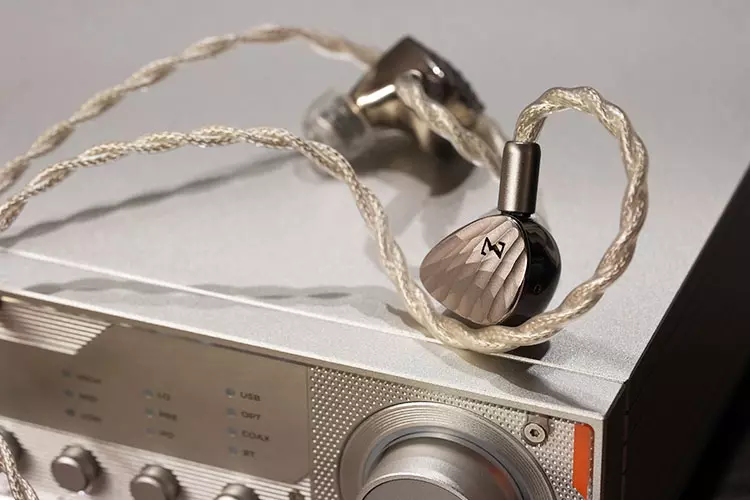
The Zeta II inherits the carved-out, dual-layer design from the original Zeta and proudly displays the Z motif on its faceplate.
The full aviation-grade titanium jacket remains as impressive as the original version, and this time HiBy challenges itself with a more complicated, multi-faceted feather-like pattern that feels much harder to tool.
The design is impressive in person, with a complex texture that feels better than it appears in photos.
The machining quality is also excellent; the lines appear clean yet feel smooth and not sharp when handled. The polished body as well as the sides of the faceplates also feel very premium to the touch.
HiBy employs a vacuum ionic magnetron sputtering coater, a technique derived from horology, to apply a thin-film coating on the surface of the titanium jacket for improved wear resistance.
The design and tooling are well executed and artistic. If I were to point out any flaws, I would hope the placement of the Z logo could be aligned with the wearing position so it would appear more naturally as a Z.

Comfort & Isolation
Even though Zeta II has 4 different driver types, including a planar inside, it feels surprisingly compact. The finishing doesn’t make it feel too metallic; instead, it feels smooth and textured to the touch, and has a very sturdy build quality.
The fit is excellent, as is the isolation, even for my rather small ears, thanks to the slightly extended nozzle and the stock eartips, which have a mildly sticky silicone surface.
Passive noise isolation is strong enough to block out most ambient noise, even on a plane.
Because of its lightweight design, the Zeta II remains comfortable even after 4–5 hours of use, unlike some heavier multi-BA IEMs that can cause pressure or fatigue in the contact areas.
Ear Tips
This aspect is also worth highlighting, as it’s rarely emphasized in HiBy’s official materials yet makes a noticeable difference in the actual listening experience.
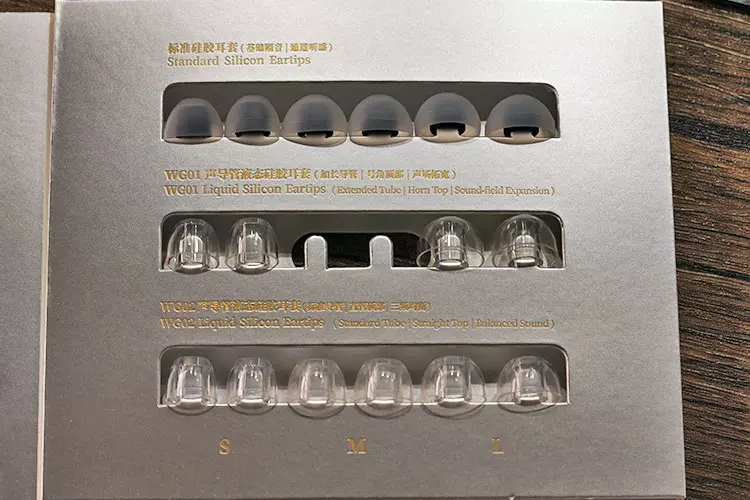
The Zeta II comes with a comprehensive box set of eartips. You get the standard tips, which deliver a fuller-bodied and warmer sound signature, as well as the WG01 set, which emphasizes airiness, technical performance, and extension.
Additionally, there’s the WG02 set, which brings the mids forward for a more coherent and balanced timbre.
Both WG series tips feature wide bores and are made from what is commonly referred to as liquid silicone material. The WG01 tips incorporate a special horn-shaped waveguide in their design to achieve the intended sonic character.
The differences are quite audible, and I strongly recommend experimenting with these tips, especially the WG sets. The material also provides superior sealing properties, further enhancing isolation and bass performance.
Stock Cable
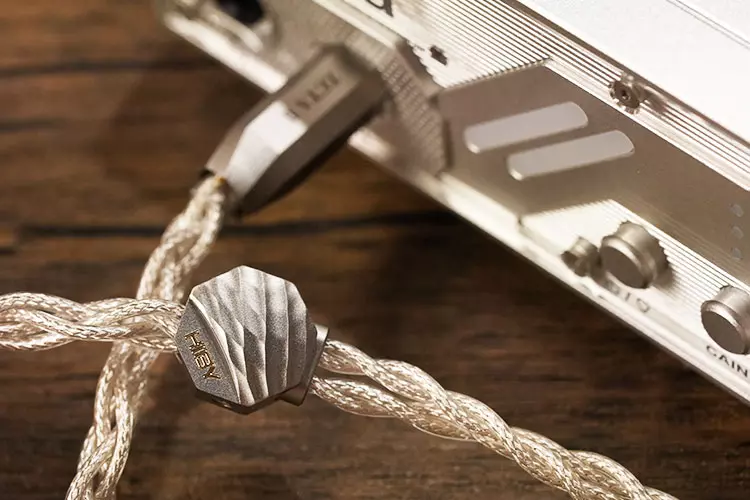
The stock cable is a 4.4mm balanced termination with 0.78mm 2-pin connectors. It features cores made from 5N silver-plated OCC combined with 4N silver conductors, arranged in a special cross-braiding ratio.
HiBy claims this design enhances ultra-high-frequency extension and contributes to a wider, more spacious soundstage.
I experimented by swapping it out with other cables, including the Effect Audio Cleopatra and various copper options.
The Zeta II proves quite sensitive to cable rolling, and its onboard tuning, slightly V-shaped with good mid-bass density, allows it to remain engaging and balanced across different pairings.
That said, the stock cable is a good match this time around, it delivers effortless treble extension while ensuring the bass kicks firm and deep without veiling or curtaining the mids.
The cable’s design elements are also consistent with the faceplate design, giving the overall package a premium feel that rivals some higher-end aftermarket options.
On another note, you may want to try swapping an 8-braid cable on the Zeta II to achieve a more expansive and relaxed timbre.
Packaging & Accessories
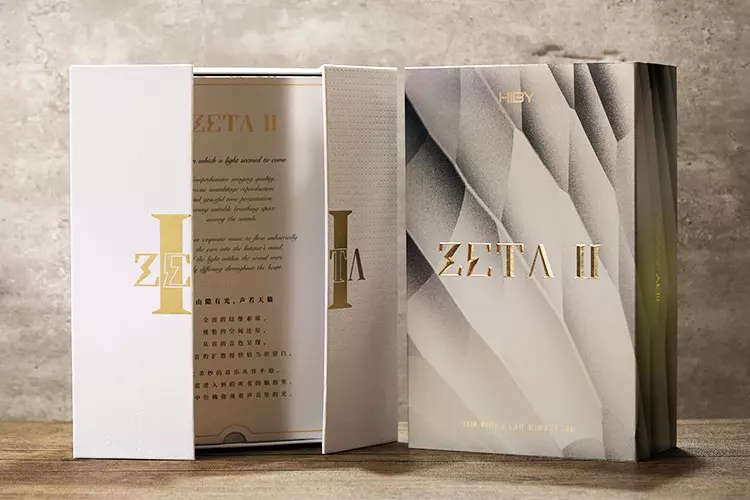
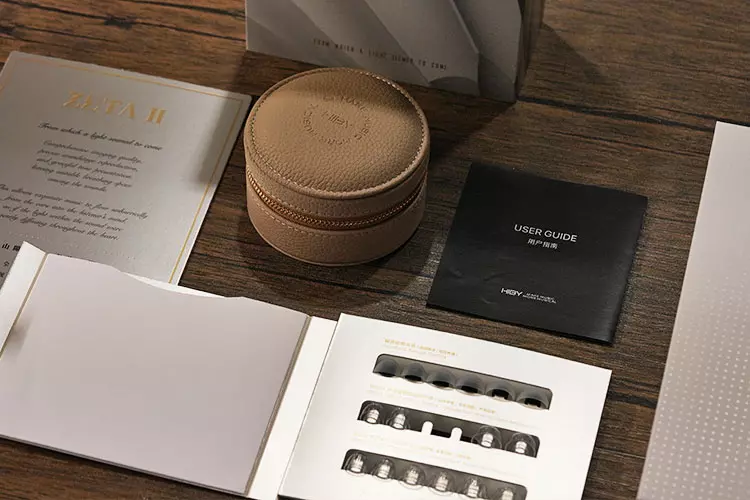
The Zeta II arrives in a fun and engaging presentation. The packaging box opens sideways, revealing a premium round leather case neatly positioned at the bottom, beneath the earphone units themselves.
The overall presentation strikes a nice balance; it’s not overly extravagant or flashy, yet it feels thoughtful and premium.
The accessories included are of consistently good quality. The leather case is well-manufactured with clean stitching and some soft cushioning on the top side. While the molding quality of the ear tips is impressive, showing HiBy’s attention to detail.
Sound Impressions
After more than 100 hours of burn-in, the bass appears slightly airier and punchier while fully retaining its speed and tightness.
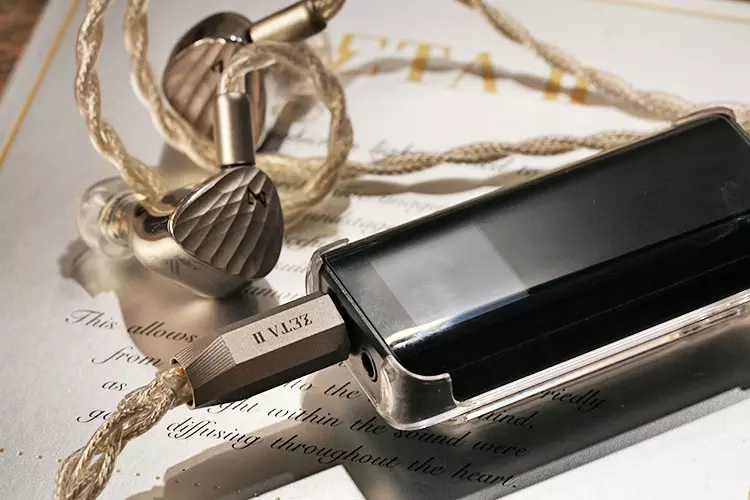
The impressions below reflect listening across a variety of sources, including HiBy’s own DAPs, such as the R6Pro MAX, warmer options like the Shanling M7T, and desktop setups like the Luxsin X9.
Summary
The Zeta II exhibits a gentle M-shaped tuning with satisfying low-end rumble, solid bass punch, and vocals presented with intensity that matches the bass in presence and impact.
Treble extension is decent, neither overly exaggerated nor rolled off, while effectively taming sharper tones in the sibilance zone for a smooth, non-fatiguing top end.
Vocals emerge holographically, cutting through the mix with authoritative power in the upper midrange and presence region, regardless of the tips set used.
It still pairs better with cleaner-sounding gears, or else the mid-bass range may get overly thickened.
Among the tips, I prefer the WG01 (expansive tuning) for maximum openness and minimal midrange coloration, delivering the cleanest, most extended treble.
The standard tips and WG02 (balanced tuning) set provide greater fullness and body in the mids, but sacrifice some treble air and extension in comparison.
Compared to the previous generation, the tuning direction leans more balanced and faster in the bass, likely thanks to the smaller, quicker dynamic driver, resulting in a more vivid tonal palette, noticeably strengthened technical performance, and even greater treble detail retrieval.
Crucially, this extra resolution arrives in a swift, extended, and non-shouty manner rather than aggressive or peaky.
Timbre
The Zeta II incorporates numerous elements designed to prioritize speed, transients, and extension throughout its architecture.
For instance, the DLC-domed dynamic driver, the micro-planar magnetic driver, and the quad-EST array. Together, these contribute to a textured, detailed, and remarkably speedy response, even when driven by less powerful sources.
It excels at retrieving micro-details, particularly in two ends, which come across as tight, dense, speedy, and richly textured. When sufficiently powered, the whole audible spectrum feels defined, nicely weighted, textured, and well-layered.
When tested with violin tracks, the Zeta II vividly captures the air and resonance of the higher strings, as well as the tension and bite from fast bowing. It truly shines with larger ensembles.
For example, in Paganini’s Violin Concerto No. 1, Op. 6, the solo violin floats clearly above the orchestral backing, with vibrato, bowing nuances, and picking details rendered with precision.
When the full orchestra enters, the Zeta II delivers a layered soundstage with precise instrument positioning. The waves of low-end power are clearly perceptible, and the sense of authoritative slam remains strong even at elevated volumes.
Switching to EDM, vocal trance, Eurodance, and 1990s club tracks, the Zeta II also impresses with its dense and textured treble. Synthesized instruments sound delicate yet defined, with crisp attacks in the upper registers.
Vocals shimmer with a silky-smooth yet substantial texture, just enough sparkle to stand out clearly without veering into excessive brightness.
Staging & Dynamics
When using dongles or less powerful sources, the Zeta II may not immediately impress with a particularly wide or deep soundstage on first listen.
This is largely due to the gentle bass bump and the slight emphasis in the upper vocal/presence region, which can make the presentation feel a touch more forward and intimate initially.
However, the signature becomes noticeably more balanced once you switch to stronger, cleaner outputs, which further tighten bass control, enhance instrument presence in the higher registers, and unlock greater overall scale and depth.
That said, bass instruments and darker-toned voices come across quite intimate and close-up, while brighter elements in the treble, such as cymbals, hi-hats, or synths, sit farther back in the mix.
This contrast strengthens the layering effect and helps render a more 3D stage, especially when multiple instruments or sections enter simultaneously.
The Zeta II handles complex bass lines and large ensembles with satisfactory, definitive power and accuracy.
It maintains strong dynamics even at elevated volumes, preserving clear, well-defined transients at both the low and high ends without smearing, compression, or loss of control.
Personally, I would like the treble to be slightly more intense for air and swiftness. The smoothness and distortion control remains intact when I pushed the higher frequencies up a few dBs by EQ.
Click on page 2 below for my recommended pairings and selected comparisons.
