

Synergy
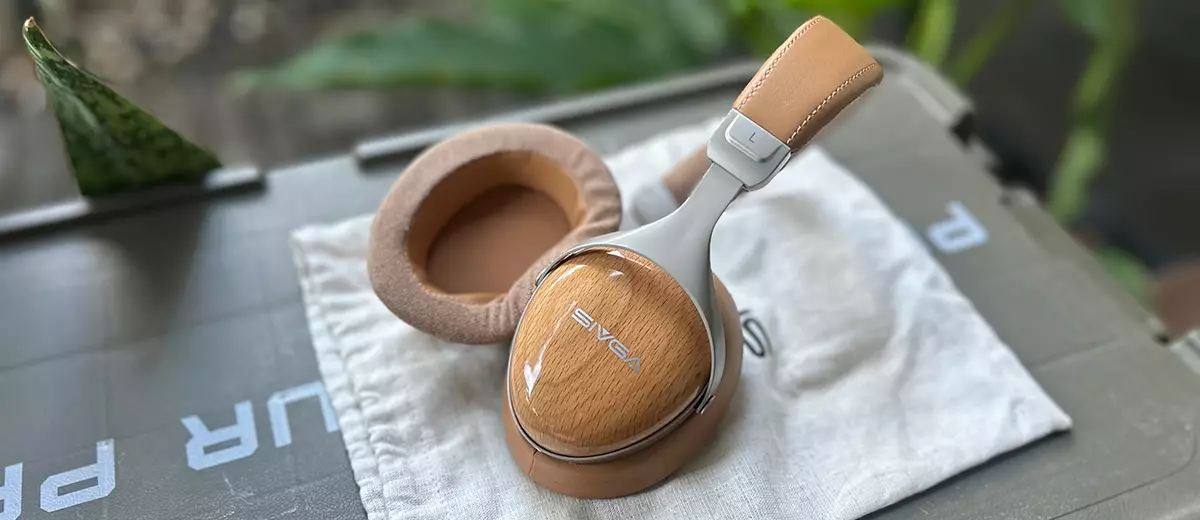
Living with the SV021 PRO V2 day-to-day, source matching ends up mattering more than I initially expected.
Pairing it with warmer gear, especially R2R DAC/amps such as the K13 R2R, was a mistake. Instead of smoothing over the vocal quirks, it actually makes them worse, hollowing vocals out further and pushing that inorganic quality even more front and center.
What works is going the other direction entirely. Neutral sources keep the balance intact and highlight the headphones’ upper-mid articulation on strings and synths.
These come through cleanly, with none of the smearing or softness that warmer gear introduces. Vocals make this painfully clear, with both male and female vocals sounding overly digital or artificial on warmer gear, but decently natural on colder sources.
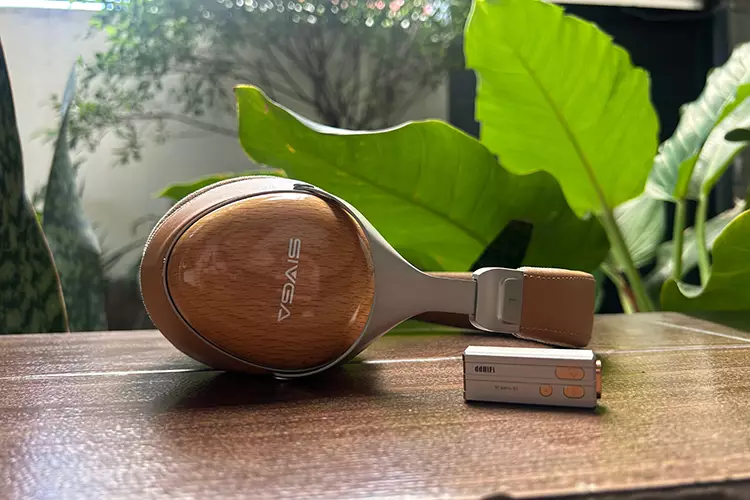
As a headphone with a 45Ω impedance and 106 dB sensitivity, you don’t need much power to maximize them fully.
Throughout my testing, I preferred pairing them with the ddHiFi TC44 Pro E3. It had more than enough headroom for the SV021 PRO V2, while maintaining good synergy with its more neutral amplification.
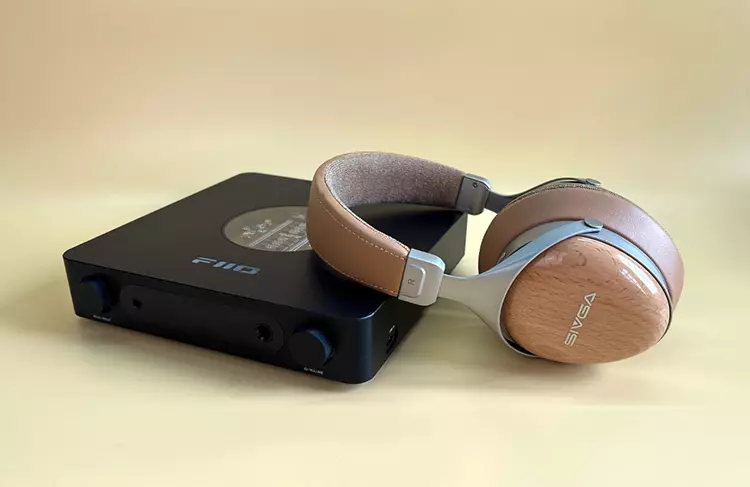
For desktop use, I found that the DX1 II performed quite well. With its neutral presentation as well, I found myself enjoying the default tuning of the SV021 PRO V2.
Selected Comparisons
SIVGA SV021 PRO
Technical
The SV021 PRO V2 carries over the same technical specifications as the SIVGA SV021 PRO without alteration.
Impedance, sensitivity, and driver configuration are identical across both generations, so there’s no difference in drivability or power requirements to account for here.
Any gains in the V2 are purely the result of tuning changes rather than hardware revisions.
Design
Design and build are likewise unchanged between the two models. Anyone familiar with the V1’s construction will find the V2 identical in hand, down to the fit and closed-back shell.
This means it has a lightweight build with minimal clamp force, decent sound isolation, and good on-ear comfort due to its enlarged pad opening.
Performance
This is where the V2 distinguishes itself, and the improvements are substantial. Treble control is noticeably tamer, with sibilance kept in check in a way the V1 didn’t quite manage.
The midrange sees the biggest transformation, with lower mids that are significantly fuller, and mid-bass performance has been tightened up as well, giving the overall presentation more body.
String instruments benefit directly from this: acoustic and electric guitars carry more fidelity, with improved harmonic resolution across the board.
Vocals are the standout improvement. Where the V2 only occasionally slipped into a hollowed-out, inorganic character with warmer sources, the V1 exhibits that coloration constantly, regardless of source.
Dynamics also see a clear upgrade, with better note weight giving instruments and vocal lines more physical presence and impact.
Importantly, none of these gains come at the expense of the qualities the V1 was already known for, with clarity, detail retrieval, and good sound staging performance.
Taken together, the V2 represents a broad, across-the-board improvement over the V1.
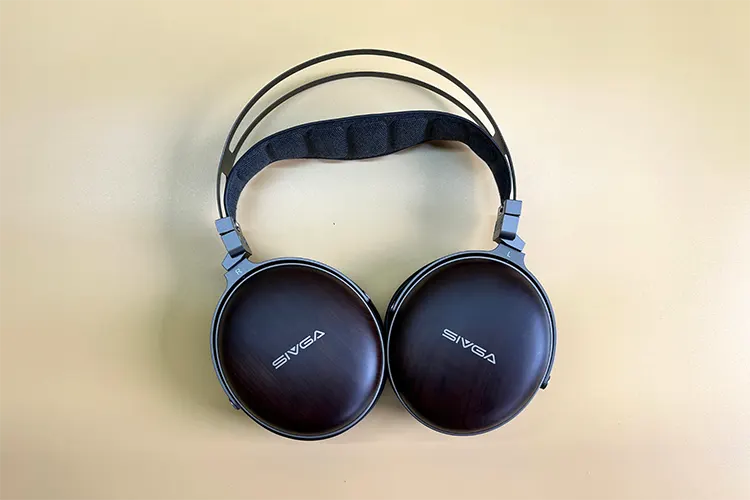
SIVGA Peng
Technical
The SIVGA Peng runs a 340Ω impedance and 102 dB sensitivity, making it considerably more voltage-thirsty than the SV021 PRO V2’s 45Ω and 106 dB rating.
In practice, the Peng wants serious desktop-level amplification to sound its best, while the SV021 PRO V2 is comfortably driven off portable sources and dongles without leaving performance on the table.
Design
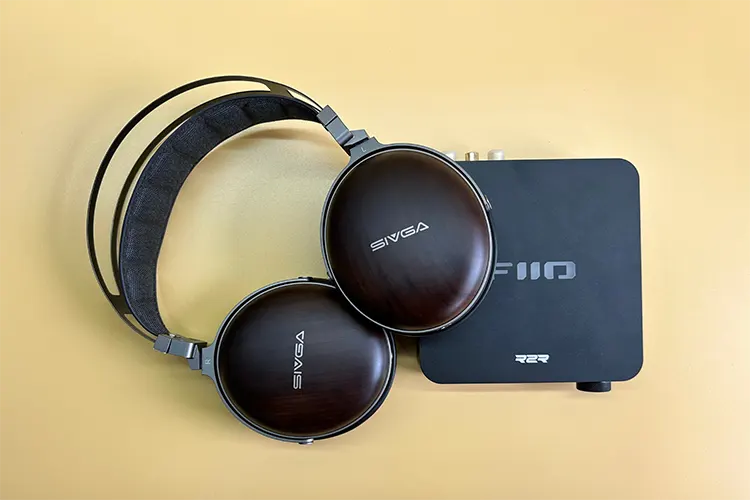
Both headphones lean into SIVGA’s wood-forward design language, though they land in different places.
The SV021 uses African Zebrawood or Beechwood with a glossier, more dramatic finish, while the Peng also uses Zebrawood but in a more matte and more understated execution.
At 289g, the SV021 PRO V2 is noticeably easier to wear for extended sessions, helped further by its very light clamp force.
The Peng’s thicker pads and more substantial build give it a premium tactile edge, but the SV021 PRO V2’s velour-pleather hybrid pads are breathable and comfortable, even if less plush.
Performance
Tonally, the two headphones take different paths. The Peng leans warm and mature with a fuller, more natural midrange. The SV021 PRO V2 is closer to neutral with a pronounced upper-mid emphasis that favors clarity and articulation over warmth.
Bass tells a similar story with the Peng’s mid-bass carrying more texture and body, whereas the SV021 PRO V2 is more sub-bass light, with a mid-bass quality that’s decent but doesn’t fully offset the lack of low-end foundation.
Where the SV021 PRO V2 struggles most is vocal naturalness. On warmer sources, both male and female vocals carry a mild artificial, hollowed-out quality that the Peng doesn’t share.
The Peng’s midrange stays organic and textured, particularly on vocals and acoustic instruments, while the SV021 PRO V2’s timbral shift is hard to ignore over longer listening.
Treble is a closer contest: the SV021 PRO V2 resolves guitar strings and hi-hats with real detail and convincing decay, though upper treble runs hot enough that synths can turn peaky and fatiguing. The Peng’s treble is more restrained and coherent by comparison.
Where the SV021 PRO V2 claws back is soundstage. It’s genuinely impressive for a closed-back design, holding its own even against the Peng’s more relaxed, spacious presentation.
Modhouse Argon Mk3
Technical
The Modhouse Argon Mk3’s planar magnetic driver is notoriously power-hungry, needing serious current delivery to sound controlled and dynamic.
The SV021 PRO V2’s 50mm dynamic driver, by contrast, is easy to drive at 45Ω and 106 dB sensitivity, performing well even off modest sources.
This is a fundamental difference in what each headphone demands from your amplification chain, and it’s worth factoring into any buying decision between the two.
Design
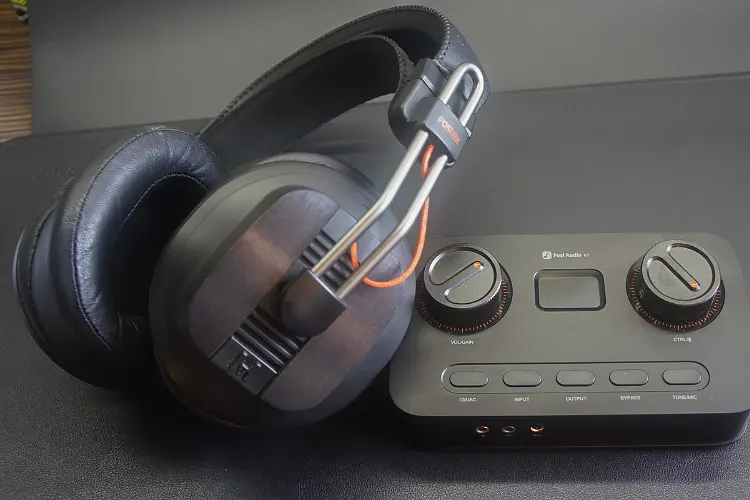
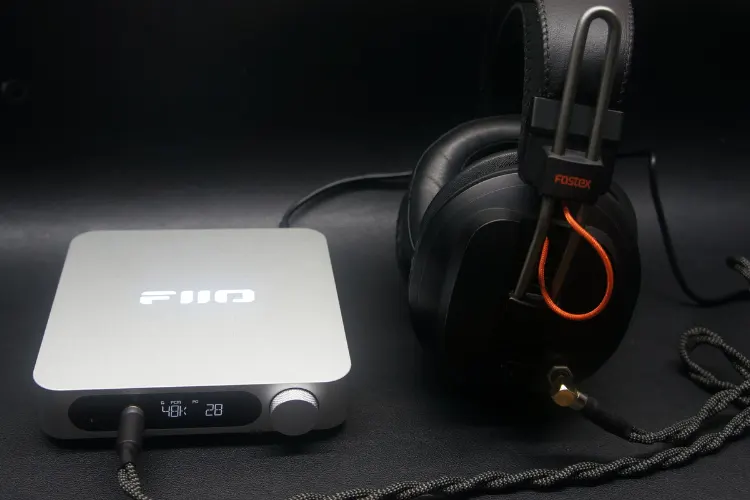
The Argon Mk3 is a heavily modified Fostex T50RP platform, with aftermarket cups, lambskin or protein leather pads, and a premium comfort strap layered onto a fundamentally plastic, industrial base.
The SV021 PRO V2 takes a more cohesive approach, with Zebrawood cups and a machined build that feels more deliberately designed rather than modified.
At 289g with very light clamp force, the SV021 PRO V2 is comfortable straight out of the box, while the Argon relies on its aftermarket strap to distribute its roughly 315g weight comfortably.
Performance
The Argon’s bass is the standout difference, coming off as deep, physical, and textured in a way the SV021 PRO V2 doesn’t attempt to compete with.
The SV021 PRO V2 is sub-bass light with only decent mid-bass, so listeners who want low-end impact will gravitate toward the Argon without hesitation.
The midrange comparison is more nuanced. The Argon’s mids sit back slightly but stay natural and clear, while the SV021 PRO V2 pushes upper-mid presence forward with genuine articulation and detail.
Treble favors the SV021 PRO V2 in resolving power, with guitar strings and hi-hats showing excellent detail and decay, though it runs hotter and can turn peaky on synths in a way the Argon’s more relaxed top end avoids.
Soundstage is close: the Argon is often praised for rivaling open-back headphones in width, but the SV021 PRO V2’s staging is similarly impressive for a closed-back design, and its dynamics, particularly on fast string passages, hold up well against the Argon’s more bass-driven sense of scale.
My Verdict
The SIVGA SV021 PRO V2 makes a strong case for itself as a meaningful step forward from its predecessor, though it isn’t without its own quirks.
On the pro side, the improvements over the V1 are substantial and easy to hear. Upper-mid resolution is good, string instruments and hi-hats resolve with real detail and convincing decay, and dynamics, particularly on fast string passages, show a clear step up in note weight and control.
The closed-back soundstage remains a highlight, and the SV021 PRO V2 is easy to drive, performing well even off modest portable sources.
On the con side, vocal timbre remains the SV021 PRO V2’s most persistent issue. And while it’s far less pronounced and consistent than what I heard on the V1, it hasn’t been fully resolved.
Sub-bass is also light, and the upper treble runs hot enough that high-pitched synths can tip into peaky, fatiguing territory during longer sessions.
Source sensitivity compounds these issues further; pairing the SV021 PRO V2 with warmer gear, particularly R2R DAC/amps, only amplifies the vocal coloration rather than smoothing it out.
Getting the best out of this headphone requires a more deliberate approach to system matching than most listeners will want to think about
SIVGA SV021 PRO V2 Technical Specifications
- Driver: 50mm Dynamic Driver with Five-Layer Composite Aluminum Diaphragm
- Acoustic Design: Closed-Back
- Impedance: 45Ω ±15%
- Sensitivity: 106dB ±3dB
- Frequency Response: 20Hz – 20kHz
- Weight: 289g
- Cable Length: 1.6m
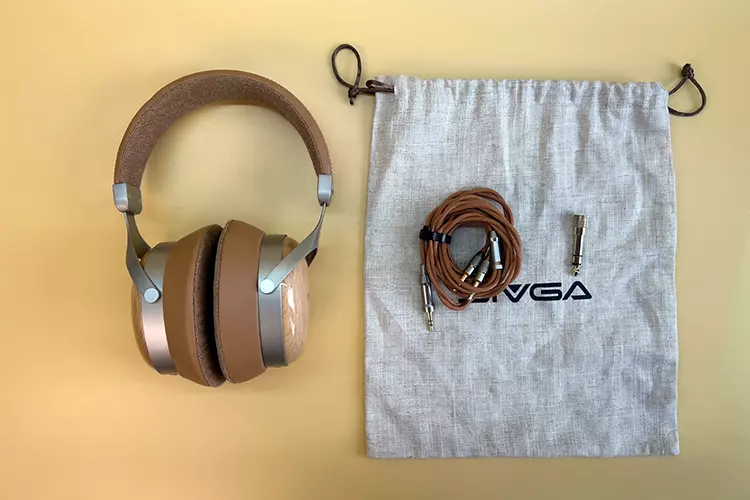
- Connectors:5mm single-ended (dual-entry)
