


Sound Impressions
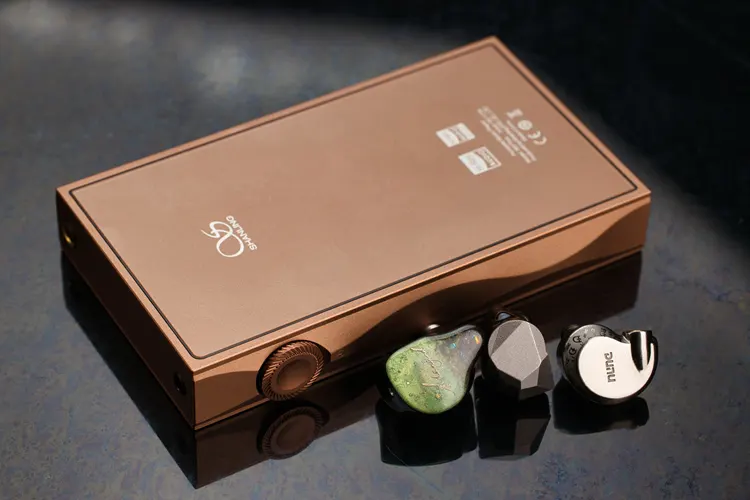
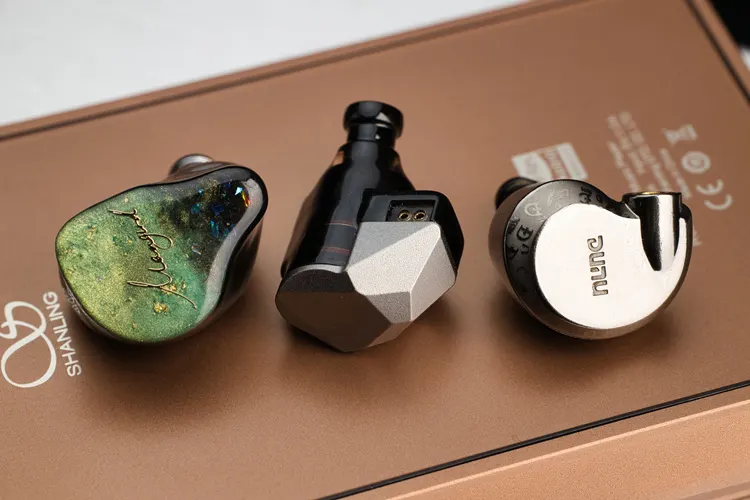
The following sound impressions of the Shanling M3 Plus were completed using a mix of the DUNU Falcon Ultra Ti, the MOONDROP Harmon, and the Xenns Mangird Top.
Please note that no sound equalization or anything that enhances the sound was used for these impressions.
Summary
Having listened to many similarly priced midrange DAPs, I expected the M3 Plus to sound similar, with colored sound, low-resolution sound, and a small soundstage size. I was surprised by how the M3 Plus exceeded my expectations.
I first noticed its neutral sound signature with a flat perceived frequency response that doesn’t favor or emphasize any frequencies over others. It sounds very even from bass to treble.
The M3 Plus does not impose its sound; there is no euphony, so it cannot enhance or degrade the sound of IEMs or headphones.
People who rely on the source to improve the sound of a certain IEM or headphones should take note; instead, it sounds consistently good with the IEMs and headphones I used.
It has a nicely extended bass that never calls attention to itself. It has excellent control of the drivers it is connected to, and the bass never goes out of control, even in complex music. It is noticeably consistent when I switch from IEM to IEM.
Clear and vivid are the first words to come to mind when I focus on midrange. There is no coloration; it’s just clear, lush, vivid, and detailed. Because of that, the M3 Plus will be an excellent music player for people who like vocals.
There is no perceivable limitation in treble extension; it’s as if the treble is unlimitedly extended due to its open, detailed, and airy sound.
It is full of gentle-sounding micro-details and at the same time, crisp bite, yet it never seems to add an extra sharpening to the sound; it is very natural in its delivery.
Timbre
There is no sticky warmth in the M3 Plus sound signature. The timbre is natural to neutral, avoiding sounding blunted or sharpened, and without any exaggeration in the attacks of each instrument.
Transients are rendered with the correct bite, and the leading edges are not rounded off or highlighted.
Staging and dynamics
The M3 Plus delivers a big and wide soundstage, and the lateral panning of sound from the extreme left to the right is excellent. One thing I notice is that the soundstage depth is not as deep as it is wide; therefore, the shape is not spherical.
It forms an ovoid soundstage that extends outside the head, which isn’t bad at all, as it does project holographic images nicely, with good front-to-back separation.
Although it depends on the IEM or headphones being used, the imaging performance of the Shanling M3 Plus is excellent in its own right. The images are sharply rendered, with good space in between.
The perceived resolution is very high, with plenty of micro-detail, yet it never comes across as fatiguing. All the details are presented naturally and were never forced into the ears or face.
Transients and dynamics are rendered crisp and fast, contributing to its clarity. Add to that the low noise and high output power, and I got an excellent dynamic range performance with my chosen IEMs.
My complaint, and it is a minor one, is that I wish there was a little more warmth in the bass; its tight bass rendition, though excellent for clarity, won’t help cold-sounding IEMs and headphones sound better.
People who depend on the source to make their favorite IEMs or headphones sound warmer should know that the Shanling M3 Plus will not add coloration to the sound.
Synergy
I couldn’t hear any noise with headphones and IEMs when paired with the M3 Plus. There is no hiss, clicking, or popping sound when operating it.
Even with third-party music player apps like UAPP and music streaming apps like YouTube Music and Spotify, it is utterly clean and noise-free.
Its high power, moderate impedance, and low noise output section ensure the M3 Plus is very easy to match with any sensitive IEM and some power-hungry headphones, making it a versatile music source.
IEM Pairings
The M3 Plus’s neutral sound signature, excellent bass control, and high output power made it sound consistent with the IEMs used in this review. More importantly, it does not add coloration to the sound of the IEMs.
The M3 Plus sounds even-handed when it comes to different music genres. I tried many kinds of music, from the lean-sounding 80’s music to the new and bassy electronic music such as synthwave, chillwave, and dark industrial music. And it sounds good with them.
DUNU Falcon Ultra Ti
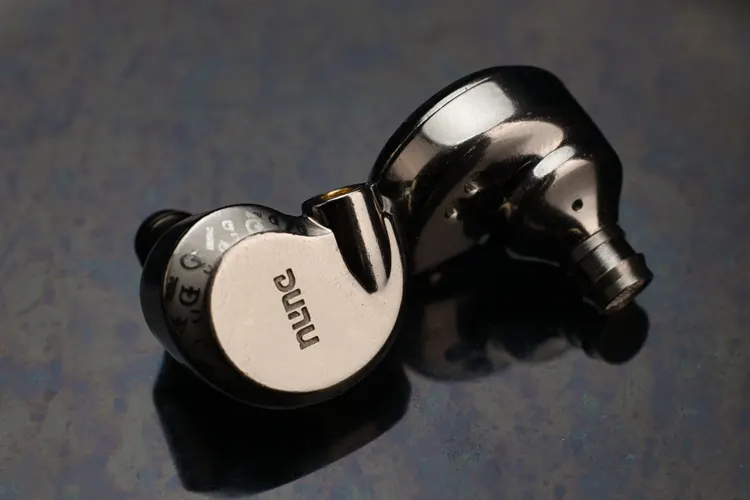
The DUNU Falcon Ultra Ti with the ePro EP00 M ear tips sounds as neutral as can be, but what made this pairing special is that the bass is tight and clean, and the treble sounds very detailed.
The soundstage is big, and the imaging is fantastic, which is one of the traits that made the Falcon Ultra special. They are tight, precise, and holographic.
Combining the power of the M3 Plus with the energetic sound signature of the Falcon Ultra Ti, the dynamics are explosive. This is a fun-sounding pairing with serious technical performance.
MOONDROP Harmon
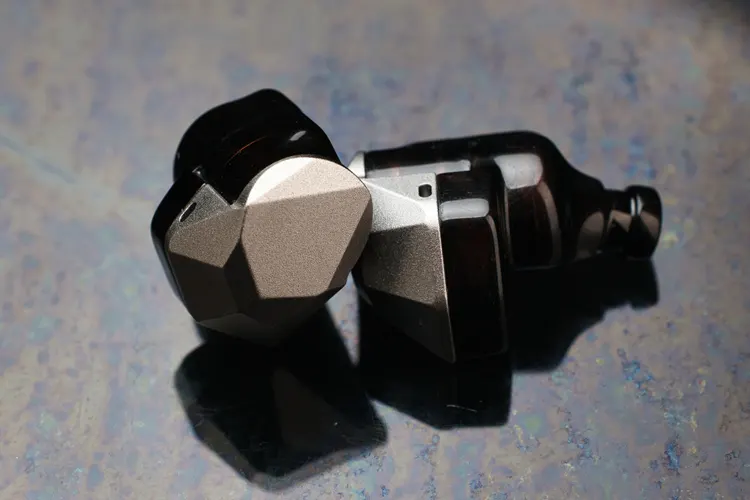
The MOONDROP Harmon is a triple dynamic driver IEM and can be difficult to drive with below-average sensitivity. I have to crank up the volume higher to make the Harmon sound as loud as the other IEMs in this review.
I estimate that it trails the others by about 6 dB in terms of sensitivity, which is a lot, because the 6 dB difference means it demands four times the power from the amplifiers compared to the others in this review.
When I tried lower-powered sources, they struggled and sounded strained with the volume cranked up almost fully to sound decently loud, especially with bass-heavy tracks.
Not the Shanling M3 Plus, it sounds unfazed by the Harmon. It retains the warm sound signature even at high volumes. The bass is full, detailed, and well-controlled, the midrange is warm and pleasing to the ears, and the treble is clean and airy.
Thanks to the power output and bass control of the M3 Plus, we have a beautiful pairing with the Harmon.
Xenns Mangird Top
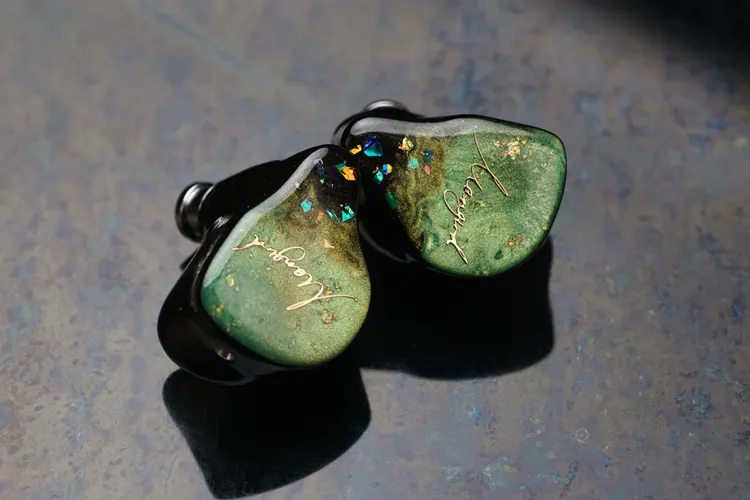
It’s an easy-to-drive hybrid single dynamic and 8 BA driver IEM with a warm and bassy sound signature. The sub bass and upper treble are well extended and clean, while the midrange is lush. It has very good details and air in the treble.
I find the soundstage big and clean, and the imaging is excellent; it is defined and precise. This combination retains its tonality even when I go to high volume levels, which indicates a good pairing. The M3 Plus has an easy time driving the Xenns Mangird Top.
Headphones Pairings
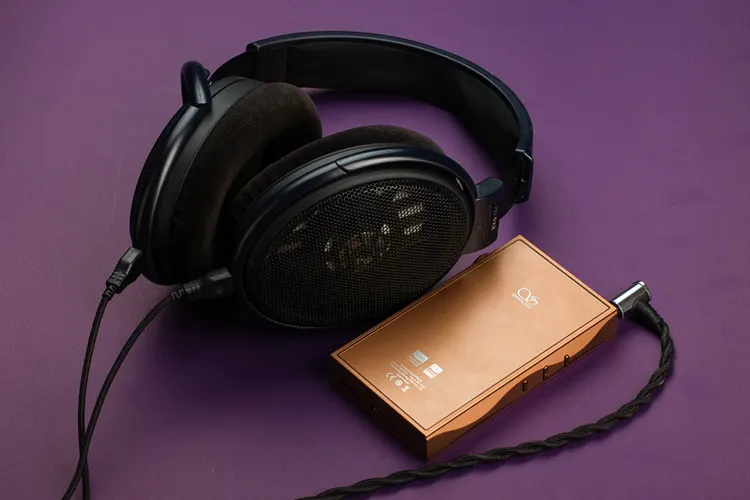
I have a very popular and moderately difficult to drive headphones, the 300Ω (Massdrop) Sennheiser HD6XX.
Many portable sources, such as DAC/amps and DAPs, can drive HD6XX to satisfyingly loud volumes, but only a few can drive it properly to make it sound as it should. And the Shanling M3 Plus is one of them.
It’s 800 mW rated power into 32Ω and should translate into 85 mW into 300Ω, and technically, that is a decent figure to drive the HD6XX to loud volume levels.
This pairing is fantastic for a portable setup; the bass is tight and well-controlled, detailed and articulate, much more so than pairing with lower-powered sources. The midrange is clear as can be, and the treble is very extended and detailed.
The soundstage is huge, and the dynamics are lively, akin to when the HD6XX is paired to a proper desktop setup I heard at a HiFi show. This is a good pairing because the HD6XX sounds boring and anemic when not properly driven.
Although it’s a very versatile music source, pairing it with thin-sounding IEMs and headphones is ill-advised, especially if they need the source’s warmth to sound their best, because the M3 Plus won’t provide that.
Selected Comparison
Shanling M3X
Technical
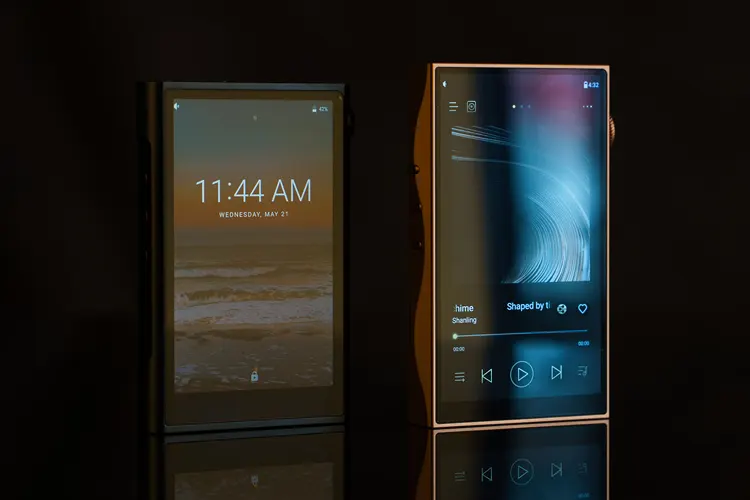
The Shanling M3X has an older predecessor compared to the M3 Plus and sits below it in the product hierarchy. When launched, it had a lower price at its release of $339, not counting inflation.
The M3X is about 10% smaller in dimensions and lighter in weight. It operates on an old Android 7.1 platform using a Snapdragon 430 processor with 2GB RAM and 32 GB ROM.
For audio, it utilizes a dual ESS Sabre ES9219C DAC implementation with output power of up to 240mW @ 32 Ohm (Balanced).
Design
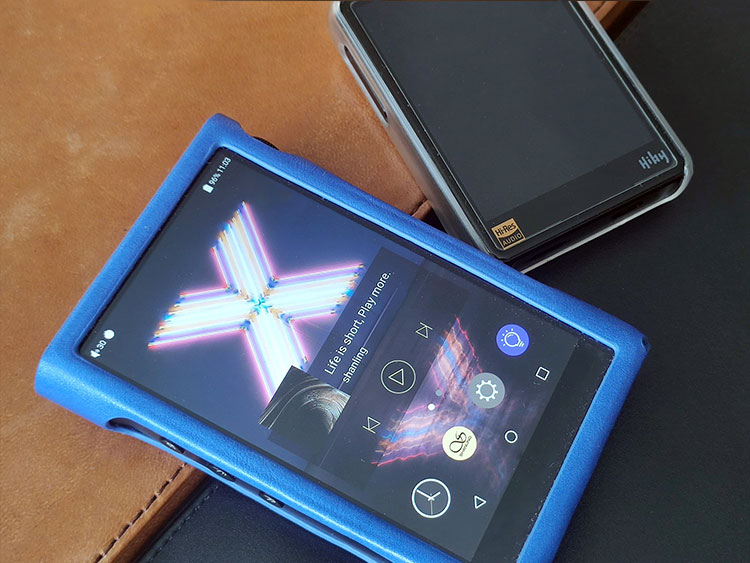
Aside from the different design on the sides, they are very similar overall. Both have a volume knob on the right side, 4.4mm and 3.5mm jacks on the top side, three control buttons on the left side, and the USB-C and Micro SD card slot at the bottom, with the M3 Plus ditching the flimsy plastic cover for the Micro SD card slot.
Performance
The first thing I noticed was the difference in dynamics. The new M3 Plus is more dynamic and energetic sounding, and due to its high output power, it seems to have unlimited dynamic range, compared to the modest output of the older M3X.
I hear the M3X struggles with the MOONDROP Harmon even at moderately loud volume levels. while the M3 Plus has an easier time. The difference in driving capability clearly shows when comparing them driving the Harmon.
The M3 Plus also sounds more transparent. I hear more clarity with the M3 Plus, and the background is cleaner, with instrumental note decay resonating further in the sound field. The M3X sounds unrefined by comparison.
They may be similar in tonality, but the M3 Plus has more bass energy and extended upper treble.
Due to its cleaner sound, the M3 Plus will deliver the perception of a bigger soundstage, resolution, greater instrument separation, and a better imaging performance.
Overall, there is a clear upgrade in sound quality from the older M3X to the new M3 Plus.
My Verdict
It’s nice to see Shanling update their mid-priced M3 product line with upgrades and differences from the older models.
I love the excellent sound quality for its price range, and the design, color, and screen quality. The processor speed is fine for light Apps normally used for music playback, but struggles on heavier Apps.
Nonetheless, I find the Shanling M3 Plus to be a very well-rounded Android 13 digital audio player. It has well-proportioned strengths in features, including decent battery life, a compact size, relatively lightweight, with impressive output power and sound quality.
It’s a very versatile music source, and to top it off, I find it an excellent upgrade to its older sibling, the M3X, in every way.
Shanling M3 Plus Technical Specifications
- Dimensions: 115 x 70 x 18 mm
- Weight: 205g
- Screen: SHARP branded touch screen, 4.7 inches, 720 x 1280
- System: Open Android 13
- Audio Formats: DSD/DST/ISO/DXD/APE/FLAC/WAV/AIFF/AIF/DTS/MP3/WMA/AAC/OGG/ALAC/MP2/MP4/AC3/M3U/M3U8/MQA
- Hi-Res Support: 32 bit / 768 kHz, DSD 512
- Gain setting: Low, Mid, and High
- Memory: 4GB RAM and 64 GB ROM + Micro SD card slot
- DAC: 4 x CS43198
- Digital Filters: 2 Presets
- BT version: 5.0
- BT Codec support: Transmit LDAC /aptX HD / aptX / SBC receiver LDAC / SBC
- SE Output: Low Gain 12.5mW @ 32Ω, Mid Gain 50mW @ 32Ω, High Gain 200mW @ 32
- SE Noise: ≥1.1µV
- Balanced Output: Low Gain 50mW @ 32Ω, Mid Gain 200mW @ 32Ω, High Gain 800@ 32Ω
- Balanced Noise: ≥1.6µV
- SN: Balanced 120db / SE 127 dB
- DNR: Balanced 130db / SE 127 dB
- Frequency response: 20Hz – 40kHz -2dB
- Output impedance: 1.5Ω
