

Sound Impressions
The following sound impressions of the Shanling EC Zero T CD player were completed using a mix of the PMG Audio Apx, Empire Ears ESR MKII, and the Austrian Audio Composer in a balanced output low-gain mode.
Summary
The EC Zero T can deliver multiple variations on what is essentially a very analog and natural sound quality without a hint of ‘digitization’ and an impressively black background with sensitive headgear.
The only time I feel the performance coming closer to typical delta-sigma DAC sound is when you switch off the tube mode and turn on the OS mode.
This is when the EC Zero T sounds at its most polished and controlled in its delivery. You hear a little bit of additional contrast on note timbre, creating a slightly shorter decay, reduced upper-bass to lower-mids bloom, and some enhanced treble sparkle.
In most instances, OS mode delivers a cleaner sound that I find more suited to fast-paced, natural-sounding BA monitors, such as the Noble Audio Ronin, or darker, warmer performers, such as the ABYSS JOAL headphones, when in DC high gain mode.
NOS delivers a ‘rawer’ presentation that, in many instances, I prefer for casual or more emotive listening sessions. It’s not quite as succinct as OS mode, but I find the additional body and bloom more suitable to neutral monitors or hybrids, where I wanted a bit of energy and weight in the low-end and vocal notes.
Operational Modes
Combining these two DAC filters with the operational modes introduces even more variety to the EC Zero T’s sound signature.
The solid-state or transistor mode is not as colored as I expected it to be. It’s still quite analog in its tone, but its outstanding characteristic is a more driven high-energy performance compared to the tube alternative.
It’s not too bright or mid-centric, with lows staying relatively tight but impactful with my tested monitors. It’s a good choice with NOS for EDM, R’n’B, and anything that needs body and weight to sound ‘correct’.
Compared to the tube mode, the staging is more ‘upfront’ and in your face. Its default gain level is also 1-2 dB more than tube mode, so combined with the more dynamic performance, you might find yourself pushing down the volume a bit when switching from tube mode.
With the OS turned on with transistor mode, the sound is perhaps at its most neutral with the highest level of timbral contrast. Upper-order harmonic presence is more noticeable but not overbearing unless you have a headphone or IEM that already leans bright.
The tube mode pushes down a little on the energy, creating a smoother, more relaxed sound but also a more ambient soundstage with vocal imaging a little more neutral in its positioning.
The drop in gain and power levels also means volume and dynamics dip a little compared to solid-state initially, but a few clicks on the volume levels will sort that out.
Combined with NOS mode, this is an excellent option for neutral headphones and IEMs, especially those with energetic hybrid BA tweeters. It softens the attack leading edges, introduces a sweet tonal quality to the mids, and lengthens the low-end decay a touch.
Synergy
Variables
The Shanling EC Zero T has a variable PO output rating depending on the type of connection (single-ended or balanced), gain level, the amplification mode (solid-state or tube), and whether you use the built-in battery or the DC Input option.
Each output difference is noticeable in terms of volume and dynamic range, and ultimately, which one you use will come down to what type of gear you are pairing the EC Zero T with.
For example, using more sensitive IEMs such as the Noble Audio Ronin, switching from a low-gain solid-state to tube mode resulted in a 1-2 dB drop in volume, forcing me to have to push up the volume to match the energy of the solid-state performance.
Also, the relatively high output impedance at 4.7Ω SE and 6.6Ω balanced will introduce another variable for certain types of drivers sensitive to impedance skew, usually IEM BA drivers, but I would treat it on a case-by-case basis.
One thing is for certain: this is the first modern portable CD player I have tested that can drive more demanding headphones.
For example, the ABYSS JOAL sounded quite thin and hollow from the EC Mini and the MOONDROP DISCDREAM 2 Ultra‘s balanced output. Both of these players lack the dynamics and power of the EC Zero T’s equivalent sound when switched into high-gain DC Power mode.
IEM Pairings
I tested four IEMs, including the Noble Audio Ronin, Campfire Audio’s Solaris Stellar Horizon, the Empire Ears ESR MKII, and the PMG Audio Apx.
I had an overriding impression that the NOS/OS and tube/Solid-state modes mix-ups are the key to enjoying each IEM. Get these wrong, and the listening experience is less rewarding.
I do have to caveat the above with the EC Zero T’s R2R DAC’s analog core sound signature, as outlined in more detail in the above sound summary.
None of the tested IEM sounded digital or overly lean when paired with the EC Zero T. It was more a case of how much contrast, body, and warmth I wanted to introduce into the performance of each IEM.
For example, the Stellar Horizon is a neutral to bright IEM. I prefer the sound to be as natural as possible and try to beef up the midrange note body with a good fundamental frequency level.
The EC Zero T with NOS and tube mode on gave me just that, with some bass bloom and a smoother vocal performance over the higher contrast from the OS setting.
On the flipside, the Ronin sounded a little too soft with tube mode compared to the more energetic and upfront solid-state mode with NOS or OS turned on. OS will introduce a little more clarity, but depth and bass bloom took a hit for me.
The PMG Audio Apx sounded bassy with the EC Zero T, so I wonder if skew was a factor here. Nevertheless, it was an enjoyable performance with a preference for NOS over the sharper OS treble sound.
I would take the tube/NOS mode with the ESR MKII pairing. Vocals sounded smooth and neutral in imaging, and the power was superior compared to the leaner brighter OS/solid-state mode.
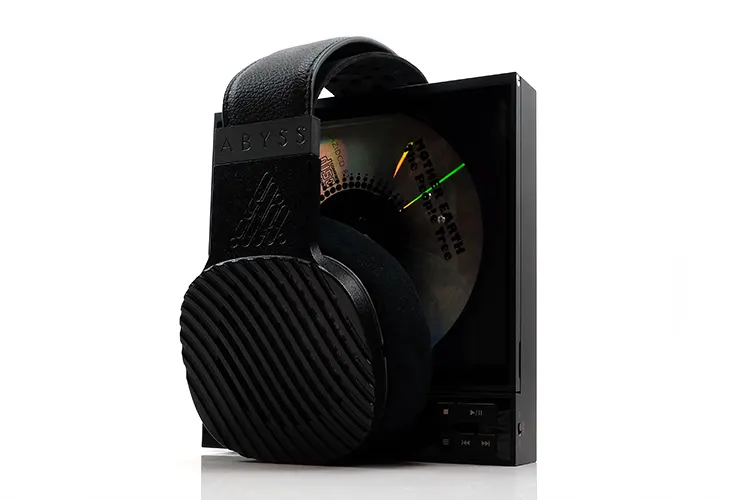
Headphone Pairings
Headphone pairings follow a similar theme, though impedance skew is not a factor. This time, it’s gain and DC input levels, followed by filter and mode choices.
I tested 2 dynamic and 2 planar headphones: the efficient Austrian Audio Composer, the 80Ω ZMF Headphones BOKEH Open, the DCA NOIRE XO, and Abyss’s JOAL.
The Composer is fine in battery mode on a low-gain setting. I wouldn’t bother going high-gain DC Input; the EC Zero T can drive this 22Ω 112 dB/mW driver with ease.
It also sounded exquisite on the tube/NOS mode with a beautiful blend of sweetness instead of sharpness and a soft but full-sounding set of lows. This is a headphone I typically monitor with, but the EC Zero T transformed it into a relaxed, yet detailed listening experience.
The two warmer or darker headphones, the JOAL and BOKEH Open, sound better to my ear with the tube mode turned off. I would stick with NOS for the BOKEH open to retain the low-end bloom and richer vocal texture, but go with OS for the enhanced control and clarity with the JOAL.
Both do well with a high-gain battery mode setting, but you can hear a lift in the dynamic range and immersion once you switch to the DC input mode.
I would keep the EC Zero T DC mode and high-gain on for the NOIRE XO. It sounds more dynamic and expansive staging-wise with the additional uptick in power.
For timbre control, you get more ‘urgency’ with solid-state, but the smoother, more liquid-like tone of the tube mode balanced out the more aggressive highs of the NOIRE XO more to my liking. NOS also added a bit more weight to the vocal and bass notes.
