

Synergy
IEM Pairings
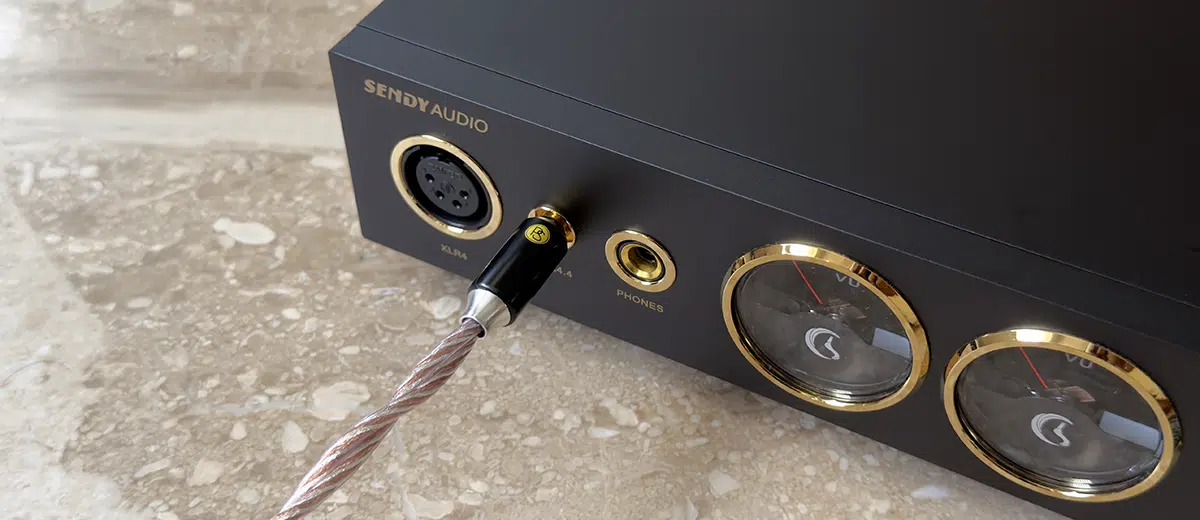
I spend a lot of my time with IEMs, so I really wanted KYLIN to work well with at least a few of them.
Sadly, that did not happen. Most of the IEMs I tried with KYLIN had a noticeable background hiss, almost like a constant waterfall sitting behind the music. It was present enough for me to consider KYLIN pretty much unusable with IEMs.
That said, a couple of IEMs did manage to handle KYLIN’s power better. The Alpha Omega Omega and Ra were the only ones that paired cleanly enough for proper listening.
And as expected, the sound was quite immersive. In fact, with Omega, this was one of the best pairings I have heard in recent times. Big, open, and very engaging.
Even the IEMs that I usually consider stable with powerful sources, like the Softears Enigma and THIEAUDIO Origin, had a slight hiss here. In a quiet room, it was audible enough to become distracting, and that kind of puts them out of the picture for me.
That said, I can understand why KYLIN behaves this way. It is clearly designed around power and headroom. With the kind of output it has, it can satisfy the demands of some really hard-to-drive headphones like the HiFiMAN HE6SE and the Susvara.
The headphones I have with me are not that demanding, but KYLIN’s purpose feels quite clear. This is more of a headphone-first machine, not something I would pick for IEMs.
Headphone Pairings
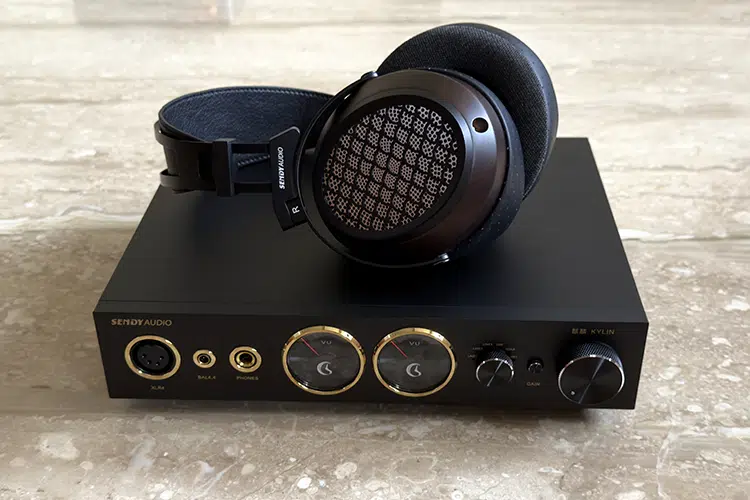
With all the headphones that I paired with KYLIN, none of them had issues with headroom.
There is always plenty of power to drive them. But power alone does not mean refinement in every area. KYLIN sounds big, relaxed, slightly warm, and musical, but not ultra-clean or perfectly smooth.
HE600 can sound a bit energetic and slightly neutral through its midrange, which KYLIN keeps in control. That slight analog flavor adds some missing bits of musicality.
The soundstage expansion helps in a rearrangement, giving more air and separation among notes. That helps HE600 deal better with the busy tracks.
It can help drier headphones sound more pleasing and less skeletal. Thin or clinical headphones gain some flesh here. Guitars, male vocals, piano notes, and older recordings can sound more organic through KYLIN.
This slight treble lift is probably part of why KYLIN does not sound overly warm or sleepy. But the trade-off is that with brighter headphones, or headphones that already have a lively top end, the treble can feel a bit loose and splashy.
With the HE600, this is not too evident, but another planar, the Sendy Audio Aiva 2, had an obvious treble lift that could be smoother.
In terms of pairing, KYLIN works well with smoother, warmer, or slightly rolled-off headphones. Anything that lacks some openness up top can benefit from the extra air and sparkles.
SIVGA’s SV023, a dynamic driver headphone, has a warm midrange and a smoother treble; thus, the pairing feels good. Currently not in my hand, but a headphone like ZMF Headphone BOKEH could have good synergy with KYLIN.
In the end, KYLIN is more of an old-school-flavored amp with huge driving ability and a nice analog mood, but with a top end that sometimes reminds you it is not fully polished.
Selected Comparisons
Questyle CMA18 Master
Technical
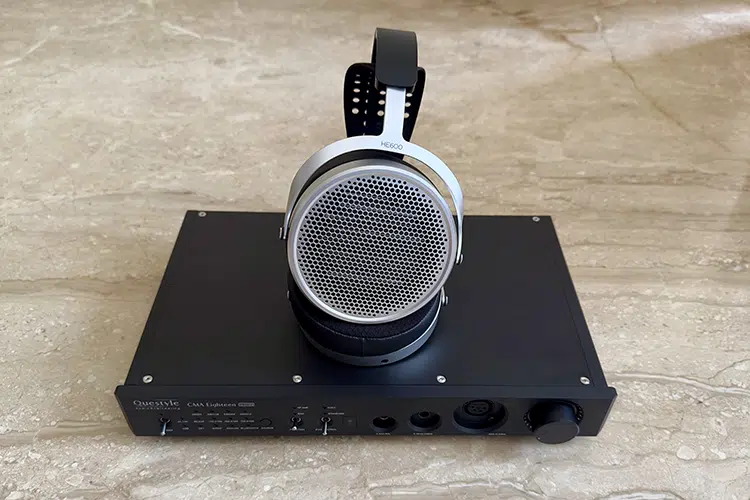
The Questyle CMA18 Master is a very versatile all-in-one unit, and on paper, it is loaded quite well.
It uses the flagship ESS Sabre ES9039PRO DAC, along with Questyle’s patented Current Mode Amplification technology.
In simple terms, this method processes the signal as current rather than voltage. One of the advantages of this design is lower transient intermodulation distortion, and Questyle has used this approach across different power levels for a long time now.
For digital inputs, the CMA18 Master offers both USB-C and USB-B. Through USB, it can decode up to PCM 768kHz/32-bit and native DSD up to DSD512. The optical and coaxial inputs handle up to PCM 192 kHz/24-bit.
The CMA18 Master also supports Bluetooth connectivity. Here, it supports SBC, AAC, aptX, aptX-HD, and LDAC, with LDAC going up to 96 kHz/24-bit. So, the device can also work as a more relaxed wireless source when needed.
Power output is also quite healthy. The 6.35mm single-ended output is rated at 188mW at 300Ω and 1.5W at 32Ω, while the balanced output goes up to 765mW at 300Ω and 2W at 32Ω.
That is already a lot of power for most headphones. Still, spec-wise, the KYLIN pushes things even further and sits above the CMA18 Master in raw output power.
Design
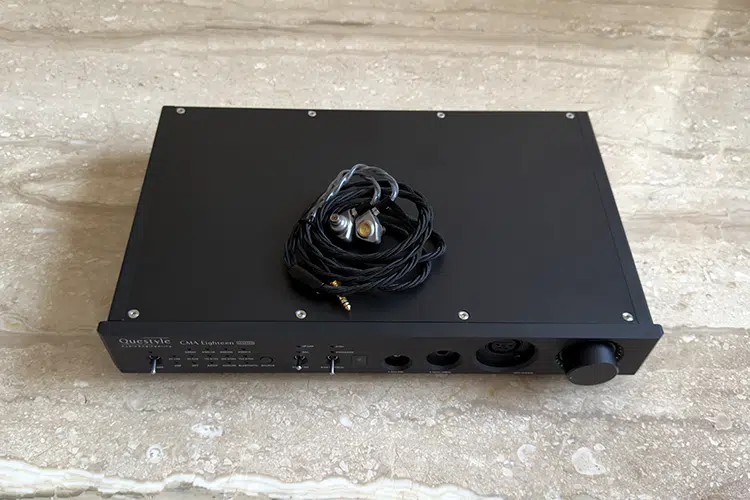
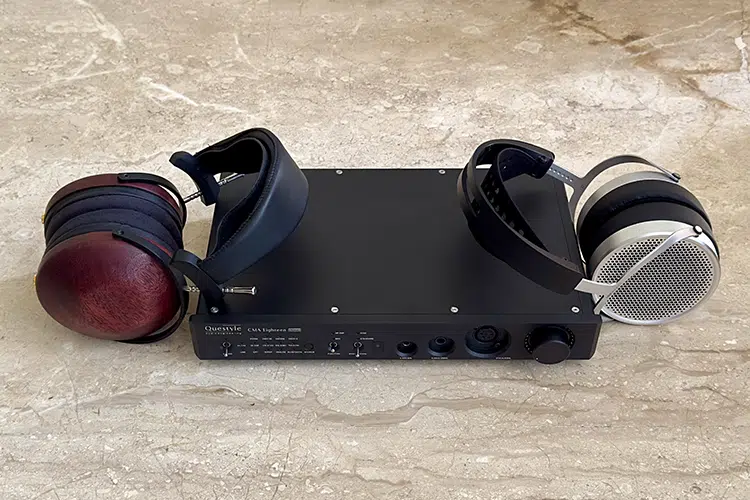
The CMA18 Master and KYLIN follow a similar understated design language. Both look minimal yet classy, with a solid old-school feel to them. Neither of them is trying to look too fancy or flashy like some of the newer desktop units.
The dimensions are also quite close, except KYLIN is a little smaller in width. The CMA18 Master is slightly heavier, but in actual handling, the weight difference does not feel too major.
On the front panel, the CMA18 Master gives you a few extra controls. You get toggle switches to select between headphone amplifier and DAC modes, along with a bias control switch that lets you move between high-bias Class A mode and standard-bias Class AB modes.
The input selector button is also placed on the front, and the small LED indicator makes it easy to know which source is currently selected.
On the rear panel, the CMA18 Master offers a similar digital input setup. But on the analog side, it is more limited, with only one RCA input available.
Another notable difference is the heatsink-style finish on the sides of the KYLIN. Since KYLIN is a Class A amplifier, it is expected to generate a bit more heat. However, during my use, I did not find it getting too hot, even in the extreme hot weather here.
Performance
The CMA18 Master sounds smooth, ultra-clean, and very detailed. Not in a way that pokes your ears. It just feels more open and more sorted. The tuning stays slightly neutral, but not dry or analytical. There is a soft, warm touch underneath, which keeps the musicality intact.
Compared to KYLIN, the CMA18 Master immediately feels more refined, and the note texture is better. Small details and tiny nuances get more space to show up. It does not force them forward, but they are easier to catch.
KYLIN has a warmer low end and a slightly fuller body in the lower midrange. The CMA18 Master also has an impressive low end, but it does not come across as warm.
It keeps the bass cleaner, tighter, and more textured. So, it is more like clean, tight, punchy bass on the CMA18 Master versus a rounder, more analog-sounding low end on the KYLIN.
The midrange is cleaner on the CMA18 Master, too. There is a tiny bit more energy in the region, and the upper midrange feels better extended. KYLIN’s more laid-back, rounder notes and softer edges. Easier listening, sure, but not as finely cut.
Tonally, the CMA18 Master is just more exciting. More sparkle, more air up top. Treble is super smooth but still has bite and detail. KYLIN feels a step behind on detail, and it doesn’t have that same treble smoothness.
The stage is wider on the CMA18 Master, with better spatiality around instruments. Layering is also cleaner. Nothing feels like it is fighting for space. Even on busy tracks where the KYLIN starts feeling a little stressed, the CMA18 just handles it with ease.
Burson Audio Conductor Stellar
Technical
Like the CMA18 Master, the newly released DAC/Amp, Burson Audio Conductor Stellar, is also a very loaded device.
It features the ESS9039PRO DAC, paired with fully discrete output stages and Burson’s Max Current power supply technology. The Conductor Stellar is offered in three versions: Standard, Deluxe, and Max.
The Standard and Deluxe versions come with V7 Vivid PRO op-amps and a remote control. The Max version goes a step further and includes the Burson Fusion Core 24V/15A power supply.
The DAC section is quite capable. It supports PCM up to 32-bit / 768kHz and native DSD512 through USB-C. The Conductor Stellar also delivers 8 watts of pure Class A power.
At its core, each channel is powered by four Onsemi MJE15032 transistors, so this is clearly not a lightweight desktop box in terms of output.
For headphone use, the front panel gives you 4-pin XLR, 3.5mm, and 6.35mm outputs. There is no 4.4mm port here. One useful thing is that the Conductor Stellar also has a dedicated amplification module made specifically for IEMs, so it is not just brute force power everywhere.
On the input side, it does not support analog inputs. You get USB-C, optical, coaxial, and Bluetooth 5.0 with LDAC, aptX HD, and AAC support. For outputs on the rear, the layout is again quite simple, with XLR and RCA preamp/line-out options.
One thing to note is that the Conductor Stellar gets quite hot during use. KYLIN, in comparison, never showed that kind of heating issue. It stays cool as a cucumber even during longer listening sessions.
Design
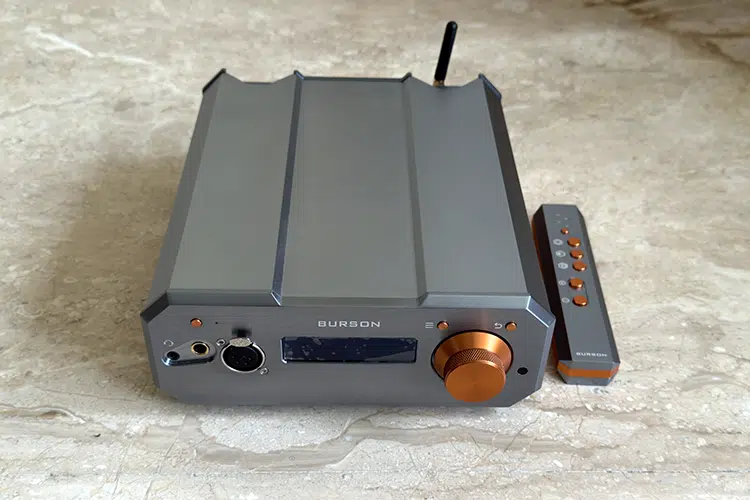
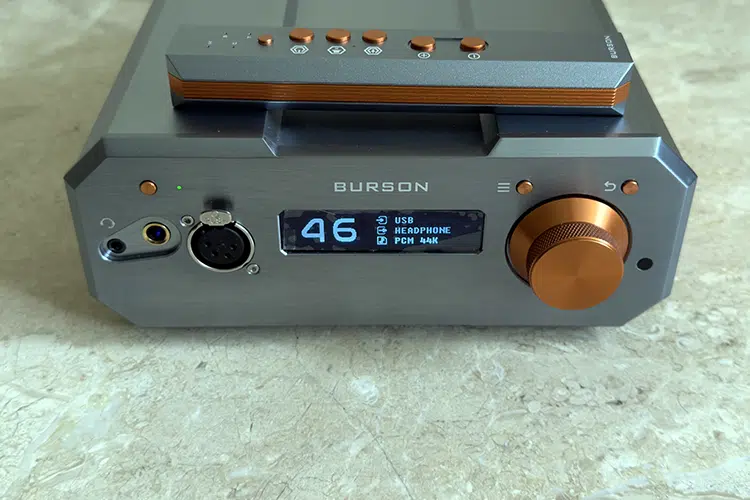
Design-wise, the Conductor Stellar has a more modern and catchier look. It experiments more with colors. The orange accents on the volume knob and the heatsink-style side panels give it a distinct look. A bit loud, but in a good way.
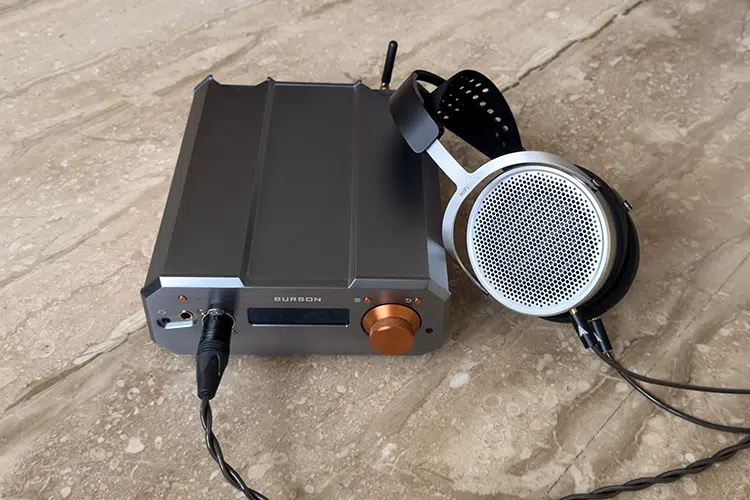
The weight is nearly similar, but the Burson unit looks beefier on the desk. It has more height and less width than KYLIN.
The front panel looks neat and does not feel overcrowded. The headphone outputs are placed cleanly on the left. In the center, there is a small screen that shows basic information like input source, decoding status, and mode selection.
The menu button can be used to navigate through the input sources and options to select the output type.
Compared to KYLIN’s more retro and analog-style approach, the Burson feels more modern and slightly flashier. Still practical though.
Performance
KYLIN clearly has the better low-end performance. It slaps harder, feels a bit fuller, and also comes across tighter. The lower midrange has more body, which gives string instruments a rounder note structure, and vocals get some added fullness.
That analog’ish flavor is also more pronounced on KYLIN. It has a little warmth and bloom around the notes. The Conductor Stellar, on the other hand, sounds cleaner and more transparent. There is less warmth in its tone. Its treble is more linear and natural.
KYLIN is not exaggerated or peaky in the treble region, but I do feel it could have been a bit smoother. That said, the overall stage feels a touch more open and expansive than the Burson.
What works in KYLIN’s favor is how instantly captivating its warmth and fullness can be with the right headphones.
The vocals feel denser and more intimate. That slight bloom behind the notes helps the whole atmosphere feel more natural and organic. It gives the music a bit more soul, for lack of a better word.
The Conductor Stellar has its own strengths, though. Its upper midrange feels more extended, and the midrange and treble feel better stitched together and more coherent.
It does not have that same warm pull as KYLIN, but it sounds more sorted and cleaner through the upper registers.
Another clear difference is detail handling. The Conductor Stellar gives more room to tiny details and small cues. The midrange is cleaner, and micro-details come out with less effort.
KYLIN has the details too, but that is not really its style. It does not push them forward. Its tuning naturally places those details behind the musical envelope, letting the warmth and body take the front seat.
My Verdict
The Sendy Audio KYLIN desktop amplifier sounded impressive when I first tried its prototype nearly a year ago. That feeling remains.
For Class A purists, KYLIN should click quite quickly. It has loads of power. The kind where the sound does not feel squeezed or held back. Headroom is strong, dynamics come through with ease, and harder headphones should benefit from that extra reserve.
The sound has a nice analog flavor to it. Slightly warm, relaxed, and absorbing. Compared to good sources like the Questyle CMA18 Master and Burson Audio Conductor Stellar, KYLIN does not feel lacking in scale or drive. It holds its ground quite well.
The design also works in its favor. It is not trying to be the most feature-loaded desktop unit out there. It is not trying to look very 2026 either. It feels old-school, but in a good way. More like a proper hi-fi box than a modern gadget trying to show off its features.
Of course, it is not perfect. I do feel the top end could have been a little more refined. A touch more smoothness there would have made the whole sound even more convincing.
It is not an IEM-friendly device at all. Sensitive IEMs can hiss badly with it. Also, compared to other sources in this price range, KYLIN does feel quite limited in features.
Still, KYLIN surely delivers where it matters. Big power, spacious sound, easy dynamics, and that slightly vintage Class A charm. It may lack some modern extras, but as a headphone-first desktop unit, it has enough character and muscle to impress.
Sendy Audio KYLIN Technical Specifications:
- DAC chip: ES9038Q2M
- Pre-Amp Amplifier: OPA604X2
- Analog inputs: RCA
- Digital inputs: USB-B / Coaxial / Optical
- Headphone jack outputs: XLR, 4.4mm balanced, 6.35mm single-ended
- Line outputs: RCA
- Output power: 500 mW (600 Ω) / 1 W (300 Ω) / 10 W (30 Ω)
- THD: <0.1% (1 kHz, rated power)
- Channel Separation: ≥85 dB
- Signal-to-Noise Ratio: ≥90 dB
- Dimensions: 245 x 225 x 50 mm / 9.7″ x 8.9″ x 2″
- Weight: 3.1 kg / 6.83 lbs
- Max Supported Sampling Rate:
- USB Decoding: PCM: 32 bit/384KHz
- Coaxial/Optical Input Decoding: Up to 24 bit/192kHz
