

Nihal reviews the Alpha Omega Omega, a new flagship hybrid 9-driver universal IEM featuring a single dynamic, 4 BA, and a quad-EST driver array. It is currently priced at $2699.
Disclaimer: This sample was sent to me in exchange for my honest opinion. Headfonics is an independent website with no affiliate links or status. I would like to thank the team at Alpha Omega for their support.
Click here to read more about the Alpha Omega gear that we have previously assessed on Headfonics.
This article follows our current scoring guidelines, which you can read in more detail here.
Soon after I reviewed the Alpha Omega Ra, an IEM that I adore, I became very excited about trying the Omega.
I reached out to Clement, the brand owner, many times for the Omega, but the one-man army can only do so much. Thankfully, we happened to meet at CanJam Singapore this year, and Clement brought along the Omega.
We had a great time at the event along with Henry Tik from Astral Acoustics. This duo has released a summit-fi IEM called Fulgrim, which we are hopeful to review soon.
If you are not aware, the brand is inspired by Warhammer 40k, a miniature wargame set in a dystopian science fantasy universe. Ra, Omega, Omegon, and Fulgrim are some of the characters from the game.
Since CanJam Singapore, Omega has been my daily driver, and through this review, you’ll know why. Along the way, we will delve into what Omega offers, compare it to some of the solid offerings in its price range, and determine if Clement’s flagship leaves a lasting impression.
Features
The Omega has a tri-brid driver configuration, featuring dynamic, Sonion balanced armature, and Sonion electrostatic drivers.
The precise configuration is a single dynamic driver, along with one Sonion BA driver for the lows and 3 BA drivers for the mids. Two Sonion electrostatic drivers are dedicated to the highs, and 2 more for the ultra-highs with a 6-way passive crossover.
Alpha Omega has implemented an internal chamber tweak with an additional crossfeed channel for the EST drivers. This is intended to minimize phase issues and enhance the control and cohesiveness of the driver’s performance at different frequency ranges.
The Omega is also equipped with three tuning switches, which deliver a total of eight different sound signatures. I will cover some of these tunings in the sound analysis part.
Design
Alpha Omega has not yet built an IEM in metal shells. Let’s say Clement has a thing for resins. However, Omega with its resin shells can raise some eyebrows; as for premium prices, a lot of us prefer metal shells.
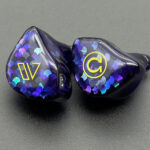
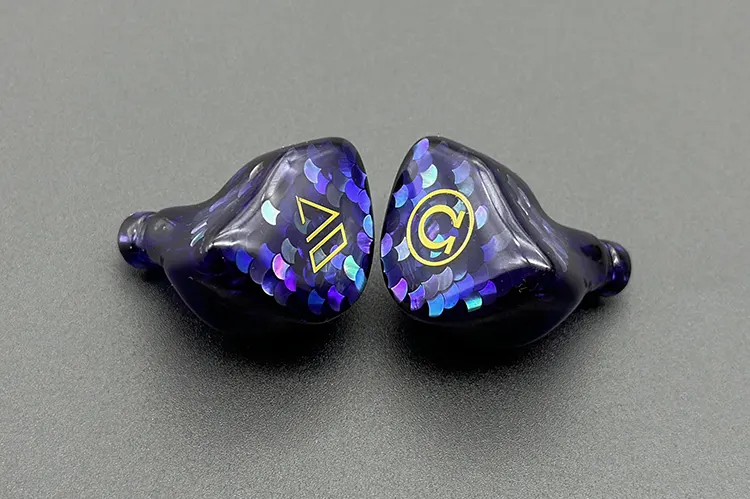
However, the shells are built to last long. These IEMs look and feel premium. The purple hue of the shells, with a faceplate adorned with a shiny, fish-scale-like design, gives a very sophisticated look to the IEM.
The IEM shines when it faces the light, making the internals look like a piece of jewellery. The brand’s logo in gold accent is placed on one of the faceplates, and the logo of the Greek alphabet Omega is placed on the other.
The shells are big, no doubt, but they have an ergonomic shape, thus not compromising the fit. Compared to some resin-shelled IEMs in this price range, I find the build and design on par with all of them. The Omega can be customized to one’s liking, but the build time may be longer.
The nozzle on Omega is bigger than a lot of the IEMs we see around. The reason the nozzles are big is that there are four sound tubes carrying sound to the ears. The nozzle also features a circular groove along its shaft, which helps improve ear tip grip.
The IEM connects via a flush 2-pin 0.78mm socket. There is a big vent on each shell, just beside the 2-pin socket. This venting system enables better airflow, helping with the bass performance.

Comfort & Isolation
Omega has shells of larger-than-average size and a large faceplate area with a flattish structure, so they don’t feel too large. For reference, these are as big as the Elysian Acoustic Labs APOSTLE‘s shells.
Due to its big nozzles, people with small ears may have issues with the fit, but ear tips can come to the rescue.
The ergonomic shells are lightweight with smooth curves, adding to the comfort factor. There are no sharp edges on the shells, and none of the edges push on the ears; thus, even in longer sessions, there is no discomfort.
Even with its big size, the Omega does not stick out much, and the weight ensures it does not fall off. Once you have a secure fit, they remain seated as they are, even if you are on the move. I do not find myself adjusting the monitors during my usage.
The isolation factor is decent, blocking a fair amount of outside noise. If you are surrounded by a few people chit-chatting at normal volumes, you should not be worried. In my time with the Omega, I did not feel any pressure build-up either.
Ear Tips
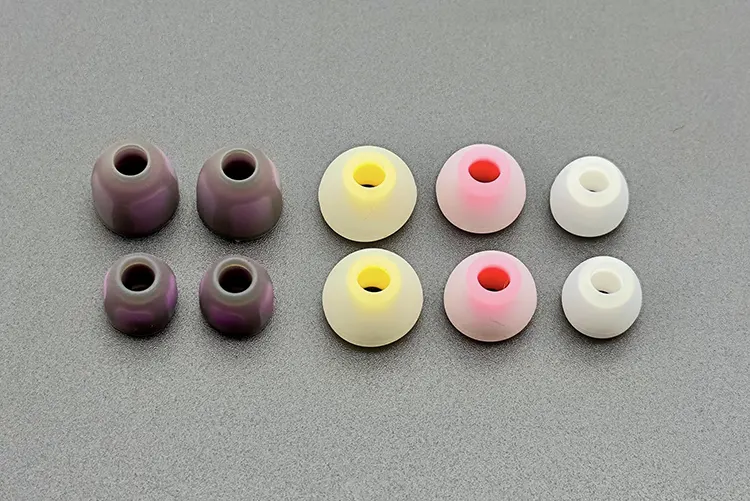
Omega comes with two different sets of ear tips. One set is the Acoustune AET07 silicone ear tips in three sizes: S, M, and L. The other set of ear tips is the Earbond EBT series hybrid ear tips with memory foam and silicone shells.
Clement has a special love for the Acoustune ear tips, so he packs most of his releases with the same ear tips. These ear tips have a thick stem and a wide bore, which go well with the Omega.
I do not use foam ear tips much, so my usage of the EBT ear tips was just limited; however, these surely are interesting ear tips.
Honestly, I found the Eletech Baroque tips to pair superbly well with the Omega. These ear tips are very soft and do not push hard against the ears. Other than these, the Divinus Velvet ear tips also go well.
The Velvets provide a more sung fit and better isolation than the Baroque tips. Since the nozzles are big, one can try ear tips that have a wider bore and thinner stems. The ones with thick stems are tricky to load.
Stock Cable
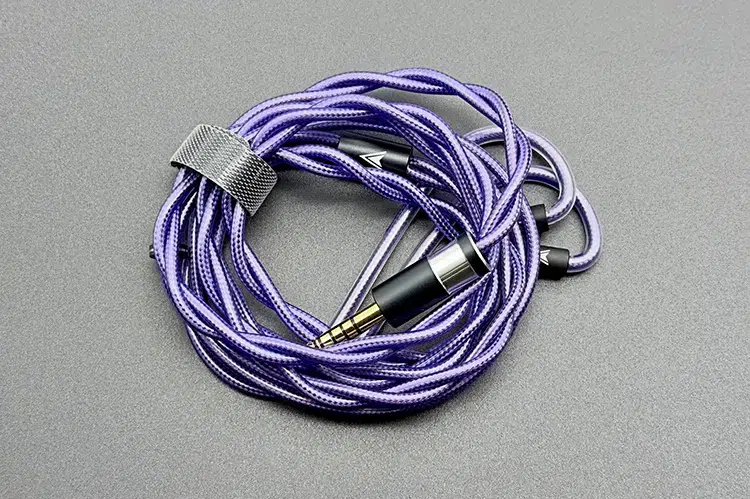
For the stock cable, Alpha Omega has collaborated with Astral Acoustic, a Hong Kong-based brand. A few months ago, we had covered one of Astral’s cables, called Mars. Omega’s stock purple coax cable, called Amethyst, is a custom cable made especially for the Omega.
The Amethyst is a 7N OCC SPC + 6N OCC Copper cable. It features ferromagnetic shielding technology, which reduces atmospheric noise (RFI) that may be picked up via earphone cables, enabling an ultra-quiet background. The cable focuses on delivering a well-balanced sound along with retrieving maximum details.
The cable has a striking deep purple color with a glossy, metallic sheen, matching the IEM’s design scheme. The Y-split, 2-pin connectors, and the termination adapter are all very sleek, with a minimal yet classy appeal.
The cable is lightweight, so dealing with it is always easy. The cable is quite supple and flexible, making it comfortable to store and ensuring it does not take up much space either. Together with the IEMs, the whole setup is easy-breezy and no-fuss to carry around.
The Amethyst aptly pairs with the Omega, enhancing both the looks and the sonic capabilities. I did not feel the need to change the cable, but just a word of caution: do not press the pins too hard when swapping cables.
Packaging & Accessories
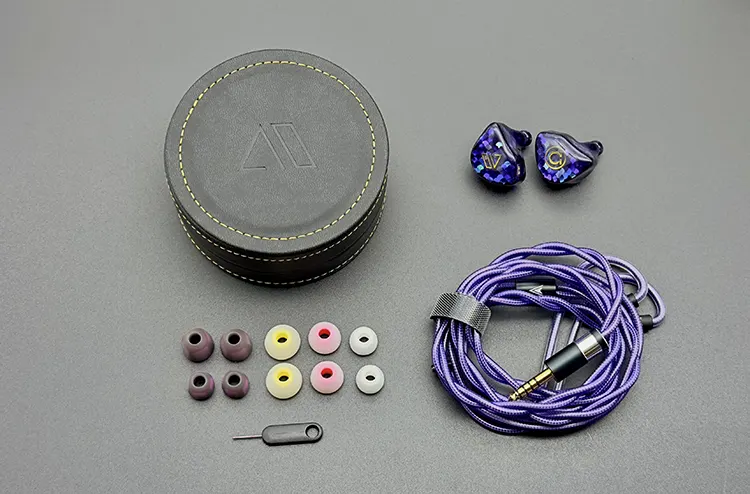
The Omega arrives in a simple black box with a gold logo of the brand on top. The packaging feels basic for the premium price, but it gets the job done. I would have loved to see better packaging, as at this price point, many brands are going overboard these days.
When opening the box, you’re greeted by drawer-style, sliding compartments. Each tray slides smoothly, revealing its contents layer by layer.
The top compartment houses the IEMs and the cable, placed firmly in a foam cutout. The IEMs and the matching cable look great in their purple finish. The lower tray holds the case and two sets of colorful ear tips. Don’t miss the pin inside the case, which you’d use to turn the tuning switches up and down.
The box has enough foam and cushions to keep things safe. The overall unboxing is tidy and organized, just not super fancy and lacking a premium touch. However, for the people who really do not care much about the unboxing, the style is quite practical.
Carry Case
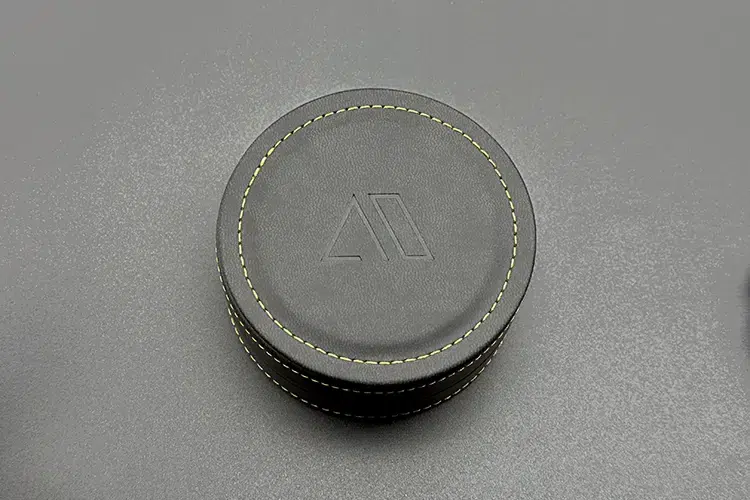
Omega is packed with a dark grey leather puck case. Most of us have already seen such a case, but the build and sturdiness are worth mentioning here.
The case is made of thick and durable material, which makes it quite protective. It does not deform under stress, nor does the outer layer get scratched easily, so you can use it without worrying.
The top of the case carries the brand’s logo embossed on it. I find the embossing better than stamping, as it lasts forever. There is a thick stitch that runs along the edges, giving it a rich look. The inner surface is nicely cushioned with soft material, providing a premium touch.
As with most puck-style cases that we encounter in the hobby, this one lacks a bit of space. You can store the IEM and cable, but I do not feel good about storing them in a cramped space, and I do not take chances with premium IEMs at all.
A little extra room would have helped the IEMs and cable sit in more comfortably.
Click on page 2 below for my sound impressions and recommended pairings.
