

Selected Comparisons
The following comparisons to the PLUSSOUND Allegro II were completed using the hybrid ear tips and a mix of the iBasso DX320 MAX Ti, the Cayin C9ii, and the Chord Electronics Mojo 2.
PLUSSOUND Allegro
Launched in early 2023, the original Allegro was the company’s first high-end universal in-ear monitor and was also priced at a slightly lower $3499.
Technical
Like the Allegro II, the original has a hybrid configuration. However, and I guess in vogue with high-end IEMs a few years ago, it uses a mix of dynamic, BA, and EST in a 6-way crossover with no planar or bone conduction drivers.
The precise configuration is also a dual dynamic for the lows, 6 BA instead of 8 for the mid-lows, mids, and the mid-highs, and a quad-EST driver array for the highs and ultra-highs.
The Allegro II has no EST drivers and instead uses those additional BA’s to cover the highs with the 6mm planar covering the ultra-highs.
As mentioned on page 1, the Allegro II’s internal wiring has also been upgraded from Copper XS only to a mix of Copper XS and Silver XS, which should improve conductivity, enhancing clarity and detail.
The original Allegro is rated at 12Ω impedance with an SPL of 112 dB/mW @1kHz compared to the Allegro II’s 15Ω and 115 dB/mW @1Khz rating.
The difference, though, is the EST drivers in V1, which tend to drag the sensitivity levels down a notch or two, something that does not affect the Allegro II’s performance.
Design
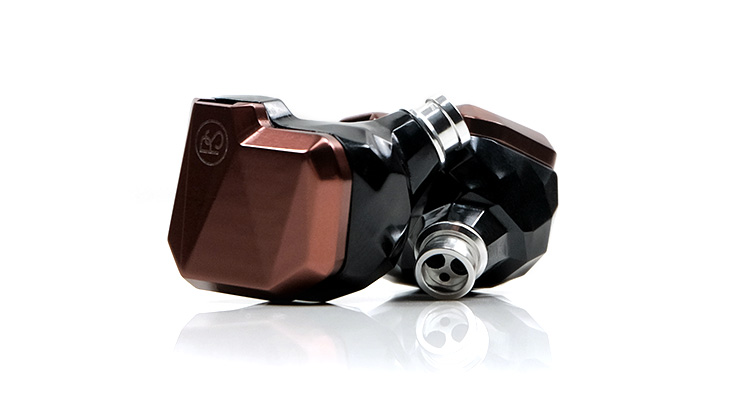
No question the Allegro II is the smaller unit, but the main shell is more compact, whereas from the top down, the face plates look almost the same dimension-wise.
I liked the polygonal aesthetic of the Allegro, but compared to the more ambitious 7-axis CNC-machined etching all over the body of the Allegro II, it suddenly looks the plainer of the two.
Color-wise, there is no change between these two models; dark copper and black are a nice mix. Rather, we have gone from a glossy exterior to a matte anodized finish on Allegro II.
The Allegro II comfort levels are superior to the bulkier original. Not just that, but the elongated nozzle combined with the flatter shell allows the Allegro II shells to fit tighter in the concha basin of your ear, producing a superior seal and a lower external profile.
The new tips are more useful this time around, but that might be personal preference. The older tuning had me wedded to foam tips, but the size of the shells and tips combined felt too weighty.
With the improved tuning, I can slip into the hybrids or silicones without an issue, and both are more comfortable than the foams, with the silicone the most comfortable of the three choices.
Performance
For this comparison, I used the Symbio W tips on the original Allegro as they are a closer match to the performance direction of the Allegro II hybrid tips.
There are a lot of changes here, and for the better. For a start, I hear less of that overlapping timbre between the BA/EST and dynamic drivers of the original compared to the new.
The Allegro II sounds firmer, more natural, and coherent in its timbre throughout. In contrast, the original features competing tonal qualities between the slower, bloomy low-end dynamics and the wispy, long decays in the highs, creating a battle of highs and lows, accentuated by a leaner-sounding set of mids.
The Allegro II shifts the bass weight more decisively to the sub-bass power, whilst retaining a tighter, more dynamic mid-bass punch.
It also improves on the bass-to-mids separation compared to the original, with a more pronounced lower-mids scoop and a stronger level of gain from 1-3k, placing vocals more front and center and instruments with more body and a better fundamental frequency.
Subjectively, the Allegro II hits deeper and harder with midrange notes that are more planted-sounding with improved tonal weight.
You will notice the switch to the BA/planar combo for the highs. It’s less ethereal in its tonal quality with an improved harmonic balance. That translates into reduced upper-order harmonic overtones, less vocal sibilance, and a slightly drier timbre for percussion strikes.
The resulting performance delivers a stronger perception of space, particularly through the mids and vocal imaging. I would say the Allegro II is not quite as busy-sounding in the highs as the original, but to my ears, that is a good thing.
Noble Audio Shogun
The Noble Audio Shogun was launched earlier in 2025, and until the debut of the recently released Chronos, it was the company’s co-flagship IEM, sitting alongside the Ronin.
Technical
Like the Allegro II, the Noble Audio Shogun is a high-end hybrid 13-driver universal monitor with a mix of dynamic, BA, and bone conduction. However, it does not use a planar driver for the highs; instead, it has a quad-EST driver array.
Its precise configuration includes a single 10mm composite diaphragm dynamic driver for the lows as opposed to dual isobaric, 6 BA for the mids and highs instead of 8, and the quad EST driver array for the ultra-highs rather than the Allegro II’s 6mm planar.
Both IEMs have dual bone conduction driver implementations designed to enhance spatial imaging. However, the Allegro makes specific reference to also improving the sub-bass performance.
The Shogun is rated at 23Ω impedance with an SPL of 110 dB/mW @1kHz. While the Allegro II seems a little easier to drive at 15Ω and 116 dB/mW @1kHz, it was the Shogun that sounded the more sensitive of the two.
Both will sound good from DAPs and dongles, and do not need anything special to drive them.
Design
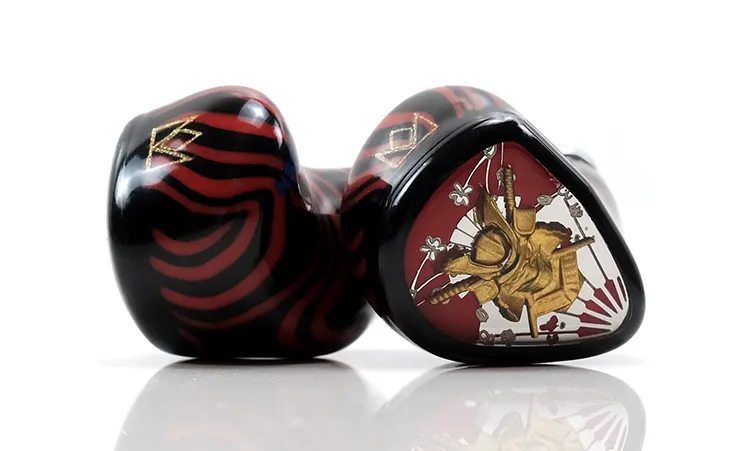
The Shogun has the bigger form factor but is technically the lighter of the two, courtesy of its lightweight resin materials.
That also means the CNC-machined aluminum body of the Allegro II is more durable for potential bumps and drops, but if you are after the best in comfort, well-formed resin tends to edge out well-formed aluminum.
Stylistically, they could not be further apart. The Shogun is a themed creation borrowing heavily from Japanese Samurai culture, with a lot of intricate concepts rolled into one striking blend of red gold and black.
The Allegro II is more of a modern minimalist creation. It’s still quite intricate, but the mix of copper and black is more urban in concept and will appeal more to those who like clean lines and simpler color schemes.
Personally, the wearing experience is more about the tactile feedback than the visual, with metal versus resin in your ear. The Allegro II is heavier and not quite as forgiving with ear canal shapes as the resin of the Shogun.
However, the deep canals of each mitigate the effect of metal somewhat, and with the new hybrid tips, the Allegro II has a slight edge in passive isolation performance over the Shogun with its own silicone tips.
Both come with good stock cables. The Shogun’s 4-core custom cable is a flashier design, finished with a matching black and red Japanese Katana sword handle theme.
It uses a Litz-based as opposed to a coaxial geometry consisting of copper, gold, palladium-plated silver, and pure silver. It is more pliant but heavier than the Copper+ braided version that comes with the Allegro II.

Performance
These two are very different in how they present music, particularly in their respective staging properties.
From an FR point of view, the Shogun bass response is more exaggerated with enhanced mid-bass bloom over the Allegro II, which, to my ears, seems more controlled but dips harder through the 150Hz to 1k range.
That creates a dramatic staging change as the reduced lower-mids presence from the Allegro II places instruments on a narrower X-Axis compared to the very wide sounding Shogun.
Combine that with more pinna gain elevation from the Allegro II, and it becomes much more vocal-focused with instruments imaging behind compared to the Shogun’s stronger, wider instrumental left-right placement.
So, whilst both go deep, and I would argue the Allegro II is deeper sounding, its imaging focus is more centered down the spine of the music, whereas the Shogun’s is bloomier, more grandiose, and pushes out quite wide in the process.
Their respective treble tuning is almost the exact opposite, which in turn differentiates a lot of their note timbre. From 5-8k, I find the Shogun tuning to have a slightly darkish tone to it with more upper-harmonic order emphasis from 8-10k onwards.
The Allegro II is more pronounced from 5-8k, which injects a bit more energy and contrast into percussion and vocal timbre. It has less of a rounded, smooth tone and more of a meaty, drier coloration.
I could live with either; it just depends on the music I am listening to. If the recording is bright and arena-like in its projection, I would pick the Shogun. If it’s soft-sounding and more intimate, the Allegro II might be the better choice.
Vision Ears EXT MKII
The Vision Ears EXT MKII was launched last year and is part of VE’s Premium line of universal IEMs, which also includes the all-BA Phonix.
Technical
Although the EXT MKII is a hybrid, the internal driver configuration is very different from the Allegro II. There is no BA, no bone conduction, and no planar drivers.
This is a simpler but still unique setup with a 9mm dynamic driver for the lows, a HALC-chambered 6mm dynamic driver for the mids, and four EST drivers for the highs and ultra-highs using a 3-way crossover.
The Allegro II keeps its dual dynamic array focused on the lows, but packs 8 BA into the mids and highs and ditches the EST for planar for the highs, so the mix of timbre here is different.
The EST MKII is rated at 10Ω and 108.5 dB/mW SPL @ 1KHz (100mV), so while the load is even lower than the Allegro II’s 15Ω rating, the SPL is less efficient, and you will find you might need a bit more volume to volume match the EST MKII to the Allegro II.
Design
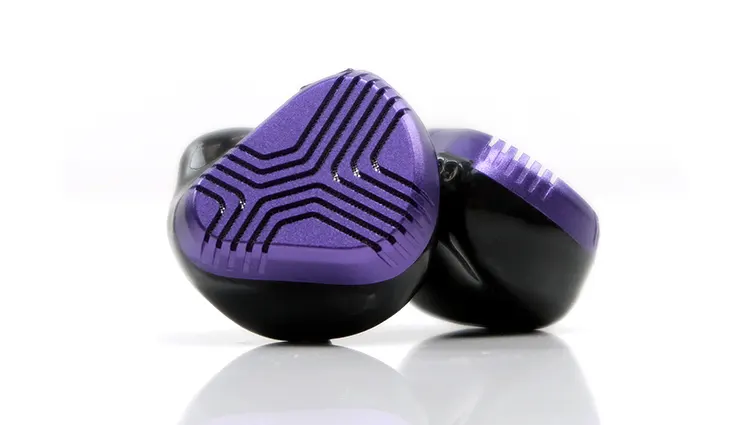
There is a massive difference in their respective form factors. The EXT MKII is tiny. It’s one of the smallest multi-driver hybrids I have used, so despite the excellent size reduction from PLUSSOUND, the Allegro II still looks quite big compared to the VE design.
The EXT MKII is not all resin either; it has a CNC-machined aluminum plate and resin for the main shell, making it a fairly lightweight creation.
Arguably, the Allegro II’s 7-axis CNC-machined aluminum shell and body are more durable and perhaps a more premium choice of materials, but that’s a difficult one to debate, as resin is generally a more comfortable choice in the ear over metals.
One design feature of the EXT II’s shell that stands out is the unique, almost perpendicular angle of the nozzles, allowing for a very snug fit in the ear’s concha basin. It feels very secure and low-profile in the ear compared to the Allegro II.
That being said, the Allegro II passive isolation is just as good. The new hybrid tips help a lot to seal the canal even with a metal body. I would put them on par with the EXT MKII in that regard when using the VE silicone tips.
The stock cable that comes with the EXT MKII is nothing special, and the same one from the MK1 with an updated 4.4mm plug. This is a 1.2m 28AWG 8-wire SPC insulated in 200d Kevlar for each wire and wrapped in a tightly braided black PVC jacket.
It handles superbly and better than the stiffer Copper+ braided version that comes with the Allegro II. However, the finishing is more premium than the VE cable, and side by side, the dynamic range from the Allegro II cable is slightly better.
Performance
The use of a dynamic driver for the EXT MKII mids as opposed to BA drivers, to my ear, is the biggest difference between these two IEMs.
You can hear tangible timbre differences, with the EXT MKII delivering a fuller vocal with a little more natural decay compared to the lighter note weight, but faster and more technical delivery of the Allegro II mids.
You might disagree on that point as the most prominent. Aspects such as the slightly stronger sub-bass bias on the Allegro II, the gentler bass-to-mids dive, and more mid-bass bloom from the EXT MKII all have merit and all contribute to what I would loosely describe as a slightly smoother sound.
The Allegro II accentuates its vocal focus with a more elevated pinna gain region, sounding more front and center. However, the girth of the EXT MKII vocal texture remains ‘fatter’ and more emotive in its delivery, which in turn, draws your ear in just as much but for different reasons.
There is a discernible softness in the EXT MKII’s lower-treble tuning compared to the more energetic Allegro II alternative. Do not get me wrong, the EXT MKII has some nice treble and excellent headroom, but it’s not as amplified in its 5-8k region as the Allegro II.
That means the Allegro II has more fill in its upper-mids and treble region, a bit more contrast and energy in its note quality, and will sound slightly tighter and drier in its overall coloration.
The EXT MKII sounds more relaxed in comparison, fuller, and smoother, but also more relaxed in its delivery.
My Verdict
The PLUSSOUND Allegro II is a confident-sounding high-end monitor that has addressed many of the concerns and feedback from the original model.
It delivers a meatier, more decisive modern tuning with excellent power, strong vocal presence, and a better treble balance courtesy of the new BA/planar implementation.
The reduction in physical size, combined with the new hybrid tips, also makes long listening sessions with the Allegro II a more pleasurable experience than before.
It might not win awards for the widest soundstage out there, so this tuning is more for those who like things a bit more close and personal, but at the same time crave some top-notch clarity and control.
Overall, the PLUSSOUND Allegro II is an impressive upgrade on the original flagship and one that I would consider to be a musically enjoyable high-end performer. You could say the dopamine release is strong in this one.
PLUSSOUND Allegro II Technical Specifications
- 13 drivers per side
- Driver Design Quad-Hybrid (dual 10mm isobaric Dynamic driver, dual Bone Conductor drivers, 8 Balanced Armature drivers, 6mm Planar magnetic driver)
- 8-way crossover
- Anodized aluminum faceplate, body, and nozzle
- Rhodium Plated 2-Pin connection
- UPOCC Copper + Silver XS internal wiring
- Curated Copper+ cable with exclusive two-tone splitter
- Impedance: 15 ohms
- Sensitivity: 116dB@1kHz
- Frequency Response: 10hz-21kHz
