

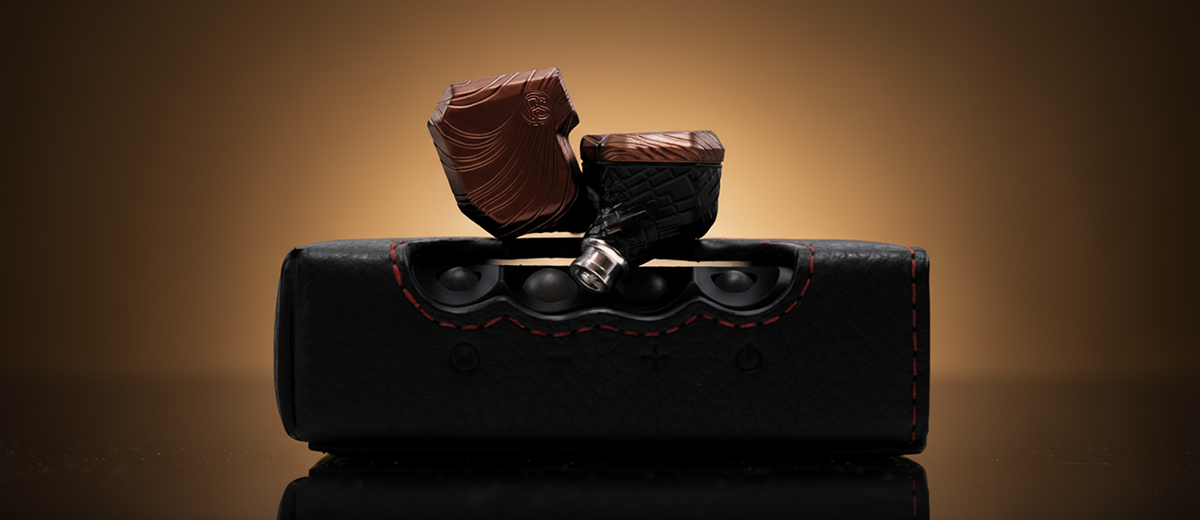
Sound Impressions
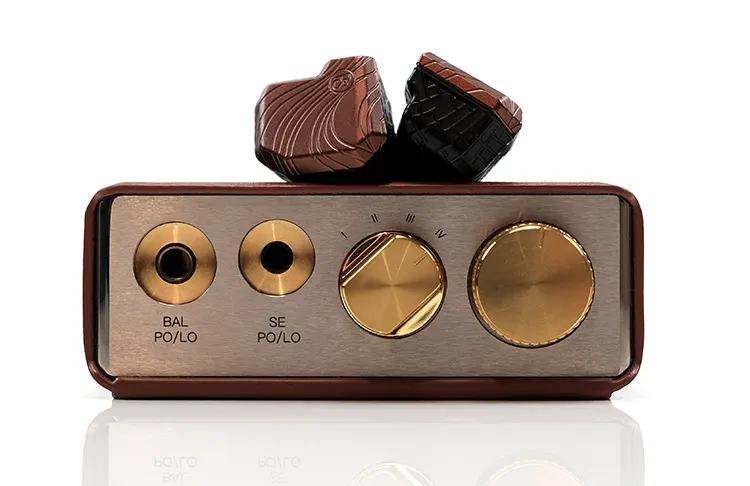
The following sound impressions of the PLUSSOUND Allegro II were completed using a mix of the Cayin C9ii and the iBasso DX320 MAX Ti in a balanced output mode for both source and amplification.
Summary
The Allegro II is a more confident and muscular spin on the surprisingly mature but slightly tentative tuning of the original Allegro.
It sounds more powerful with a better fundamental frequency presence and improved note weight from those BA drivers. Vocals are more natural and forward in their imaging, with a drier but meatier treble sound that’s strong on its attack without sounding brittle or sibilant.
Arguably, the Allegro II is tuned for modern music where power and rhythm are essential components.
It sounds fantastic with R’n’B, EDM, and pop, where you need a little bit more ‘bounce for the ounce’ sub-50Hz, and still retains excellent midrange detail from those BA drivers for more nuanced and complex passages.
There is an energetic drive from its dual dynamic drivers with improved contrast and control. Compared to the original, the bass-to-mids separation has improved with a notable shift to a stronger sub-bass lilt over mid-bass bloom and warmth.
The blending of dynamic and BA is more coherent this time around. I can still pick up a little on the contrast, and there is some suck-out in the lower-mids, but the ‘glassy-like’ timbre from the original has been ‘fattened up’ with vocals offering more texture and an improved harmonic balance.
PLUSSOUND has also tinkered with the treble response. The switch to planar sounds right to my ear. There is still some 5-8k elevation, but it is judiciously applied for contrast and bite without thinning out the sound.
Overall, the Allegro II isn’t a reference tuning; it has some coloration and heft to create a musically enjoyable and resolving presentation that both casual and audiophile alike will enjoy.
Frequency Response
Compared to the original, the Allegro II FR is decidedly more U-shaped with noted peaks from 20Hz to 50Hz and a stronger 1-3k (pinna gain) elevation.
That means the two pillars of bass power and vocal presence tend to leap out in the Allegro II performances, with everything else filling out the presentation in more of a supporting role.
The mid-bass bloom has been noticeably reduced with a steeper 50Hz to 600Hz drop, which reduces background instrumental presence a little.
However, the elevated sub-bass tuning has noticeably improved the fundamental frequency, giving lower-register instrumental notes and some vocal performances improved heft and impact.
From 1-3k, the gain level has been given a shot in the arm. The Allegro II vocals are much further forward and more distinct-sounding compared to the original. As a vocal lover, that suits my tastes a lot better.
Thankfully, that enhanced pinna gain does not come with unnatural sibilant or bright upper-harmonic overtones.
Like the original, the Allegro II has been tuned with a 4-5k dip, but instead of a light touch 8-10k lift, the 6-8k lower-treble is given more focus, which, for me, improves upper-register percussion attack physicality, shortens the decay a little, and enhances note definition throughout.
It does not sound quite as organic or as smooth as the Noble Audio Shogun or the VE EXT MKII. However, the resulting lower-treble fill provides a viable alternative for those who want a slightly cleaner, higher-contrast tuning over those somewhat darker sound signatures.
Staging & Dynamics
The Allegro II projects some excellent depth and decent height, offering improved control and imaging over the original.
However, its mids are slightly to the intimate side with vocals further forward and backing instruments tucked in behind courtesy of a notable 200Hz to 600Hz dip, more so than the original.
It is not as wide-sounding as competing flagships such as the Shogun, but the slightly shorter decay and articulate BA performance produce a precise imaging experience throughout.
Add in the stronger bass-to-mids separation, improved note fundamental frequency presence, and lack of mid-bass bloom, and you get a much better-than-expected sense of clarity and depth to the Allegro II’s soundstage.
With the new hybrid tips, the bass presence is enhanced more than the silicone alternatives, which create a slightly flatter and more relaxed staging quality from the Allegro II.
Given the U-shaped tuning, I stuck with the hybrid tips as they sounded more immersive and engaging with the music I typically listen to.
Overall, the Allegro II staging qualities are more about focusing on the ‘spine’ of the music, i.e., the bass, vocal, and percussion presence, rather than casting a wide, grandiose presence.
Synergy
Efficiency & Sensitivity
The PLUSSOUND Allegro II is rated at 15Ω and 116 dB/mW @1kHz, and though on paper a little more sensitive than the original Allegro, the gap isn’t terribly significant.
In the context of our selected comparison IEMs on page 3 of this review, it’s a little less sensitive than the Noble Audio Shogun, but easier to drive than the Vision Ears EXT MKII.
This is an IEM that will drive quite easily off good-quality dongles and DAPs, but it’s not so sensitive as to pick up on amplification with higher noise floors.
DAP & Portable Amplifier Pairings
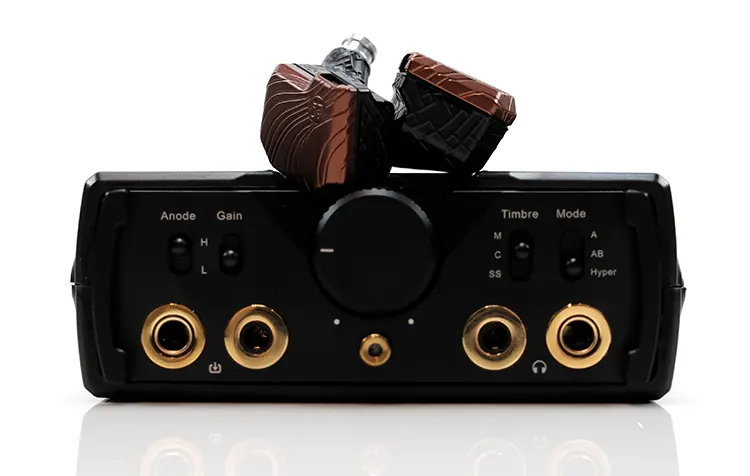
I tested the Allegro II with a mix of DAPs and portable amps, including the Cayin C9ii and the N6iii equipped with the R202 motherboard, the Chord Electronics Mojo 2, and iBasso’s D320 MAX Ti.
If it is technical prowess, high levels of resolution, and retaining a lively level of articulation and treble extension, then the iBasso DX320 MAX Ti and, to a lesser extent, the Mojo 2 will give you that.
Both produce a slightly more neutral level of bass quantity, but the dynamic range from these two are excellent.
The Mojo 2 Allegro II pairing is more linear and slightly more forgiving to my ear than the DX320 MAX Ti, which has a bit more snap and punch in the lows. The DX320 MAX Ti also improved the Allegro II’s staging considerably over the Mojo 2.
If you want to keep the timbre more natural-sounding, especially with the Allegro II’s BA mids, then the two Cayin units are a better choice.
For vocal lovers, the R202 R-2R setting with the N6iii produces the richest vocal performance, though at the cost of some depth and background clarity.
I wasn’t a fan of the R202 1-bit midrange performance with the Allegro II. Its analog tone is soothing, but the vocal imaging and weight felt a bit flat compared to the R-2R, and my preference was pairing the Allegro’s with a more colored, ‘joyful’ source sound.
The C9ii sounded the best of both worlds when in Classic tube mode. You will hear excellent dynamic range, a very spacious soundstage, and a smooth-sounding vocal timbre.
Setting the unit in Hyper Mode with Classic Tube will also soften the pinna gain presence slightly, which I know some might prefer over the more upright, energetic solid-state setting.
Dongle Pairings
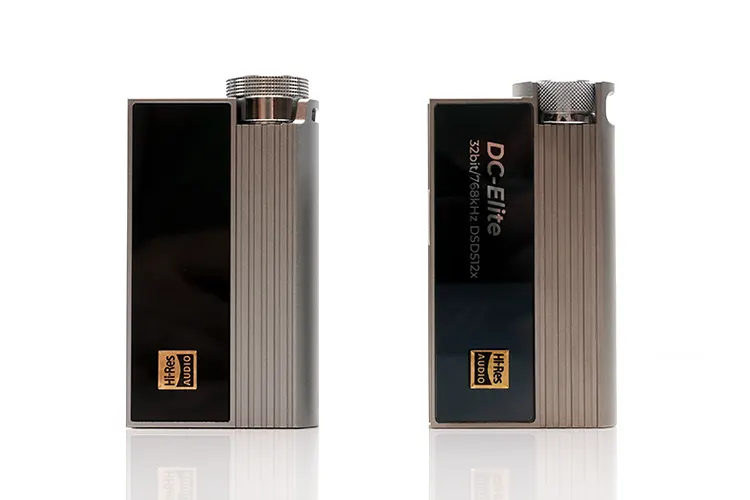
The Allegro II dongle pairings did not follow quite the same preference pattern as the DAPs and portable amplifiers. I tested 4 in total, including the iBasso DC-Elite and Nunchaku, Cayin’s RU7, and FiiO’s BTR7.
I was expecting the Nunchaku tube mode pairing to work out the best based on my DAP preferences, but despite creating a smooth and sweet midrange, the dynamics and punch on the low-end were lacking compared to the DC-Elite.
The Nunchaku goes deep and has some nice body, but I prefer the more aggressive punch and faster attack of the DC-Elite/Allegro II pairing. I did not feel the DC-Elite reduced the amount of note body from the Allegro II or dulled the vocal bloom either.
The RU7 pushes the Allegro II staging presence back a bit from where you are as a listener. If you feel the Allegro II pinna gain is too much, then the RU7 mitigates this with more neutral imaging whilst pushing out the staging dimensions quite nicely along the X-axis. Its analog tones also give the Allegro II mids a more natural coloration.
The BTR7 has some gusto with the Allegro II, but the staging felt too narrow with a lack of separation compared to the other dongles.
Bass density and energy from the Allegro II are good; the vocal weight is also very good. However, the 1-3k elevation felt too aggressive, with almost no background space left for instruments to hold their own.
