

Sound Impressions
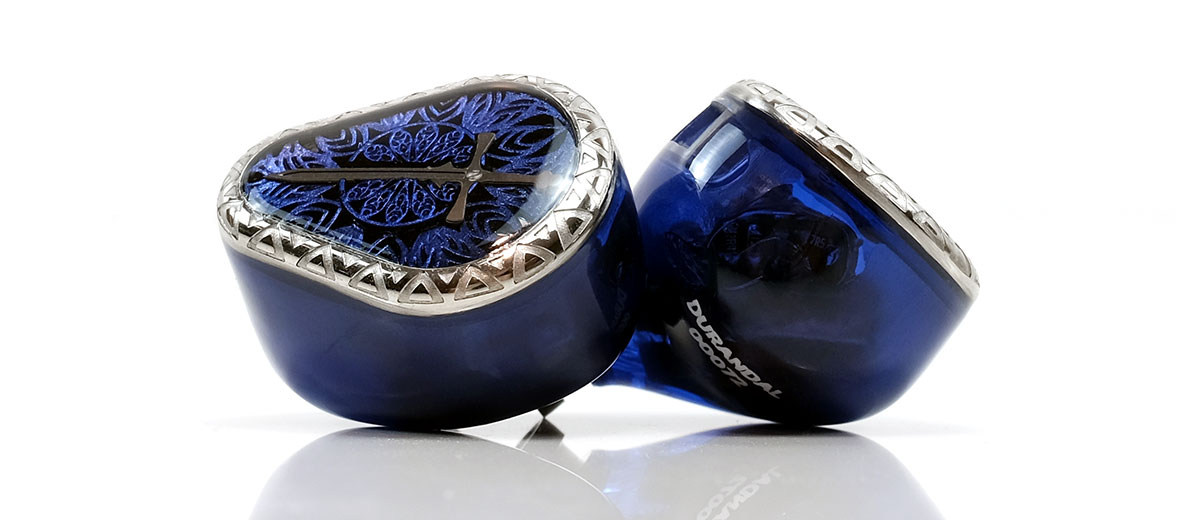
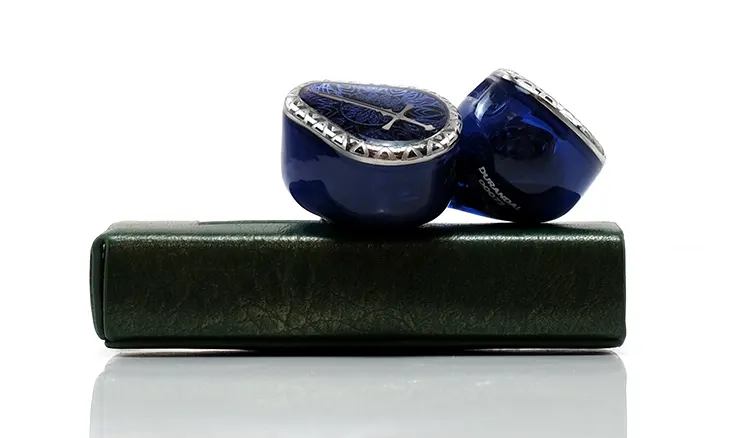
The following sound impressions of the Nostalgia Audio Durandal were completed using a mix of the iBasso DX340 and the Cayin C9ii, the stock cable, and the Royal Blue Symbio W ear tips.
Summary
If I were to describe the Tesseract as the technical king of the Nostalgia Audio lineup, then the Durandal is the emotional, powerhouse sibling.
This is a deep and natural-sounding performer with beautifully textured vocals and excellent dynamic range. It delivers a driving bassline and a stronger set of highs compared to the Nostalgia flagship’s relaxed treble.
The emphasis here is engagement, with a ‘bottom-up’ tuning that works wonderfully well with modern pop and rock or anything that needs a firm fundamental frequency to carry any tune with convincing authority.
And yet, I would not define the Durandal as a predominantly basshead IEM. There are those in this price range with even stronger bass profiles, such as the Noble Audio Onyx.
Rather, it’s a balanced weight, one which is very convincing but does not come at the cost of a loss of clarity in the mids and highs.
So, whilst it’s not the widest soundstage, at least not compared to the Tesseract, I would not classify the Durandal as having a dark tuning with plenty of depth and decent headroom on display.
One thing to note is how influential the source will be on Durandal’s performance bias. It does seem quite sensitive to a DAP or dongle’s core sound signature.
For example, the neutral iBasso DX340/AMP15 will open up the mids and highs but shave a bit of body and weight from the lows. If you want something more spacious and technically ‘correct’, then it is an ideal pairing.
If you are after the strongest bass response, then the N6iii/E203 combo and especially the ONIX Mystic XP1 portable amp/DAC will produce a high-density, fulsome set of lows but attenuate the available headroom at the same time.
Frequency Response
The Durandal sits somewhere between a mild w-shaped and V-shaped frequency curve. It has an elevated low-end response that is Harman ‘correct’ up to 100 Hz, displaying excellent sub-bass presence and a decent mid-bass punch to go along with it.
From there, the FR has a slow drop to around 500-600 Hz, but a drop that stays a few dB above neutral right the way up to 1k. This results in a fulsome, warmish tone from the Durandal’s bass and lower-midrange, fattening up the lower register instrumental sound and imbuing vocals with plenty of texture and body.
On the top side, the Durandal highs have a stronger lift compared to the more muted Tesseract treble presence, particularly from around 6-7k onwards.
However, it is not a spikey, harsh tone. It is just enough to bring some welcome contrast in the midrange timbre to give it a more life-like, natural tone. There is also a bit of an upper-mids dip from 2-4k that seems to prevent any excessive treble bleed into the midrange timbre.
From 1-2k, there is a slight push north of neutral that helps flesh out some voicing with good presence to go along with that body.
However, that drop in the upper-mids gives it a slightly compressed presentation, so vocals sound more tonally accurate to my ear than the Tesseract, but they do not reside in the same amount of space and separation from background instruments as the flagship IEM mids.
Staging & Dynamics
The Durandal has excellent depth and dynamic range, good height, and average width, at least when I compare it to some of its competitors in this price range.
To give you some context, I find the staging bias more balanced than the darker Onyx, deeper and more powerful sounding than the Tesseract, but not as airy or wide. It is also slightly more relaxed in its midrange delivery compared to the drier but more filled-in lower-treble presence of the SWEEAR SR11.
As such, this is an IEM that will draw your ear more to the lows and mids, pulling you into the performance rather than presenting it from several feet away. There is a degree of intimacy in a lot of the vocal performances, helped along by the excellent weight in the vocal and instrumental notes.
If there is one area that can be debated, it is headroom, and only after experiencing the very open and airy-sounding Tesseract and a few other similar high-end IEMs.
The staging width lacks the same attention-grabbing imaging precision and midrange instrumental separation as the flagship, preferring instead to give a stronger center-weighted presentation.
Synergy
Efficiency & Sensitivity
The Nostalgia Audio Durandal is rated at 15Ω impedance with an SPL of 115 db/MW. Whilst it never came across as super sensitive, I would rate it a fairly easy monitor to drive from DAP and dongle alike.
Ranged against the Tesseract’s 18Ω impedance with an SPL of 118 dB/mW, it is slightly less sensitive, demonstrating how well-tuned the Tesseract is, given that it uses 6 EST drivers. Typically, EST driver IEMs are less sensitive, requiring more volume, but that’s not the case here.
Compared to other high-end EST IEMs with bone conduction, such as the 14Ω 108 dB/mW, rated Noble Audio Onyx, the Durandal is a little easier to drive. However, some of that volume twisting might be psychoacoustic due to the darker tuning from the Onyx.
Can it scale? Yes, the Durandal’s dynamic driver has plenty of potential for enhanced dynamic range and presence with a decent source such as the iBasso DX340 or the Cayin C9ii’s solid-state output (see below for DAP pairings).
DAP Pairings
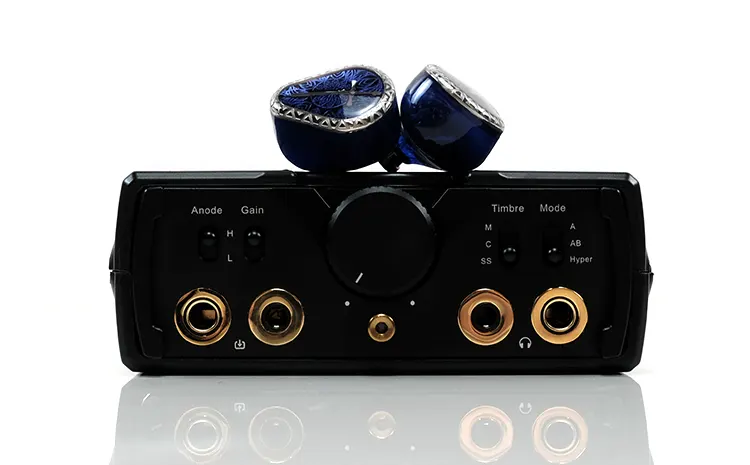
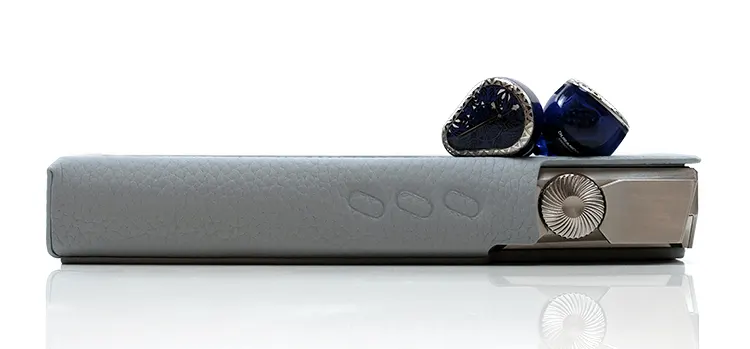
I tested three DAPs and two portable amps, including the iBasso DX340, the Cayin N6iii with the E230 card, and the HiBy RS8. The portable DAC/amps included the ONIX Mystic XP1 and the Cayin C9ii.
The DX340 offered the best resolution, headroom, and spacious staging but lacked the fullness and power of the N6iii/E203 with Hyper Mode on.
Some will feel the N6iii pairing lacks a bit of air and can sound too focused on vocal and bass presence. With the right recordings, it’s an excellent combination. EDM and modern pop play beautifully with that dynamic driver in full flow.
If you want something more nuanced, with improved treble and air for an arena-level or chamber recording, the DX340/AMp15 Durandal is a better pairing. It’s more balanced and open through the mids with a less dominant but still impressive bass reach.
The HiBy RS8 gives you both strengths, but with a slight loss in vocal presence. It delivers similar depth to the N6iii pairing but creates more space and improves the Durandal’s low-end extension.
Vocals are relatively neutral in imaging, not as rich as the N6iii, but still have an analog timbre. Like the DX340/AMP15, there is excellent clarity from the Durandal BA drivers.
The choice of amplifier will depend on how much you like your bass. The Mystic XP1 sounds thunderous with the Durandal, with the heaviest low-end performance of all the tested gear. However, it’s quite a dark pairing with less air than the Cayin.
The C9ii has excellent bass, sounds more refined and smoother through the mids, and can project a more spacious soundstage, especially in Hyper/Classic Tube mode. However, I prefer the slightly drier Class AB/Hyper Mode setting to keep the Durandal decay in check.
Dongle Pairings
I tested the Durandal in balanced mode with the iBasso Elite and Nunchaku, as well as the HiBy FC6, and the Cayin RU7.
Unless you are gung-ho for fulsome, sweetened vocal performances, I would pick either the DC-Elite or the RU7 to pair with the Durandal. In the case of the DC-Elite, it’s the speed, clarity, and excellent dynamic driver response from the Durandal that captures my attention.
From the RU7, it’s the smoother tone, combined with the wider soundstage from the Durandal, that brings home the goods. Its vocal imaging is not quite as pronounced as the DC-Elite, but with a more welcoming, analog coloration for percussion, it creates a less fatiguing experience.
The Nunchaku sits somewhere between the RU7 and the DC-Elite. It’s a great pairing for vocal-focused recordings with a lot of the RU7’s warmth, but I found in both Class AB and Tube mode, the Durandal did not sound as pinpoint for imaging as the DC-Elite. It’s a mellower, smoother sound, though.
The FC6 is all about the bass. It is not as airy or open-sounding as the other 3 dongles with the Durandal, but its bass response was impressive, pushing the Durandal to deliver a very powerful low-end.
It’s just a pity the lack of staging depth in the mids holds it back, but if you do not need that, it is a fun pairing with the Durandal.
