

Selected Comparisons
The following comparisons to the Noble FoKus Amadeus were completed using a Samsung S23 Ultra and a Vivo X90 Pro Plus Smartphone (Android).
Noble FoKus Rex5
The Noble Audio Rex5 was launched at the end of 2024 and is the company’s current flagship in their wireless TWS range.
Technical
The Rex5 is a distinctly different beast from the 8.5mm triple-layer diaphragm dynamic driver Amadeus.
This is a 5-driver tribrid True Wireless System consisting of a single 10mm dynamic driver for the lows, 3 BA drivers for the mids, and a single 6mm planar driver for the highs.
Beyond the driver grouping, there are some shared features. This includes ANC, a Qualcomm QCC3091 BT5.4 chipset with up to LDAC decoding capability, as well as being tightly integrated into the Noble FoKus app and the Audiodo Personal Sound service.
There are some battery performance differences, which is understandable given the driver configuration inside the Rex5. And it is a significant advantage for Amadeus, with almost twice the real-world earbud battery performance at 5-7 hours compared to 3-4 from the Rex5.
The smaller Rex5 cradle also has a slightly reduced capacity of 18-25 hours compared to 30-42 hours from the Amadeus version, but it does have wireless charging.
Design
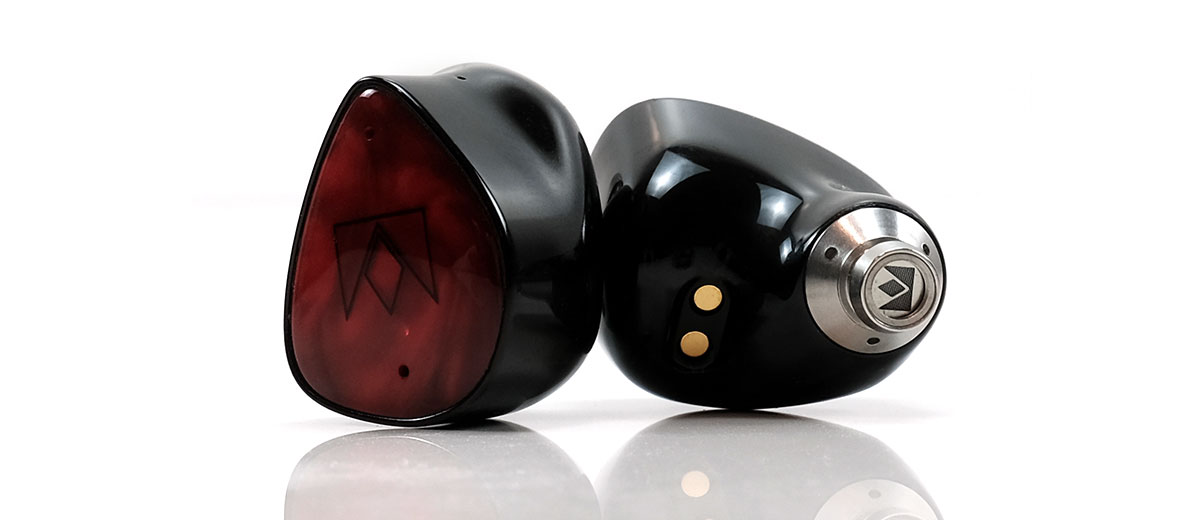
Whilst I find the Amadeus aesthetically pleasing with that striking deep red and tightly integrated Mozart theme, I have to say I prefer the higher-grade materials and finish on the Rex5.
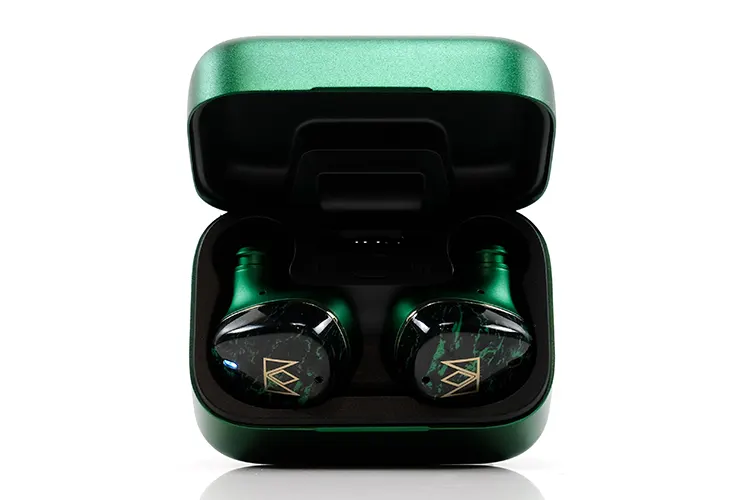
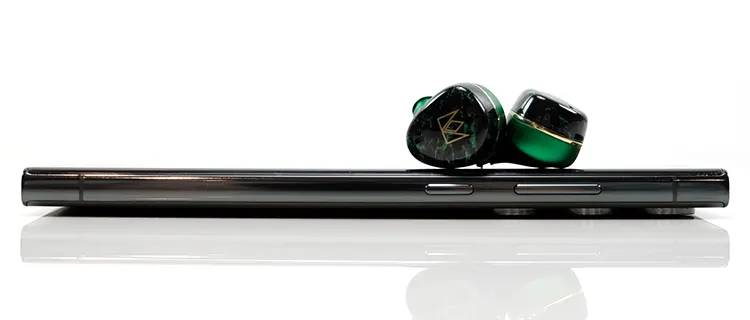
You could argue it’s a personal preference thing, but the Rex5 aluminum shells feel smoother, with better curving, and more robust than the acrylic of the Amadeus. I also love green, so yeah.
I would also extend a design advantage point to the Rex5 cradle. It’s smaller, easier to insert and extract the drivers, and offers easier access to the reset button in the middle. It is just a pity it has a reduced charge capacity compared to the larger Amadeus version.
The Amadeus form factor and materials have their advantages, including a longer nozzle design, a deeper ear canal insertion, and improved seal over the Rex5 with the supplied stock tips.
With that in mind, the ANC on the Amadeus does a better job of noise attenuation than the more relaxed porous fit of the Rex5.
I say this only from using the Amadeus with the stock dual-flange tips, as the single-flange narrow-bore alternatives wouldn’t seal for me.
Performance
I prefer the timbre from the Amadeus and the technical or resolving capability from the Rex5. If the two strengths were only to combine, then you would have one TWS to rule them all.
The Rex5 is more neutral-sounding compared to the Amadeus, but on its own, per se, it’s not an overly neutral TWS. Rather, the Amadeus pins its colors firmly to the warm, creamy, free-flowing mast with confidence, comparatively pushing the Rex5 more towards neutral.
The strength of the single dynamic driver is there. The Amadeus timbre sounds singular and coherent from top to bottom, as opposed to the variation in driver timbre from the Rex5.
Despite the dynamic drive purely for the lows, the Rex5 bass has less warmth and fullness and aims more for a snappy, punchy character with a flatter tuning into the lower-mids.
It sounds cleaner over this range, an area where the Amadeus has some rising warmth carried over from a raised mid-bass shelf and slower drop into the lower-mids.
Once into the midrange, the Rex5 BA performances become more distinct, sounding more articulate, faster, and more detailed. The Amadeus retains that warmth, creamy, softer tone, which I find beautiful for vocals, but when the bass is busy, they can sound less distinct.
The Rex5 imaging from 2-5k is more upfront, clearer, and slightly more resolving. However, it is also slightly leaner and cooler in tone than Amadeus’s almost liquid-like delivery.
The Amadeus highs seem more biased to the upper-treble with a lighter bump from 8-10k onwards and less aggressive than the Rex5 equivalent. There is a little sparkle; this is not a dark TWS by any means, but it does have softer note edges than the precision of the Rex5 BA drivers.
Noble Audio FoKus Mystique
The FoKus Mystique is a former flagship TWS launched by Noble in 2023. Our review came out in March of that same year.
Technical
The Mystique leans more towards the Rex5 than the single dynamic driver Amadeus, with its hybrid multi-driver configuration.
Its precise driver grouping consists of a single 8mm dynamic driver for the lows and mids and a dual Knowles customized balanced armature setup for the mid-highs and highs.
Because it is an older TWS, it also has some legacy features, including an older BT5.2 Qualcomm QCC3040 chipset, and up to aptX Adaptive decoding rather than LDAC.
Whilst it offers an ambient mode, there are no ANC capabilities, so it relies on passive isolation for noise canceling.
Like Amadeus, the Mystique has FoKus app integration, so many of the features, such as EQ and control configuration, are there, but it lacks the Audiodo Personal Sound service.
Since there is no ANC, the Mystique battery life is fixed at around 7.5 hours at 50% listening volume, which is a bit lower than the 10-12 hours non-ANC lifespan of the Amadeus battery and closer to the battery level with ANC on. Both cradles can deliver up to 30 hours or around 4 cycles.
Design
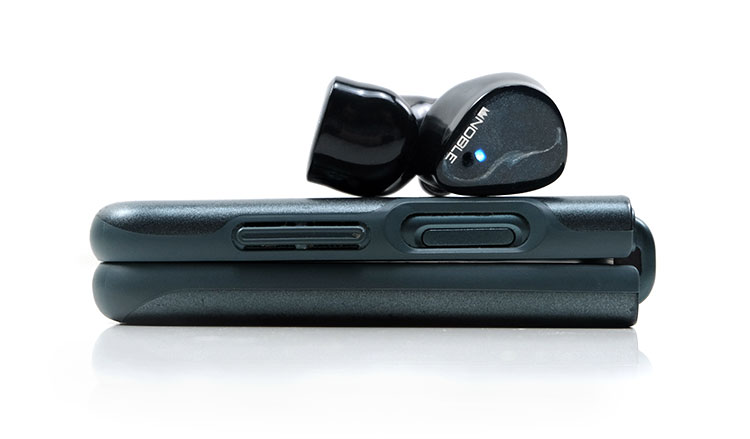
The two TWS have very similar design approaches, separated mostly by aesthetics rather than materials, which are mostly acrylic.
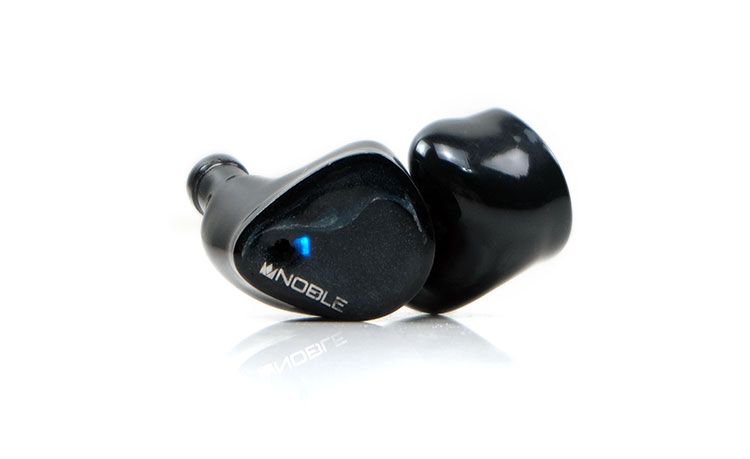
The one exception is the Amadeus’s nozzle, which is now stainless steel with an etched grill rather than the Mystiques’ extended acrylic nozzle and plain grill.
I have to admit the older version does look more harmonious and a bit narrower, and there is maybe 1-2mm more length on it compared to the stubbier but sturdier version on the Amadeus.
There are some more nuanced differences in the shell finishing. The Mystique contouring is a little more aggressive and complex compared to the more uniform finish on the Amadeus shell. It’s not a huge gap, and both earbuds slot nicely into my ear.
However, the Mystique form factor seems more flexible with the stock single flange tip, whereas the Amadeus is less amenable, preferring the dual flange to retain a good seal.
Comfort-wise, they both sit well with their respective tips; however, the Mystique’s elongated nozzle penetrates a little more and is the slightly better performer for passive isolation. The Amadeus, however, has ANC, which delivers a more complete level of noise isolation.
Despite being slightly larger, I prefer the Amadeus cradle design. Its deep red finish is more striking, and the build quality has improved, particularly around the thing, which is stronger and articulates more smoothly. The buds are also a bit easier to get out.
Performance
The Amadeus is warmer sounding, with a lusher midrange, and liquid highs with a touch of upper-treble sparkler. The Mystique is cooler, not as evenly balanced in the mid-treble with a noticeable spike that flavors the mids and vocal timbre, but it does have more sub-bass reach and presence.
I would say the Mystique is more V-shaped sounding than the Amadeus, which accentuates the mid-to-upper bass body and warmth to create that creamier tone in the mids.
The big weakness of the Mystique is its 6-8k tuning, which has a noticeable peak. That creates a little bit of harmonic dissonance through the midrange timbre, including higher-pitched vocals and percussion.
You can hear a bit of upper-order dominance in the emphasized areas, such as percussion hits and some naturally recorded sibilance, which sound brighter and edgier.
The Mystique vocal imaging comes across as slightly more upfront than the somewhat more relaxed Amadeus equivalent. Not that the Amadeus is noticeably dipped, but rather its mid-bass body and lower-mids warmth can compete a little for the same space with bassy recordings.
I also found the older TWS a little drier courtesy of the BA combo for the mids and highs. Some will perceive that as a good thing, and yes, the detail is very good, though not quite as dynamic and intricate as the Rex5 presentation.
Ranged against the softer Amadeus sound, I could hear that precision from the Fokus Mystique BA drivers. However, with a strong dip into the lower-mids, midrange notes can sound a little detached from the fundamental, creating a glassy tone that is not as natural to my ear as the Amadeus timbre.
Noble Audio FoKus Pro
The FoKus Pro was launched in 2021 and, at the time, was also a Noble Audio flagship TWS. It also won our Top Gear 2021 Award for Best TWS.
Technical
The last of the compared TWS is also a hybrid rather than using something similar to Amadeus’s single dynamic driver configuration.
The Fokus Pro uses a slightly smaller 8.2mm single dynamic driver for the lows and mids and a customized dual Knowles BA for the mid-highs and highs.
This is a previous generation Noble TWS, so it comes with the older Qualcomm QCC3040 Bluetooth SoC. That means BT5.2 instead of the Amadeus’s BT5.4 capability and a lower codec ceiling of aptX Adaptive rather than LDAC.
Though the FoKus Pro is compatible with the FoKus app, its options are more limited. There is no ANC onboard, so it’s just passive isolation. Unlike Amadeus and Mystique, the Pro also has no ambient sound profile.
It also lacks any compatibility with the newer Audiodo Personal Sound service, but like the Amadeus, you have access to a 10-band EQ and can customize the touch controls.
Because there is no ANC, there is only one battery benchmark for the Pro at 7.5 hours on 50% volume, which is comparable to the Amadeus with ANC turned on. Without ANC, the Amadeus’s 10-12 hour cycle is more competitive.
One huge plus point for the FoKus was the 8-10 charge cycle of the cradle, making it by far the best cradle for battery life Noble has ever put out.
Design
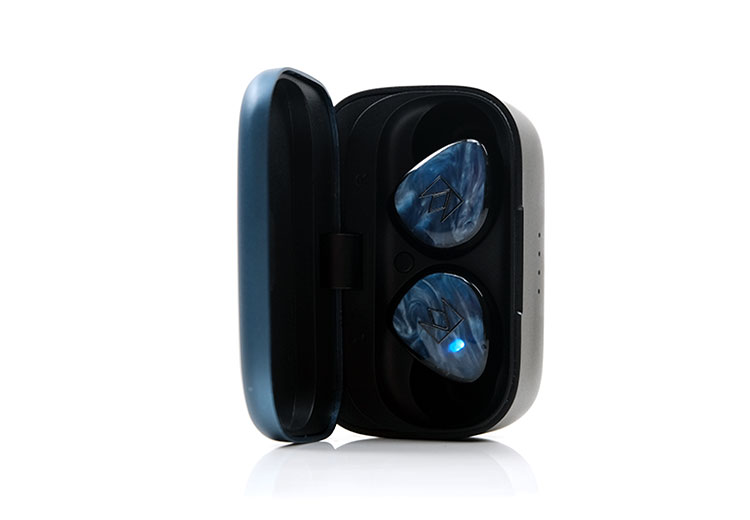
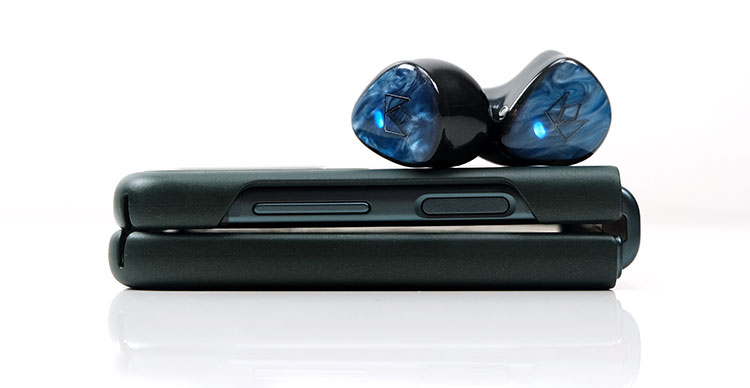
The design language of the FoKus pro is very similar to the Mystique and, by extension, Amadeus. The key changes are the color choices, red versus blue, and the length of the nozzle, which is much longer on the FoKus Pro.
The Amadeus’s swap to the stainless steel spout combined with the etched grill does have a sturdier and classier feel, but the shorter length means compensating with tips a bit more.
The Fokus Pro digs deeper into the ear canal, which I appreciate, but it can collect a lot of dirt in its extended tip recess, forcing you to clean it more often.
As with the Mystique comparisons, there are some nuanced differences, such as the contouring on the Pro shell, which is a bit more refined, allowing the shells to get a little closer to the base of my ear’s concha.
As such, I find the Pro’s a little more comfortable and slightly superior than the Amadeus for comfort and passive isolation. However, once you turn on the ANC, the Amadeus isolation performance is far superior.
As with the previous comparisons, the Amadeus cradle is a slightly bigger design but a big improvement over the Pro version in terms of hinge stability and the internal base elevation, making it easier for earbud extraction with my fingertips.
Performance
No question that the Amadeus is a sonic upgrade on the older FoKus Pro.
The additional lift from the LDAC mode, combined with the newer driver (and BT Soc), creates a more richly textured and life-like listening experience, combined with a far more expansive and dynamic sounding soundstage.
In comparison, the Fokus Pro has more of a ‘pitter-patter’ approach; the weight is there on the lows, the mids are clean and clear, and there is decent height.
What it lacks is a connection with midrange notes; sans warmth or a solid fundamental, with a lack of comparative detail in that note texture, giving it a more compressed one-dimensional sound.
The Amadeus has all of that, though again, the lack of BA drivers means the pace is a little slower and the decay a little longer.
If you want that drier and slightly more neutral tone, the FoKus Pro is closer to that sound, but honestly, the Amadeus just sounds way more dynamic and engaging with the bonus of a more evenly tuned set of highs for a fatigue-free listening experience.
My Verdict
The Noble FoKus Amadeus is my kind of sound from a TWS. A warmer-to-natural tuning, with a good bass fundamental, very likeable, almost lush vocal tones, and a sprinkle of sparkle without a tinge of harshness.
It provides a tasteful, warm, and relaxed sounding contrast to the more neutral-to-natural detail-oriented tuning of the flagship Rex5.
If the stock sound is a little dull or too soft for you, then dive into the FoKus app and hit that personal EQ service. It’s personal, so I cannot guarantee you will get the same outcome. For me, it delivered a more dynamic, high-impact, and contrasty sound signature and a nice alternative to the chilled stock tuning.
Throw in ANC, LDAC, and even better battery life than the Rex5, and you may have a difficult but welcome choice as to which is the right high-performance Noble TWS for you.
Noble FoKus Amadeus Technical Specifications
- Driver: 8.3mm custom triple-layer diaphragm
- Frequency response: 20Hz – 20kHz
- Sensitivity: 113 ± 2 dB at 1kHz
- Impedance: 37Ω
- Output power: 3mW
- Chipset: Qualcomm QCC3091
- Bluetooth: Version 5.4
- Audio codecs: SBC, AAC, aptX Adaptive, LDAC
- Battery (earbuds): 65mAh
- Battery (case): 500mAh
- Playback time: 8–12 hours earbuds, up to 42 hours total
- Charging time: 90 minutes for earbuds, 120 minutes
- Quick charge: 10 minutes = 2 hours of playback
- Microphones: Dual with cVc noise cancelling
- Noise control: ANC and Transparency mode
- Features: Multi-point connection, TrueWireless Mirroring, Auto Power On/Off
- Certifications: FCC, CE, MIC, RCM, SRRC, BQB, ROHS, MSDS
