

Synergy
Efficiency
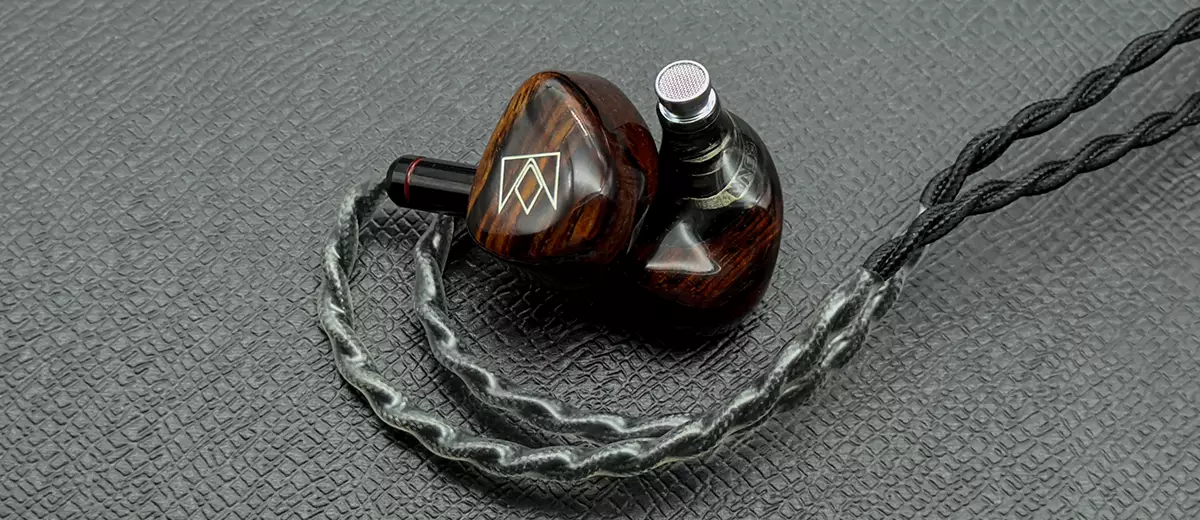
Lu Ban is rated at a sensitivity of 108 dB SPL/mW and an impedance of 27Ω. The IEM hardly asks for power and can be comfortably driven with most sources, except the extra powerful ones, which I would suggest avoiding. However, it loves a clean source.
I would not say it is very fussy about sources, but I have found it very responsive to them. For example, if a source is extra warm, Lu Ban can turn into a mess, as it already has enough warmth.
I would also not suggest pairing it with a bright or dry source, as it can slightly stir the treble notes and take away the smoothness. A neutral source is the best pairing for the Lu Ban.
On the MUB5, I had to switch the firmware from V2.6H1 to V3.3N7A, as the former has a V-shaped tuning and is heavier in the low-end region, which I do not find very ideal with the Lu Ban. The Lotoo PAW Gold Touch, on the other hand, is as good as it can get for an ideal pairing.
At lower volume levels, I can feel that the dynamics do not appear in full swing. You have to reach a decent volume level to feel the hits and force.
On my Lotoo PAW Gold Touch, it takes about 30 volume steps to reach a comfortable level, which suggests it is not power-hungry.
However, it can take some extra juice for sure. On the MUB5, in Normal Gain, it hardly takes about 25 volume levels, and I often shift to Low Gain for better volume control.

Source Pairings
I did not particularly enjoy the pairing with the Campfire Audio Relay dongle, as it adds a slight lift in the low end and lower midrange region, along with a bit of spice in the upper treble. Because of this, that cleanliness feels lost.
Lu Ban already has enough low-end presence, and any extra help there can be potentially off. However, for casual listening, it does its job really well. Also, Relay offers a good amount of power, so drivability is never an issue.
That is why the LPGT feels like an ideal pairing, as the DAP’s reference style does not elevate any frequency region and keeps the tuning extremely clean.
The sound feels natural and musical, with the right dose of engagement. The sound is very balanced, and you cannot complain about details and resolution either.
Treble has the right amount of shimmer and air. It is still very relaxed, but with enough spark. The soundstage is not extra wide here, but it has that holographic feel with good height and depth.
Even with very dense passages, Lu Ban feels very sorted, though I never stress it out by throwing heavy and complex tracks at it.
With MUB5, the R2R tonality brings extra musicality to the mix. And the extra power it offers helps with a more spacious and open stage. This is where it outshines the LPGT. The bass just gets slightly more body and is more pleasing.
Midrange notes feel like they carry more body. Vocals, especially female vocals, feel extra special here. Treble is quite smooth, with good details, and is still non-fatiguing. Overall, compared to LPGT, this pairing feels more organic and extra rich.
Selected Comparisons
Noble Audio AGIS II
Technical
The Noble Audio AGIS II is a more premium release compared to the Lu Ban, featuring an 8-driver hybrid architecture with four Sonion BA drivers, two Sonion bone-conduction drivers, and two Knowles BA drivers.
The two Sonion BA drivers are for the high and ultra-high frequency ranges. Two Sonion bone conductors are employed for the midrange; the other two Sonion BA drivers cover the mid-bass regions, and the final two Knowles drivers handle the bass and ultra-bass regions.
I find the AGIS II quite easy to drive, and you can play it well using low-spec sources as well. On my LPGT, it takes around 30 volume clicks, and a few extra volume clicks can make it quite loud.
Design
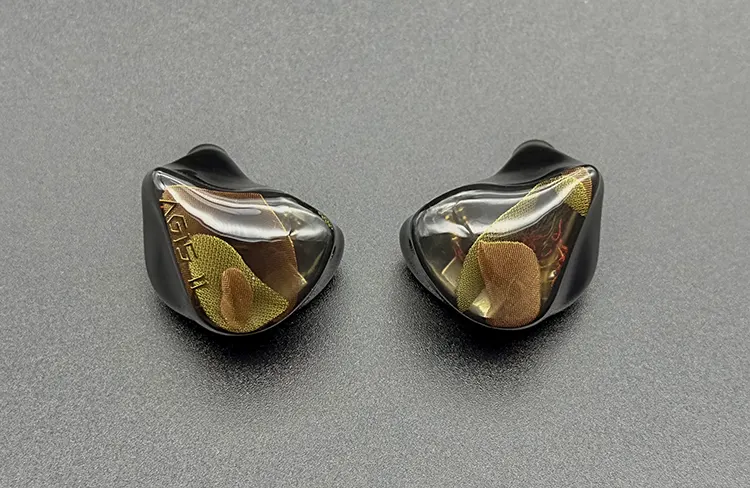
The AGIS II has a sleek, glossy black shell with a soft, flowing shape. Built in resin, the shells carry one of those minimal but very thoughtful designs.
For the faceplates, Noble Audio has used irregular shards of ultra-fine metallic mesh, randomly arranged like abstract patches of fabric.
The different colors of this mesh give the design a unique touch. This also adds a slightly shiny appearance to the shells. The Lu Ban has a toned-down appearance with deep, wooden color schemes.
The Lu Ban has smaller shells and an easier fit. Though the shells of AGIS II are not too large, for my ears, the wings on the shell sometimes press hard against my ears, which becomes fatiguing in the long run.
Both IEMs come with good packaging and presentation, though the AGIS II, being a more premium offering, has a better set of accessories.
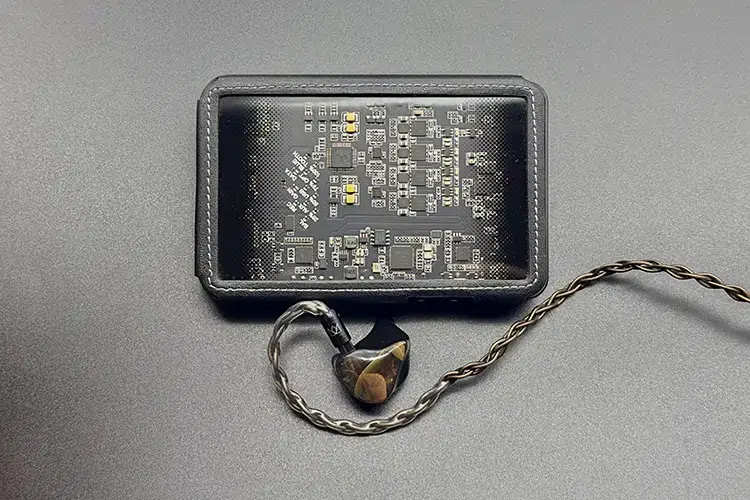
The large AGIS II leather case packs everything inside and takes the packaging to a different level. This large case has enough space for your DAP and can accommodate a couple of IEMs as well.
Performance
The AGIS II pushes hard on resolution and details while keeping a good dose of warmth in the mix. Lu Ban goes warmer and feels a bit constrained in how the treble notes behave.
You get enough details on Lu Ban, but the notes do not separate fairly, which is why it does not handle fast, complex tracks as the AGIS II does.
The treble is smooth and a bit highlighted, but it never goes into the sibilant region or becomes extra sharp.
The separation in the notes, along with air and sparkle, is present in the right amount, giving the treble proper space to appear. The notes sound quite natural, and the shimmers are present in just the right amount.
In the low end, Lu Ban is a bit more impactful, though the overall control is better on the AGIS II. The AGIS II is more mid-bass focused. Lu Ban offers a slightly better sub-bass floor. On bass-heavy tracks, the AGIS II does not clutter the mix as much.
In the midrange, AGIS II is more about resolution and details. It sounds lush and rich too, but the clarity is never compromised. Lu Ban’s midrange is extra rich.
You may appreciate a more natural and musical midrange here, but there is some compromise on detail and resolution. The midrange is slightly pulled back on Lu Ban compared to the AGIS II.
Technically, AGIS II is ahead in how the soundstage is presented. It is deeper and has more height. The airy and sparkly top-end behavior also adds to a more open sound.
Instruments are well-separated and never fight for space. Imaging feels more accurate. It also handles dense tracks slightly better and is more coherent too. Overall, I see AGIS II as an upgrade to Lu Ban’s sound.
Campfire Audio Grand Luna
Technical
The Grand Luna from Campfire Audio features a planar-balanced armature hybrid configuration. Its configuration is as interesting as the Lu Ban’s. It uses a new generation 14mm planar magnetic driver and two balanced armatures.
The custom 14mm planar magnetic driver helps the low end and the midrange, while the two balanced armatures support the high-frequency regions.
The Grand Luna requires 33 mVrms to reach 94 dB @ 1 kHz and has an impedance of 13 Ω @ 1 kHz. Like most Campfire Audio IEMs, the Grand Luna is sensitive and efficient and takes lower volume levels than the Lu Ban.
Design
Grand Luna has an adorable look. The design language is quite different on both IEMs.
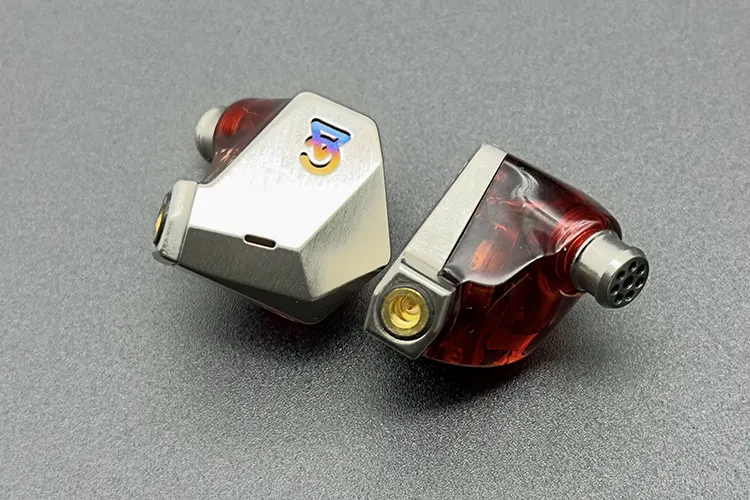
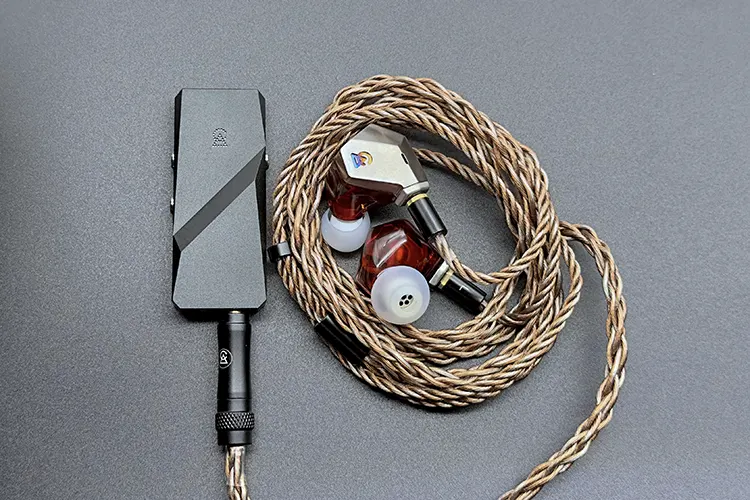
Grand Luna’s shells combine deep ruby-red acrylic shells with a geometric, angular metal faceplate. The acrylic shells are transparent, faintly revealing the internal driver structure of the IEMs. Lu Ban has smaller shells, though fit is never a challenge with either of the IEMs.
The Grand Luna has an MMCX connection, and the stock cable is the Time Link Cable System. These swappable cable terminations include 3.5mm single-ended and 4.4mm balanced connectors, along with a USB-C DAC termination.
Lu Ban’s cable misses this modularity and is only available in a 4.4mm balanced option.
Performance
The Grand Luna and Lu Ban are distant cousins, as they share a very similar tuning style. They both go for a bass-dominant sound with very relaxed treble, a smooth presentation throughout, and a very engaging midrange.
In the top end, they both cut down a lot on air and sparkle, giving the treble a very calmed-down presentation. Lu Ban is a shade more airy and adds more separation to the treble notes. So, on very dense and complex tracks, you can expect it to perform better.
In the bass, the Grand Luna has more of a mid-bass approach, which on bass-heavy tracks can overshadow higher frequencies.
This is where the Lu Ban keeps itself toned down. The level of bass feels quite similar on both. Lu Ban leans more on the sub-bass and has a more controlled mid-bass region.
The midrange is all about extra richness and lushness on both IEMs. Grand Luna has more lower-midrange presence along with extra warmth in the midrange.
This gives it a slightly richer profile, though this can also be considered slightly dull in comparison, as the separation feels a bit compromised on dense tracks.
Lu Ban keeps the midrange a bit cleaner, but you get a similar rich and heavy midrange. These IEMs do not chase details and resolution.
Due to a slightly more extended and forward upper midrange on the Grand Luna, I can feel notes taking better shape. Female vocals and instruments such as pianos are more pleasant and sweeter.
Technical aspects are more or less the same on both. The soundstage is slightly better organized on the Grand Luna.
Their behavior is similar if you compare details and resolution aspects. On heavy and fast-paced tracks, both IEMs struggle with separation and layering.
THIEAUDIO Monarch MKIV
Technical
The THIEAUDIO Monarch MKIV, the latest iteration of the Monarch Series, features a tri-brid driver configuration with a total of ten drivers per side.
These drivers include two custom-developed 10mm dynamic drivers, six Sonion balanced armature drivers, and dual Sonion electrostatic drivers. There is a 4-way crossover implemented, and the IEM pushes the output through four separate sound tubes.
The THIEAUDIO Monarch MKIV has an impedance of 10 Ω @ 1 kHz and a sensitivity rating of 100 dB/Vrms.
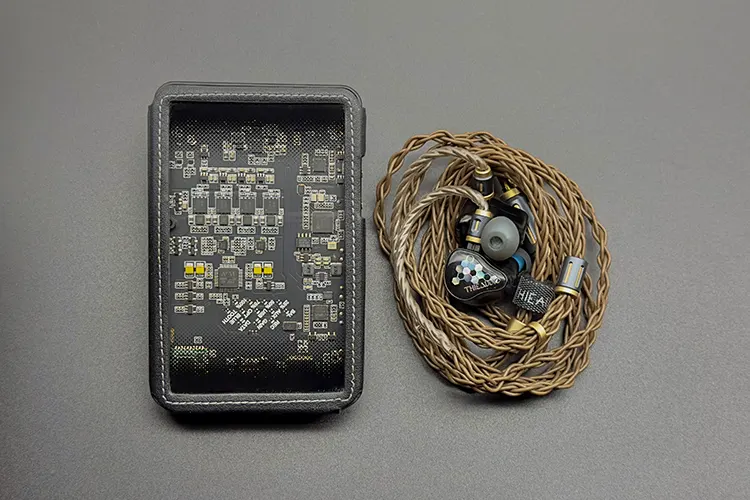
The Monarch MKIV does not demand a lot of power and can be comfortably driven by low-powered sources such as dongles and smartphones. On my LPGT, both IEMs take similar volume clicks.
Design
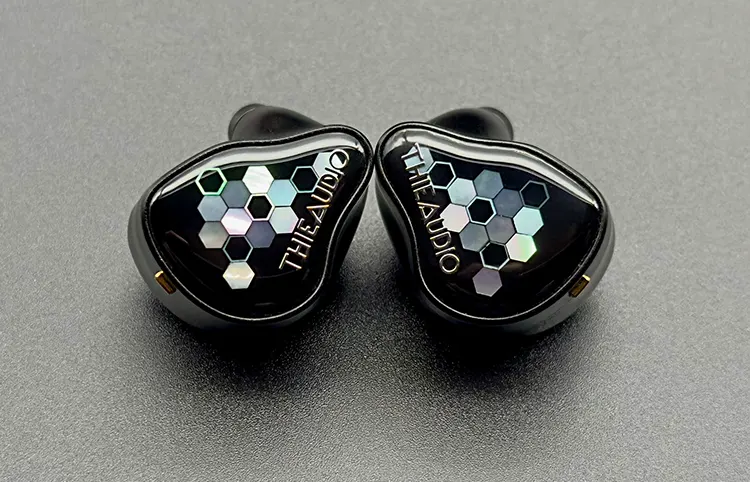
The shells of the Monarch MKIV are made from T6 aircraft-grade aluminum. These shells are finished in black and come with two different options for the faceplate design. THIEAUDIO also allows you to order custom faceplates for an extra charge.
The Monarch MKIV has large shells and can be uncomfortable if your ear size is small. Lu Ban, made of resin shells, is quite small in comparison and is extremely lightweight.
For my larger ears, I find that both IEMs offer a good fit. I have never experienced any discomfort with either of them, even during longer sessions.
The MKIV comes with a modular cable that includes 3.5 mm unbalanced and 4.4 mm balanced connectors. I find Lu Ban’s cable more appealing than the Monarch’s.
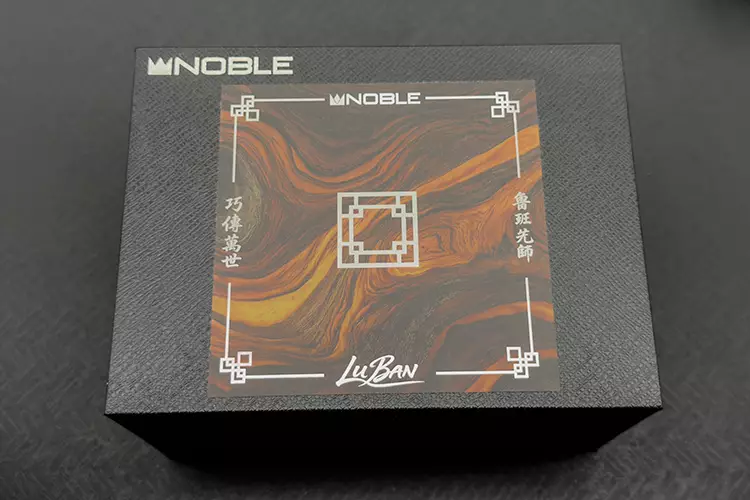
THIEAUDIO uses a minimal packaging style and packs it in a smaller box. Noble uses a lot of foam, but the presentation does feel a bit more premium. Sadly, the carry cases with both IEMs fall short of enough space.
Performance
In the low end, Lu Ban has a boomier and more swollen-up presentation. It has a bit more sub-bass and mid-bass presence.
In STANDARD mode, Monarch MKIV keeps it toned down in comparison, and this control gives it a tighter and cleaner low end with a better attack.
The RUMBLE mode of the Monarch MKIV can match the volume and impact level but with cleaner attacks and extra mid-bass presence.
The midrange feels extra rich on Lu Ban due to its warmth and the slight bloom that the low end lends. Monarch MKIV keeps it neutral-ish but with more forwardness in the upper midrange region.
This gives the vocals and instruments better extension and expressiveness. This is where Lu Ban steps back and keeps things too smooth and slightly downbeat.
I would also put the Monarch MKIV slightly ahead in terms of resolution and how it presents the details.
The Monarch MKIV feels a bit more coherent moving from the upper midrange to the treble region, as the forwardness evolves subtly into detailed and crisp treble notes. You also get more sparkle and air, but nothing that feels sharp or harsh.
Lu Ban feels very restrained in comparison. It feels less airy, and the energy is slightly pulled back, so you do not get that same well-lit feel.
Lu Ban’s soundstage stretches more in height and depth, while the Monarch MKIV is width-focused. Due to how different the treble profiles are on both IEMs, the separation among the instruments feels better done on the Monarch MKIV.
Lu Ban overall feels like a less polished tuning, while the Monarch MKIV feels technically more competent and more coherent sounding.
My Verdict
I walked in curious about the configuration and stayed for Lu Ban’s bass and analog musical feel.
Lu Ban surprised me in many ways. Starting with the bass, it is very delicious. It has a very distinct feel, something I see as a differentiating factor from the rest of the crowd.
The midrange is very rich, while the treble stays light on the ears, so if you are a sucker for a relaxed, musical tuning, you may hit the insta-like button with the Lu Ban.
Sure, it has its flaws and can sound less organized on some fast-paced, complex tracks. I really wish the sound were more coherent and the top end behaved more maturely.
But I would pick the Lu Ban for specific genres such as soft rock and smooth jazz, where it delivers one of the most pleasant presentations among its peers. This is where its strength lies. In addition, the size and design make it appealing.
I would even go so far as to say that, despite having some high-end IEMs, Lu Ban finds its place and sneaks in now and then, especially in its midrange. That is probably the biggest compliment I can give to this IEM.
Though it faces stiff competition from some noted peers, I would still encourage readers to give Lu Ban a try, and who knows, you might end up liking it.
Noble Audio Lu Ban Specifications
- Driver Configuration: 10mm Wooden Composite Dynamic + Dual Planar Drivers
- Frequency Response: 20 Hz – 45 kHz
- Sensitivity: 108 dB SPL/mW
- Impedance: 27Ω @ 1 kHz
- Cable: OCC silver-plated cable with a 4.4mm balanced termination
