

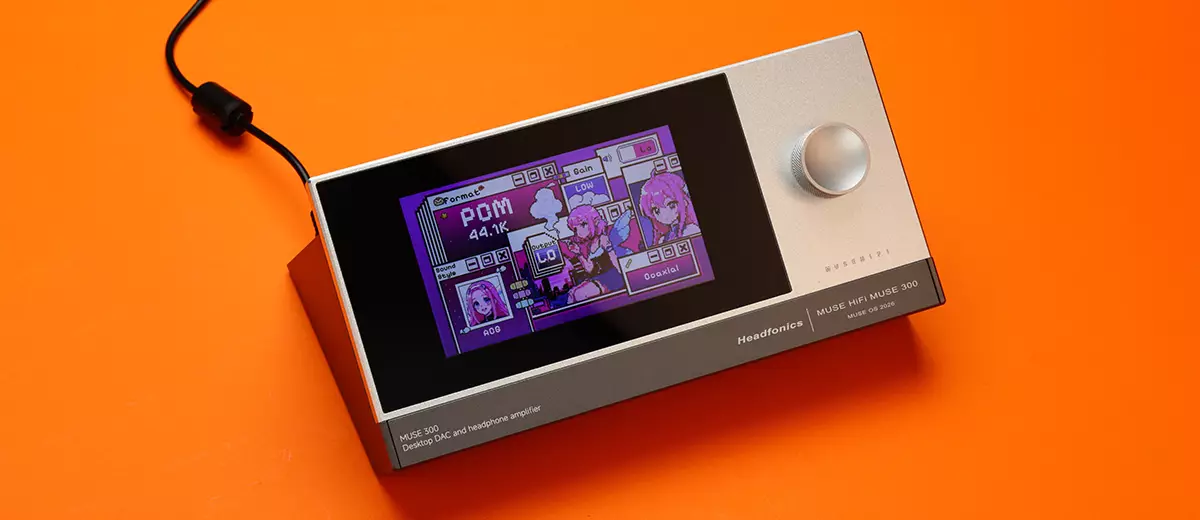
Connectivity
Wireless
The MUSE 300 can only receive Bluetooth signals and supports aptX Lossless, aptX Adaptive, aptX HD, LDAC, AAC, and SBC with its Qualcomm QCC3095 BT 5.4 chip.
The initial pairing with my phone, laptop, and PC is straightforward and fuss-free. And the subsequent Bluetooth connection is fast. I never encountered any circumstance in which it didn’t connect.
On my Android phone and Android DAP, Bluetooth connection is automatically set at LDAC, which has the highest audio quality as of this writing. I never had to install any app or driver to allow the LDAC connection.
I got an excellent signal reception. Using the LDAC codec, I managed to be 10 meters away from the source, walking around my house with the usual obstructions like concrete walls, tables, and other objects, without experiencing any signal dropout or sound degradation.
I experience an almost indistinguishable sound quality between Bluetooth LDAC and USB.
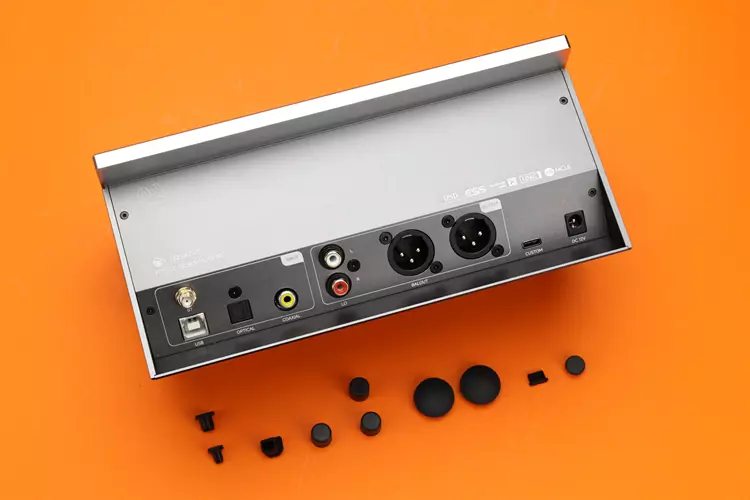
Wired
The MUSE 300 features three digital inputs: USB-B, optical, and coaxial.
Using the USB-B input, the MUSE 300 never required a driver for my Android phone, desktop PC, and MacBook Pro.
It also connects fuss-free to my Win 11 PC and MacBook Pro, automatically routing audio to the MUSE 300 when plugged in and back to the speaker audio when unplugged, without any special drivers installed.
Additionally, I didn’t have any issues using the optical connection from my desktop PC and the coaxial connection from my SMSL PO100 PRO USB Digital Interface signal isolator.
Synergy
I’m glad to report that during my prolonged use of the MUSE 300 with various digital sources, including my phone, laptop, DAPS, and desktop PC, I never heard the MUSE 300 produce a noise of its own, even with sensitive IEMs in balanced connection and the gain set to high.
For this section, I use the Balanced Sound Style for listening.
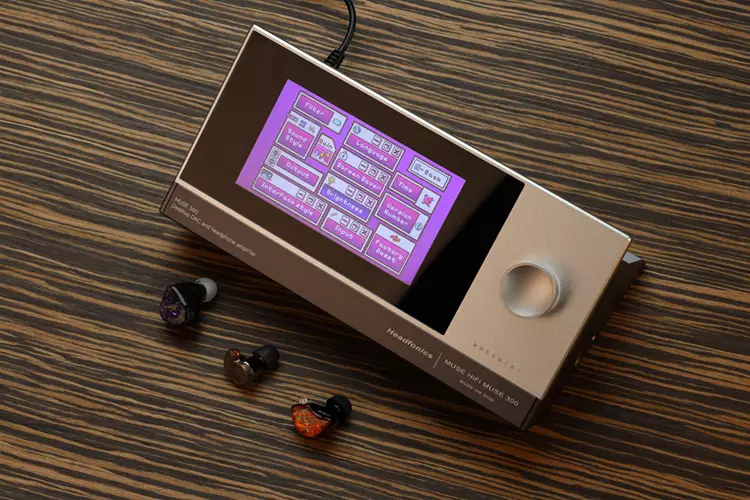
IEM Pairings
Thanks to the MUSE 300’s high output power rating, I have no trouble getting my IEMs to very high-volume levels. I barely have to go up to 80% volume to get concert-level volume effortlessly in medium-gain mode.
When paired with the DUNU Falcon Ultra, an easy-to-drive dynamic driver IEM, I get effortless dynamics and a clean, neutral, and transparent sound signature with a very extended subbass and upper treble. The soundstage is big, and the imaging is well-defined.
Switched to Tipsy M5, a tribrid of dynamic, BA, and bone conduction driver IEM, which I like for its neutral and revealing sound. I get effortless dynamics as well, and the sound is clean at high volumes.
The sound is very detailed, with excellent control of the dynamic and bone-conduction drivers, preventing boominess and sluggishness in the mid-bass. I hear a spacious stage with well-defined and layered images.
Finally, when paired with the QoA Martini, another tribrid set with dynamic, BA, and bone conduction drivers. The sound is even cleaner and a grander, more spacious presentation.
The bass is more boosted with excellent control by the MUSE 300; I hear excellent slam and depth. The midrange is slightly recessed yet clearly heard.
I have never heard the Martini’s treble sound this clean before; there is a very good, delicate upper micro-detail separation in the background, which adds more engagement and realism to the music.
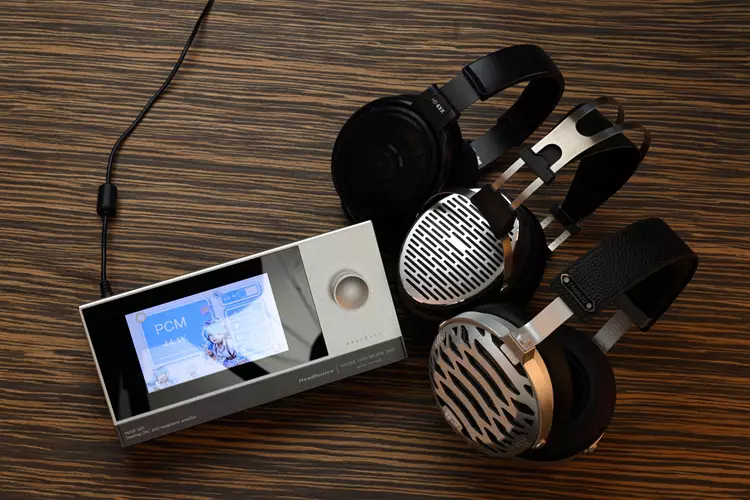
Headphone Pairings
When reviewing a DAC amplifier for driving headphones, I not only look at how loud it gets without distorting or compressing, but also at how it sounds with the headphones. This means I put equal weight on sound quality and the volume of the headphone pairing.
That said, I never heard the FiiO JT3, a V-shaped sounding dynamic headphone, sound this good before. The MUSE 300’s excellent bass control is clearly showcased here, making the JT3 sound more neutral and delivering tighter, more controlled bass.
I also hear smoother treble than usual, even though I’m not using the Tube Amplifier as much as the Balanced Sound Style mode. Both the staging and imaging are good, and it sounds very loud at 85% volume using the 3.5 mm connection.
I must add that pairing the inexpensive, entry-level JT3 with the MUSE 300 makes it sound like a more expensive pair of headphones.
With the TANGZU Ox Demon King, I get to a very loud volume at 90% using the 3.5 mm connection. Again, the tight, well-controlled bass sound signature of the MUSE 300 is apparent here.
I get a tight bass with clean midrange and a slightly elevated treble, inherent to the Ox Demon King’s tuning.
Finally, with the difficult-to-drive Sennheiser HD 6XX, using the 4.4 mm balanced connection. I get excellent dynamics, making the HD 6XX sound engaging and not anemic.
I hear a very controlled, dynamic bass with a neutral midrange and an extended, detailed treble.
The HD 6XX is fussy about source pairing, but with the MUSE 300, I must say this pairing is very good and ideal.
Selected Comparisons
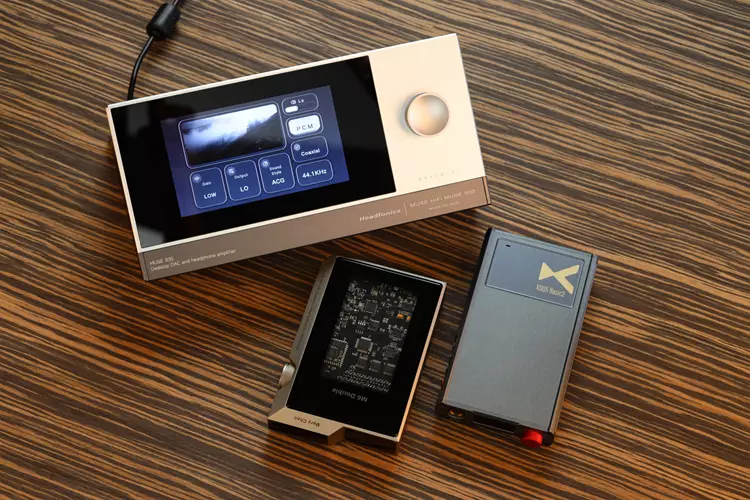
For this comparison, I connected both the MUSE HiFi M6 Double and the xDuoo XD05 Basic2 to a 20-watt PD GAN charger via their dedicated power inputs, enabling desktop mode for both.
I also used the M6 Double, which had been turned on for at least 30 minutes before comparison to give its tubes a good warm-up for the best sound quality.
And although I’ve used all the IEMs and headphones mentioned in this review, I mainly used the Tipsy M5 IEM for its neutral, revealing sound and the Sennheiser HD 6XX to see how they handle a difficult load.
MUSE HiFi M6 Double
Technical & Design
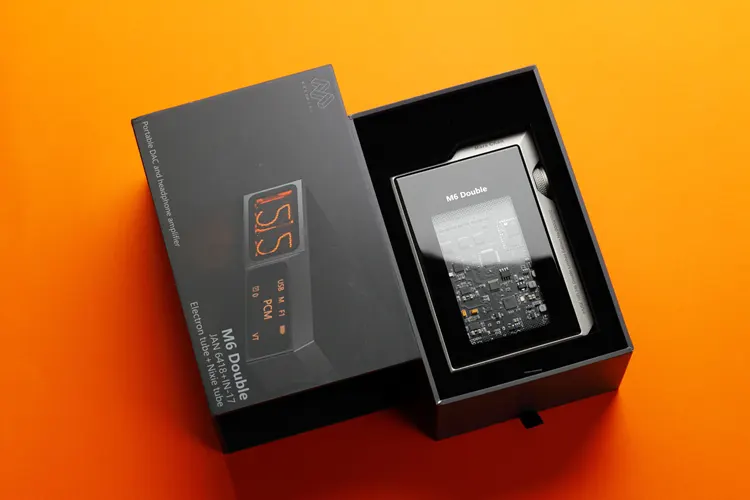
The M6 Double features the latest ESS SABRE DAC, an ES9039Q2M chip, customized to complement the tube amplifier section during tube-mode operation. M6 Double uses two JAN 6418 mini audio vacuum tubes for tube-output mode.
MUSE HiFi never specified the output power of the M6 Double, but I would estimate it at around 400 mW maximum through its balanced 4.4 mm output jack.
The chassis is made entirely of CNC-machined aluminum alloy, with tempered glass sandwiched between the front and back.
There is a clear section in the tempered glass at the front, allowing us to see the PCB; however, the back has only opaque black tempered glass printed with text and logos.
At the top, you can see the 1-inch screen indicating the operating condition of the M6 Double, with the IN-17 Pixie tube nicely placed behind a glass in another window beside the screen.
Performance
I exclusively use the Vacuum Tube mode on the M6 Double because it gives it a special sound.
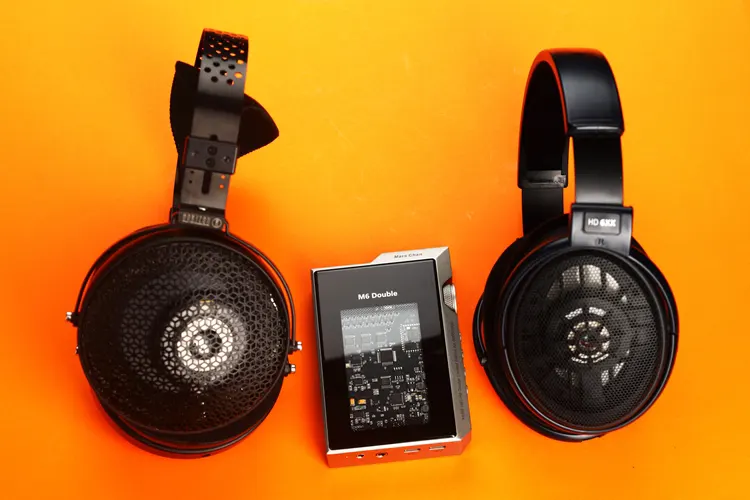
Upon first comparison, it is apparent that the MUSE 300 has a more forward, powerful, and present bass response while the M6 Double has a relaxed bass due to its tube output stage.
M6 Double has a brighter, more open tonality with a big soundstage, while the MUSE 300 is more neutral and balanced in its sound presentation, with an equally big soundstage.
Out of curiosity, I switched the MUSE 300 to Tube Amplifier Sound mode, but it’s still bassier and has a slightly darker tonality, even though they both sound equally detailed.
However, regardless of the sound style mode used, I find the MUSE 300 very slightly cleaner and a tiny bit more resolving.
When pairing the HD 6XX with the MUSE 300, the pairing is very good to excellent. However, with the M6 Double, the pairing is not as good; I hear power compression and clipping distortion even at medium-loud volumes.
xDuoo XD05 Basic2
Technical & Design
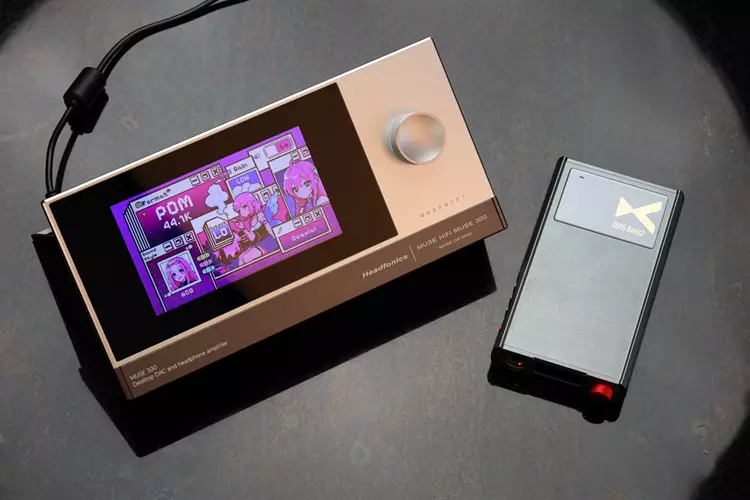
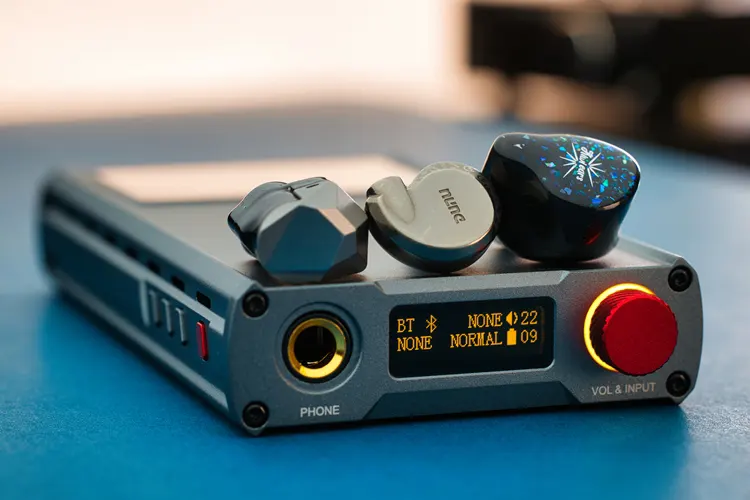
The XD05 Basic2 features a Cirrus Logic CS43131 converter chip that drives the replaceable op-amp section via a transistor output buffer. It has an output of 750 mW @ 32 Ω, Bluetooth 5.4, a 3000 mAh battery, and 11 hours of battery life.
The XD05 Basic2 features a full-metal chassis with a utilitarian design and a retro look on the front, while the rest of the chassis has a science-fiction, space-age appearance. The red knob and the OLED screen look gorgeous.
Performance
Using the XD05 Basic2 in its stock form, which uses a Texas Instruments NE5532 opamp, a relatively cheap, commonly used opamp.
I get a neutral, slightly warm sound with an analog-style signature, where the instruments have softer transients compared to the analytical, clear, and clean sound presentation of the MUSE 300.
There is a clear distinction between the sound of the XD05 Basic2 and the MUSE 300, and both have different audiences in the audio community.
The MUSE 300 is for people like me who like a highly resolving, very detailed sound with see-through transparency without sounding cold, fatiguing, and sterile. The XD05 Basic2 is for people who like a warm, bassy, and soothing sound signature, albeit less defined.
When it comes to driving the difficult-to-drive HD 6XX headphones, the XD05 Basic2 is set to its high-gain Turbo mode. Both it and the MUSE 300 drive the HD 6XX effortlessly to very high volumes, beyond what I can handle without maxing the volume knobs.
My Verdict
As a music listener who values high-resolution, accurate, and transparent sound presentation with a big soundstage, I find the MUSE HiFi MUSE 300 to be almost beyond reproach in terms of sound quality.
I like that it has all these micro-details, nuances, and dynamics that make for easy sound analysis, while never crossing the line into being cold, sterile, or dry, resulting in a musically engaging and enjoyable sound for long listening sessions.
I also like the use of real electronic components, such as resistors and capacitors, for the 3 sound-style modes, resulting in a very natural-sounding tuning, unlike most DAC Amplifiers that use digital manipulation, which sometimes produces unnatural sound effects.
My only complaints are minor: I wish the VU meter and spectrum analyzer screensavers were faster and accurately reflected the music being played, and that the display could be turned off, as I discussed in the Display section above. I hope the firmware update can address these issues.
Personally, I’m on the lookout for desktop DAC amplifiers in the $300-$700 range before reviewing the MUSE HiFi MUSE 300 and have been considering many of its competitors in that price range. Seriously, I couldn’t find anything as unique, good-looking, classy, and with great connectivity.
That said, I would highly recommend the MUSE HiFi MUSE 300 to music lovers looking for a good-sounding, great-looking desktop DAC amplifier in its price range.
MUSE HiFi MUSE 300 Specifications
- DAC chip: ESS ES9039 Ultra
- Bluetooth chip: Qualcomm QCC3095
- Main Controller: 32-bit Microcontroller Unit (MCU)
- Low-Pass Filter (LPF): OPA1612 × 2
- I/V Conversion: ES9603 × 2
- Sampling: NE5532A
- Amplifier: TP6120A × 2
- Coaxial Interface: AK4118
- Supported codecs: aptX Lossless, aptX Adaptive, aptX HD, LDAC, AAC, SBC, and more
- Display: 5-inch, 480 x 854 IPS
- Inputs: Bluetooth / USB / Optical / Coaxial
- Outputs: Headphone Out: 6.35mm Single / 4.4mm Balanced
- Signal-to-noise ratio: ≥ -129 dB
- Output power: Up to 2200 mW @ 32 Ω
- THD+N: ≤ 0.0006%
