

Synergy
Battery drain
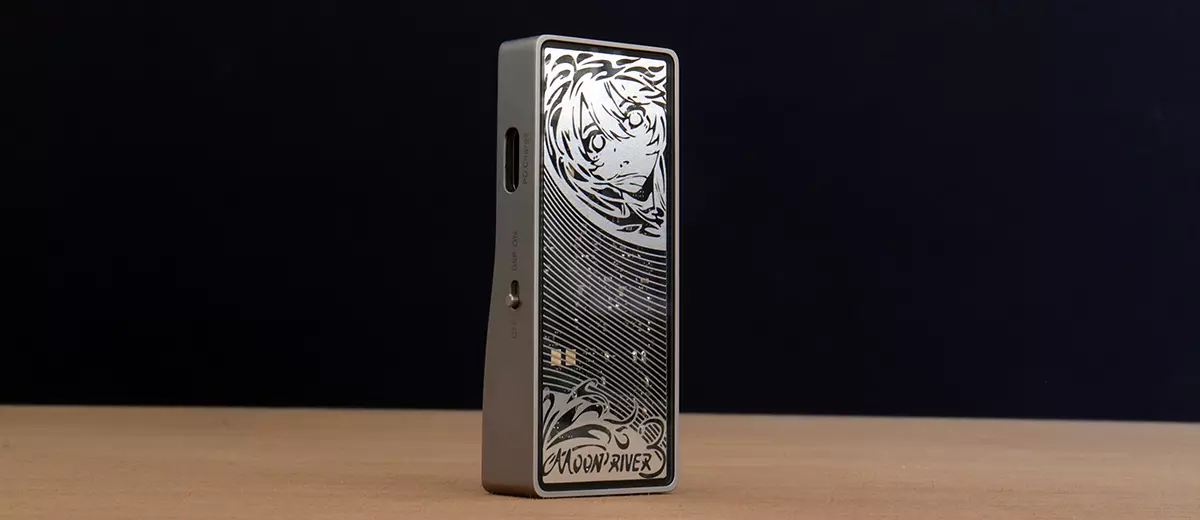
The MOONDROP MOONRIVER 3 is easy on battery life, especially in standby mode. My 5000mAh built-in mobile phone battery barely moved, keeping the dongle connected to the phone.
It does run a tad on the warm side, but I did notice that it runs warmer running off the port of my phone compared to the USB port on my PC, let’s say.
It is possible that this device could work optimally using a high current port, but I couldn’t notice any audible difference. Perhaps a test bench setup would discover this hunch.
When in use, I could play a good 15 minutes of music while using a pair of efficient IEMs and notice a 1% decrease in battery power. While using full-sized headphones, I would certainly quote a double amount of battery drain, perhaps threefold.
Power
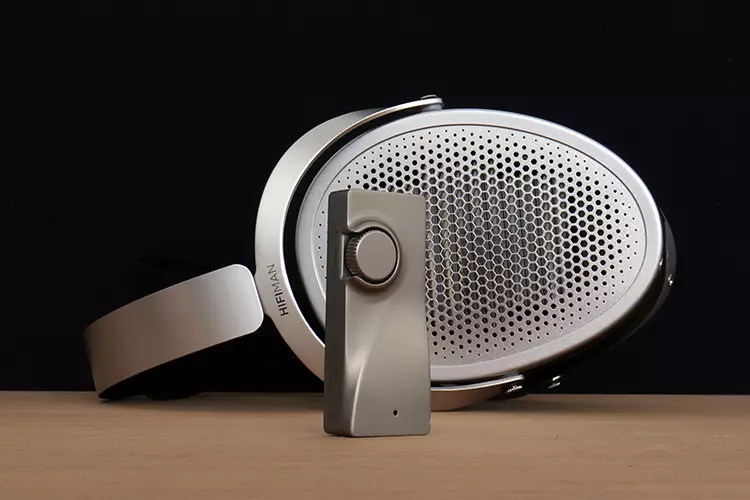
I was able to use most of my HIFIMAN headphones, including the HE1000 Unveiled, the Sundara, and the Edition XV, with no power deficiencies noted.
Of course, I used the balanced 4V out capable of 500mW. If it were a more common 2V out, the results would more than likely be different.
But it still manages to be adequately balanced and with the delicacy to drive sensitive IEMs, along with enough grunt to allow one to use full-sized headphones under the same gain level.
Then again, the high level of precision of that 100-step volume helps the user find a proper volume level.
Pairing
My instinct tells me that MOONDROP applied some Emagic here, in that with no gain control implementation, it managed to carry out a balancing act, in that one setting is good for all the headphones you can currently use with the MOONRIVER 3.
But what surprised me was the results I obtained with headphones like the Sundara, which actually picked up a slight warm bottom end with this dongle.
I was also surprised to hear so much height off my Sundara open-back headphones, since the MOONRIVER 3 seemed to widen their sonic capability.
It does the same for other cans, like the Meze Audio 99 Classics 2nd Generation and the HEDD Audio’s HEDDphone D1.
Surprisingly, headphones like the Sennheiser HD 490 PRO Plus, which is a bass-neutral headphone with a controlled soundstage, seem to open up with the MOONRIVER 3, plus the bass response picked up some needed body and warmth.
Remember as well that you can go in and cook up a sonic profile that can either correct deficiencies or peaks, or add some coloration and fun factor to a neutral headphone, and take it from bland sounding to something interesting sounding. That DSP is a game-changer in my opinion.
Selected Comparisons
MOONDROP MOONRIVER 2: Ti
Technical
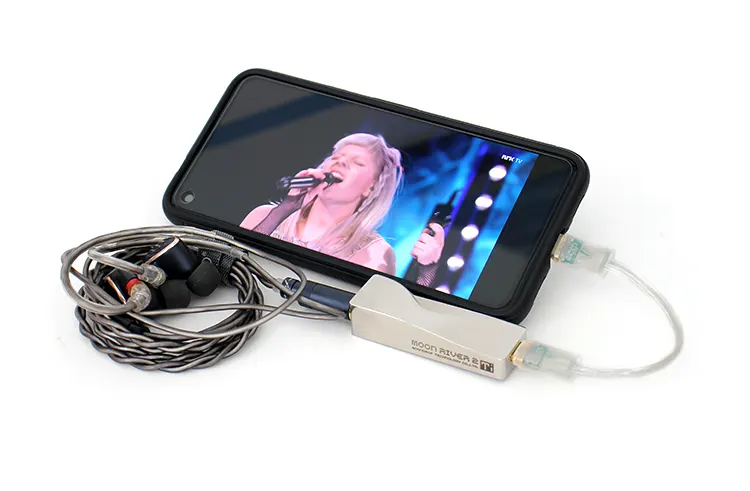
The MOONRIVER 2: Ti was certainly improved over the OG version 2. The DAC section, for example, was upgraded from dual CS43131 chips to a pair of CS43198, which, to me, sound warmer, smoother, and not as clinical as the 43131.
The MOONRIVER 2: Ti also gained a small increase in power output, but the difference was only around 30mW, which is not too significant and will doubtfully be noted with the most sensitive IEMs.
The MOONRIVER 3, on the other hand, steps up to the plate with a total of 500mW, almost doubling the power output capability of the updated 2: Ti.
In that aspect, the MOONRIVER 3 outshines the MOONRIVER 2: Ti. But where it really shines is with the customization capability, in that the app now has a built-in parametric equalizer with the ability to load a plethora of user-created presets, official presets, or you can make your own. The 2 Ti has limited customization capability.
Design
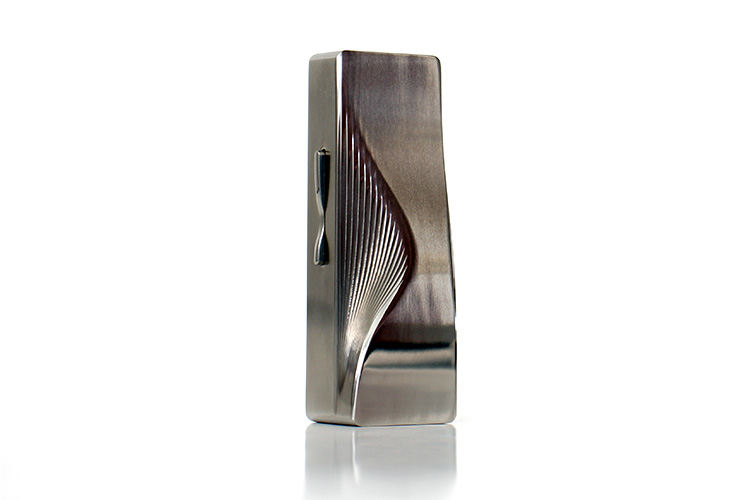
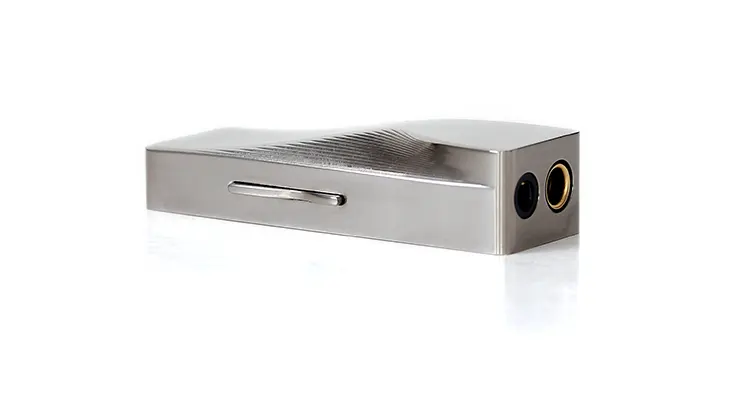
The body design uses the same basic shape. However, the MOONRIVER 3 gained some weight, and it also increased in size. Both employ what I call a bulletproof design in that they’re hefty, and I’m certain that it will take a lot of force to break one.
In place of push-button volume control, the MOONRIVER 3 employed the rotary volume control that doubles up as a pause button with the ability to skip and advance tracks. No new features were added here, just changes in aesthetics.
Both models are rather hefty, and the fact that this time around, they used stainless steel instead of titanium made no difference.
Perhaps if they had kept the original aluminum construction, weight would have been kept under control. But then the construction would lose that almost indestructible character.
It’s important to mention weight in this case because I know many mobile phone enthusiasts who feel uncomfortable using a hefty device like the MOONRIVER 3 or the 2: Ti, and for such a hefty device to hang off their delicate USB ports. I
think that’s this device’s only con, and this applies to the 2: Ti as well as the 3.
Performance
When it comes to raw power, the MOONRIVER leads by a lot. It manages to produce almost twice the amount. But that makes the MOONRIVER 2: Ti the model that’s more ideal for IEMs, and I prefer the small chassis for portable use.
Both models are capable of working with the same app, but there are differences. For example, the MOONRIVER 2: Ti opens up the two gain setting options, but not when using the MOONRIVER 3.
I’m sure at this time, it was overlooked, and perhaps the MOONRIVER 3 will implement it in the future. This device is still in development, and new firmware can come out any day and add some features later on.
These two dongles’ sound signatures are almost the same. They both have a neutral, dynamic, and clean sonic profile.
However, to my ears, the MOONRIVER 3 gained some space, as far as soundstage size, performs with more volume headroom, and is the more authoritative device, and able to drive more demanding headphones.
Shanling UA7
Technical
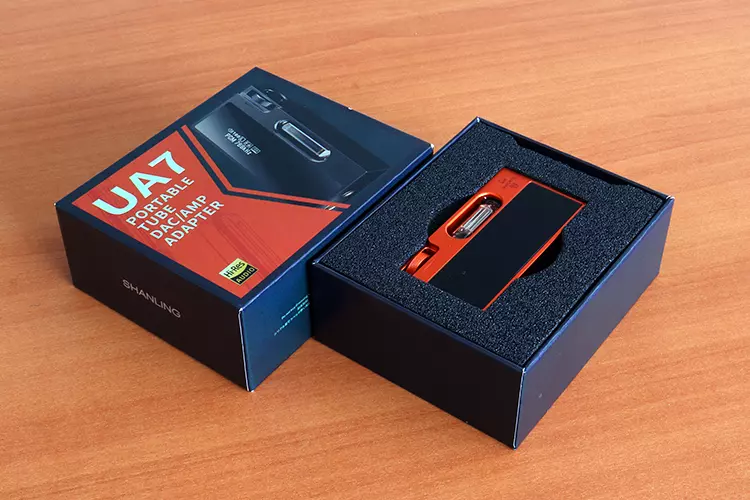
The UA7 is Shanling’s tube dongle and is an antithesis dongle to the MOONRIVER 3 for that reason. They do have a couple of similarities, for example, both have 100-step rotary volume controls and dual headphone output ports, but that’s about it.
The Shanling UA7 uses dual ES9069 chips on DAC duty, but the preamplifier section is treated to a couple of JAN6418 tubes suspended on a tube shock absorption structure, making this dongle fairly impervious to ringing, a common issue with tubes.
As far as sound shaping ability, the Shanling UA7 does have a list of digital filters that are selectable within the Eddict app. In this case, the MOONRIVER app with a full-out parametric EQ does more for my ears than those digital filters.
On paper, the Shanling is the more powerful of the two, producing 577mW per side versus the MOONRIVER 3’s 500mW.
Then again, MOONDROP gave us a rounded number, and it could be that they’re being conservative with their specs. I bet they both produce a similar 4V out.
Design
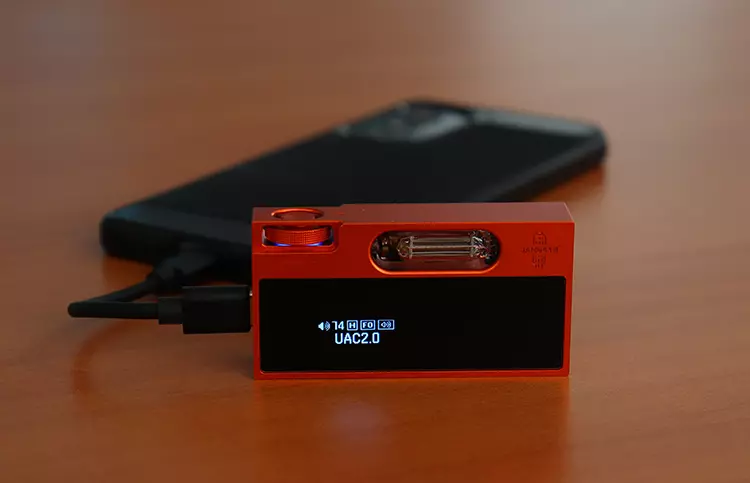
You get to play around with an onboard menu via the built-in screen, which is one of the benefits of owning the UA7, and in combination with the app, you get a turbo mode plus a two-step gain selector.
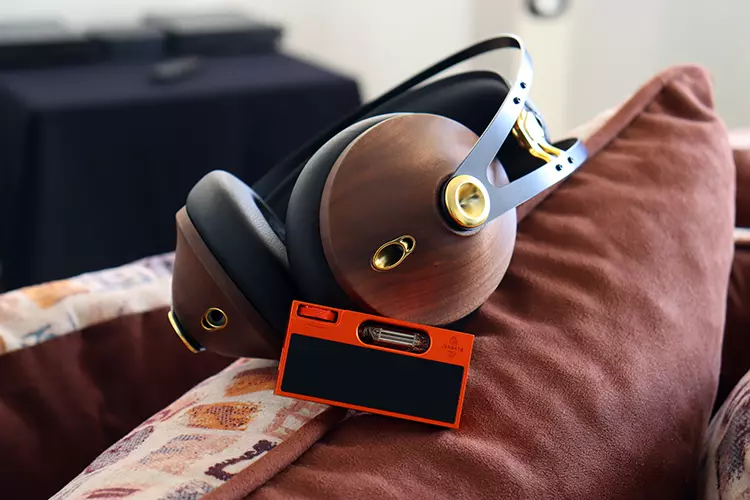
My copy of the Shanling UA7 was received with the orange finish, and I think it looks stunning.
I wouldn’t display it at an art gallery; that’s more of what the MOONRIVER 3 would be found at. Curves, waves, and waifu, oh my, would be the name of the display.
Performance
The Shanling UA7 is all about rich smoothness, and it also has a sonic signature that is more forgiving since it doesn’t attempt to be as analytical as the MOONRIVER 3, which aims for a sound signature that’s dynamic with an emphasis on neutrality.
The MOONRIVER 3 doesn’t produce bass as full as the UA7 in its stock tuning since it’s geared to sound neutral, until you apply some color and engage the parametric EQ, but the MOONRIVER 3 still produces warmth if you A/B compare it to other analytically tuned dongles.
However, things change once you realize that you can change the overall tonality of the MOONRIVER 3 at will, and it can be altered to correct, tame, or augment certain frequencies, or you can just go for a fun tune.
The Shanling UA7 offers two sonic profiles, and both are smooth and fun-sounding, but if you prefer high-level resolution, detail, and the widest soundstage with less coloration, the MOONRIVER 3 fits that bill.
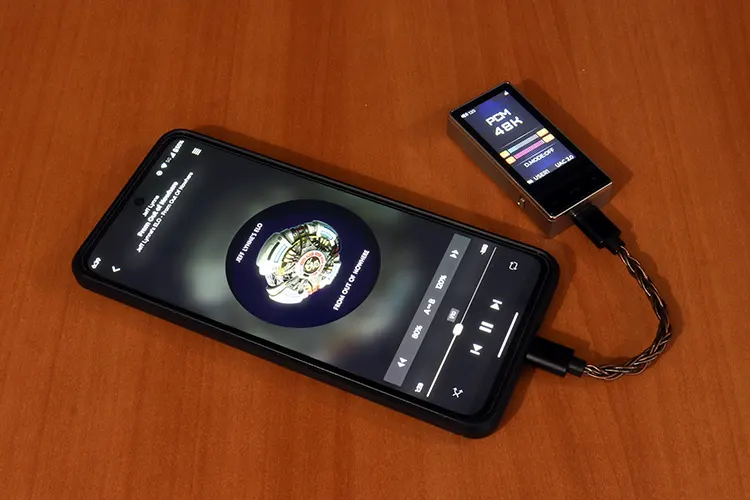
FiiO QX13
Technical
FiiO’s TOTL DAC amplifier dongle is the QX13, and it’s one of the most unique models due to FiiO taking some totally different approaches to dongle-making design implementations.
They started by incorporating a pro-level ESS Sabre ES9027SPRO single-chip solution.
Don’t be fooled by the single-chip solution since it manages to play higher bit rates with either PCM at up to 768k or DSD, which reaches the DSD512 level, versus MOONRIVER’s DSD256 capability. On top of that, the QX13 has native MQA capability.
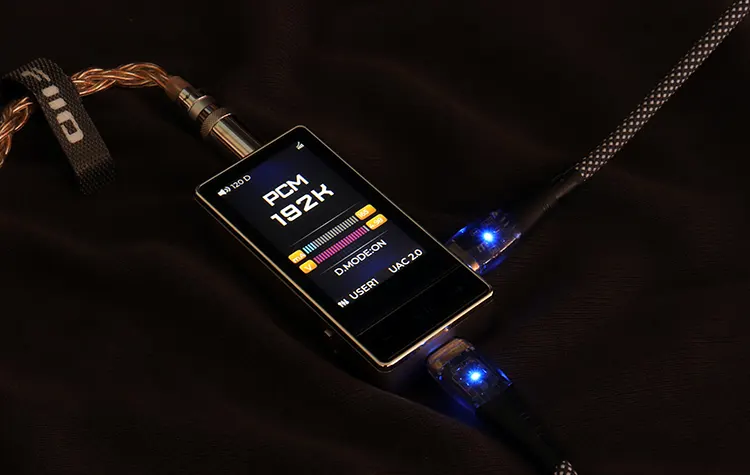
Another implementation that has to be looked at is FiiO’s desktop mode, which allows the QX13 to produce up to 990mW of power using a second USB-C cable.
I prefer this over the MOONRIVER 3’s charging port implementation, which only works if you use the supplied cable, limiting the feature even further.
A high-end, Bur Brown OPamp setup produces all that power that the FiiO QX13 is capable of producing.
The array is composed of four INA1620 chips plus an additional two OPA1692. It seems as though FiiO designed the QX13 with the desktop user in mind more than any other user.
Design
I really like the QX13’s larger-than-usual 1.99-inch multi-color display that sits behind Corning glass. You can clearly see what you’re reading on it, even from afar, and it’s a good size for those who find it a challenge to read small displays.
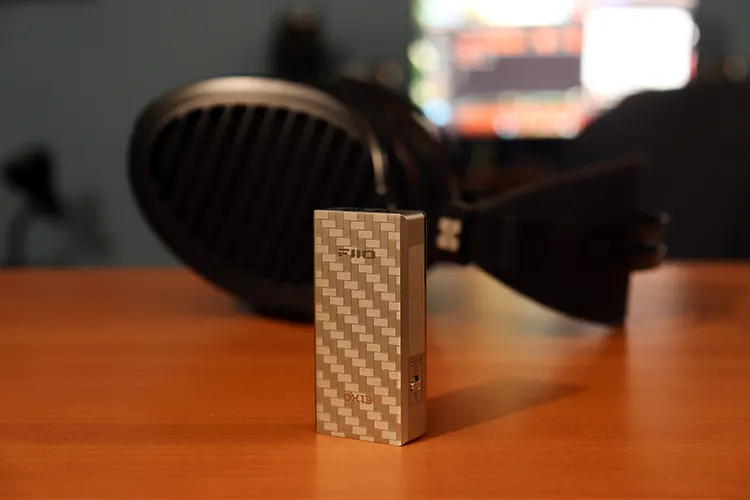
However, the FiiO QX13 is a large dongle, larger than the MOONRIVER 3, but the MOONRIVER 3 feels heavier. It does employ a construction that I would bet would resist a fall from a skyscraper. I think the MOONRIVER 3 design is heftier than the one FiiO employed.
FiiO took a different approach from the rest of the bunch with the volume control buttons as well, and their multi-function button’s placement. They’re placed upfront and below the large multi-color screen, which is unconventional but functional.
Performance
When it comes to driving power, the QX13 is on another level. It produces almost twice the amount of power that the MOONRIVER 3 is capable of.
But of course, the caveat is that you have to feed that second USB-C port to obtain that amount of power, making it less viable in a portable scenario.
The FiiO QX13 is also more resolving, due to it using a studio-level DAC chip, while the MOONRIVER 3 uses a consumer-level chip and is the more relaxed of the two, sonically speaking.
The QX13 also has a cleaner presentation that is tuned a bit bright with upfront microdetails. It does have a leaner character over the MOONRIVER 3 that produces a timbre that’s closer to natural, and a warmer nature in the lower region, especially.
So the rule of thumb here is that the FiiO QX13 is the more desirable dongle if the user tends to use their dongle in a desktop scenario often.
The extra power output makes the QX13 better for driveability; the MONRIVER 3 is the better choice if you’re using it strictly as a portable device.
My Verdict
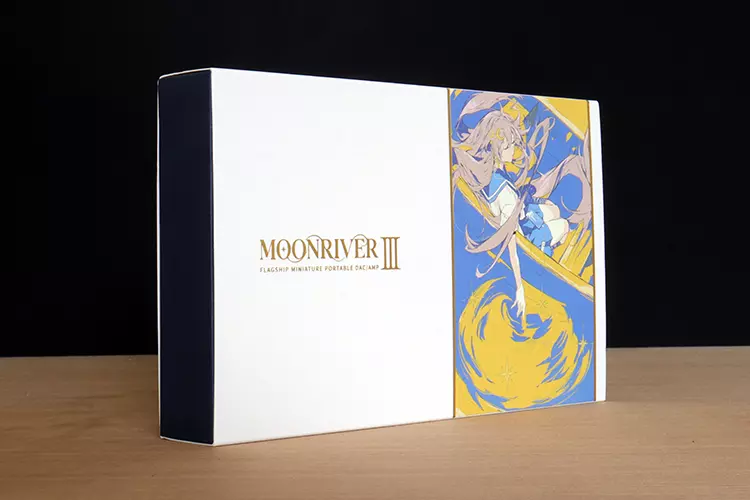
The flagship MOONDROP MOONRIVER 3 dongle DAC just raised the bar by not only outperforming the previous MOONRIVER 2: Ti dongle, but also by including some cool, useful features that are not found on most other competitors’ models, sonic excellence aside.
Throw in a bullet-proof sexy design that’s energy efficient, and throw in a wide-sounding, dynamic sound signature that is resolving, and you start to get a sense of what the MOONRIVER 3 brings to the table.
The MOONDROP MOONRIVER 3 is quickly becoming, once again, one of my favorite dongles in a vast sea of models that tend to offer the same ‘ol configurations, no artistry, craftsmanship, or unique, useful features. The MOONRIVER 3 offers that with nothing to complain about but heft.
MOONDROP MOONRIVER 3 Technical Specifications
- DAC chips: Dual CS43198
- Max output power: ~50mW @32Ω
- Outputs: 3.5mm + 4.4mm
- Dynamic range: ~131db
- Volume control: 100-step hardware
- DSP / EQ: Built-in parametric EQ with profiles
- Power input: USB PD external power
- Build: stainless steel body
- Use case: IEMs + harder to drive headphones
