


Nihal reviews the Effect Audio Ares 10, a special 10-wire geometry edition of their classic cable featuring a ‘Soul Blend’ gold copper alloy. It is currently priced from $699.
Disclaimer: This sample was sent to me in exchange for my honest opinion. Headfonics is an independent website with no affiliate links or services. I thank Effect Audio for their support.
Click here to read more about the Effect Audio products previously reviewed on Headfonics.
This article follows our current scoring guidelines, which you can read in more detail here.
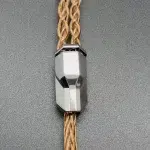
Effect Audio’s Ares cable has gone through a long journey of change. What started as a very budget-friendly entry-level cable has seen many revisions over the years.
To name a few, Effect Audio released Ares, Ares S, Ares S Lite, Ares S 8-wire, Ares II, Ares II 8-wire, Ares S II, and Ares II x Cadmus II AxC.
So, this cable has changed its form and design many times and has also crossed paths with different cable ideas along the way.
Now, to celebrate 10 years of its existence, Effect Audio has released the new Ares 10 cable.
This is the brand’s first-ever 10-wire geometry release, which already gives it a special kind of treatment. On top of that, it also comes with some special attention given to its conductors and hardware.
How much of that translates into performance, we will see in this review. I will also compare the Ares 10 with Code 23 Mk II, Astral Acoustics Mars, and PLUSSOUND Copper Fusion Hybrid.
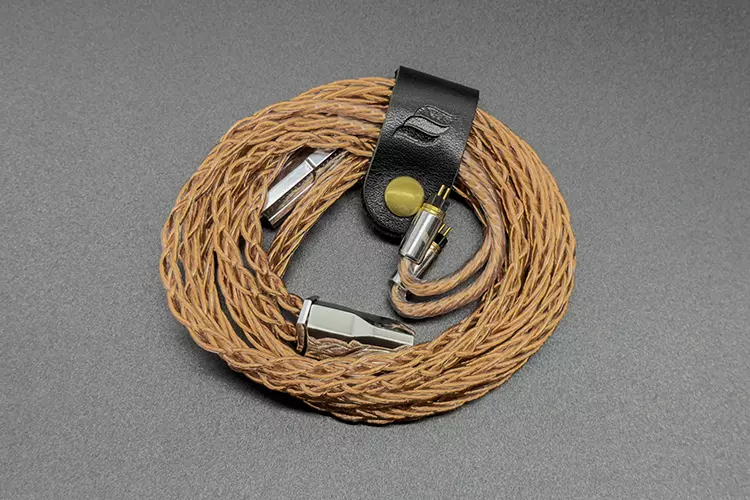
Material & Geometry
For the first time in EFFECT AUDIO’s history, Ares 10 adopts a 10-wire geometry. At its core lies a newly developed Tri-Strata Copper Architecture™, a three-layer construction.
A similar architectural design was also used in the Fusion 1 2025 cable. This architecture integrates multiple copper variants across all three layers. Each layer serves a distinct purpose in shaping the final sound.
The materials used here are a mix of pure copper and a newly developed Soul Blend Gold Copper Alloy, which is said to add midrange density, a more grounded bass presence, and fuller, more textured vocals.
The cable also uses EA Ultra Flexi™ Insulation for flexibility and protection. It comes with a default 0.78 mm 2-pin connection and offers plenty of customization options on the product page.
Design
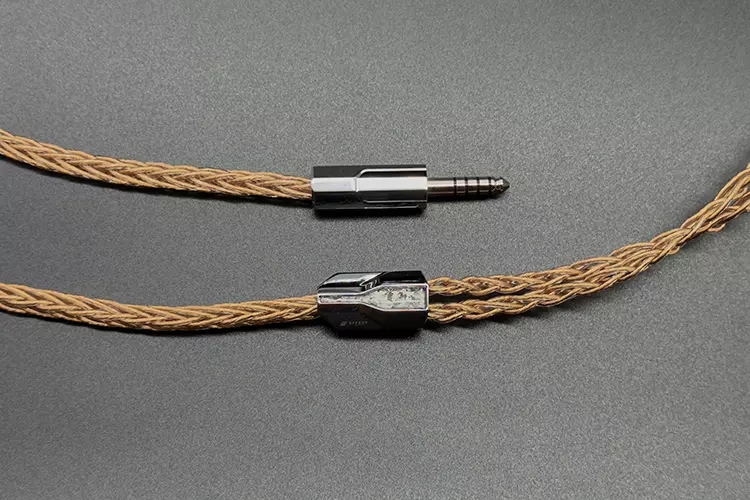
Ares 10 keeps the familiar Ares identity but shows up in fresher clothes. The basic look is still unmistakably Ares. What changes is the presentation. The transparent sleeve lets that mild copper glow come through nicely, and that gives the cable a clean, classy look.
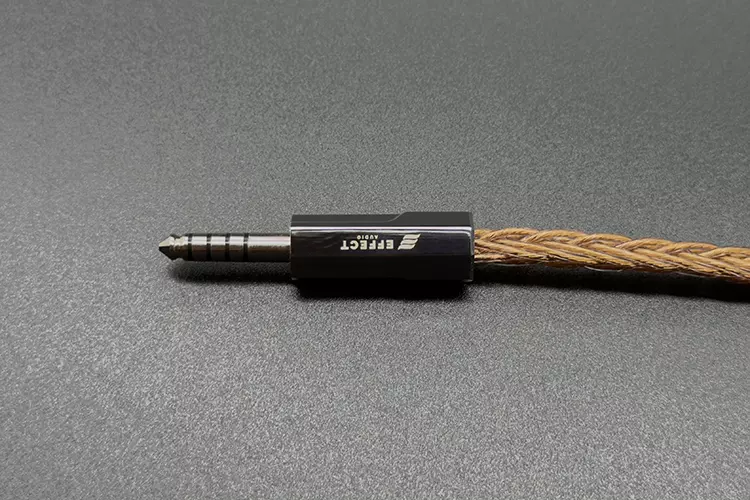
The hardware has a bright mirror-finish surface with a shiny silver appearance. A very polished and sleek look.
It’ll pick up fingerprints and smudges easily, though, so you’d need to clean it up more often. Effect Audio should have added a small cleaning cloth to the box. Also, the polished hardware may pick up light scratches with time; you may need to handle it carefully.
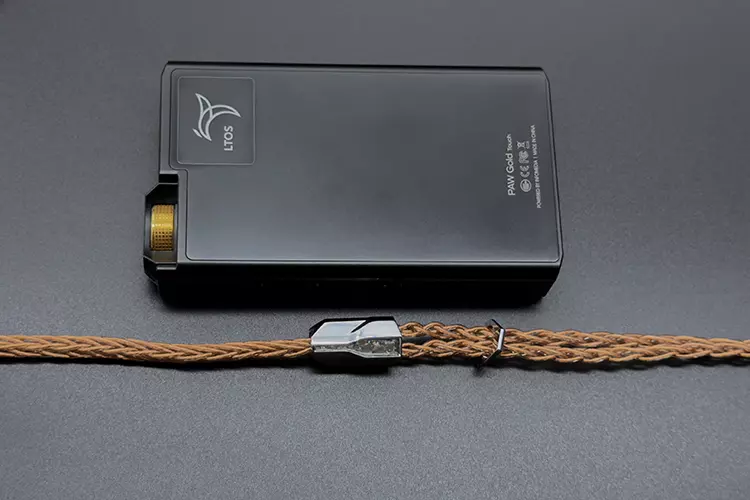
The Y-split keeps the same familiar Signature Series design language, but this time it gets a nice visual twist.
The ice crystal titanium flakes inside the barrel add a subtle crystalline texture, and that works really well with the polished metal finish around it. It gives the cable a slightly more special feel without going overboard.
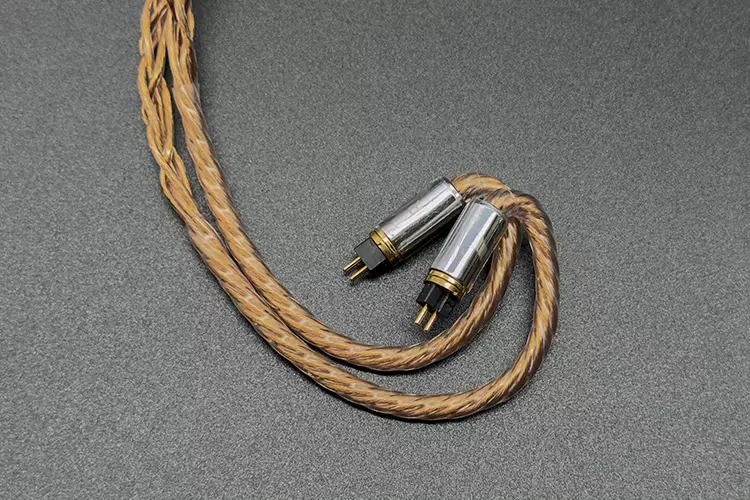
The termination adapter and the 2-pin hardware follow the same shiny finish, which creates a very nice contrast against the warmer copper tone of the cable itself.
It is a good-looking cable overall. Familiar, but still fresh. Premium-looking, but not loud.
Ares 10 also gets Effect Audio’s ConX system, which makes connector swapping easy and keeps the cable compatible with 2-pin, MMCX, and Pentaconn Ear. That adds real flexibility, especially if you rotate between multiple IEMs.
Handling
Handling is one area where Ares 10 genuinely surprises. You see the 10-wire build and naturally expect something thick, stiff, and a little troublesome in daily use. That is not really the case here. It is actually quite easy to live with.
The cable does not feel tightly wound or overly springy. It has enough flexibility to move around naturally, and that makes a big difference in use.
Rolling it up is easy. Storing it is easy too. Even when you take it out again, it does not fight back much. It may uncoil a little on its own, but that is more a sign of it not being stiff than anything else.
What stands out even more is the weight. For a 10-wire cable, it feels surprisingly light. You do not constantly notice it when wearing it, and that helps a lot during longer listening sessions.
The Y-split can make its presence known a little and may pull itself down slightly, but it never becomes distracting. More importantly, it does not create any real pressure on the ears.
Tangling is also not much of an issue here. The cable behaves well. It keeps its shape when rolled, but it is not rigid. So overall handling stays stress-free, which is not something you can say for every large cable.
The only small concern is the memory hooks. They are slightly on the stiffer side. In longer sessions, you may feel a bit of pressure behind the ears. Not too harsh or poky. And it is not a dealbreaker, though. Just a small comfort note.
Packaging & Accessories
Effect Audio does not really pay much attention to packaging for its lower-budget and mid-fi releases. However, the box artwork does save the day.
For this price point, I do believe adding a few small accessories would have been quite commendable, but we get none.
The packaging is more in line with the smaller siblings from the Signature Series cables. At this price, and given that this is a special release, it deserves better.
It arrives in a similar black box with the same engraved artwork as its siblings from the Signature Series, with only the front logo being different.
Given that the cable’s hardware is very shiny and catches fingerprints quite easily, a cleaning cloth feels like something that should have been included.
I do like the approach here. They maintain a similar packaging style across most of their cables and still include a few useful accessories, so the package does not feel barebones.
Performance Impressions
The following sound impressions of the Effect Audio Ares 10 were completed using the iBasso EPITOME, THIEAUDIO Valhalla, and BGVP Solomon, alongside my main source, Lotoo’s PAW Gold Touch.
Summary
The Ares 10, with its copper and mix of gold, adds quite a bit of character. It pairs easily with most of the IEMs I tried.
Ares 10 favors IEMs that are transparent, slightly lean, neutral to mildly bright, or a touch too analytical in their presentation. It works especially well with tunings that already have strong technical ability but miss a bit of naturalness.
It is also a good match for sets with capable bass that need a little more body or for bass sections that sound fast but slightly underfilled.
If the notes feel too dry, too separated, or slightly overdefined, the Ares 10 usually helps. It also pairs well with tunings that have a bit too much upper midrange and lower treble energy, where clarity is good, but comfort takes a slight hit.
It feels more refined, more even, and easier to live with over longer sessions. This is one of the stronger traits of the cable. It can smooth the top end without making the whole sound sleepy.
Timbre
The Ares 10’s timbre is mature and controlled. It adds color, but not too much. It smooths things but does not blur them. That is really the core of Ares 10. It makes many technical tunings sound less mechanical and more human.
In the low end, Ares 10 usually brings a fuller and richer note body. Not loose. Not overly warm. Just more grounded.
On leaner tunings, this comes through as slightly added heft and better support and control under the mix. Bass notes carry a bit more flesh and weight, which helps the whole presentation sound more complete.
In the midrange, Ares 10 adds tonal richness. There is a bit more density and body in the notes. Vocals and instruments come across with a more natural presence, and that dryness some technical tunings can have gets reduced nicely.
The mids feel less flat, less matter-of-fact, and a little more alive. More relaxed. Female vocals and sharper instrumental overtones stop sounding as if they are being overlit.
In the treble, Ares 10 mostly works by removing excess tension. Lower treble crunch gets softened a bit. The sharper edges lose some bite. Then the upper treble settles down too, especially on tunings that sound too airy or slightly overexposed.
Detail does not disappear. Resolution stays intact. But the treble stops calling attention to itself so much. It feels more refined, more even, and easier to live with over longer sessions.
Ares 10 favors IEMs that are transparent, slightly lean, neutral to mildly bright, or a touch too analytical in their presentation. It works especially well with tunings that already have strong technical ability but miss a bit of naturalness.
Staging & Imaging
Ares 10 does not try to create some artificial jump in stage size. That is not really its style. What it does instead is make the stage feel more filled in, more organic, and more complete.
Notes carry a more musical touch, and because of that, the whole presentation feels fuller. The stage sounds less empty between images. More natural too.
That added musicality in the midrange helps a lot here. Since the energy is trimmed a bit and the tone feels more settled, images come across as more vivid and more believable.
Not ultra-sharp. Not razor-cut. Ares 10 is not about forcing hyper-precision. It is more about structure. It’s more about letting you feel and enjoy the music rather than having details constantly poke at you.
Imaging feels naturally clean. Instruments and vocals feel better arranged on the stage. There is a stronger sense of order. Separation also improves, but not in a dry or analytical way.
It comes from the notes having better extension and a more natural presence. They seem to stay around a little longer and make space for themselves. Because of that, it becomes easier to follow individual lines without the presentation sounding forced.
Micro-details are in plenty, just delivered in a smoother wrap. Nothing feels lost. The presentation is smoother, more effortless, and easier to sink into.
Cymbal tails and reverbs trail off with a more natural finish, and that adds a nice sense of ease to the mix. Little things linger more musically.
So overall, Ares 10 makes staging and imaging feel less technical in the usual hi-fi sense and more musical in the real listening sense. It gives the sound an easier flow, a musical massage, and a more relaxed sense of space.
Click on page 2 below for my recommended pairings and selected comparisons.
