

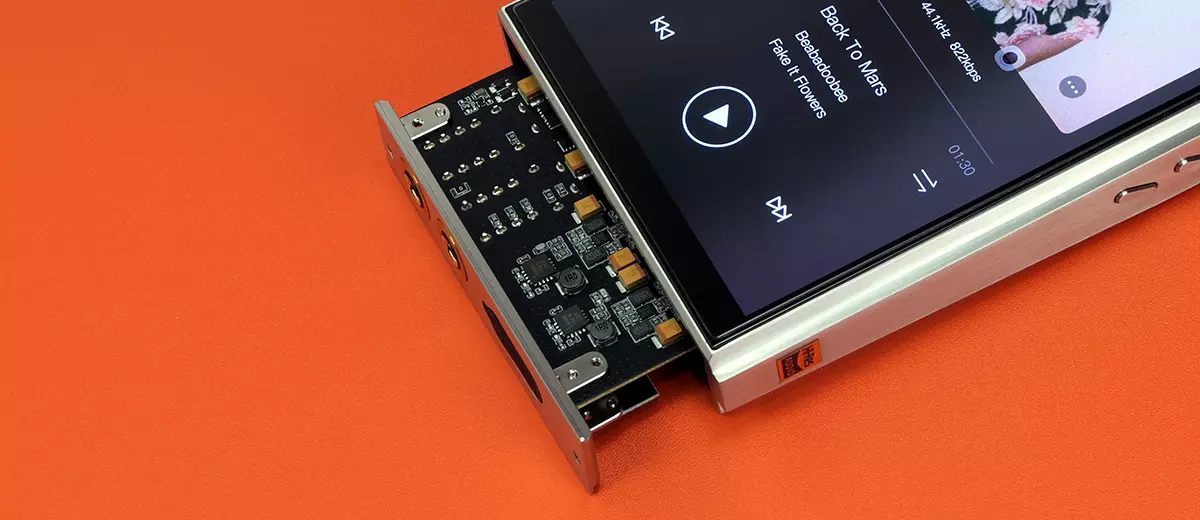
Marcus reviews the iBasso AMP17, the first 1900mW-capable and DX340-compatible amplification card to feature gallium nitride (GaN). It is currently priced at $299.
Disclaimer: I received this sample in exchange for my honest opinion. Headfonics is an independent website with no affiliate links or status. I thank iBasso for this opportunity.
Click here to read more about the iBasso products previously reviewed on Headfonics.
This article follows our current scoring guidelines, which you can read in more detail here.
The iBasso AMP17 is the latest in the company’s series of innovative amplification cards specifically designed for the DX340, but is also backwards compatible with the older DX300 and DX320 DAPs.
Priced at $299 (or around $249 outside the USA), the AMP17 is the third in the latest generation of amplification cards, with AMP15 packaged as the DX340’s stock card and the AMP16 NuTube card released shortly after at $269.
The AMP18 has also just been released and is priced at $329 in the US. This is an amplification card that we will also review soon.
For those who enjoy the AMP15 sound, the AMP17 is the next logical card to buy. This is a balanced-only amp card, but it sounds more dynamic with improved staging performance whilst still offering what is essentially a neutral sound quality.
How has iBasso achieved this improved performance over AMP15, and how does it compare to it and AMP16? I found out in my full review below.
Features
On the face of it, the AMP17 might not seem to bring anything new to the table that has not been done before.
This is a discrete-engineered balanced-only solid-state card with a sub-ohm impedance output rating for headphone and IEM users.
It offers a healthy 1030 mW into a 32 Ω load via the DX340’s battery power and up to 1900 mW into the same load via its additional 12V DC input, a feature found on the AMP15 and AMP16 modules.
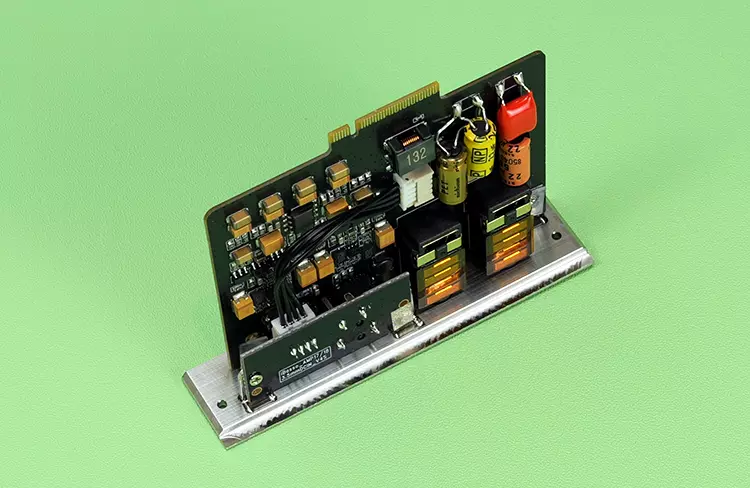
Rather, the innovation lies in the implementation of these discrete-engineered components with gallium nitride (GaN) semiconductor material rather than silicon found in traditional portable transistor-based or MOFSET amplification topologies.
GaN is a common application since the 1990s, driven by increasing demand for energy-efficient, sustainable technology in consumer products, such as compact fast chargers for phones and laptops.
It has also been a recent introduction in desktop audio for the very same reasons why iBasso has decided to implement GaNFETs in the AMP17.
Reasons include a more efficient, low-heat design and a higher PWM frequency that results in excellent square wave output performance from faster switching nodes than traditional MOFSET alternatives.
And because the quad-GaNFET implementation has a low internal and output resistance, AMP17 has higher drive currents than previous cards, making it an ideal match for lower impedance headphones and IEMs.
What that means to the user is improved levels of dynamic range, clarity, and control over what the previous cards can offer without too much battery drain.
Design & Installation
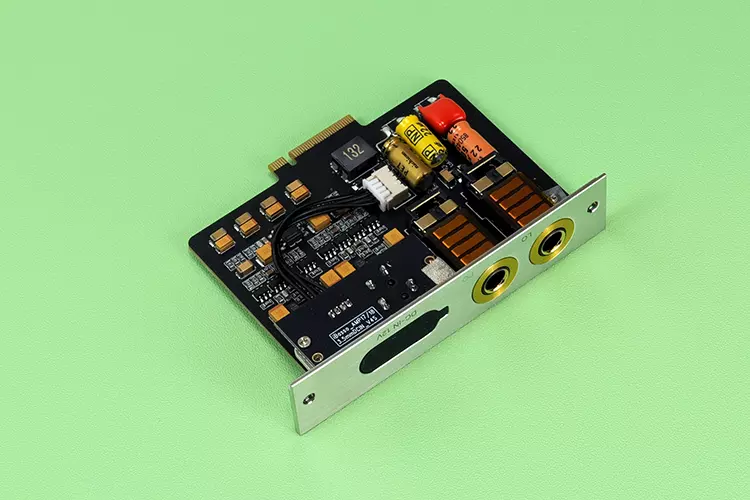
Because AMP17 slots into the DX340 and essentially disappears with only its front 316 Stainless steel panel visible, there is not a huge amount to say regarding aesthetics, other than the PCB Board is a little bit narrower than AMP16 and AMP15.
It is also a balanced-only PO/LO design with no 3.5mm options, so the front panel only has two 4.4mm connections on the other side of its 12V DC Input, which is protected by a rubber flap.
Battery life compares well with AMP15. I clocked around 8-9 hours using AMP17 with the DX340 with higher impedance headphones, increasing to almost 10 with IEMs using a DAC high gain, amp low gain setting.
For those installing AMP17 for the first time, the cards slide in and out of the base panel of the DX340. At the deepest point in the slot, there is an edge connector slot that lines up with the equivalent connector on the card to ensure it is recognized by the DAP.
The cards are held in place with two tiny T4 Torx or HEX screws on the front panel, with a matching screwdriver included in the accessory packaging.
For DX300 and DX320 users, AMP17 comes with an additional faceplate to ensure the card is 100% compatible. Be mindful to disconnect the DC input during the panel swapping process, as the older DAPs do not use that feature.
The screw system is a bit old-school for me, especially now that we have screwless interfaces that come with the new Cayin N6iii. The screwdriver does not seem magnetized either, so it is very easy to lose them if not held securely in place when locking down the card.
Thankfully, iBasso has included some spare screws in a bag should you lose any during installation.
Packaging & Accessories
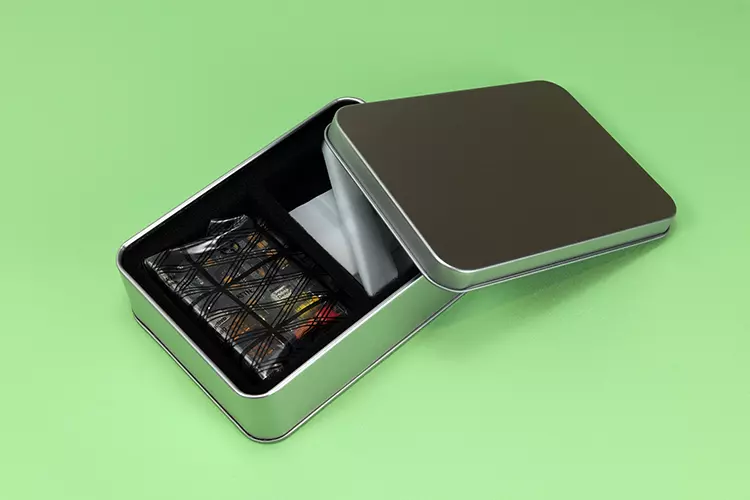
As with AMP16, AMP17 comes in a fairly compact, plain white box surrounding a tin can that houses plenty of protective foam.
The foam forms two distinct trays. One holds the card sealed inside an anti-static bag, and the other has two bags of spare screws and a screwdriver. You also get a warranty card with your serial number.
Sound Impressions
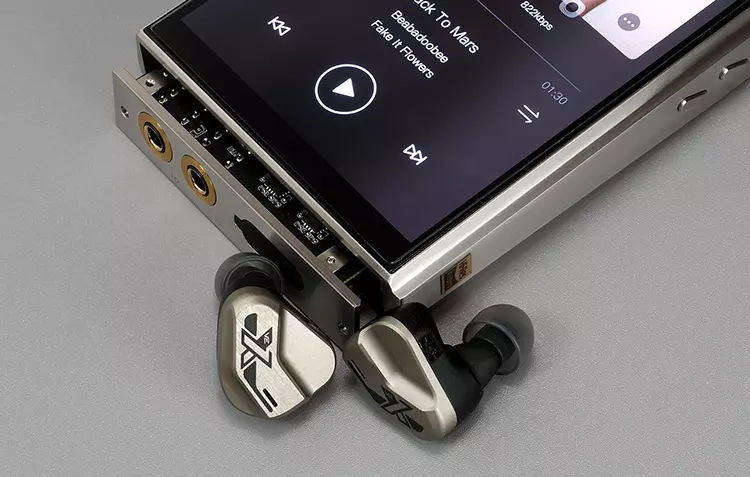
The following sound impressions of the iBasso AMP17 were completed using the DX340 as the main DAP, combined with the PMG Audio Apx, Vision Ears VE10, and the Austrian Audio The Composer headphones.
Summary
For fans of the neutral AMP15 sound but looking for a little more ‘oomph’, AMP17 is the next logical amplification card.
It retains a clean, neutral tonal quality but enhances the dynamic range and visceral impact of the performance with IEMs and headphones.
You will hear improved depth in the presentation, with an enhanced fundamental frequency in most lower-register notes that works wonderfully well with recordings that have a strong bass guitar presence or a very rhythmic low-end.
The contrast with AMP15 is stark. I always found AMP15 to be punchy and spacious-sounding, but when compared to AMP17, it sounds a little flat and tranquil. It is almost polite-sounding and more reserved in its delivery.
AMP17 brings you into the soundscape a lot more, but without overwhelming you with a wall of sound. The control of the harder-hitting bass notes and the level of definition are excellent, so there is a sense of order in the increased energy levels, especially with open-sounding IEMs such as the Apx.
The only time I would hesitate with AMP17 is if your IEM or headphone has a very heavy and prolonged bass shelf and you enjoy keeping the DAC gain on high.
IEMs such as Noble Audio’s Shogun sound better with the DAC gain set to low. Keeping it high overwhelms the lows and suffocates the mids. Reverting to low-gain retains the Shogun’s pronounced bass, softens the impact, and leaves space for the vocal presence to come through.
Headphone owners will also get a lot of joy with AMP17’s enhanced power via DC Input, particularly modern planar owners.
The additional depth and vocal bloom provided over AMP15 were well-suited to the likes of the NOIRE XO and the darker Audeze LCD-4z, two moderately efficient headphones that can often sound flat if underpowered.
Click on page 2 below for my recommended pairings and selected comparisons.
