

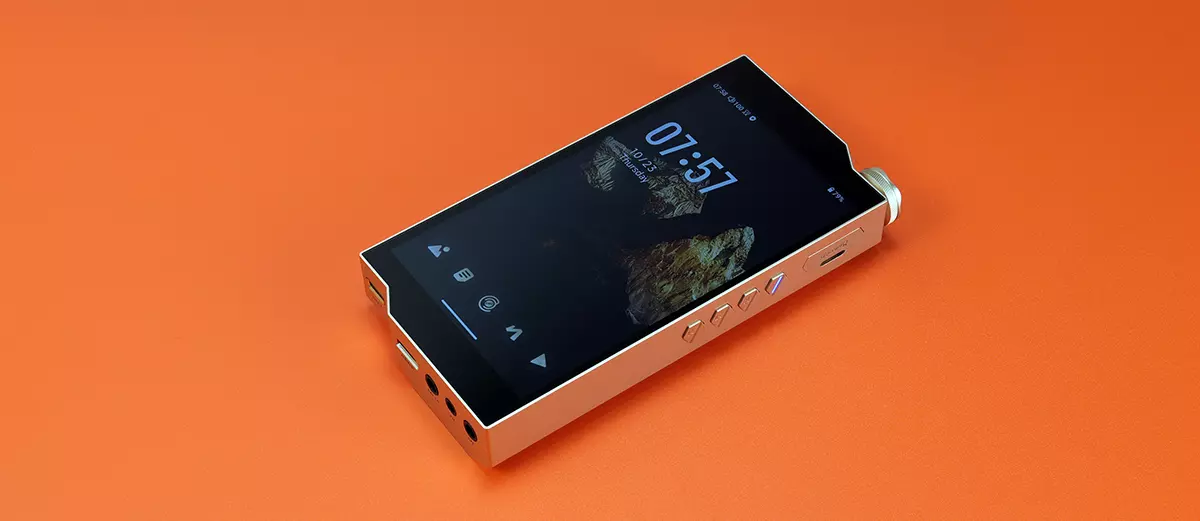
Selected Comparisons
The following selected comparisons to the HiBy RS8 II were completed using a mix of the Volk Audio ÉTOILE, PMG Audio’s Apx, and the Austrian Audio Composer.
Settings included balanced output, low-gain for the IEMs, and medium gain for the headphones. In all instances, Turbo Mode was active, DSP, Sankofa AI, and PMQ were turned off.
HiBy RS8
The HiBy RS8 was launched in late 2022 and was the company’s flagship DAP until the release of the RS8 II. It was also our Top Gear Award winner for Best DAP in the same year.
Technical
A great deal has already been covered regarding the differences between these two, so I will keep this brief.
Essentially, the RS8 II moves from Darwin II to Darwin III with enhanced FPGA, 16GB of RAM compared to 8GB, 512GB of onboard memory compared to 256GB, and Snapdragon Gen 2 as opposed to Snapdragon 665.
The computational power combined with the upgraded SoC and RAM means the RS8 II is not only a faster UI experience for the user, but is also able to do intensive pre-calculations that enable new features such as Adaptive amplification, as well as enhance the performance of its R2R array over the original RS8.
The switch from the RS8’s Android 12 to Android 13 might disappoint some looking for a more recent OS platform, but given the improved SOC and RAM, the RS8 II is the fastest DAP on the market right now.
The addition of Sankofa AI with the retro hardware choices should also have broader appeal than the previous Custom IEM tuning presets.
WiFi speed has a bump with the RS8 II’s Wi-Fi 7, showing almost double the transfer speed compared to the dual-band module inside the RS8.
For all that, there are some features on the RS8 that are missing on the RS8 II, such as true NOS, a dedicated 3.5mm lineout, and a stripped-down Darwin Controller suite. I can happily give up the 3.5mm LO for the addition of I²S digital output, but YMMV depends on your setup.
Decoding is unchanged at a maximum of DSD1024 and PCM 32-bit/1536kHz with 16X MQA, and amplification has been enhanced from 780mW balanced into a 32Ω maximum on the RS8 to 812mW on the same load. Turbo Mode is available for both DAPs.
Design
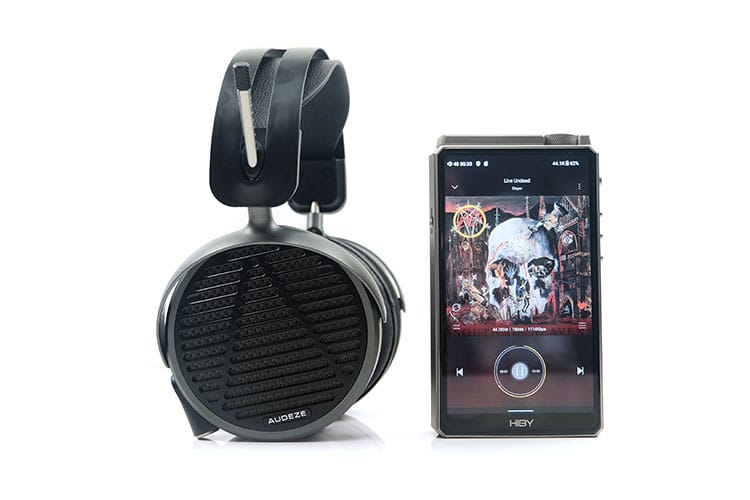
The RS8 unit I have here is the titanium version, so it is significantly heavier than the aluminum chassis of the newer RS8 II. And whilst the dimensions have not hugely changed between the two, the more sophisticated cutting on the RS8 II actually makes it seem the narrower device.
And it is the shape that propels the RS8 II over the boxier RS8 design aesthetic. The RS8 II styling, from the volume knob to the cutaway panels and more aggressive chamfering on the side panels give it a more premium look.
What has not changed is the screen size and pixel density. They look much the same, save for the thicker bezel at the top of the RS8 II to account for the angular cut around the volume wheel.
The dial itself feels a little lighter in construction than the titanium version on this RS8, but the new angular panel shape makes it far easier to access compared to the guarded vial on the RS8.
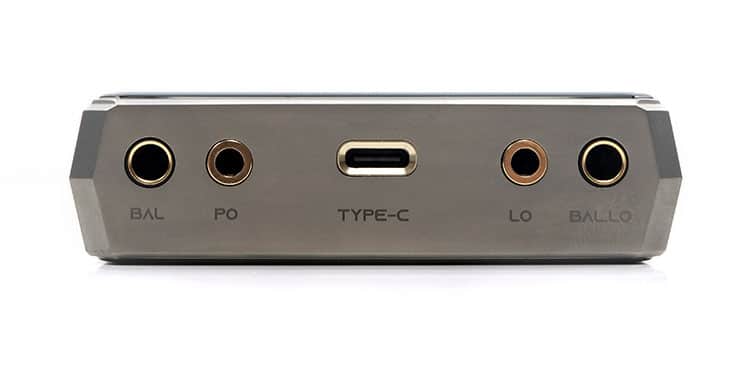
Gone is the dedicated 3.5mm LO, in comes the new I²S digital output with the USB-C socket moving to the far left instead of central on the RS8. The additional dust plugs for the RS8 II are a nice touch and enhance the aesthetics when not in use.
Special shout-out to the new leather case that comes with the RS8 II. It’s softer, more versatile for button management, whilst providing for more protection around the buttons at the same time.
Performance
The RS8 II sound signature corrects the main critique I had about the original RS8’s performance, and that is the slightly flat dynamics of its midrange presentation using Class A.
Particularly, the vocal presence and emotive vibes often left me feeling slightly cold relative to its excellent low-end response.
In pure Class A, the RS8 II sound has a more distinctive lower-mids bloom and warmth, providing more body and a sweeter, more intoxicating vocal performance.
The ETOILE and Apx IEMs sound less clinical with the RS8 II. Everything beyond 4k sounds more refined and effortless, whereas the RS8 is drier with a little more harmonic dissonance in percussion strikes and higher-pitched vocals.
Class AB on the RS8 is a closer ‘fight’. Both sound punchy with good vocal presence, but again, it’s just a shade more neutral in tone on the original RS8 compared to the more serene, sweeter sound of the RS8 II’s coloration of the same IEMs.
Placing the Adaptive amp slide in the middle is where the RS8 II excels. It’s a bolder sound at times, with a firmer vocal presence and more staging depth and better dynamic range over the flatter RS8 sound. It still retains its natural sound quality, but it sounds more immersive and engaging than the RS8.
One final impression in this comparison is the cohesion in the soundstage of the RS8 II. Everything sounds seamless from the lows, through to the mids, and the highs.
There is improved lower-mids fill, better bass and vocal balancing, and the treble extends gently rather than crashing down on the mids’ timbre.
The RS8 sounds comparatively compartmentalized with my tested IEMs, meaning lows, mids, and highs sounded almost like strangers to each other, which surprised me a lot.
HiBy R8 II
The R8 II was a more recent release in late 2023, replacing the original R8 from 2020 and sitting just behind the RS8 (and now the RS8 II) in the company’s DAP lineup.
Technical
The HiBy R8 II is a step below the RS8 II with Android 12, 8GB of RAM, and 256 GB of onboard storage, and is powered by an older Snapdragon 665 CPU.
It is not as fast, nor does it have the same FPGA computational power as the RS8 II, so it is missing key features such as Sankofa AI.
However, it does use DARWIN-MPA technology with a 1024-tap cascaded FIR filter system and an in-house delta-sigma capable of similar bitperfect DSD1024 and PCM 32-bit/1536k decoding capabilities.
Like the original RS8, the R8 II has dual-mode amplification rather than the RS8 II’s adaptive amplification. You either go Class A or Class AB with the R8 II; there is no pre-calculated mix during playback. Both DAPs offer Turbo Mode, which is my preferred setting for the enhanced voltage swing.
Amplification is slightly weaker on the R8 II at a maximum of 710mW balanced compared to 812mW balanced on the same 32Ω load, though in truth neither DAP has brute force power. There is some additional Vrms in the RS8 II lineout at over 5Vrms balanced compared to 4Vrms from the R8 II.
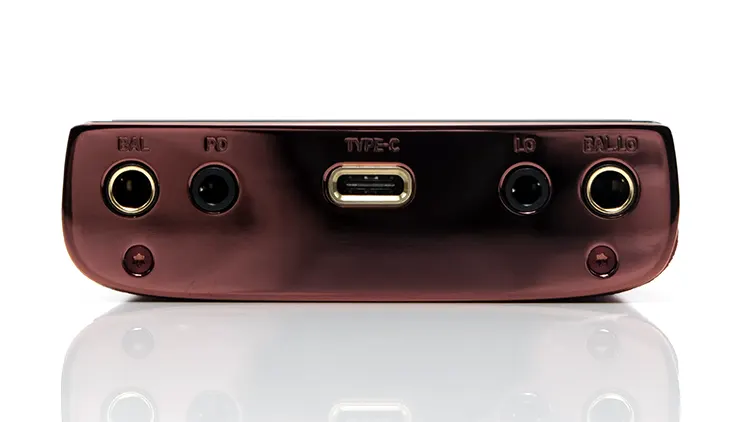
The I/O is similar to the RS8, meaning there is no I²S, but instead it has dedicated LO/PO ports with a slower speed USB-C port in the middle.
The R8 II does not have Wi-Fi 7 either, and an older BT5.0 module to sync and transfer speeds for streaming are behind the RS8 II.
Design
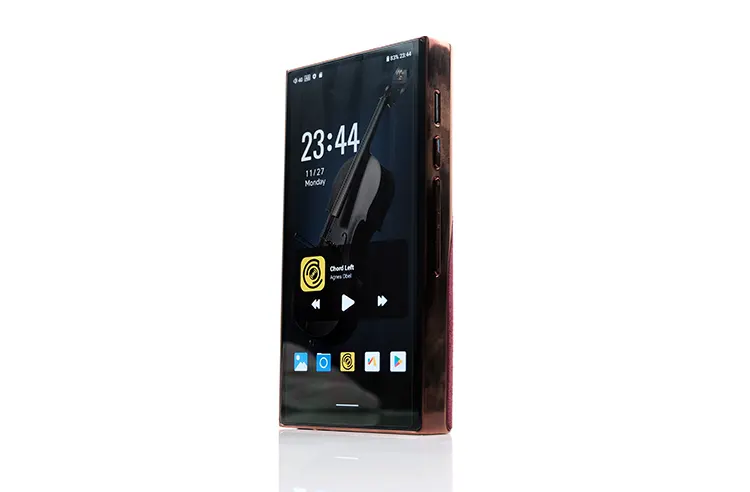
The R8 II has a form factor closer to the original RS8 and slightly bigger and heavier than the RS8 II. However, I consider it an elegant-looking device with some nice Alcantara accents on the rear panel and finished in either glossy red, blue, or black.
Side by side, the RS8 II does look the more premium device with its more advanced machining on the chassis, and I always prefer a physical volume dial over volume rockers, so it’s clear where some of the additional money is going towards.
However, there is one major advantage the R8 II has over the RS8 II, and that is its superior screen. This is a larger 5.9″ IPS screen with a 2:1 ratio and an enhanced 1080 x 2160 resolution as opposed to the 5.5″1080 x 1920 resolution for the RS8 II screen.
You can see the difference clearly in the blacks and improved pixel density in the R8 II screen when placed side by side with the RS8 II. Granted, screens are not everything in DAPs, but it is more aesthetically pleasing.
I am less of a fan of the volume rocker solution on the R8 II. Its accurate but time-consuming to move up and down the volume steps in this manner. There is no volume lock per se on the R8 II either, though with rockers it’s less of a concern.
A quick mention regarding the R8 II protective case. It matches the R8 II elegance beautifully, but the opening at the port panel is not wide enough for large cable jack barrels.
Cables such as the stock Liquid Links version with the Annihilator 2023 do not fit, whereas there are no issues with the cut of the more premium leather case that comes with the RS8 II.
Performance
Two very different performances, whether in Class A/AB or adaptive. To a certain extent, there is the soundstage cohesion element I spoke about in the RS8 comparison, but with the R8 II, it pertains more to less staging width and more sub-bass emphasis.
In all amplification classes, you will notice a more elevated sub-bass response and intimate vocal imaging from the R8 II compared to the more balanced response from the RS8 II lows and mids.
The RS8 II has a little bit of the R8 II’s muscularity taken off, and in return, there is an enhanced lower-mids bloom and a more relaxed, airier, and wider set of mids and highs. Again, it’s more cohesive sounding, though not as authoritative sub-50Hz as the R8 II is with my tested IEMs.
That can work to your advantage or not, depending on the IEM of choice. For example, the Tangzu Monkey Key is a basshead flagship and sounds every bit the authoritative monster on the lows with the R8 II. A perfect match.
However, the PMG Audio Apx/R8 II pairing sounded a little narrower and more focused on just the bass and vocal imaging rather than the more elaborate soundstage work from the RS8 II, which seemed to do a better job filling up the huge soundstage potential of the Apx.
The ETOILE sounded a little unbalanced with the R8 II, given that it already has a boosted pinna gain. Vocals sounded too dominating and intimate, with the rest of the soundstage falling away save for sub-bass accompaniment.
The more relaxed and expansive approach of the RS8 II created a more immersive soundstage from the ETOILE without pushing the vocal imaging too far forward, sounding more natural to my ear.
iBasso DX320 MAX Ti
The iBasso DX320 MAX Ti is the latest of the company’s limited-edition TOTL DAP releases, building on the previous DX300 MAX and DX240 MAX iterations. It was also our 2023 Top Gear Award winner for Best DAP.
Technical
If the RS8 II is geared to motivate audiophiles through the clever use of software, then the DX320 MAX Ti is the antithesis, with its focus on premium hardware, particularly regarding amplification.
In some ways, the DX320 MAX Ti is a DX320 digital slab on top of a mini desktop amplifier, rich with high-end components and a very hi-fi-oriented stepped attenuator.
iBasso has been keen to ensure there is as much separation as possible between the digital side and the analog side to ensure the resulting signal output is as pure as possible.
Whereas the RS8 II uses the digital or computational side in a much more invasive manner to ensure decoding is maximized from the R2R array to produce a smooth analog output.
The DX320 MAX Ti uses a delta-sigma quad ROHM BD34301EKV DAC array capable of up to DSD512 and a maximum of PCM 32BIT/768kHz, as well as MQA 16X unfolding.
It’s a little behind the DSD1024 and 32-bit/1536kHz decoding capability of the RS8 II, but commercial availability of tracks of this bitrate level are few and far between.
Amplification is where the DX320 MAX Ti really excels, with a 24-step 4-wiper stepped attenuator with separate digital DAC level volume control, combined with a discrete-engineered 9Vrms ‘Super’ Class A circuit design capable of up to 1.1W of balanced output power and a 5-stage gain system.
Adaptive amplification and Sankofa AI provide a more interesting perspective of how music should be heard, but in terms of raw dynamic range and power, the DX320 MAX Ti is still top dog.
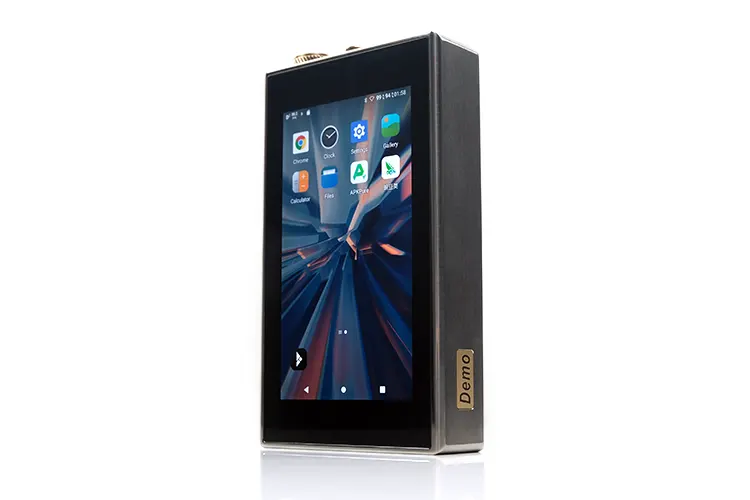
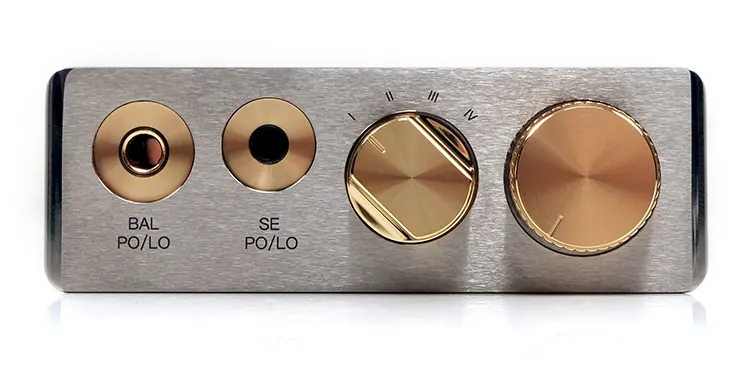
The drawback of the Dx320 MAX Ti circuit design is the separate 15V power supply for the amplifier side and USB-C for the digital, requiring a dedicated DC charger and USB-C cable to keep the unit ‘alive’.
Design
The RS8 II has a sleeker, more intricate chassis design, a smaller form factor, and is lighter than the blocky, heavy, and larger DX320 MAX Ti.
Except, as a DX320 Max Ti owner, I would tell you this is really not a portable device, but rather a transportable battery-powered mini-desktop experience.
The refined TC4 aerospace-grade Titanium unit feels more at home on your desk with a shape that suits that purpose.
The RS8 II is the portable device in this comparison. Stronger Wi-FI 7 speeds for superior streaming, Android 13 over Android 11 with more in-depth sound shaping options, 16GB of RAM over 6GB, and a Snapdragon 8 Gen 2 SoC over a Snapdragon 660 SoC.
Of course, time is a factor. It’s 2025 rather than 2023, and in 2023, most DAPs would have similar OS and slightly less RAM, so the DX320 MAX Ti should not be viewed as an inferior device per se, but rather one of its time.
What you will need to get used to with the DX320 MAX Ti design is the analog-digital split. The amplification has very little touch control from the digital side, so aspects such as volume and gain are operated manually.
The DX320 MAX T has swappable batteries, which is an advantage for some. It may not have as much battery life as the RS8 II, but if there is an issue with the battery cell pack, you can unscrew the back panel and replace it yourself.
The DX320 MAX Ti’s On-Cell 5″ 1080P IPS multi-touch capacitive panel is decent, though not as big as the 5.5″ 1080P panel installed in the RS8 II. Touch controls are also slightly slower than the RS8 II due to the lower-tier SoC.
Performance
These two are more or less peers in the same high-end performance category for resolution and dynamic range with my tested IEMs. With headphones, the DX320 MAX Ti on stage 4 gain balanced output has a slight edge due to its additional Vrms output power.
For IEMs, this is going to come down to the differences in coloration since the staging depth and complexity are evenly matched.
The RS8 II is a little more relaxed in its delivery, with slightly more even-harmonic emphasis. It is not quite as punchy and driven-sounding in the lows, but delivers more lower-mids warmth and vocal body.
The RS8 II’s general note body has more texture, but mids are just slightly set back relative to the DX320 MAX Ti imaging, especially for vocals.
It’s a more natural tone, slightly longer in note decay, and with a bit of sparkle in the highs without being too pervasive in the upper-mids instrumental timbre.
The DX320 MAX Ti is more ‘upright’ in its delivery. That means a slightly more neutral tonal coloration, more chiseled note quality, and enhanced treble presence that gives it an ethereal set of highs and exerts a stronger influence on the upper-mids timbre.
I wouldn’t call the DX320 MAX Ti bright per se, but it is slightly brighter than the RS8 II. It also has a bit of that delta-sigma polish in its instrumental and vocal timbre, very pristine with lots of spatial micro-detail coming through.
My Verdict
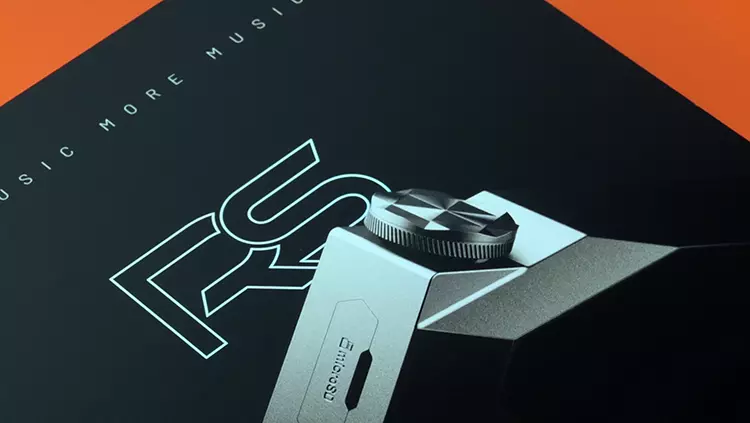
The flagship HiBy RS8 II DAP is the company’s most natural and cohesive-sounding high-end DAP to date. It is also one of the flexible sound signatures I have come across, with a deep level of tonal shaping and options for just about any moderately powered headphone and every IEM out there.
Is it the most powerful DAP in the market today? No, but outside of Susvara lovers, I think power matters less, and choice matters more with the RS8 II.
Too flat-sounding? Turn on Turbo Mode, too bright? Try some MSEB or PEQ options. Not enough bass? Some Sankofa AI profiles will look after you. Not sure you want a Classic Class A or Class AB sound or both? Adaptive Amplification seems to be a solid answer.
What is currently missing is the depth of Sankofa AI hardware options, Roon Ready certification, and hopefully a move to Android 14 at some point. Features that I hope HiBy introduces in subsequent firmware updates.
Otherwise, the benchmark for intelligent DAPs in 2026 has been well and truly set by HiBy.
HiBy RS8 II Technical Specifications
- Operating System: HiByOS (based on Android 13)
- Processor: Qualcomm Dragonwing QCS8550 (Snapdragon 8 Gen 2 platform)
- RAM: 16GB LPDDR5 (4200MHz)
- Dimensions: 75.7 × 148.5 × 24.1 mm
- Weight: 411g
- Screen Size: 5.5-inch IPS Touchscreen (1080 × 1920)
- DAC: Darwin III (In-house discrete R2R architecture)
- Decoding Rates: Up to DSD1024, PCM 1536kHz / 32-bit, and 16X MQA unfolding
- Amplification: AdaptiveAMP (Intelligent 64-level switching between Class A and Class AB)
- Internal Amplifier: Discrete Class A/AB circuit providing up to 812mW @ 32Ω (Balanced)
- Battery Size: 6000mAh (46.8 Wh) high-voltage battery
- Battery Life: Approx. 20.7 hours (Class AB) to 11 hours (Class A), depending on output and mode
- Charge Time: ~2 hours (supports 80W PD 3.0 fast charging)
- Bluetooth Level: Bluetooth 5.3 (Bidirectional)
- Bluetooth Codecs: aptX Lossless, aptX Adaptive, LDAC, aptX HD, AAC, and SBC
