

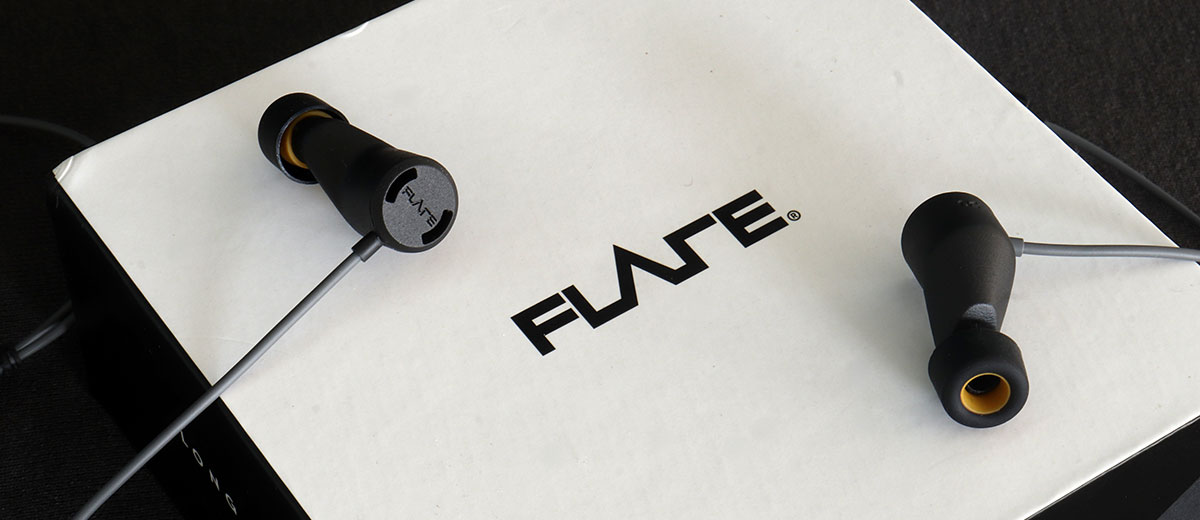
Louis reviews the Flare Audio Flare Studio, a set of 3D-printed 10mm dynamic driver in-ear monitors incorporating Mirror Image Sound technology. They are currently priced at $69.95.
Disclaimer: This sample was sent to me in exchange for my honest opinion. Headfonics is an independent website with no affiliate links or partnerships. I would like to thank the team at Flare Audio for their support.
Click here to read more about the Flare Audio products previously reviewed on Headfonics.
This article follows our current scoring guidelines, which you can read in more detail here.

Today’s review subject is a new IEM priced at £49.95 and called the Flare Studio. As the name might hint, it is from Flare Audio, a company well known for its corrective auditory ear inserts.
These inserts took them years to develop and gave them fame, but they’re not known much for IEMs, although they now have five models available in total, including the Jet and the E-Prototype.
They also make a nice-looking modern speaker set called Zero, which I would recommend checking out. The Zero speaker design consists of three separate, but joined, round cabs and is architecturally appealing on top of having an anti-refraction concept design.
Being the innovative company that they are, they came up with another idea, and that was to combine two of their products to solve one of audio’s biggest issues. The biological ear itself.
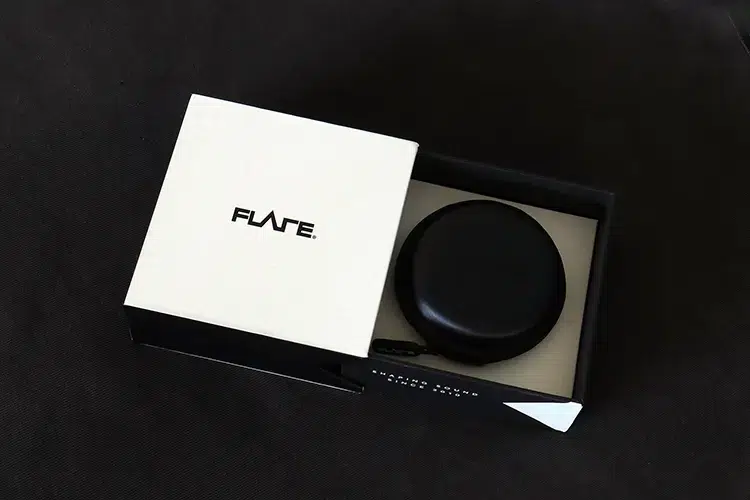
Features
Flare Audio’s basic IEM offering, labeled the Studio, combines Flare Audio’s Immerse ear inserts, which have now taken a back seat to the newer Definition inserts, and turned into an IEM by slapping a driver right behind the insert.
There are three variants available: the Flare Studio model, which is a basic model, the Flare Studio Pro, which includes a couple of features not found on the Studio model, and the Flare Studio Master, which adds Bluetooth capability and the addition of an upscale Beryllium driver.
The idea here is to channel the driver’s output through the corrective audio inserts to obtain better sound. I would consider this unnecessary since IEMs’ drivers are placed very close to the eardrum, but if it works, it works, as they say.
However, the internal canal of the insert is made to correct certain frequencies that the human ear distorts naturally. It’s at an angle which I would say is between 15 and 20 degrees, approximately, and that theoretically can help some.
Driver configuration
The Flare Studio counts on a single, Neodymium magnet-powered 10mm dynamic driver mounted behind the insert in what seems to be a separate cavity.
Flare Audio does list some driver specs, like a frequency response range of 20Hz to 20kHz with a sensitivity rating of 93 dB and a 16Ω impedance rating, but that’s about it.
The custom-designed drivers, along with the shells, are made in England at FLARE HQ. This is FLARE Audio’s exclusive implementation and hard swing to make an IEM that can claim zero audible distortion.
Design
One of the design features in the Flare Studio IEM is its Mirror Image technology, which is a means of controlling resonance by controlling sound waves before entering the ear, and it does so in more than one sonic area.
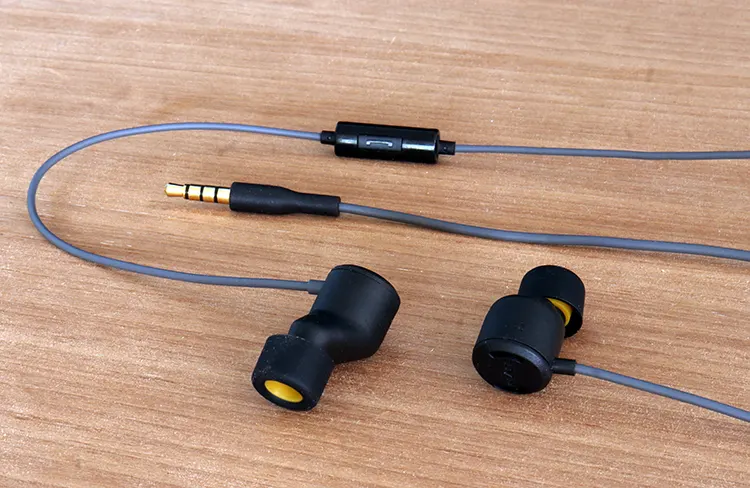
The IEM shell is fabricated by means of 3D printing. The advanced 3D printing methods used are shown in the final product, since you can’t see any visible printing lines unless one uses magnification.
Since they’re made from a material that comes from a 3D printer, you have to carefully execute the tip installation and removal procedure.
My set has a couple of small nicks around the output nozzle lip already, and they have no filter on the nozzle tip, exposing the driver to foreign particles, to put it nicely.
The shells are uniquely designed and have this peculiar, rounded, and stretched Z shape that sports two large vents on the backplate, if you can call them that on this model.
However, on insertion, you can hear the driver crunch, meaning this model lacks adequate front driver air pressure relief, so insert slowly.
Comfort & Isolation
The Flare Studio is a very comfortable IEM to wear. You don’t feel the shell due to that Z shape that only permits the tip to touch the ear. But the tips included are not very moldable.
One thing they do well is that they attenuate external sound well and by a rather high amount. You’ll have a hard time carrying on a conversation with these on, trust me. Especially if you select a tip with a good seal.
This set, in part, acts as an earplug set. Funny that FLARE Audio makes two earplug models, the Earshade and the Sleeep.
Ear Tips
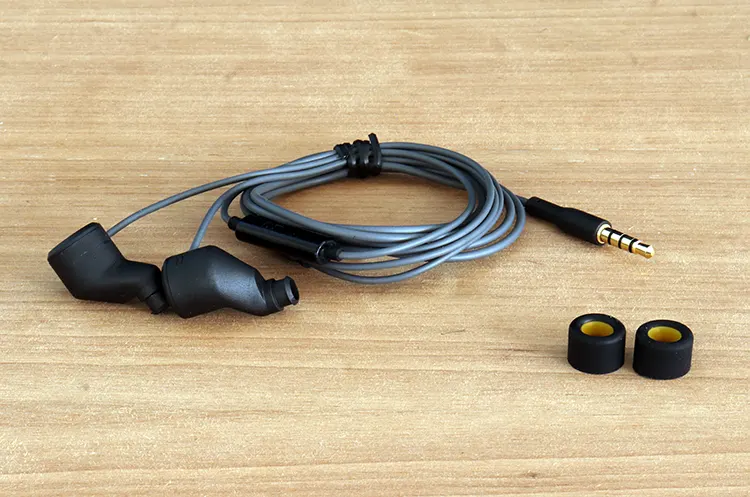
You get a set of Flare Audio’s Silicone tips inside the box, which are two-toned with black and colored inner inserts. The colors indicate size. They can be used on other off-brand IEMs as well and are available on Flare Audio’s website.
What I like about them is the fact that the inner, or color insert, which is responsible for channeling the sound into the ear canal, seems to be the same bore size on all three sizes.
Perhaps that will help to unify sonic perception and give the end-user similar results sonically, regardless of tip size.
They seem durable, are washable, but are a bit stiff feeling inside the ear, and do not conform much either. And since this IEM set is tip-sensitive, that presents a challenge to the end user.
The good thing is that you can use aftermarket variants on the Flare Studio IEMs with no issues.
The foam tips are more pliable and therefore more comfortable. The funny aspect, or stable aspect I should say, is that they also use the same insert with the same bore size. That makes it so that both ear tips sound sonically identical.
Stock Cable
The only calamitous aspect about the Flare Studio IEM is that it comes with a non-removable cable, and it’s rather thin. It’s a basic set, and you get basic features. I wasn’t expecting a braided cable with silver strands, but you get a gold-plated self-cleaning plug at least.
The Flare Studio IEM cable does have a microphone attached on the right side with a pause and play button, which scores brownie points. The cable is terminated in a standard 3.5mm plug.
The cable is thin, uses a black plastic Y-separator, rubber plugs, and is rubber-insulated. It doesn’t carry noise as some do, and that is one of the strong points of the cable, but I don’t think it’s a cable that will last long enough to pass on the Flare Studio IEMs to future generations.
Packaging & Accessories
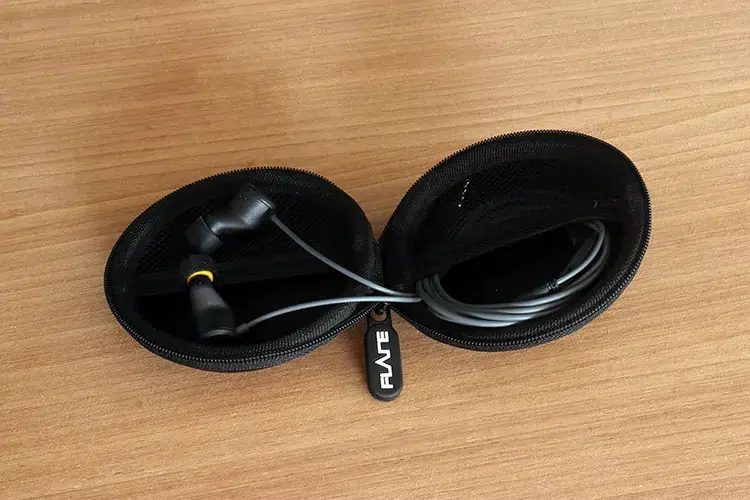
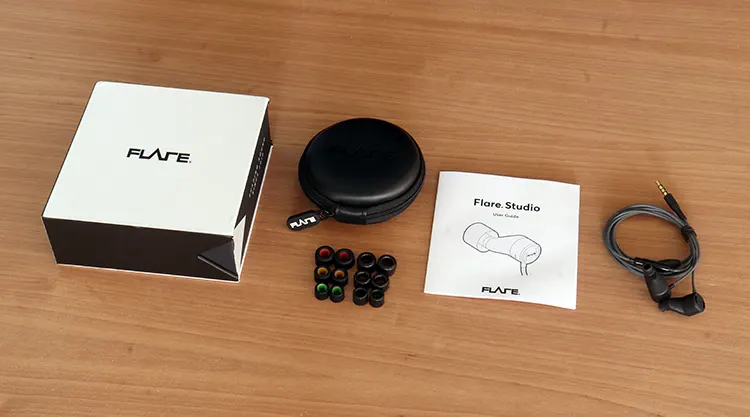
The Flare Studio IEM is a basic set, but you still get a small zippered, hard storage case with FLARE Audio’s name embossed on the front and back. The case uses the hockey puck shape but is made from cloth and synthetic materials.
You get three sets of FLARE Audio silicon tips, in small, medium, and large sizes. FLARE Audio also throws in the same amount of their foam tips, giving you a total of six pairs. The rest is paper.
Sound Impressions
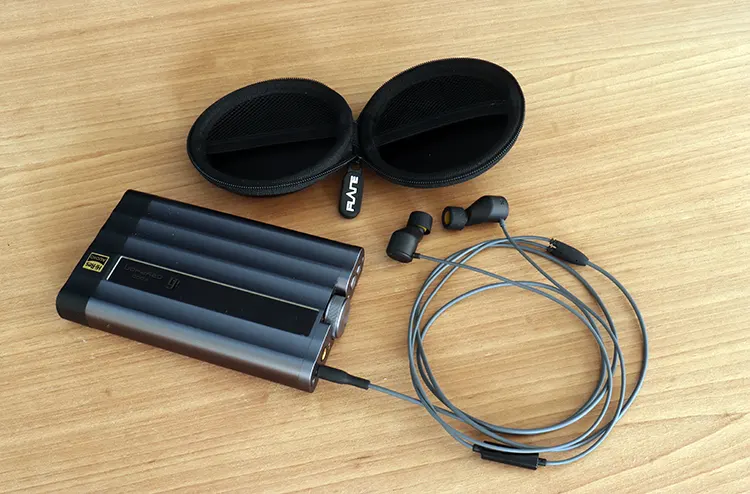
I didn’t go crazy on the gear I used to evaluate the Flare Studio IEMs and tried to keep things simple. I used the Shanling UA1 Plus, and I also used the stock output of a OnePlus Nord, which is equipped with a 3.5mm TRRS jack.
I also used the Rose Technics RT-5000, the Shanling UA6, the Questyle M18i, and the iFi audio xDSD Gryphon.
Initial impressions
The Flare Studio IEM set uses an unconventional tuning method to produce an IEM model that promotes neutrality, the minimum amount of coloration, and overall tonal balance, but they have a fun aspect about them, sonically speaking.
They have a heavy bass output capability that makes them sound like a large home speaker set. The bass on this set harnesses lots of physical energy and a high output level in that audio bandwidth. They don’t produce boomy bass; they produce outstanding bass in an omnipresent sense.
You do have to play with the in-ear placement because as you spin the insert-type IEM while inserted, the sound changes drastically, and there’s this one spot where the bass becomes prostrating and dominant as described, and I’m guessing that’s where their ideal placement spot is.
There’s a taste of darkness here, but there’s also a forward element here. But, oh, the bass. The Flare Studio is an urban slammer with an audiophile inclination.
It serves up heavy bass lines alongside a smooth midrange section that is accompanied by highs that are just under the radar but are produced with lucidity.
Bass
Is it me, or do the Flare Studio IEMs restore lost bass? These IEMs do not follow the Harman curve, and honestly, I don’t care. The tuning is such that you feel a heavy bass presence, but it’s not overwhelming, and I like it.
Tonally, the bass extension on this set barely touches 20Hz and is effective above 30Hz, although it’s audible down to 24Hz, and a frequency sweep on this set does not reveal the elevation much because the bass is produced quite evenly.
The perceived bass increase is mostly centered around 80Hz, but not restricted to that frequency area, since it tends to cover a wide bass band. I would say it covers every frequency between 35Hz and 120Hz.
You can say that the bass area is a few decibels above flat or neutral. The bass is well endowed and plentiful, but it constantly demonstrates that it can also produce distinct notes and that the driver’s tuning can handle complex bass lines.
Midrange
Some of my favorite vocal producers are single dynamic driver IEMs, like the HIFIMAN Svanar, for example, and the Flare Studio IEMs follow suit by providing a smooth midrange on the back of a lively presence.
The midrange is not of exotic quiddity, but the tonality is almost spot on. There is a small hump around 2.5kHz, but the amount of decibels from neutral are not far off and only adds to that mentioned liveliness in the midrange.
The mids are quite pleasant, which I find common from most of the dynamic drivers out there. But there’s just a small amount of body due to the general studio-like character in the midrange presentation that caters to detail over euphonic tunefulness, or musicality in a nutshell.
Treble
Again, to my ears, most of the dynamic driver IEMs tend to sound like horn-loaded drivers in the high-frequency department. You get plenty of energy, but the extension remains below a certain point, just like a horn-loaded driver rated at 15k.
Reaching the 6.5kHz point, the Flare Studio IEM shows its first peak in the high-frequency range. There’s another, smaller peak around 10.2kHz. Again, all these mentioned peaks within the midrange and treble area are small and, to my ears, don’t surpass 4 decibels.
The highs are well-controlled and non-fatiguing, but they lack high-frequency definition, shimmer, and sparkle. Perhaps they will get better in time when the driver is better broken in. I have about 70 hours on them already at the time.
Staging and Dynamics
The Flare Studio IEMs produce what I call a naturally wide soundstage. They do attempt to provide a studio-like positioning by sounding near-field-like that it’s not holographic but supplies a tight and focused soundstage.
They are at home on a lateral staging plane but lack height. What they try to create is a studio atmosphere that caters to proper frontal placement over omnidirectional cues. They focus mainly on critical listening necessities and reveal details in placement.
The dynamic range is not here or there. Besides the bass response, there is an absence of artifice, but the bass response tends to carry all the impactfulness of this IEM. The midrange is a smooth sail.
Click on page 2 below for my recommended pairings and selected comparisons.
