

Synergy
Efficiency
I would say that the Flare Studio Master needs some power to perform optimally, meaning they’re not the most efficient IEMs around.
I’ve pushed them with some powerful gear like the SMSL SH-X and the Topping L70, and noticed that the trend with these IEMs is that I need to reach halfway volume with most amplifiers to obtain an acceptable volume level, and that was on high gain.
Comparatively, they are just as efficient as the HIFIMAN Svanar, which I coincidentally had on hand to compare, and much less efficient compared to the Studio basic model.

Pairings
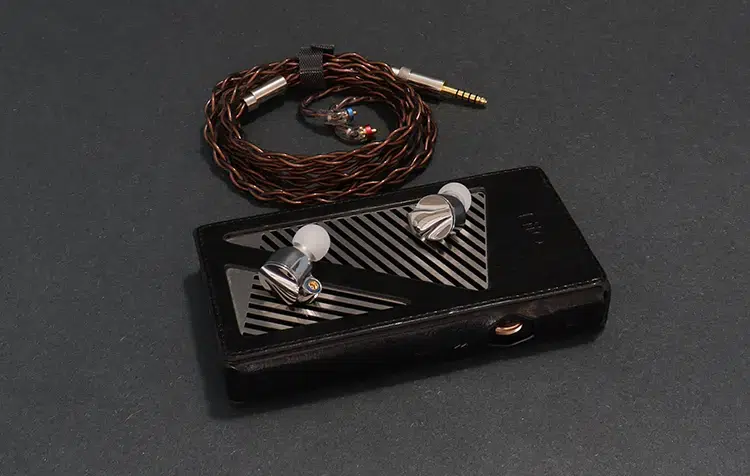
I paired the Flare Studio Master with some transparent gear because that’s what it needs, unless you want color and a particular sonic character that’s not analytic, or want to add some fun factor.
That’s what you get with the xDSD Gryphon, since it adds even more bass with the Xbass feature. But the one effect that improved the Flare Studio Master was the Xspace, which supplements and complements the lacking height.
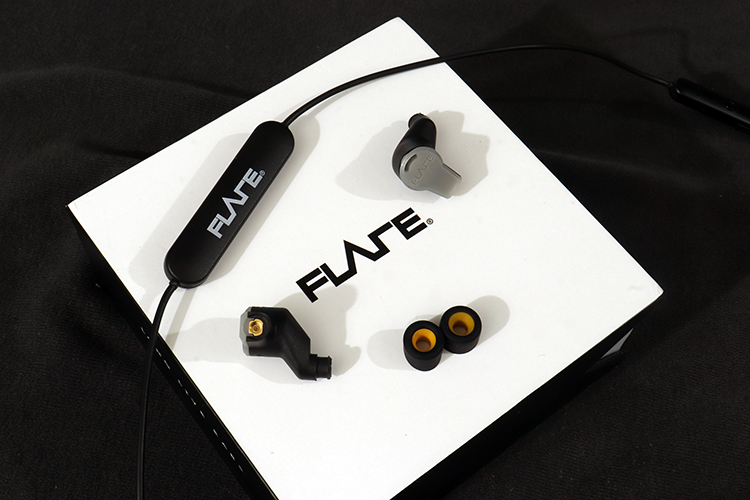
The Bluetooth necklace offered needs LDAC to receive my approval. If you need to obtain better performance using BT, you can pair the Flare Studio Master with FiiO’s BTR17, the iFi audio GO blu, or even the Questyle M18i, since it receives BT transmissions at LDAC levels.
Any of these models will outperform the BT necklace offered by Flare Audio at a higher cost, of course.
Select Comparisons
ORIVETI bleqk Lowmaster
Technical
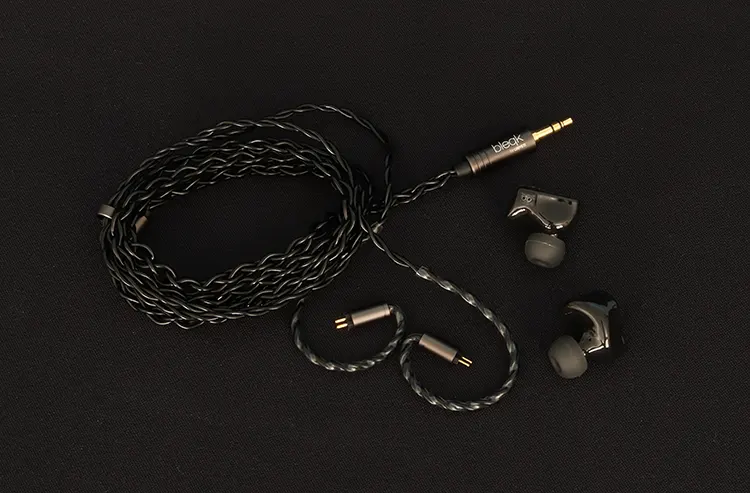
The ORIVETI bleqk Lowmaster is a tribrid, 3-driver IEM that uses two balanced armatures alongside a 10mm dynamic that can go as low as 5Hz, hence the name Lowmaster.
The connectivity aspect of the Lowmaster uses a more robust dual-pin 0.78mm connection, which are known to be more durable compared to the MMCX connector, which claims convenience over durability.
I just wish the Flare Studio Master included an MMCX removal tool, since yanking them off time after time can cause intermittent connections once the MMCX inner ring collapses with use.
Design
The bleqk Lowmaster employs a conventional IEM design in the sense that it’s constructed out of resin and molded into a universal fit IEM shell shape that fits most ears comfortably.
It does come with a rather nice cable that combines four black color insulated wires, braided, and assembled with metal hardware. 3.5mm connectivity is included, and the cable is assembled with a proper TRS plug, instead of a TRRS, which is the wrong plug to use on the Studio Master.
The Lowmaster also comes with a storage case that’s larger and can hold everything that comes in the box. Part of that package comes with six sets of two types of tips.
Performance
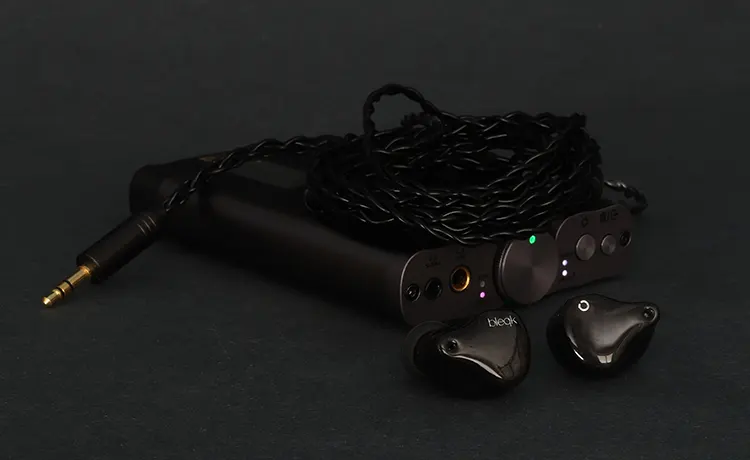
Let’s do staging first. Both IEMs tend to slightly smear the definition of the aura around each piece with recordings. However, I give depth to the Lowmaster. Both IEMs lack height within the overall soundstage to my ears.
The Lowmaster is another budget IEM that does well in the detail production department, but doesn’t seem as recording quality dependent as the Flare Studio Master, which seems to be less forgiving.
I would say with certainty that the Lowmaster produces the best frequency extension of the two due to its capability of reaching lower notes in the bass region alongside a cleaner bottom end with extended treble.
The Lowmaster produces bass with a warm character and also produces a punchier character over the Flare Studio Master that caters to those who want a small, natural bass bump out of the box.
FiiO FD15
Technical
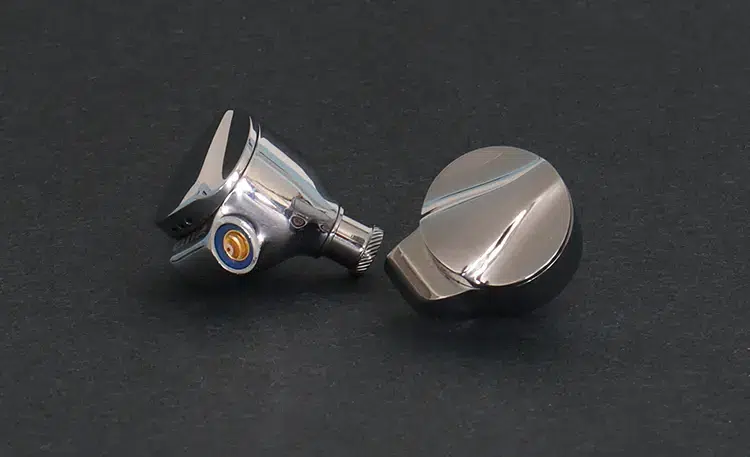
The highlight of the FiiO FD15 is the custom-made 13.8mm dynamic driver made with something called Magnalium, which is a combination of aluminum and magnesium.
The custom FiiO driver is driven by a powerful 1.5 Tesla magnet and sports a custom W-shaped DLC gasket that claims an extra 30% more effective vibrating area.
The FD15 also comes with an increased amount and assortment of tips, plus the FD15 comes with interchangeable output nozzles, and you get two sets in the box.
Design
I have to give recognition to FiiO for producing the FD15, which happens to be one of the best bargain IEMs for a few reasons.
First off, besides the custom driver, is the shell construction, which, calling it robust, would be an understatement.
The all-metal construction manages to incorporate proper venting, which is lacking in the Studio basic model, but not on the Flare Studio Master, taking care of the driver crunch on insertion noted with the Studio basic.
Another aspect that is unbeatable in this price class is the Fabrilous outsourced cable assembly that is included with the FD15.
It offers up 4.4mm and 3.5mm connectivity, all-metal hardware, and a braided cable. The FiiO FD15 is the best accessorized IEM in this comparison, and possibly in this price class.
Performance
The FD15 is capable of producing midrange that punches above the price class it currently sits in, and I prefer it over the monitor-like presentation of the Flare Studio Master.
The FD15 seems dark, but overall produces high-frequency notes with more weight behind each note.
If one assumes the bass will be monstrously powerful on the FD15, you are going to be greeted by bass that is neutral until you color it with equalization.
The only issue I have with the FD15 is that at loud listening levels, conglomeration occurs, but it also occurs on the Flare Studio Master.

My Verdict
There’s a palatable feeling I get with the Flare Audio Flare Studio Master because they’re so unique. They also have a unique sonic characteristic in that they reveal recording quality but are not sterile-sounding and present the listener with some fun factor.
What I see over other qualities they have is that their chameleon ability is their forte. You can use them hardwired, over Bluetooth, and they’re cable rolling friendly, and that makes them highly pliable.
Overall, the Flare Studio Master IEMs provide accurate, immersive audio with a solid build, aimed at people who prioritize faithful sound quality and durability in a casual and professional capacity. They cater to those who are looking for reference-like sound with versatility.
Flare Audio Flare Studio Master Specifications
- Driver material: High-spec Beryllium
- Size: 10m
- Type: dynamic neodymium magnet
- Frequency response: 20Hz to 20kHz
- Sensitivity: 96db
- Impedance: 16Ω
- Connectors: MMCX jack cable
- Bluetooth: MMCX cable
- Microphone: Omni-directional with passive noise cancelling (BT only)
