

Synergy
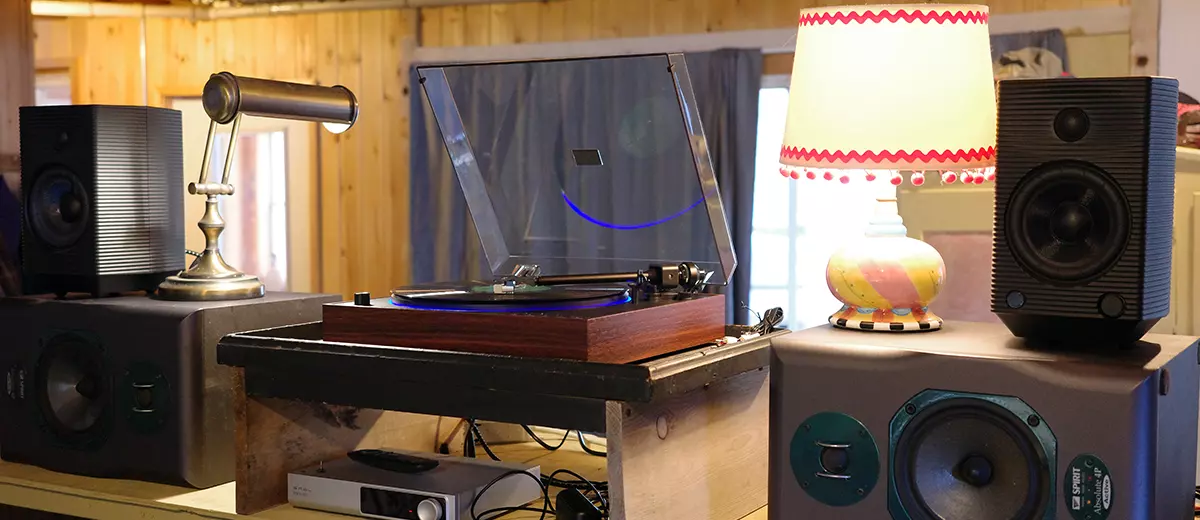
As mentioned above, the TT11 paired easily through BT in two different options, while functioning quite well. Even though the Dynaco was run mostly BT via the xDuoo TA-32, the added level of the gear helped to convey excellent detail to the music played.
Pairings
I cannot really say I had a preferred setup, since the ease with which the TT11 can be switched makes the point essentially moot.
I do have the benefit of using the TT11 in not only my office but also the listening room, whereas when I reviewed the TT13, I was limited to a single-room situation, with less-than-ideal sound characteristics.
I did spend more time tethered to the Dynaco/XDuoo via BT and came away impressed. The higher the quality of the vinyl, the better the sound, and my enjoyment went up as well.
If the source conveyed more bass, the A25s pushed through to present that low-end grunt without losing detail in the upper end. As an alternative to my dedicated turntables, the TT11 presented an easy-to-use, quick option.
When paired with the FiiO SP5s, a natural synergy was of course had. The sound quality of the SP5 speakers is something that fits my flavor, and they see regular use when not in review mode. Or, in this case, incorporated into review mode.
Using the TT11 in RCA mode presented a more typical vinyl sound signature, with excellent note weight and good 3D qualities, but you can easily see how close the gap has become between wired and BT.
Select Comparisons
FiiO TT13
Features
The FiiO TT13 features two JRC5532 op-amp chips, each powered by independent LDO power supplies to reduce potential EF interference.
This design ensures cleaner signal processing by isolating the power sources for better performance. The TT11 uses two NE5532 op-amps and an AC6951C Bluetooth chip, running with similar LDO power supplies. To me, the TT11 presents a slightly warmer signature with the chosen chips.
The stock AT3600LA cartridge, a budget MM cartridge with a devoted following, feeds directly into one opamp chip (powered by one LDO) and then into a second opamp (powered by another LDO). The TT11 uses the AT360L and functions well.
The balanced potentiometer then routes the signal to either the 5.0 Qualcomm Bluetooth module or the Line Out (RCA) automatically.
Additionally, the first chip provides input to the MCU, which manages playback motion, button functionality, and adjustable RGB mood lighting. With the TT11, why change what is successful?
For even greater EF isolation, the TT13 supports an external DC power source. When both AC and DC power sources are connected, AC takes priority, maintaining seamless operation. The TT11 does not come with an external power source option.
FiiO’s choice of plinth material for both is equally good, and both are aluminum. Where the TT13 presents a single unit, the TT11 is inserted into a wood frame.
Additionally, the included RCA connections and ground wire allow seamless integration into two-channel systems, making both versatile options for audiophiles and casual listeners.

Design
The TT13 comes across as svelte in shape and modern. The thin all-aluminum plinth and combined base (4kg) give it a functionally luxurious look, which fits well with its potential audience.
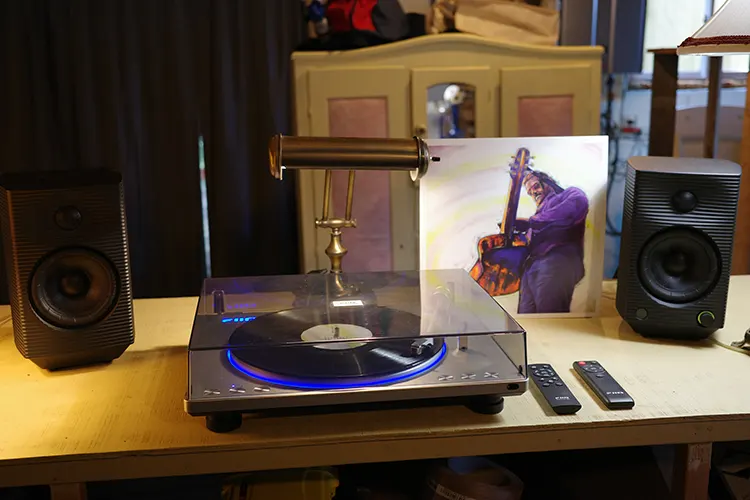
A showpiece if you prefer. The looks between the two could not be more different. Modern and chic versus retro and vintage of the TT11.
The aluminum plinth of the TT13 is quite durable, too. The platter is also cast aluminum, reducing weight while increasing isolation from potential interference.
The aluminum frame of the TT11 functions similarly, but I do note more noise when tapping the unit. Vibration from outside sources, such as walking on wood floors, was not heard through the speakers, though.
The tone arm is fully automatic with the press of a button, and matches the color of the plinth, giving it a subdued silver look. The TT11’s all-black tonearm looks subdued and classy, mirroring the vintage look of the unit.
The straight-tone arm is not adjustable, coming from the factory set for tracking force. Since the AT3600LA is a fairly heavy unit (recommended 3.5g +/-0.5g tracking force), the thin look counters the cartridge look nicely.
The TT11 is not only adjustable, but the user can change cartridges, making it more versatile in my mind.
With the dust cover on, I am hard-pressed to tell much of a difference from my Pro-Ject Debut Carbon in looks, except for color, which is a good thing in my book. The TT11, on the other hand, mimics the looks (except for sheer size) of my Denon DP-1200
All functional switches are either on the plinth (surface-mounted) or on the back, giving that streamlined look that has a modern touch. The TT11 has the same setup.

Performance
The cartridge has more to say about the sound signature than pretty much anything else when it comes to turntables.
The plinth can change sound somewhat according to the material lying underneath, and the electronics certainly play a part, but the cartridge is the first line and sets the tone.
Known as a budget cartridge coming on turntables in this class as well as slightly higher, the AT3600LA comes across as somewhat energetic, but without a lot of detail retrieval or character.
This can be construed as smooth, with a tilt towards warmth, too. It does set the tone quite well, knowing where it sits in the AT line, and this carries over nicely into translating the sound of the TT13.
While pure clarity is lacking, there is enough energy and detail from the mids to cover the rolled-off top end (conical stylus in play here) and “almost there” bass line.

Audio-Technica AT-LP60XBT
Features
With BT 5.0 and belt drive, the AT-LP60 is a budget turntable marked as “your first turntable.”
That is indeed the case with our daughter. I purchased this for her along with a pair of Klipsch BT speakers when I found out she had albums, but no turntable.
She likes it. I reviewed the “big brother” AT-LP120XBT-USB for my blog and still listen to it somewhat regularly.
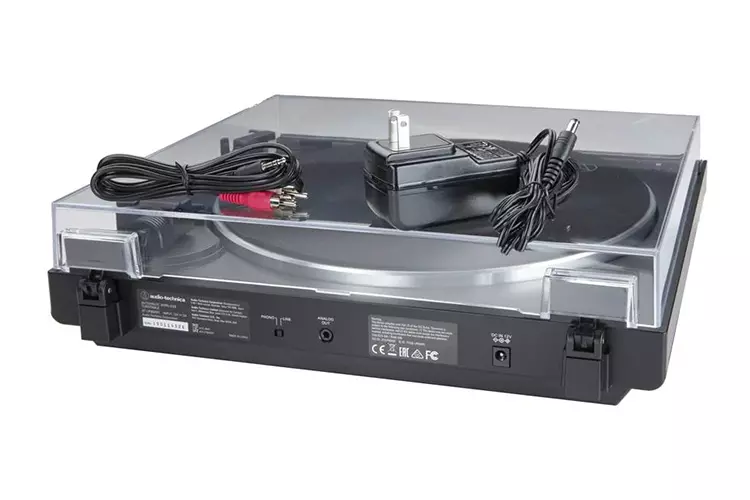
Using the CSR BT chipset, the 60 can connect to devices that support the aptX codec, not just SBC. You can still use the RCA line out for connection, too. With a belt drive, noise is kept to a minimum.
The 60 comers with the ATN3600LC cartridge, which seems to be a conical replacement stylus of similar build to the AT300L (and very close in price). Both cartridges function well.
Design
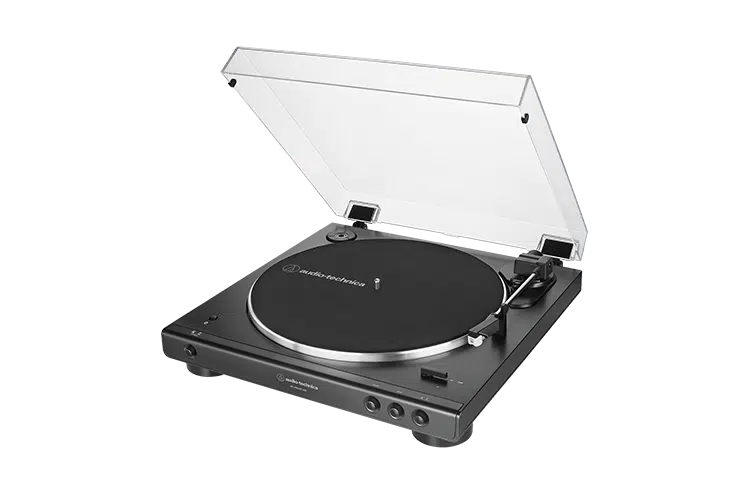
Overall, the design of the AT-LP60XBT is simplistic and budgetary at the same time.
It is quite light, coming in at just 2.6kg, thanks to its extensive use of thin plastic. The downside is that even with the svelte dimensions and lightness, the AT-LP60XBT does feel slightly fragile. Especially the buttons on the front.
That fragile feeling is also present in the dust cover, which is made from clear plastic, and the turntable’s fragile-feeling tonearm, which gives an overall lower quality build to it. The TT11 comes across as much more robust with better build quality.
The AT-LP60XBT is not badly designed per se, but the materials aren’t as luxurious as the TT11.
Performance
The soundstage is generally warm, which lacks attack in the treble range. You would never define the sound as crisp like a CD, but the TT11 does not show that signature, either.
The TT11 does present better clarity and detail retrieval. The soundstage of the two are similar and will come down potentially to speaker choice and external sources used.
Both use quality Audio Technica budget cartridges, but both can also be upgraded as needed, making both quite versatile in use. Both function well, but the FiiO wins on quality build, which could be another deciding factor.
My Verdict
Since FiiO already had the TT13, some may think there was no need for the TT11.
But where the TT13 presents itself as an all-in-one functionally easy unit to use and own, the TT11 goes a bit vintage while still presenting what many want: Bluetooth and fully automatic settings. Plus, unlike the TT13, the user can change cartridges if desired.
The sound shows itself as a bit warmer than the TT13 and with slightly less detail retrieval. But throw on a 180g quality pressing, and the TT11 obliges you with a tone that not only reminds you it is vinyl but does so with aplomb akin to sitting in your easy chair after a long day’s work.
Remember that it is fully auto as well, so once you sit and if you do not feel like getting up, the TT11 returns the tone arm to its cradle without bother. That, along with the interchangeable cartridge, may be the best tricks the TT11 presents, but that would sell the sound qualities short.
Pair it with quality listening sources, including headphones if you wish, and the merits of the TT11 come through with a quality vintage nostalgia.
I did find the isolation of the plinth could have been better, but one does not normally go around tapping your turntable. Isolation from external noise possibilities is good, though. I would have liked to see a remote included, too, but then it might have disrupted the vintage vibe.
So, the FiiO TT11 can shoulder its place into the budget market with a quality build that is above many of its competitors and comes with a user-changeable cartridge if you desire.
The TT11 would be a quality offering for your first turntable. Especially with modern powered speakers, and if space is limited.
FiiO TT11 Technical Specifications
- Amplification: Texas Instruments NE5532 op-amps
- Anti-skating: Yes
- Bluetooth 5.2 with SBC codec support
- Bluetooth chip: AC6951C
- Counterweight adjustment: 0–4 g
- Dimensions: 34.3 cm × 38 cm × 10.9 cm
- Ground: RCA
- Installed cartridge: Audio-Technica AT3600L
- Line output: RCA
- Mechanism: fully automatic, customizable mechanism
- Motor: customized low-noise motor
- Physical buttons: power, speed adjustment, Bluetooth pairing, start/stop, repeat, tonearm up/down
- Platter lighting modes: Purple/Red/Yellow/Blue/Cyan/Green/White/Off
- Rotation speeds: 33 RPM and 45 RPM
- Selector switches: record size, line out/phono output
- Supported record sizes: 7-inch and 12-inch
- Tonearm material: aluminum alloy
- USB port for firmware updates
- Volume control type: None
- Weight: 3.33 kg
- Wow & Flutter: ≤0.2% WRMS (33 RPM), 3 kHz
