

Sound Impressions
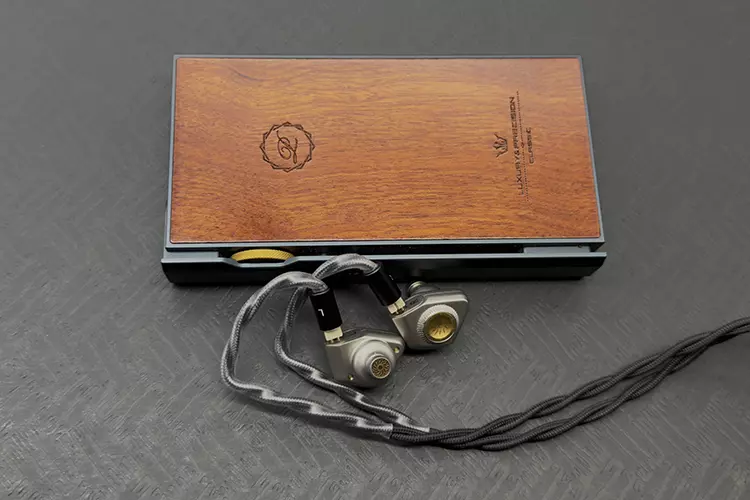
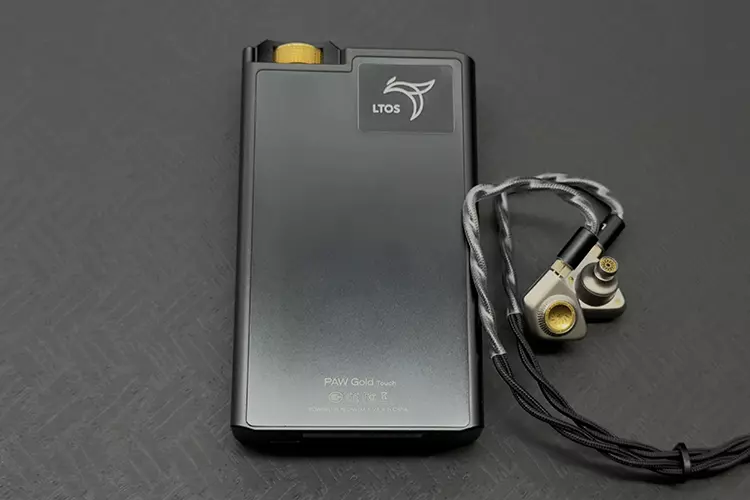
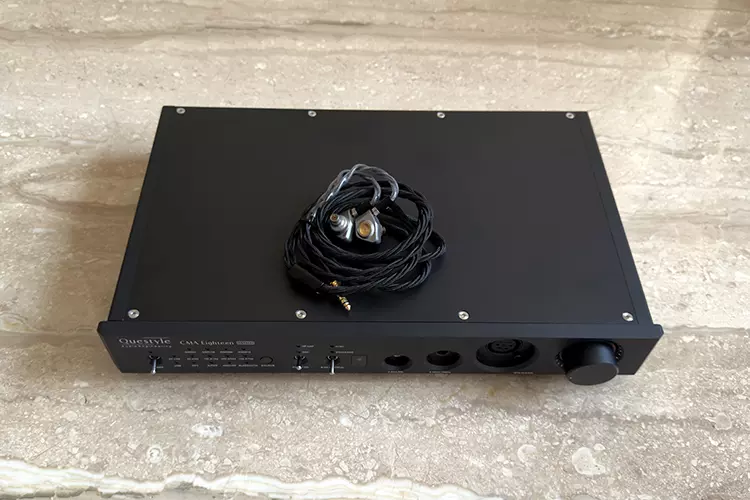
The following sound impressions of the Faith Audio Labs E1000 were completed using a mixture of my main source, the Lotoo Paw Gold Touch, the Questyle CMA18 Master, and the Luxury & Precision P6 Pro.
For the review, I paired the IEMs with the stock cable and Divinus Velvet ear tips, size L.
Summary
The E1000 is the kind of IEM that makes you rethink the whole “more drivers equals more performance” idea. This single-driver IEM does not sound like a compromise anywhere.
From the get-go, the coherence and seamless delivery win you over. It does not try to wow you with fake thickness or sharp edges. It just sounds put together. It just flows.
Bass has a slightly mid-bass-leaning flavor, and it’s not about extra rumble, but the real strength is texture. You hear the line, you feel the shape, and you get all the details.
Midrange is clean, nuanced, and emotionally direct. The kind that makes vocals and instruments feel real without adding fake warmth. Treble stays lively and open, and it does not beat me up even though there is plenty of energy.
Technically, the stage is the headline. It is not just wide; it’s grand, it has real height and depth, and the layering is strong enough to feel almost speaker-like.
Overall, E1000 feels like a flagship built on fundamentals: tonality, coherency, staging, and texture. It does not impress you with gimmicks. It impresses you by sounding effortless, immersive, and real.
Bass
The bass on E1000 is super clean and detailed, but it doesn’t try to impress you by just slamming hard. It’s not that “big punch and boom” kind of tuning.
Instead, it delivers bass with natural pressure, lifelike tone, and a distinctly organic sense of movement that you typically associate with a very high-grade dynamic driver.
The roundness hits first. Notes aren’t flat thuds. They’ve got an actual shape. You can trace the whole arc: how it starts, fills out, and tails off. Nothing exaggerated, just air moving the way air actually moves. No “we turned the bass knob to 11” artificiality.
The impact is realistic rather than aggressive. It’s like the instrument is playing right in front of you. You hear the initial hit and then the little bit of body and bloom around it.
The bass doesn’t just punch and stop… it moves and breathes in a way that sounds natural.
Bass guitars have a satisfying string tension. Pluck comes through defined; that slight stretch and release make it sound physical. It doesn’t smear into a generic rumble, and it’s easy to follow the bass line because there’s so much texture inside each note.
And with drums, it’s really convincing: a tight center hit with that softer resonance wrapping around it. It feels like you’re standing close to the kit.
The attack is controlled, but the edges have a natural softness that makes drums sound like drums, not just a loud punch.
Overall, this bass is textured, shaped, and real. Not chasing maximum slam, more interested in nuance and honesty.
It prioritizes shape, realism, and nuance over sheer slam, giving you bass that feels less like an effect and more like the actual physical mechanics of instruments happening in front of you.
Midrange
The E1000’s midrange comes across as clean first, with a slightly pulled-back foundation and a nicely lit upper section.
It does not try to sound thick or lush to win you over in the first five minutes. Instead, it keeps the center image clear and open, so vocals and instruments feel easy to follow even when the mix gets busy.
Lower mids sit on the leaner side. Because of that, you might miss a bit of weight, especially on tracks where you want that last bit of warmth and density.
The upside is that it never turns foggy or unnecessarily thick. Notes do not bunch up, and there is no “soft blanket” effect. Bass also stays well-behaved and does not spill into the mids.
Upper mids have enough lift to bring vocals forward and give instruments a crisp outline, but it does not come off sharp or etched. Female vocals get that clear extension and a clean edge.
Strings have good bite and definition, and you can easily pick the texture in plucks without the set forcing detail through aggressiveness.
I find a small sense of “relaxed openness,” which explains why it can feel effortless and less intense at the same time. The leaner lower mids reduce center thickness, and at the same time, the rise into upper mids gives clarity and projection, while the energy is not pushed too hard.
The result is a solid separation. Instruments sit apart with air between them, and that spacing shows up even at normal listening volumes.
You may find the E1000 a touch too dialed down in warmth and the last bits of naturalness. But if you like a midrange that stays clear, controlled, and well-separated, it nails that balance while keeping the presentation musical and emotional.
Treble
Who needs a stack of ESTs when a well-implemented single dynamic driver can cover the same ground on its own?
This treble goes toe-to-toe with good EST sets and does not feel outclassed in the slightest. It is not playing safe or dialing things down. It is energetic, spacious, and very detailed, yet the control is what stands out the most. You get a lot of information, but it does not scream “detail” at you.
The lower treble comes in with good definition, so cymbals and hi-hats have a clean leading edge and a proper metallic texture. It does not smear the attack. Small variations and nuances are conveyed accurately.
The best part is the sense of separation between treble notes. Each hit has its own space. Even on busy mixes with constant percussion, it stays organized.
There is also a strong sense of air and openness up top. The stage feels unblocked, and notes have room to breathe. If you are used to sets that play it safe in the upper registers, the E1000 can feel like it is pushing closer to the edge.
Sibilance stays mostly under control, and it avoids that nasty glare that makes you want to turn the volume down. With a smoother source, it settles nicely without losing its openness.
What I like a lot is the way notes decay. The treble does not just pop and vanish. The tail end of cymbal hits and metallic rings feels properly shaped, like the sound tapers off in a natural arc.
You still sense the outline of the note in that final moment, which makes the treble feel more realistic and less artificial. That also helps busy tracks, because those lingering trails stay separated rather than turning into a hazy sheen.
Staging & Dynamics
Where the E1000 really earns its place, and honestly gives many multi-driver sets a run for their money, is in technical performance.
The first thing that hits is the staging. It is grand and spacious in a way that feels more “cavernous” than simply wide.
Width is good, but the real magic comes from the height and depth working together. There is a sense of vertical scale and front-to-back layering that creates a stage that feels almost unreal at times.
The E1000 locks in a very solid image with strong spatial accuracy. Instruments are laid out around the stage in a natural, believable way, and the positioning does not wobble or blur when the track gets busy.
The placement feels stable, like the band is set and you are just watching the performance unfold. It paints a realistic, lifelike picture, and this is where the E1000 hits that “magic” for me.
Layering is another strong point. It does not just separate instruments by pushing them far apart. On well-recorded tracks, it gives that “standing in front of the band” illusion, where you can mentally map out the scene and almost see the performance in your head.
The detail retrieval feels effortless and continuous, like the information is just there in the sound rather than being pushed forward for attention. That smoothness is a big part of why it stays so easy to listen to, even whilst being very capable technically.
Macro dynamics could hit harder. Bass doesn’t lack impact; it has a softer landing, so those big swings in volume and slams do not come across as aggressively as they could on sets with a more punchy, hard-hitting low end.
Overall, the technical performance feels bigger than what you’d expect from a single dynamic driver.
Synergy
Efficiency
The E1000 is rated at 115 dB sensitivity @ 1 kHz with an impedance of 45 Ω. So no, it is not a difficult IEM to drive in the usual sense.
You can plug it into basic dongles, and it will get loud without a fuss. But it is also the kind of IEM that clearly appreciates a bit of extra current behind it. Give it more power, and it scales up nicely.
With entry-level sources, you get the core tuning and the general character right away, but the E1000 starts showing its real strengths once you move to a stronger source.
The stage opens up, the image feels more confident, and the whole presentation gains that extra sense of ease and space.
I even ran it on something like the Questyle CMA18M, which is a proper power monster of a desktop source. You barely need to touch the volume knob, but the sound still expands noticeably, especially in terms of stage size and overall openness.
On my LPGT, I am around volume 35 before I hit my upper listening limits. It is not a volume-hungry set, but it is also not the kind that feels “fully awake” on the weakest sources.
For pairing, I prefer a warm-neutral source. The treble on the E1000 has energy and can run a bit hot depending on the chain, so a bright-leaning source can push it closer to fatigue.
With a warmer or smoother source, it stays lively and open without crossing that line.
Source Pairings
The LPGT is my usual go-to with the E1000, and the pairing is solid right away. The overall balance feels right. Midrange comes through natural and emotional, with the coherent “single driver” flow that never feels stitched together.
Bass stays in check, but it’s still very detailed, and bass lines have a clear definition without turning thick or messy. Treble also behaves well here. It is smooth, carries good detail, and notes stay separated cleanly.
Where LPGT falls a bit short is not in tone or control, but in scale. The E1000 already has a strong sense of stage, but on the LPGT, it does not fully stretch out the way it can on higher-end sources. You get the core performance, but the sense of space does not hit its peak.
The P6 Pro feels like the perfect match. The moment you press play, the stage opens up, and everything feels bigger and more expansive. Notes gain size, separation improves, and the whole presentation feels like it gets a proper overhaul compared to LPGT.
It is not just wider; it feels deeper and more immersive, like the E1000 finally gets the room it wants to breathe. This pairing was one of the best I have heard, and the E1000’s coherency is a big reason why it feels so addictive here.
On the CMA18M, you get that same huge presentation again. Power is not an issue, and the IEM feels stable with a clean background and no hiss. The stage stays grand, with a touch more width than on the P6 Pro.
Treble also has a bit more energy, but it does not cross into irritating. Overall, it keeps the wow factor intact and shows that the E1000 can scale with serious gear without getting picky or noisy.
