


Synergy
Efficiency
The EPZ 550 has an impedance of 20Ω and a sensitivity of 105 dB/mW, making it very easy to drive from capable portable sources.
It reaches strong volume levels quickly, though its fixed 4.4mm cable means phones and laptops need a balanced dongle or DAC-amp.
The stock cable uses 0.78mm 2-pin connectors and a fixed 4.4mm balanced plug, which matches dedicated portable setups better than basic phone use.
This makes the EPZ 550 less flexible out of the box, but it also keeps the pairing focused on the cleaner, balanced outputs.
At lower volumes, the EPZ 550 keeps its midrange clarity and vocal correctness intact. Bass becomes even more supportive, and the treble relaxes slightly, but the overall presentation remains clean, refined, and properly defined.
Pushing the volume higher gives the EPZ 550 more room to show its staging, separation, and vocal nuance retrieval.
The treble stays controlled without turning sharp or sibilant, while the bass gains a little more presence without changing its restrained identity.
Pairings
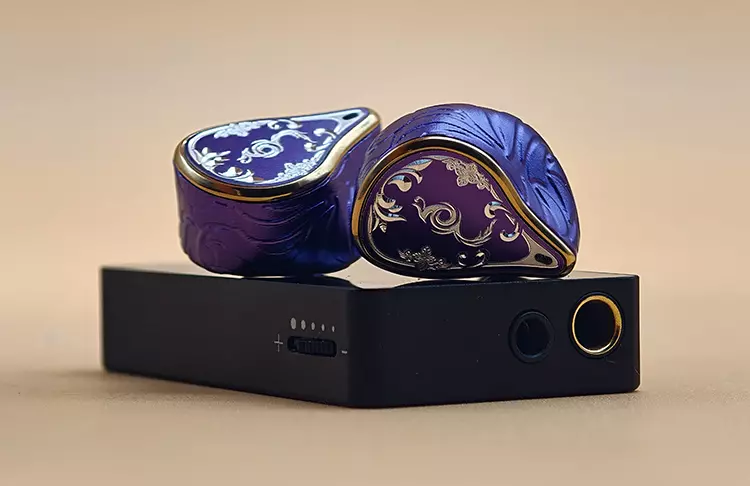
Since the EPZ 550 uses a fixed 4.4mm balanced cable, the usual phone 3.5mm jack and FiiO JA11 pairings could not be tested directly.
The FiiO SNOWSKY Tiny B was used with a phone through USB-C instead, giving the EPZ 550 a proper 4.4mm balanced connection while keeping the setup portable.
Through the FiiO SNOWSKY Tiny B, the EPZ 550 sounds clean, lively, and easy to control. The Tiny B’s brighter coloration pushes the already excellent midrange slightly further forward, giving vocals more bite while keeping the treble free from fatigue.
The Colorfly CDA-M2 gives the EPZ 550 the most technical pairing of the group, sharpening separation and making its holographic stage feel even more precise.
It also highlights the treble’s detail retrieval and airiness, but the EPZ 550’s control keeps the extra clarity from becoming sharp or sibilant.
Meanwhile, the Heartfield R1 adds warmth and a little more body to the EPZ 550’s restrained bass and lower mids.
It softens the presentation slightly, making vocals smoother and fuller, though it trades away some of the pinpoint separation that makes the EPZ 550 so impressive.
Select Comparisons
XENNS Mangird Top Pro
Technical
The XENNS Mangird Top Pro uses a 10-driver hybrid configuration managed by a 4-way electronic crossover.
It splits its drivers between bass, midrange, treble, and ultra-high output through dedicated driver groups.
Two custom dynamic drivers handle bass and use neodymium iron boron magnets with revised internal circuitry.
The midrange is handled by two Knowles balanced armatures, while treble uses two Sonion E50D composite drivers and two Knowles super tweeters.
Design
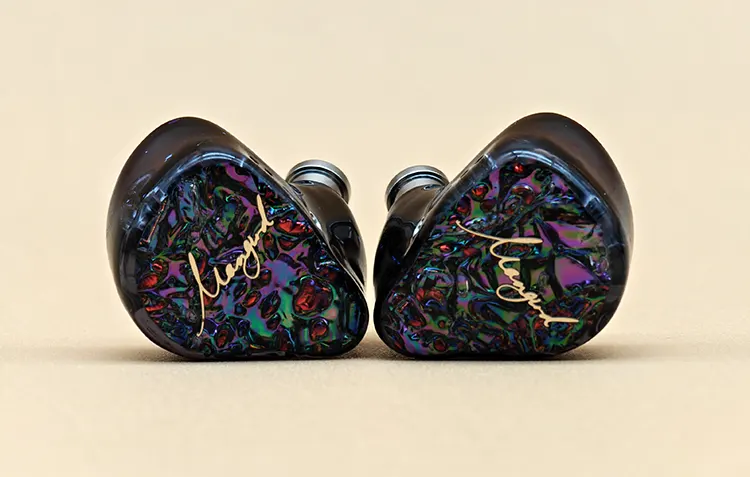
A swirling resin faceplate with multi-colored abalone-like patterns is used by the Xenns Top Pro, finished with the Mangird script logo in gold.
Its shell is made from dark semi-translucent resin, showing internal wiring and drivers beneath blue and violet flakes.
Markings sit below the nozzle, with the model’s name, number, and channel indicators printed directly on the shell.
A single metal-ringed vent sits below the recessed 0.78mm 2-pin connector, while polished metal nozzles complete the build.

Performance
The Top Pro’s bass wins outright, delivering a more complete low-end that hits exactly where it should.
It can stay supportive or become the star of the track without turning basshead-level, while its excellent mid-bass punch makes the EPZ 550 sound genuinely dry and unimpressive.
Things are closer in the midrange, but the EPZ 550 still takes the win through its cleaner delivery and stronger vocal nuance retrieval.
The Top Pro sounds genuinely excellent here, but the EPZ 550 lays vocals and instruments more properly without pushing them too close or making them feel in-your-face.
Treble favors the EPZ 550 for refinement and control, staying smooth, fatigue-free, and free from sibilance at all times.
While the Top Pro isn’t lacking in that regard, it provides a different approach as it sounds more energetic and emphasized in the highs, which I personally enjoy better.
Staging favors the Top Pro despite the EPZ 550 having a very slightly wider stage. The Top Pro gives a better sense of depth and height, making its wide and immersive presentation feel more complete across all dimensions rather than just the horizontal stage.
Dynamics also go to the Top Pro; it shows excellent refinement that showcases its high resolution. It controls every sound’s loudness and energy with better authority, bringing tracks to life in a way that sits a step above the EPZ 550.
MOONDROP METEOR
Technical
The MOONDROP METEOR uses a seven-driver tribrid configuration built around one 13mm dynamic driver, two custom balanced armatures, and four micro-planar drivers.
Its XTM Complex Technology crossover manages the driver groups, while a passive acoustic notch filter targets the 4.7kHz to 7.2kHz range to reduce harsh peaks.
The large dynamic driver handles bass with an N52 magnet and composite dome diaphragm. The balanced armatures handle midrange, while the four micro-planar drivers handle treble with a focus on extension and smoothness.
Design
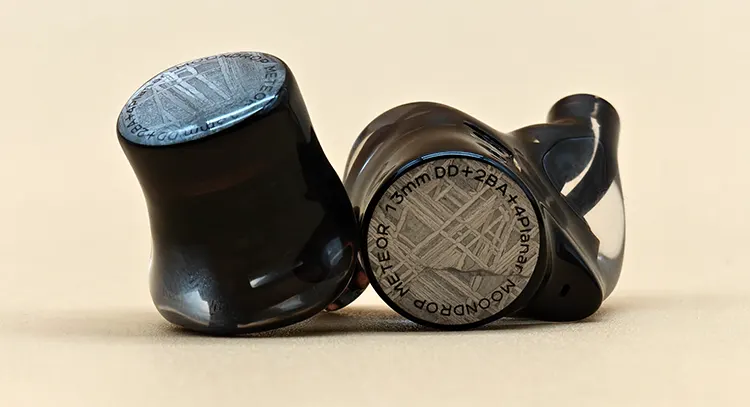
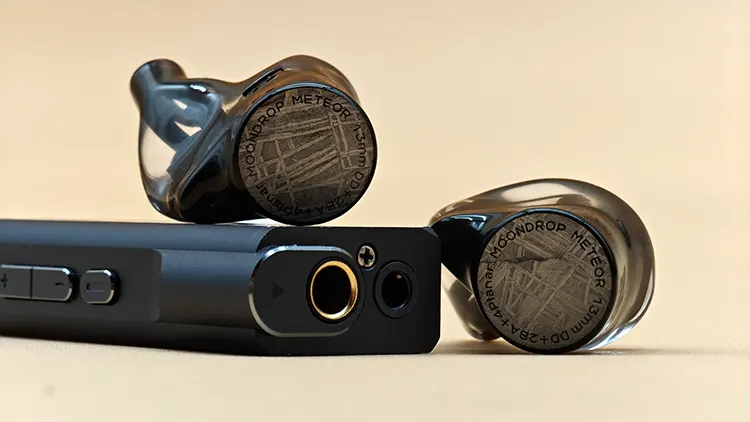
The METEOR uses an oversized faceplate with a real Aletai meteorite embedded into it, which also acts as a vibration damper for the 13mm dynamic driver. Text circles the faceplate centerpiece, while vents sit below and near the 0.78mm 2-pin connector area.
Its shell is made from black semi-opaque resin using DLP-3D printing by HeyGears. The nozzle has three sound openings but no lip, which can make some ear tips slip off during use.
Performance
Bass strongly favors the METEOR, with its wonderfully smooth and textured subbass rumble giving it a more satisfying low-end foundation plus more enjoyable mid-bass punchiness than the EPZ 550.
While the EPZ 550 does keep its bass cleaner and faster, the METEOR just has the better rumble, depth, and energy.
The midrange goes clearly to the EPZ 550, as its refinement and vocal nuance retrieval remain unmatched in this comparison.
The METEOR sounds smooth and natural, but the EPZ 550 reveals more vocal habits, backing vocals, and tiny details with better clarity.
Treble is very close, as both the EPZ 550 and METEOR deliver excellent smoothness, strong detail retrieval, and zero sibilance.
The better airiness and openness of the EPZ 550 make it overall better, giving treble details more space without losing its similarly clean control.
Surprisingly, staging is better on the EPZ 550, which delivers a wider space with a better use of staging depth and height.
The METEOR also has an immersive stage, but the EPZ 550 sounds more open and uses the entire stage with pinpoint precision.
Imaging, layering, and separation also belong to the EPZ 550, giving it stronger technicals.
Both IEMs stay clean and organized, but the EPZ 550 places sounds more accurately, layers them with more front and backward depth, and audibly makes messy tracks separate better.

My Verdict
The EPZ 550 stands out as an excellent full balanced armature IEM, that proves itself through refinement and technical control with one of the best midrange performances I have heard.
Its vocal nuance retrieval, natural timbre, excellent treble control, and precise staging make it feel genuinely complete in the areas where it shines most.
The only real issue is its tame bass, which will sound too boring or restrained for many.
Even so, the EPZ 550 delivers a beautifully refined sound with a midrange and technical performance that will easily impress anyone.
EPZ 550 Technical Specifications
- Driver Type: Two (2x) Sonion 38AM007 balanced armatures, two (2x) Sonion 26A005 balanced armatures, and one (1x) Knowles balanced armature
- Plug: 0.78mm 2-pin with fixed 4.4mm balanced termination
- Frequency Response: 20Hz – 20kHz
- Impedance: 20Ω
- Sensitivity: 105 dB ± 1 dB
