

Kurt reviews the EPZ 550, a new universal mid-tier IEM with a mixed Sonion and Knowles 5 BA driver architecture and currently priced at $549.99.
Disclaimer: This sample was sent to me in exchange for my honest opinion. Headfonics is an independent website with no affiliate links or status. I thank EPZ Audio for their support.
Click here to read more about the BA IEMs products previously featured on Headfonics.
This article follows our latest scoring guidelines, which you can read in more detail here.

EPZ has built its catalog around more than just traditional wired IEMs, with separate lines for audiophile listening, gaming, DACs, accessories, wireless gear, and even headphones.
IEMs offer a versatile lineup that covers audiophile needs, wireless convenience, and gaming-focused audio.
Now comes the EPZ 550, priced at $549.99, featuring a full balanced armature setup with four Sonion drivers and one Knowles driver.
In a highly competitive high-end market filled with numerous hybrid driver combinations, how will EPZ’s full BA configuration hold its ground against the likes of the MOONDROP METEOR and XENNS Mangird Top Pro?

Features
The EPZ 550 uses a five BA driver setup built around four Sonion drivers and one Knowles driver.
EPZ splits the Sonion array into dual 38A composite drivers for bass and dual 26A drivers for midrange, while the Knowles driver handles treble.
The dual Sonion 38A composite drivers handle bass with a dedicated two-driver layout. The dual Sonion 26A drivers handle midrange, giving vocals and instruments better control and separation.
A single Knowles high-frequency driver completes the five-driver architecture. EPZ does not disclose the exact Knowles model used, only identifying it as a dedicated high-frequency driver.
The EPZ 550 uses a 3-way electronic and physical crossover to divide bass, midrange, and treble between the driver groups. EPZ also integrates Knowles acoustic dampers into the crossover structure to manage phase alignment and driver transitions.

Design
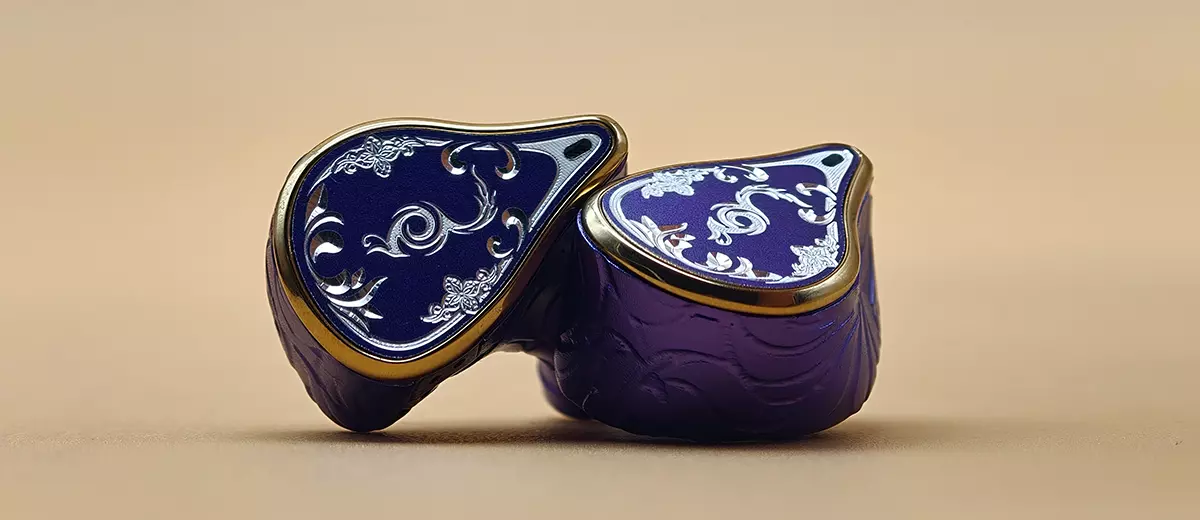
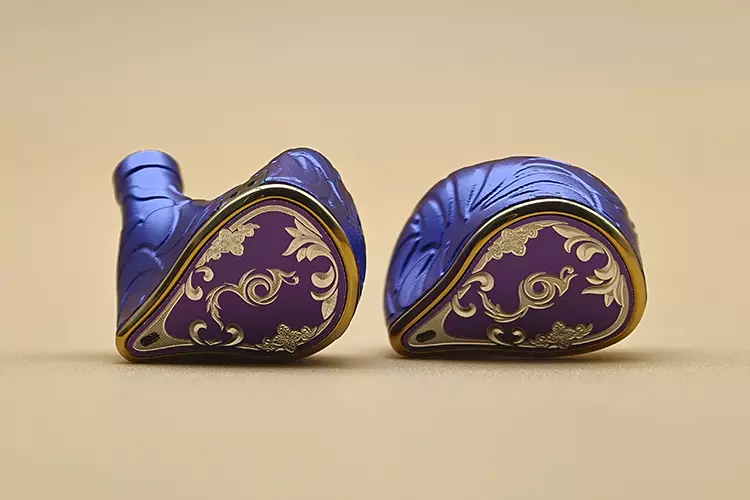
The EPZ 550 immediately stands out as one of the best-looking IEM designs I have seen, using a deep purple faceplate framed by a raised gold rim.
Its silver floral scrollwork is etched into the surface rather than printed, giving the faceplate a tactile finish that can be felt with a fingertip.
The faceplate uses a teardrop shape with a fine purple texture sitting beneath the reflective silver pattern.
A small black mesh accent sits near the lower corner, while the central circular motif gives the design a more ornate, jewelry-like focal point.
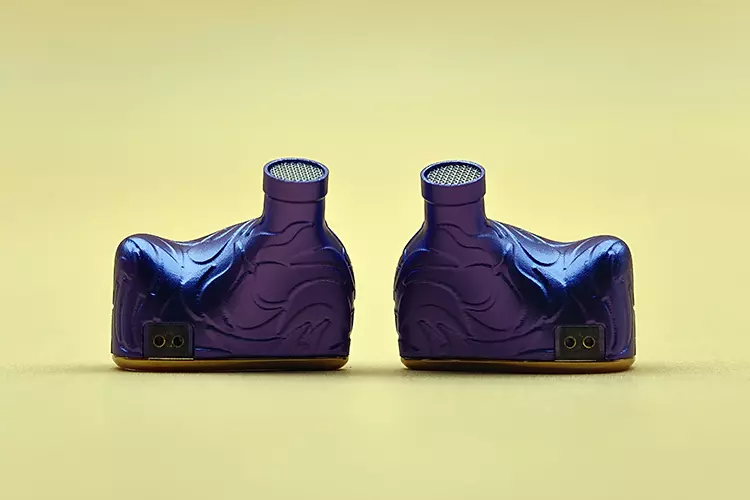
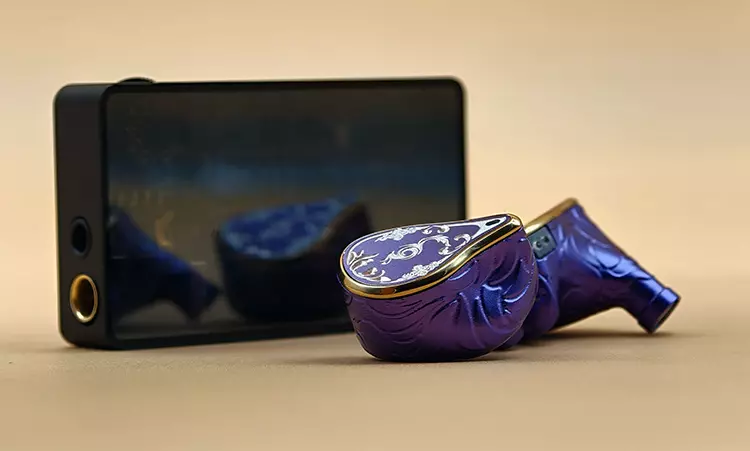
The shell carries the same purple metal finish, with flowing grooves cut directly into the body.
These grooves are real and tangible rather than decorative paint, creating a sculpted surface that continues the ornamental theme from the faceplate.
Markings are completely absent from the earpieces, which keeps the EPZ 550 exceptionally clean from every angle.
There are no visible logos, model names, or channel labels on the shells, allowing the metalwork, etched faceplate, and gold trim to carry the entire design.
A single vent is placed on the inner rear contour of each shell, positioned above the nozzle area according to the blueprint.
The vent measures 1.2mm and sits away from the faceplate, keeping the outer surface uninterrupted.
The EPZ 550 uses flush 0.78mm 2-pin connectors set into a small rectangular black block along the upper side of the shell.
Its steel nozzle measures 6.1mm in diameter, with a metal mesh filter at the opening and a stepped lip structure for ear tip retention.
Comfort & Isolation
For the most part, the EPZ 550 shells are fairly normal-sized for IEMs, making it a safe fit for most ears without feeling oversized.
Its teardrop-style shell contours exceptionally well, filling the ear naturally and forcing its shape into place without awkward pressure.
For my ears, the fit was excellent with the shell sitting flush and avoiding any real protrusion. That low-profile placement also makes it usable while lying down, since its body does not press outward or create painful contact points.
For travel, the EPZ 550 is a mixed case because the full purple design is highly eye-catching. The actual fit makes it a genuine comfort to bring around, though, staying secure and plush enough for longer portable use.
Unfortunately, isolation is not one of its stronger traits, even with the shell filling the ear well. Outside sounds remain audible in situations where they normally fade behind the music, so it does not block noise as effectively as I expected.

Ear Tips
Two sets of silicone tips in three sizes each are included with the EPZ 550, with one clear set and one white set with a pink stem.
The clear tips appear to be EPZ’s M100 liquid silicone tips, which EPZ identifies as medical-grade liquid silicone, and their tacky, grippy feel matches that material description.
The clear tips use a wide bore with a longer stem, giving them a more secure hold around the nozzle and a stickier seal in the ear.
Their sound change is minimal on the EPZ 550, though the stronger grip helps the bass and treble stay consistent by keeping the seal stable.
The white and pink tips feel more like traditional silicone, with a powderier surface and a shorter stem. They also use a similar wide bore and a largely similar flange shape, but the shorter stem lets them sit deeper in the ear.
Comfort is great on both sets, as each covers the ear canal well without causing itchiness or pressure.
The sound differences are small enough that fit becomes the deciding factor, with the clear tips offering a grippier seal and the pink-stemmed tips giving a slightly deeper insertion.
Stock Cable
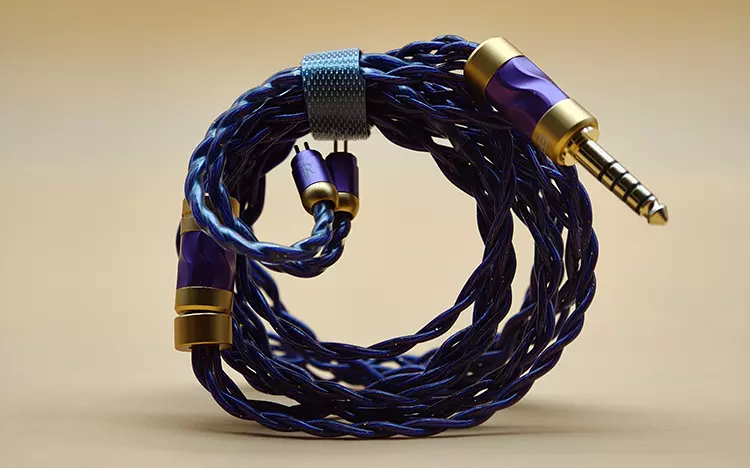
The stock cable is a 4-core 6N OCC silver-plated copper cable finished in a deep purple color scheme. Its braid carries small glitter-like gold accents throughout the jacket, matching the ornate purple and gold design of the IEMs.
The braid starts with four visible strands below the splitter, then separates into two strands for each side above it. It feels visually cohesive with the EPZ 550 rather than looking like a generic cable included only for function.
The hardware is one of the stronger parts of the cable design, using purple barrels with gold caps on the connectors, splitter, and plug housing. The splitter and plug both have a sculpted wave-like surface that mirrors the flowing grooves on the IEM shells.
The cable terminates in a fixed 4.4mm balanced plug, so there is no modular system or included 3.5mm option.
Build quality matches the IEM well from a visual standpoint, but the fixed balanced termination limits direct use with phones and basic sources.

Packaging & Accessories
The EPZ 550 arrives in a long rectangular silver box with embossed feather details across the front. The center carries the EPZ logo, Purple Phoenix name, and 550 marking in a clean reflective finish.
Flipping the box over shows the specifications panel, including the model, brand, cavity material, driver, and other IEM details. The back also carries the EPZ Purple Phoenix 550 branding, certification marks, barcode, and manufacturer details.
Sliding the front cover out reveals a two-piece inner box with a central split between both halves. The left side shows a small EPZ logo, while the right side carries the Purple Phoenix 550 mark in purple.
Opening the inner box like dual doors reveals a large purple card spanning the center, with the EPZ logo on the left and a design inspiration write-up on the right.
Removing it reveals a clean one-layer layout, with the purple carrying case on the left and the IEMs seated above the accessories case on the right.
The included cards are more interesting than usual, especially the phoenix illusion card that shifts as it moves. A separate welcome card is included as well, giving the documentation layer a more deliberate presentation.
The purple carrying case has a leather-like exterior with Purple Phoenix branding stamped in gold on the lid, while the inside uses a soft cloth lining that stores the cable neatly.
The accessories case holds the clear silicone tips, white-pink silicone tips, warranty card, and user guide.
Sound Impressions
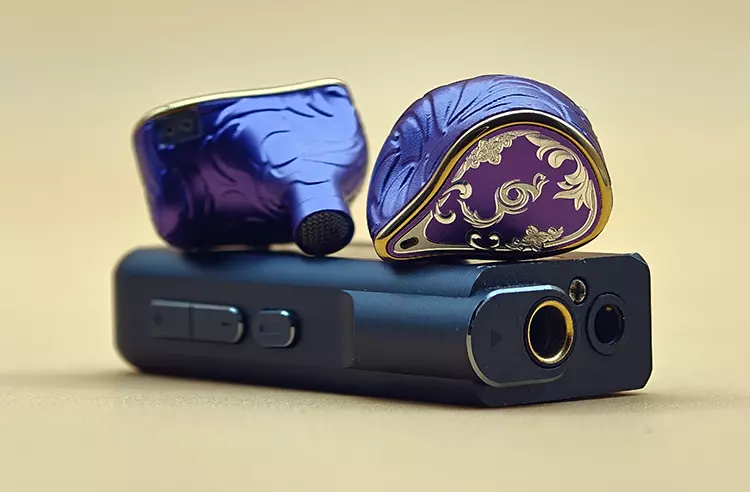
The following sound impressions of the EPZ 550 were completed using a mix of the Colorfly CDA-M2 and the Heartfield R1 dongle DACs.
Bass
The EPZ 550 delivers clean bass that prioritizes control and quality over physical force. It does not sound heavy or weighty, instead acting as a supportive foundation that keeps the rest of the tuning clear.
Its speed is the main strength, with bass notes starting and stopping quickly without smearing into the midrange. This gives the low end a proper, refined quality, even if it does not carry much power behind each hit.
Subbass is subtle and stays behind the rest of the presentation, giving tracks a light sense of depth rather than a deep rumble. It is not bad by any means, but it clearly avoids the kind of pressure and weight that bass-heavy sets deliver.
The punchiness of its mid-bass is what feels most noticeably missing, as kick drums do not land with strong impact. There is still a slight thump to keep rhythm sections from sounding empty, but the EPZ 550 does not push mid-bass energy aggressively.
Despite that weakened energy, the drums and bass guitars earn back attention through excellent timbre and texture. Every small tonal shift, drum hit, and string detail comes through with wonderful accuracy, allowing everything to sound as natural as can be.

Mids
The midrange is absolutely the star of the show on the EPZ 550, and it immediately stands as one of the most excellent and refined mids I have heard.
It gets everything here correct, leaning towards a forward presentation but in a way that feels properly placed rather than aggressively pushed.
The vocals are simply excellent, coming through lush, natural, clean, and full of life. There are strong and proper emotions here that make voices feel alive, not because they are exaggerated, but because they sound genuinely correct.
Despite being a full BA set, its timbre is as natural as it can get, with male and female vocals carrying near faultless accuracy. Instruments follow that same level of correctness, sounding natural and free from the plastic or artificial tone.
Their tone, texture, and body all land exactly where they should, avoiding any BA timbre that other full BA sets have.
Nothing in the instruments feels overemphasized or dampened, allowing guitars, pianos, and strings to keep their proper weight and natural tone.
Even with all that excellence already shown, none of those qualities are the best thing about its midrange.
The real standout is its ability to reveal vocal nuances, with the EPZ 550 uncovering new midrange details in songs I have listened to for years in a way that genuinely surprised me.
Tiny backing vocals, even the subtlest ones, are brought forward with stunning clarity without distracting from the main singer. The little habits in a vocalist’s delivery, small breaths, inflections, and phrasing choices are shown with incredible precision.
Treble
The treble on the EPZ 550 is great, continuing the same sense of correctness found in the midrange. There is no sibilance, no fatigue, and no unusual peakiness, making the top end feel wonderfully controlled.
Detail retrieval is excellent, pulling out a lot of information without forcing it forward too aggressively. It simply lays those details across the mix, letting each sound occupy its own place without making the presentation feel crowded.
It shows off its wonderful extension by preserving tiny details audibly without letting the highest notes trail off too early. This gives the EPZ 550 a spacious and open treble that supports its great resolving ability without sounding sharp.
One of its treble’s strongest qualities is airiness, as it gives instruments and vocals enough room to breathe naturally. It feels properly spacious and smooth, avoiding any cramped or closed-in feeling.
With cymbals, it carries the right amount of decay, energy, and splash while staying musical and faithful to its lifelike texture. Percussion sounds excellent here, with the EPZ 550 capturing the energy, texture, and bite vibrantly clear.
Staging & Dynamics
If not for the midrange, the staging and dynamics would be the best part of the EPZ 550. Its stage is truly wide with proper depth and height, creating a holographic, immersive, and open presentation.
Simply incredible is how I’d describe the imaging, as it places sounds with the exact amount of distance and elevation the track asks for. If a sound only needs to sit slightly above another element, the EPZ 550 places it there with true pinpoint accuracy.
Layering is amazing as well, with enough depth to make sounds appear behind or in front of one another. This adds a wonderful and convincing sense of space, making the presentation feel lively and organized rather than flat.
Its separation control follows the same impressive level as the rest of the technical performance. Even in the messiest tracks, the EPZ 550 never feels cluttered and continues to keep each element distinct.
In the same manner, its dynamics are refined as well, avoiding the flatness that can make technically capable IEMs sound lifeless. Different sounds have their own loudness to define the presentation properly, while tiny shifts in intensity are conveyed with excellent accuracy.
Click on page 2 below for my recommended pairings and selected comparisons.
