

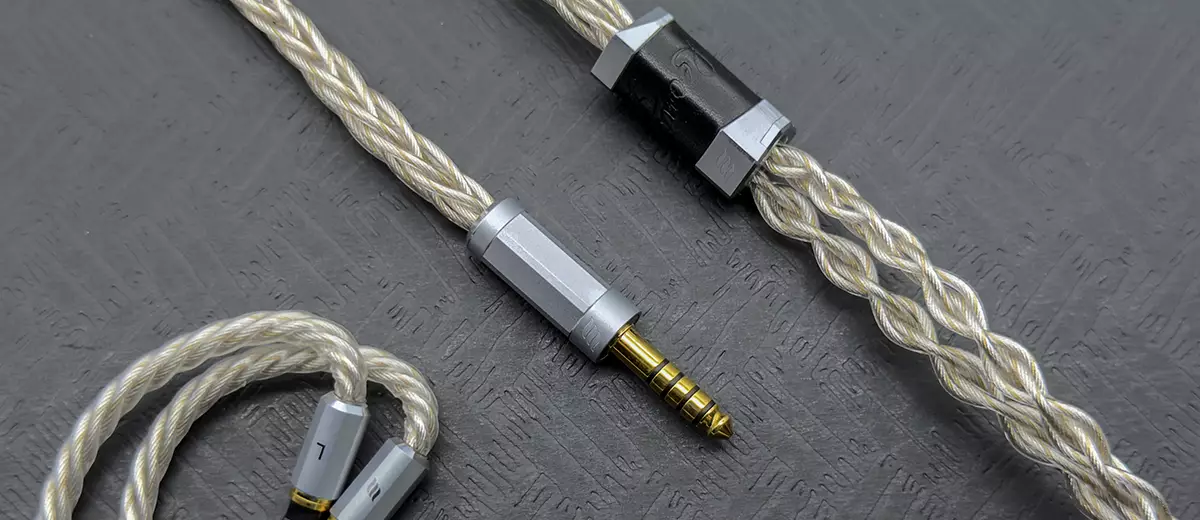
Synergy
iBasso EPITOME
The EPITOME, the recently released iBasso flagship IEM, already feels quite mature with its tuning.
I would really not bother much with swapping cables on the EPITOME to “fix” anything. Its tuning is already quite balanced. You get a very transparent and quite revealing sound without any sharpness.
However, the overall presentation can still lean a bit too clean and a touch too dissecting at times. That’s where a cable like the Leonidas Z brings that missing bit of naturalness and emotion back into the music.
One of the key aspects of EPITOME’s tuning is its easy-going flow. None of the frequencies feels boosted.
The cable helps with a better low-end foundation, an area where the EPITOME needs some help. The next thing you’d notice is how the notes feel more detailed, carrying a more musical strike.
The EPITOME sounds fuller and lusher. The midrange has more musical appeal. Vocals, both male and female, have better depth.
Instruments feel sweeter and better extended. On the stock cable, you get most of these, but the last finishing touch is where it falls short, and hence, the EPITOME’s capabilities are hindered.
The Leonidas Z scales up what the EPITOME is good at and adds a musical touch. On the stock cable, it sometimes feels less engaging in the sense that instruments are playing, vocals are there, and the stage is vast, but everything feels slightly disconnected.
The Leonidas Z fixes that beautifully and gives the EPITOME a lot more engaging sound.
For staging, the EPITOME is quite impressive in its stock setting. With a fuller and lusher sound, the stage feels more natural. Vocals and instruments feel more connected.
It is the same expansive soundstage, but it just feels more immersive. The images, which would feel more clinical than natural earlier, feel more settled now.
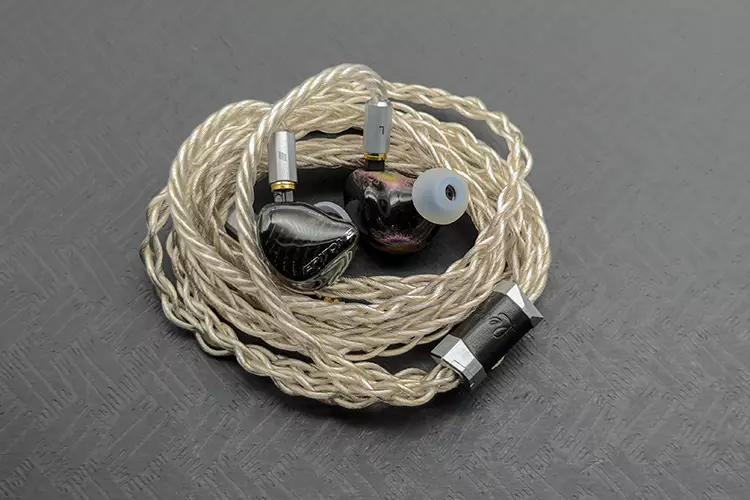
PLUSSOUND SONORA SE
The SONORA SE packs a modest count of eight drivers per side in a tri-brid layout. It delivers a sound you would expect from a flagship release and aims for a very clean and detail-focused sound.
You’d rightly expect a great stock cable with PLUSSOUND’s flagship release. Now, where does the Leonidas Z fit in?
With the stock setup, you’d still want a slightly more natural and warmer sound, with notes that are slightly more detailed and taller. An organic-leaning SONORA SE is very enjoyable.
The bass gains slight warmth, with plenty of textures and details to offer. I already love the low end with the stock arrangement, but the Leonidas Z makes it even more full-figured.
The midrange gains slightly more weight and lushness. This is where that big difference appears. This takes the sound to a whole different level.
The notes feel more detailed and land with a more organic tone. The sound is smoother and more relaxed, and that hint of dryness and clinical sound just goes away. Vocals sound fuller, more present, and a bit more forward.
With the stock cable, they may feel a bit sucked in and lack that forwardness, so this is a solid change you’d notice. The treble is impressive as it is. More detail in the notes and better separation give it a more natural top end.
You get the same airiness and plenty of shimmer, just with a more natural metallic tone. Overall, the changes across the frequency spectrum give the SONORA SE a very favorable sound.
The soundstage feels more holographic. The depth and height are readjusted, and instruments have more breathing space. Not that the SONORA SE breaks a sweat on the technical front; it just feels more street-smart in the way it handles complex passages.
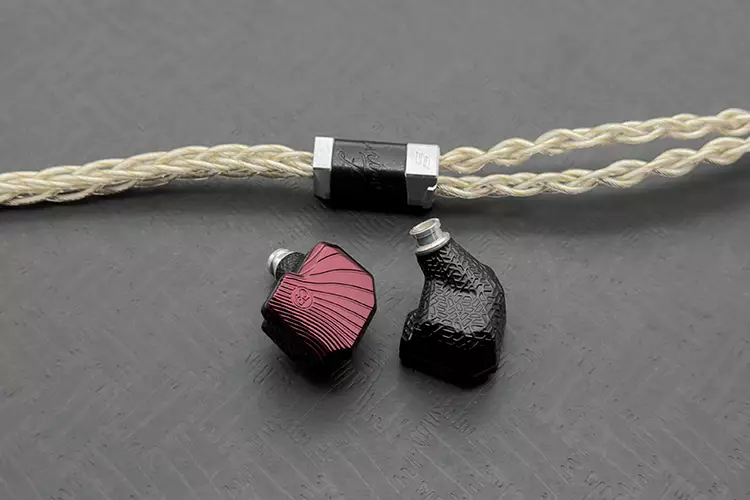
Softears Enigma
The Softears Enigma is a tri-brid IEM equipped with dual dynamic drivers, six custom balanced armature drivers, and four Sonion electrostatic drivers. The Enigma’s Kryptos does its job well, but the Enigma responds well to cable swapping.
Where Enigma needs some support is in the top end, where it may not feel quite open. Also, you might feel the micro-details could be more prominent. The Leonidas Z quite nicely adds those missing pieces.
Starting with the low end, it makes the bass notes a bit fuller and tighter. So, the bass lands with the same authority and punch but just hits a bit deeper. That’s one area where the Enigma is quite impressive.
The next is the midrange, where the cable adds some extra lushness. The Enigma already has a very musical midrange, but the cable adds slight energy and gives the midrange some extra clarity.
This helps notes land with better details and makes the midrange sound more engaging. This is where the Leonidas Z reminds me of the CENTURION II. You get a similar dose of lushness along with an extremely absorbing midrange.
The Leonidas Z does not boost the top end, nor does it add a lot of energy to the region. It just adds some air and gives notes better detail and separation.
You hear the shimmer and metallic tones full of naturalness. It doesn’t get crispier, nor does it feel extra shimmery, just more refined and more detailed, with a good amount of air.
I don’t feel the stage gets an overhaul here, but it does feel denser and more intense, the reason being that the notes are fuller and the midrange feels more expressive. The images feel a shade sharper, which, on the stock setup, does feel slightly murky.
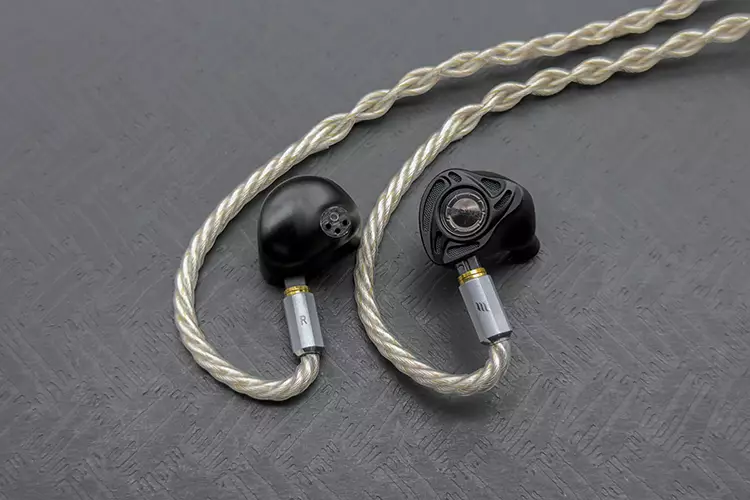
Selected Comparisons
Effect Audio CENTURION II
Technical
The CENTURION II, the Effect Audio ultra-flagship cable, is a massive concoction of six types of premium materials: platinum-silver alloy, gold-plated gold-silver alloy, gold-plated silver, palladium-gold-silver alloy, palladium-silver alloy, and pure silver.
The CENTURION II uses UP-OCC grade for all its wire materials. Structurally, the cable has seven groups of wires, and within each group, the wires are of different thicknesses to handle various parts of the sound spectrum more effectively.
The Leonidas Z is a bit toned down in its specification and mixes just three types of conductors – pure silver, palladium-silver alloy, and gold-plated silver.
Being an Effect Audio sibling, both cables share a few tech features, such as EA Ultra Flexi Insulation and Effect Audio’s ConX system.
Design
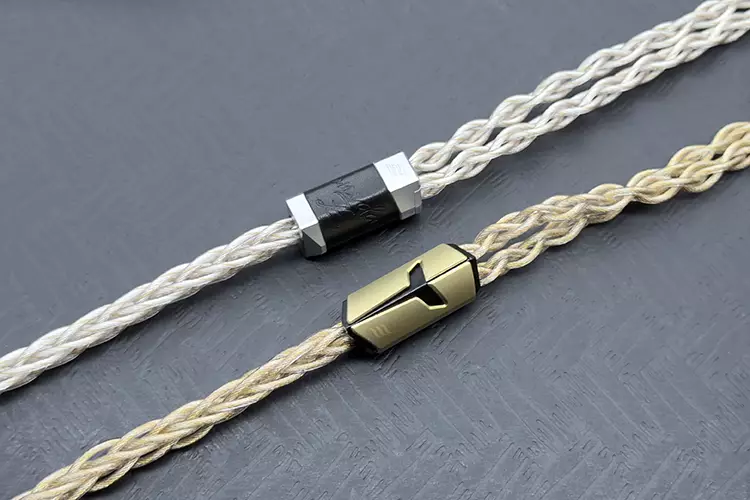
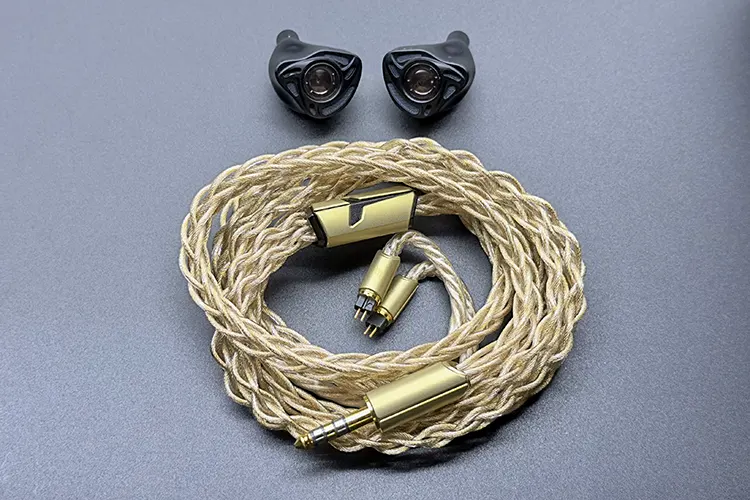
The CENTURION II and the Leonidas Z 8-wire share the same braiding style. The difference is more in how the CENTURION II carries a golden, pearly shine, while the Leonidas Z has a very subtle silver appearance.
The CENTURION II has a shinier appearance, but this golden appearance never feels overly done. All the hardware, including the termination adapter, 2-pin connection, and splitter, has a golden polish.
The splitter design is inspired by the iconic form of a Centurion helmet. It has a dual-layer construction where the outer shell is forged from titanium alloy, adding a high level of durability, while the inner layer is made of aluminum alloy.
I would rate Leonidas Z’s handcrafted splitter design at the same level of finesse. Different designs yet equally great.
In terms of handling and comfort, both cables stand at the same level. In fact, when looked closely, these cables feel quite similar in how they appear.
They both are slightly thick with the same level of thickness, yet not overly heavy to irk you during longer sessions. That’s what you expect from the flagship cables.
Performance
If I had to sum up the difference between the CENTURION II and the Leonidas Z 8-wire, I’d say the latter is a mini-CENTURION II. You find the same DNA in both cables.
The CENTURION II just takes things a bit further and gives you a better sense of scale. And that’s expected of CENTURION II, as it has a more exotic conductor layout. It brings a better sense of refinement and a more holographic sound.
The CENTURION II low end offers more texture and detail and a bit more depth. A good example is how the CENTURION II turns 64 Audio Fourté into a “master of lows,” a change that no other cable brings about. The Leonidas Z shares the same spirit here.
In the midrange, both cables push a lot of fullness and weight. Not that it’s overwhelming, but if an IEM lacks lower-midrange body, you can try either of these cables to fill up that space.
Both cables also push a lot of air and sparkle in the top end. Neither of these cables goes for that crisp and precise route; rather, they keep it very smooth and relaxed. That’s where the real sauce, or, say, the amalgamation of conductors, shows its magic.
The Leonidas Z is up there in terms of detail and note separation, but the CENTURION II is the absolute best in how it stretches the treble performance. I think it has more to do with how far the notes are stretched and how filled-in they sound.
On the technical front, the CENTURION II expands the stage in all directions, giving off a more expansive and holographic feel. The Leonidas Z does not work much on the width, from what I feel. The images feel grander and more polished on the CENTURION II.
PLUSSOUND Palladium Fusion Hybrid
Technical
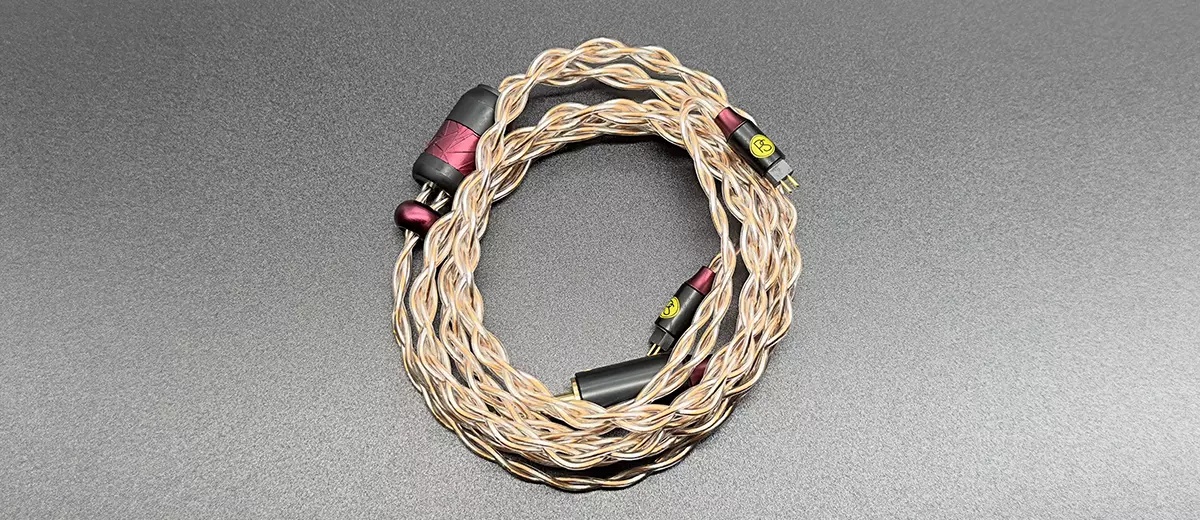
PLUSSOUND’s flagship cable, the Palladium Fusion Hybrid, was released towards the end of last year. Structurally, the wiring is a 25AWG tri-layer, coaxial-type Litz design.
The central layer is a palladium and silver alloy, and it uses the largest-diameter strands. Around it sits a full palladium and copper alloy middle layer.
The outer layer is a mixed alloy layer using both palladium and copper alloys and palladium and silver alloys. Each strand is enamel-coated to reduce electrical anomalies and prevent oxidation.
The proprietary PS insulation keeps it soft and ergonomic, and the production wire is cryo-treated for long-term stability.
In terms of the conductor, the Leonidas Z goes slightly more premium by replacing copper with gold.
Design
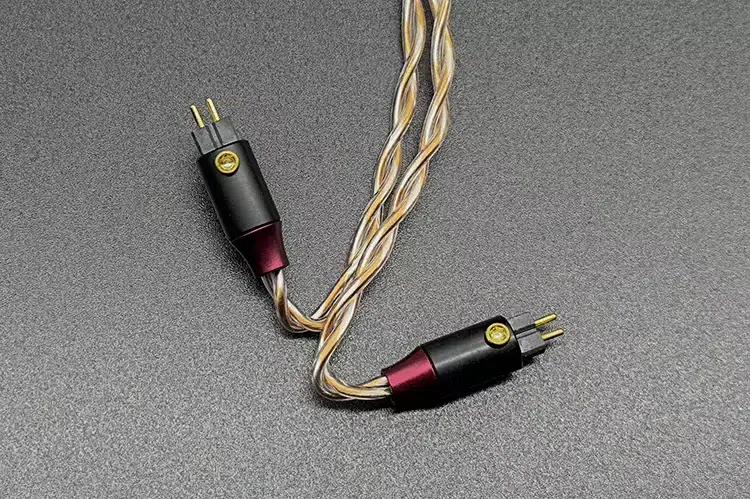
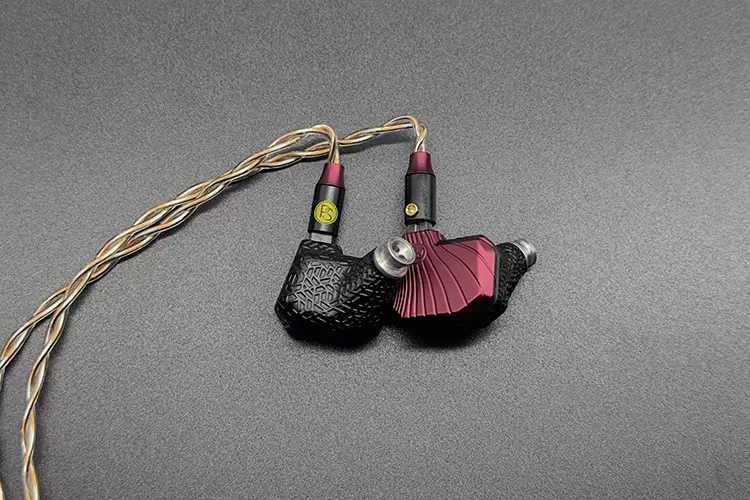
The Palladium Fusion Hybrid is a colorful affair. It’s because of the mix of copper and silver conductors showing through the sleeve and the black-and-burgundy hardware combination, which makes the cable a bit livelier.
The splitter is a cylindrical barrel, and the chin slider has a fresh, polished glow. The 2-pin connectors keep the same theme: black bodies and burgundy collars.
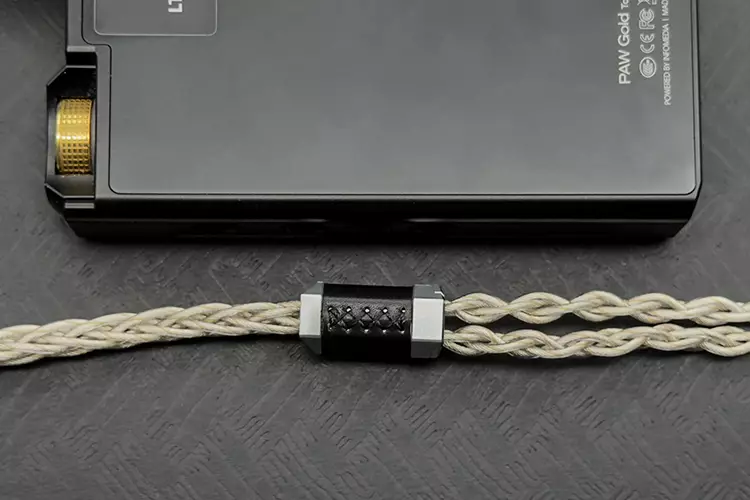
The Leonidas Z has a more sophisticated look. The hardware has angular shapes, and the finishing looks a bit more premium. The Y-split is a piece of art.
The 4.4mm termination adapter also looks a bit plusher than PLUSSOUND’s generic-styled adapter, which they put on most of their cables, thus losing that special feel.
With the Palladium Fusion Hybrid, you also miss the modularity that the ConX and TermX systems bring to Effect Audio cables.
The one thing I really like about the PLUSSOUND cable is the ease of handling. It is extremely comfortable and almost disappears when in use.
Performance
The Palladium Fusion Hybrid is built for people who want maximum resolution and a pure “show me everything” presentation.
It does not hide its characteristics, and as you’d rightly imagine, it does not suit every IEM. It makes the delivery clearer, sharper, and more revealing. Leonidas Z focuses on a smoother presentation and opens up IEMs, giving them a better sense of scale.
In the low end, the Palladium Fusion Hybrid evens up the bass shelf, reduces the warmth, and declutters the mix. The Leonidas Z adds extra body and a bit of warmth and offers a better and more solid foundation.
In the midrange, both cables add clarity but do it in different ways. The Palladium Fusion Hybrid shaves off a bit of lushness and richness in the process, giving the notes a crisper, more precise body, which, if paired with the wrong IEM, can be off-putting.
The Leonidas Z makes more room for notes and adds more detail and body to them. It adds more fullness and lushness to the mix, so the characters drift apart a lot here.
Similarly, in the top end, the Palladium Fusion Hybrid adds energy and clarity and gives an extra-highlighted, ultra-crisp top end.
The Leonidas Z keeps it smoother, gives more natural strikes to the notes, and adds plenty of sparkle and air without going the PLUSSOUND way. So, the treble drifts further apart, making these two cables work with entirely different sets of IEMs.
The Leonidas Z offers a more spacious soundstage and a better sense of openness, which feels more natural. Images feel more relaxed yet quite vivid.
On the Palladium Fusion Hybrid, the presentation feels extra clean and incisive, and not as natural. It feels too precise and crisp and misses that musical touch.
My Verdict
One of the best aspects of the Leonidas Z is that it goes easy on IEMs and does not try to alter their tuning. And that’s how I believe a cable should behave. This also makes the cable more useful to be used with a wider variety of IEMs.
The Leonidas Z works well with every type – clean, warm, neutral, or slightly energetic. This cable manages to add something useful without disturbing its signature.
At the core, the cable brings a lot of refinements and scales up the sound. It appends the musical engagement. There is an extra-lush, more filled-in, and more natural sound. Vocals and instruments carry more weight and feel more present.
You get a better sense of space and air around notes. The soundstage feels more open and immersive. The cable never goes overly sharp or clinical. It does everything in a relaxed, smooth way.
The Leonidas Z shares similar DNA to Effect Audio’s ultra-flagship CENTURION II. The CENTURION II is still the king in terms of scale and goes even more technical, but the Leonidas Z gives you a good taste of that flagship presentation.
For cable enthusiasts, the 8-wire Leonidas Z is certainly worth considering. Overall, it gets my recommendation. For me, it’s one of the best cables to come out of Effect Audio’s stable.
Effect Audio Leonidas Z Technical Specifications
- Spec: 24AWG, 4 wires / 8 wires
- Material & Structure:
- Palladium-Silver Alloy
- Gold-Plated Silver
- Pure Silver with Central Solid Core
- Sleeve: EA UltraFlexi™ Insulation
- Plug: Pentaconn OFC 4.4mm Termination
- Connector: ConX – 2-pin (Default)
