

Sound Impressions
The following sound impressions of the Cayin RU9 were completed using the Vision Ears VE10, Austrian Audio’s Composer, and the Empire Ears ESR MKII with an OTG link to a Samsung S23 Ultra and a Huawei 2000mAh power bank for DC mode.
Summary
The RU9 is a very flexible performer for both power users and those with specific tonal requirements. It can go from ‘neutral-to-natural’ and accurate, to denser, warmer, and richer sounding, to sparkling brilliance and enhanced vocal texture with a mere flick of a switch (and a 6-second wait).
It can also deftly maneuver among the different power requirements for sensitive IEMs, such as the VE10 with virtually no hiss on low gain, to impressive dynamic range and power for normally demanding planar headphones, like the DCA NOIRE XO.
For headphone users in DC Mode, you still get all those timbre choices, which have a significant effect on how well planars and high-impedance headphones perform (see my Synergy section for more details).
There is a delta-sigma DAC behind those tubes, so in terms of presentation, it is more detailed and articulate than the 1-bit RU7 but perhaps a little more polished-sounding than the grittier or rawer analog tone of the smaller dongle.
If I have to draw from Cayin’s back catalog of tube devices for any type of resemblance, I would probably opt for the N8ii, at least tonally. The RU9 is capable of some beautiful vocal bloom in modern Tube mode, similar to how I hear the N8ii treat vocals in the same manner.
Switching on the RU9’s DC Mode is akin to the P+ mode from the N8ii or Hyper Mode from the recently released N6iii. It gives everything a huge lift in terms of dynamics, bass/vocal impact, creating a ‘bigger sound’ that works wonderfully well to enhance the soundstage depth of most headphone pairings.
Before you ask, the RU9 is superior to the N3Ultra. It sounds richer, more expansive, and dynamic than the N3Ultra on every timbre mode.
Coloration
I would not class the RU9 as having a reference sound. It’s not a sterile, dry, or linear performer. The dual DAC and amp design delivers a more natural tone with slightly softer highs than, for example, the Mojo 2’s more upright and driving treble presence.
The closest to a reference sound is the solid-state mode. Of the three modes, it has a flatter and tightly controlled bass response, a neutral midrange note weight and imaging, and an airy set of highs that I do not find peaky or overbearing.
It’s a good choice for warmer IEMs such as the VE10 that need a tight lid on bass bloom to keep its emotive mids from being drowned out.
The Classic Tube mode is warmer and denser-sounding compared to the solid-state option. It delivers an unmistakable tube overtone with a more relaxed feel to its presentation, vocals shifting more to the fore with more texture and weight, and a more liquid-sounding set of highs.
I found this mode excellent with headphones in DC Mode, particularly neutral dynamic driver options such as the Composer, which can often sound bright in the highs with poorly matched sources.
Modern Tube mode brings vocal presence to the maximum and pairs beautifully with the ESR MKII. It also adds more sweetness to the performance and a tighter low-end, creating more midrange space and air in the highs in the process.
Arguably a closer tuning to the older Ultralinear mode with the enhanced treble and upper-mids sparkler, but with more body and bloom in the vocal range, female voices in particular.
Staging & Dynamics
This is more about the effect of the DC mode when discussing dynamics. In battery mode, you do get a nice level of power to drive moderately demanding headphones such as the Austrian Audio Composer in high gain.
However, for headphones such as the ZMF Headphones BOKEH and the DCA NOIRE XO, the battery mode sounded a bit flat and compressed in its imaging until I switched on DC Mode.
In DC Mode (balanced), the staging depth and impact were keenly felt, especially with the NOIRE XO, which of the three, needs the most power. The bass response sounded snappier, vocals sounded fuller and more forward, and the highs had more sparkle and reach.
Again, the timbre choices will have an effect on the staging properties of any gear. The most linear is solid-state. Though still quite spacious, the vocal imaging dropped back a bit relative to the tube modes, and the bass weight and presence felt tight but lighter in bloom and weight.
Classic mode digs the deepest, but the slower rate for decay and enhanced bloom through the lower-mids can muffle the mids of any gear that I would consider to be already warm, such as the VE10.
The better choice for warm gear is the Modern Tube mode, which reduces the bass bloom and shifts the staging focus more to the mids and highs, sounding airier with better vocal impact and improved instrumental separation than Classic mode.
Synergy
Wireless Performance
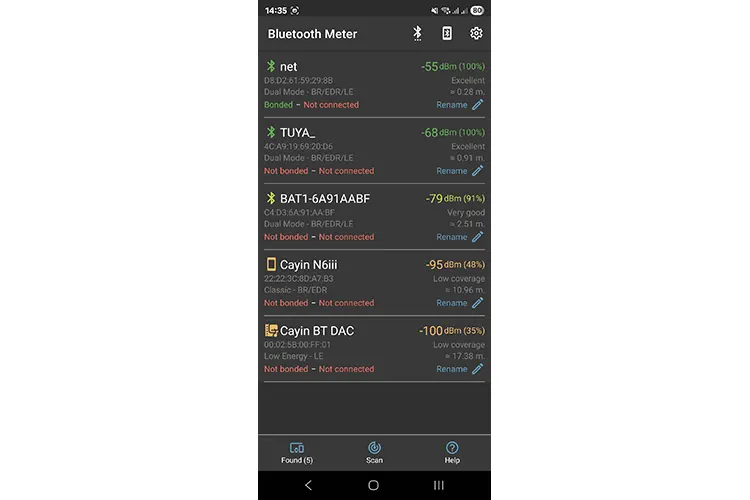
The RU9 uses a low-energy LE chipset compared to the Classic BR/EDR BT alternative inside the N6iii. In all instances, whether 1m near or 20 meters away, it generated a weaker signal than the N6iii when tested with a Samsung S23 Ultra using Egldev’s BT Signal Meter app.
Therefore, how well the RU9 performs as a wireless receiver ultimately depends on the source transmitting device, as you will need a strong BT transmission signal to maximize the performance of the RU9’s wireless receiver.
For example, pairing the RU9 via the N6iii’s BT transmitter delivered a below-average connection signal strength with signal dropout occurring around 5-7m away from the source.
Switching to a Samsung S23 Ultra and the Vivo X90 Pro+ produced a far superior performance, which did not surprise me, as phones generally do a lot better than DAPs for BT range and signal strength.
Both Android smartphones were able to reach around 20m within the line of sight without a hint of signal interruption. Only once did I go behind a wall at a 20m distance, did the RU9 audio signal start to stutter and break up.
The audio quality in LDAC was impressive, though not on the same level as USB. Just lacks a little in bass snap and instrumental separation, so not quite as holographic or dynamic sounding.
IEM Pairings
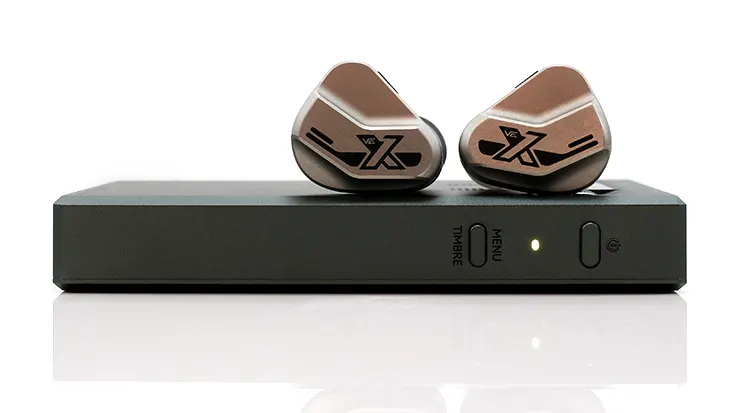
I tested four IEMs with the RU9, including the Campfire Audio Fathom, Vision Ear’s VE10, the Empire Ears ESR MKII, and Nostalgia Audio’s Durandal.
All four had no issues with background hiss, but if I am being super critical the I could hear a faint hiss in tube mode on zero volume with the Fathom in high gain, nothing in low gain.
I could argue that Modern Tube is the solution to all tuning problems, as it sounded excellent with the ESR MKII, VE10, and the Fathom. Modern Tube opened up the 3 IEM’s midrange, injecting more texture and body into the vocal performances while keeping the lows tight and retaining some needed sparkle in the highs.
Especially so with the ESR MKIII, which I consider to be a wide but neutral sounding reference monitor with excellent clarity and detail. With solid-state, it sounded accurate and speedy, with Classic coming across as a denser and warmer but a bit ponderous and unbalanced sounding.
Modern Tube really opened up the vocal presence, giving them some additional body and texture and a more dominant profile in the mix. Probably my favorite pairing of the four.
The VE10 and Fathom sit better in solid-state, though they sounded pretty good in Modern Tube. These are two warm-sounding IEMs, so Classic Tube can create an overly colored sound and create too much bass bloom.
Modern Tube tightens things up and enhances the perception of air and sparkle, creating more space in the IEMs’ mids. However, it’s the solid-state that keeps everything tight and well-defined, which is how I like to hear these two IEMs.
Durandal only came alive in Hyper mode (DC mode) and Modern Tube. Solid-state sounded a bit flat in the mids, and Classic created an overly warm and unbalanced mess.
Headphone Pairings
My headphone pairing with the RU9 is more of a commentary on the benefits of using DC Mode over battery mode.
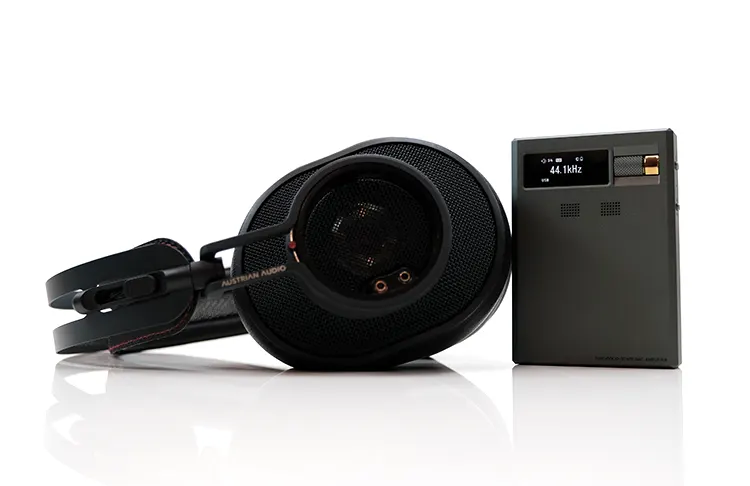
Regardless of impedance or SPL, the enhanced dynamic range and vibrancy of the DC Mode were palatable with my chosen headphones, the Austrian Audio Composer, ZMF Headphones BOKEH Closed, and the DCA NOIRE XO.
And in all three pairings, the RU9 tube modes performed better over the solid-state timbre to my ears. I would bias a little more to Classic Tube for the Composer and the BOKEH, given its smoother tone and denser sub-bass presence.
The Composer is neutral bright but with a nice punchy lower-end. The RU9’s denser, warmer Classic sound tamed the edginess from the Composer’s upper mids and highs and kept the soundstage deep with improved vocal presence.
It was a similar presentation with the BOKEH. Better dynamic range and impact with DC Mode, better vocal presence, and a deeper sub-bass response using Classic Tube mode.
I could go with either Classic or the airier Modern Tube mode with the NOIRE XO. It’s a very flexible sound signature, but one that needs the DC Mode 1W of output power to sound properly driven.
In battery mode, the NOIRE XO sounds too polite, and in solid-state mode, the vocals are more reserved and cold-sounding.
