

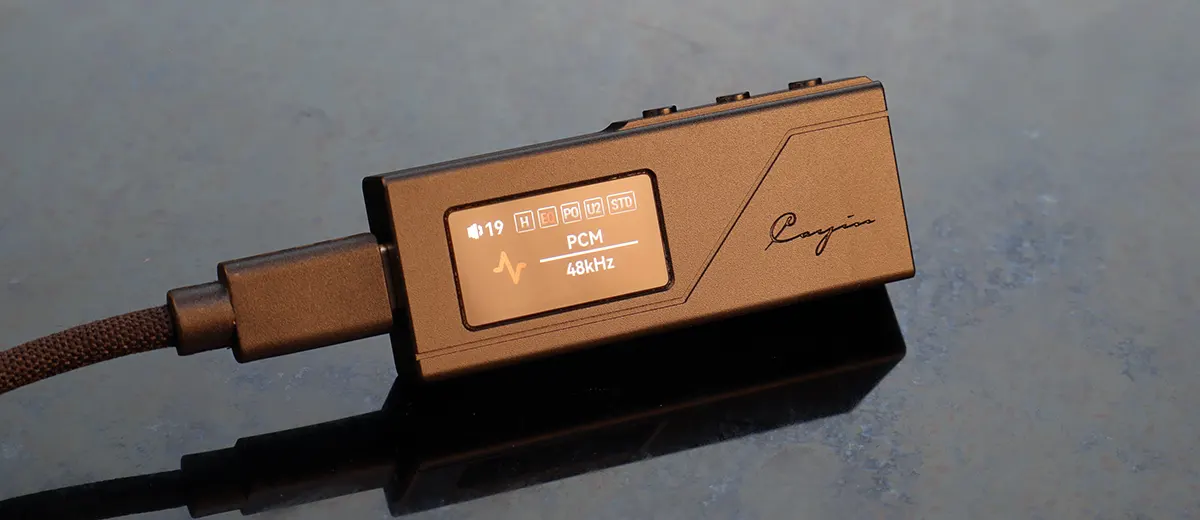
Marcelo reviews the Cayin RU3, an entry-level ES9069Q-equipped dongle DAC with app integration and up to 560mW of balanced output power. It is currently priced at $99.00.
Disclaimer: This sample was sent to me for my honest opinion. Headfonics is an independent website with no affiliate links. I thank Cayin for their support.
You can click here to learn more about Cayin products previously reviewed on Headfonics.
This article follows our current scoring guidelines, which you can read in more detail here.

As I recall, Cayin has been releasing some competitive Dongle DACs and portable amplifiers in recent years.
Some of these products have been recently reviewed at Headfonics, including the Cayin RU9, the Cayin RU7, and the Cayin RU6.
As a daily portable audio listener, Cayin’s dongles pique my interest, especially the RU7 and RU6, which I heard at an audio show, and was impressed by their smooth, analog sound.
I was excited when I was notified that I would review the latest Cayin dongle DAC, the RU3, which features 560mW of output power. This is considerably more powerful than the more expensive RU7 and RU6, yet priced much lower at $99.
Not all milliwatts are created equally, as they say, which raises the question: Will RU3 deliver the promised wattage without compromising sound quality? Or how will the RU3 compare to other dongle DACs, such as the xDuoo Link10 and iBasso DC-Elite? Let’s find out.
Features
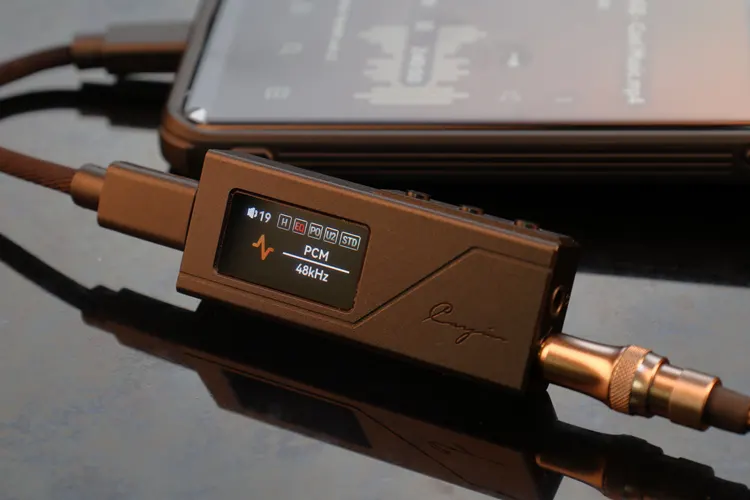
Reading through the specs and features of the Cayin RU3, the most glaring feature is the 560mW power output rating, which is the highest output rating I have reviewed in this form factor. I’m also impressed with the inclusion of the 0.96″ IPS color display.
The USB input is handled by the SPV5068 processor, a high-performance dual-core processor that acts as a USB bridge to manage data and digital audio signals.
The digital signal is then passed on to the ES9069Q high-resolution dual-channel digital-to-analog converter chip, which utilizes two OPA1602 dual op-amp forms from Texas Instruments for current-to-voltage conversion.
Two SGM8262 stereo headphone amplifier chips then amplify the signal to complete a true balanced output.
There are other notable features in the RU3 worth mentioning, such as Hyper mode, which increases the power supply to support the 560mW output rating, and Standard mode, which reduces the power load from the source and lowers the heat for more efficient operation.
This is completely independent of the gain mode, which allows for the selection of high and low gain.
Design
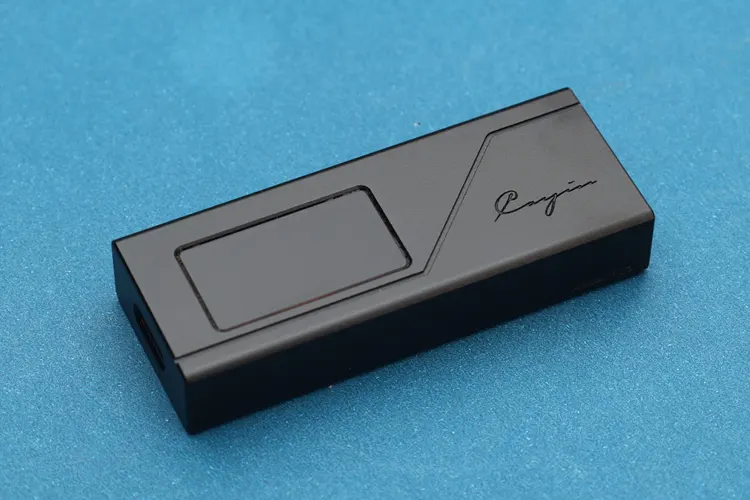
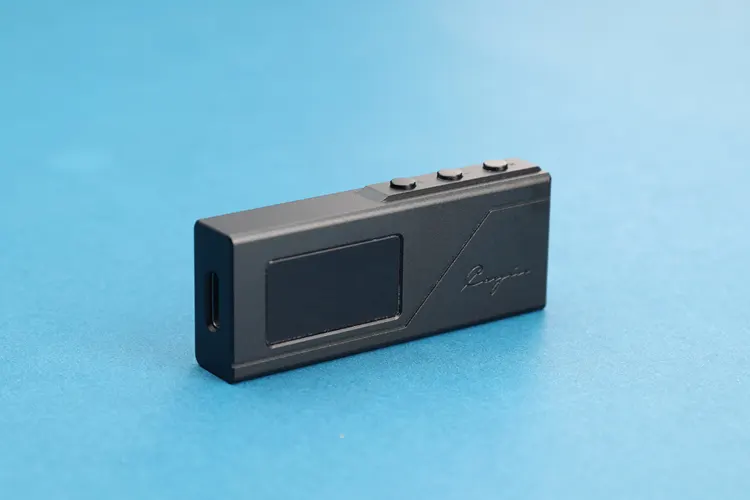
The RU3’s 60 x 25.4 x 11mm size is median in its form factor, and it is lightweight at only 24 grams, despite its chassis being CNC machined from a solid aerospace-grade aluminum, which is finished with a durable anodization process. My review sample is black, but it is also available in light Cyan and purple colors.
Thanks to the 0.91-inch IPS screen, which can be switched between two themes, the RU3 can be controlled without using the app.
However, I find the screen lacks brightness, even when set at maximum brightness. The letters are too small and difficult to read. I switched from Theme 1 to Theme 2, which helps with legibility, but I still find the screen too small, and I’m having difficulty reading it.
I noticed the RU3 runs warmer than average when I switch to the Hyper mode, which draws more power from the phone.
I didn’t conduct an objective battery life test; however, I have noticed that the battery drains a little faster in Hyper mode. Thankfully, the standard mode produces lower heat and power consumption.
I/O
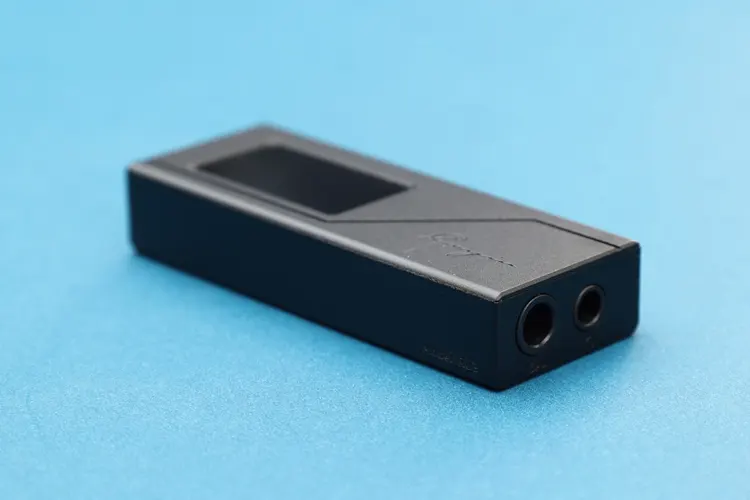
If I were to look at the screen correctly, the RU3 USB-C input is located on the left side, while the 3.5mm and 4.4mm outputs are located on the right side.
The RU3 offers two USB modes: UAC 1 mode allows compatibility with old USB sources but limits the signal resolution to 24-bit/96kHz; this mode is also used on gaming consoles, as it decreases the audio latency in the game.
UAC 2 mode enables the RU3 to achieve its highest possible digital signal capability, which is 32-bit/768kHz and DSD 512.
I find the RU3 to be highly compatible with various USB sources. It connects instantly with all the sources I tried: PC, Laptop, phones, and DAPs, with no hiccups.
And under no circumstances did it require a driver; although I haven’t tried it with old PCs, the RU3 has a greater chance of being able to connect as a dongle DAC due to its UAC 1.0 mode.
Aside from providing music to headphones and IEMs, it features 4.4mm balanced and 3.5mm single-ended jacks that can be switched into line-out mode, allowing for better matching into desktop systems and acting as an analog signal source for external amplifiers.
However, the line outputs are shared with the phone amplifiers and are not separate circuitry for a true preamp output.
Controls
On top of the RU3 are three control buttons, allowing users to easily control basic functions, such as play/pause, forward/backward, as well as adjust various parameters with the help of the screen.
I appreciate that numerous settings can be controlled through the combination of buttons and the screen, including gain, balance, themes, screen timer, factory reset, screen brightness, power mode, UAC mode, output mode, EQ, and filters. It also allows you to see the firmware.
All settings are stored in the RU3 unit, including EQ, gain, filters, and more, even when connected to other sources without the Cayin Control App.
Cayin Control APP
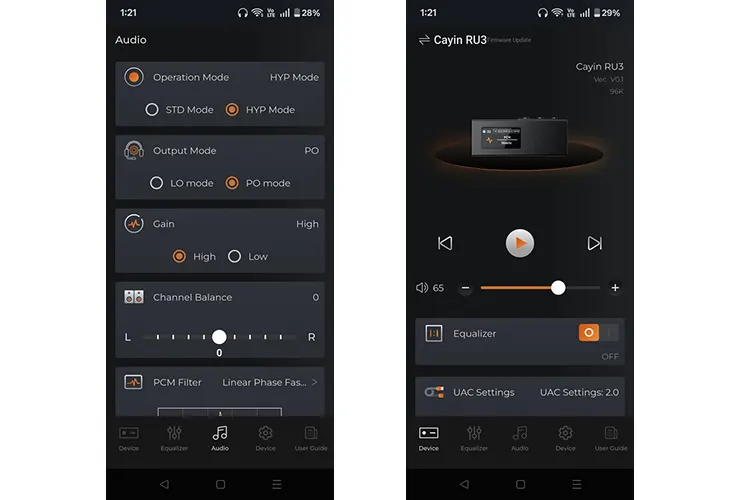
The RU3 is compatible with Cayin’s control app, enabling users to control the RU3 directly from their phone.
It features controls for a 10-band parametric EQ, 100-step volume control, two output modes, two power modes, two UAC modes, 20-step channel balance, five digital filters, two gain levels, and four UI themes.
The App also includes the manual and is very easy and intuitive to use. I much prefer using the app over controlling the RU3 using the physical buttons and the small screen.
Packaging & Accessories
The RU3 packaging is practical and straightforward in design; it’s a 150 x 75 x 35mm black box with rose gold text printed on the front and white text printed on the back.
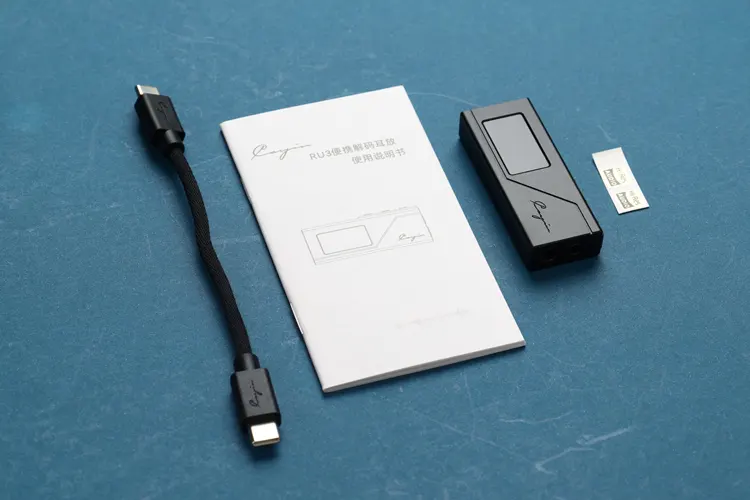
The contents include the RU3, a user’s manual, a short USB-C cable, and two small hires stickers.
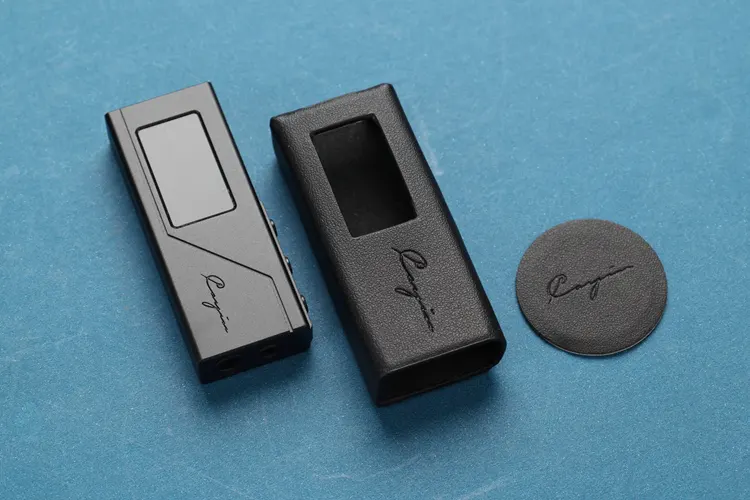
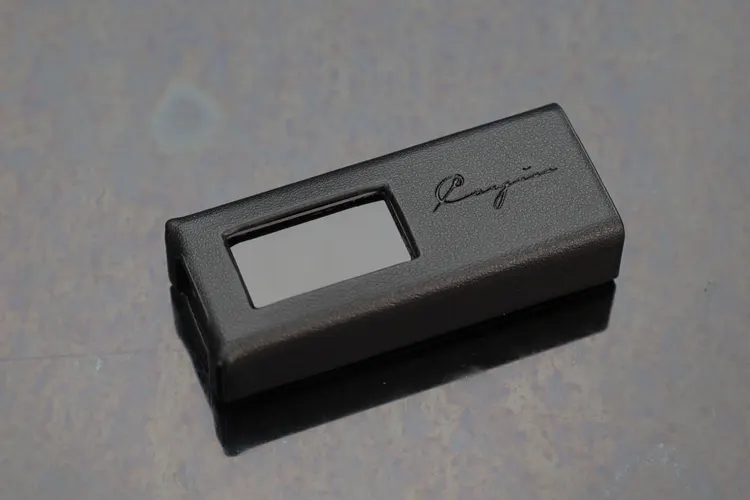
My sample arrived with a leather protective case contained in another smaller box. I’m not certain whether the leather case is included in the price or is available separately.
Sound Impressions
I spent about 12 hours in a burn-in period for the Cayin RU3 by leaving it playing all night before I started my critical listening.
Tested gear included the Sennheiser HD 6XX, Kiwi Ears Altruva, and the MOONDROP Horizon headphones, as well as the DUNU Falcon Ultra, Tipsy M5, and MOONDROP Harmon IEMs.
I used my Android phone as the primary source for the listening test, although I also tested it with other sources for the compatibility test.
I used the UAPP and PowerAmp music player apps. I set the RU3 to EQ off, ‘High Gain’, ‘Hyper Mode’, and ‘Linear Phase Fast Filter’.
Summary
That said, the RU3 provides me with this big sound presentation that I only experience on more expensive DAPs and big DAC amplifiers; it has this ballsy bass delivery that never seems to run out of steam with excellent control and tightness.
The bass hits hard with a thick texture, and there appears to be considerable power behind it. Subbass is very extended, and the RU3 seems to push the IEMs and headphones with prolonged subbass notes comfortably.
The RU3 lower midrange is warm but never muddy; it adds a subtle density to the sound, ensuring that the vocals and instruments never sound thin.
The upper midrange is neutral and flat in perceived response, which provides me with a clear sound. The overall midrange presentation is a little warm and delightfully full-bodied.
I noticed that the RU3 treble, although extended, is slightly laid-back or relaxed in its presentation. There are a lot of details to be heard, and I don’t feel like anything is missing.
However, the relaxation in the treble makes the overall sound analog-like, which many people, including me, love. Which I also believe is the house sound of Cayin.
Coloration
No dongle DACs, especially in the RU3’s price range, are without any sound coloration. Fortunately, the main sound coloration I hear is the slight warmth of the sound, which I doubt should be called a coloration at all in practical terms, as the RU3 has a very natural sound.
However, if I must nitpick, it would be the sound signature of the ESS Sabre DAC chip used in the RU3,
Though it is very subtle and barely noticeable, I think Cayin did a great job in implementing the ES9069Q DAC chip.
I can detect a very slight extra energy in the lower treble around 4kHz, which I often detect in DACs that use the ESS Sabre chip, and don’t consider it a negative.
Staging & Dynamics
Thanks to the enormous and clean power output of the RU3, the soundstage is big, though not the biggest I’ve heard, but definitely way above average.
The RU3 soundstage offers good height, width, and depth, creating a spherical sound environment that suits the IEMs and headphones I used.
The instrument decay is clean, which greatly helps in achieving a deep soundstage. However, I couldn’t help but think that if the upper treble were a little more forward, the soundstage width could be improved. Nevertheless, as it stands, the soundstage rendition of the RU3 is good.
In terms of dynamics and dynamic range, RU3 is superb! The power the RU3 has is easily perceived in terms of superior impact, slam, and energy delivery compared to all the dongle DACs I’ve heard.
I have never listened to a non-battery-powered dongle DAC sound this powerful before. I am totally impressed by the amount of power the RU3 produces.
Click on page 2 below for my recommended pairings and selected comparisons.
