

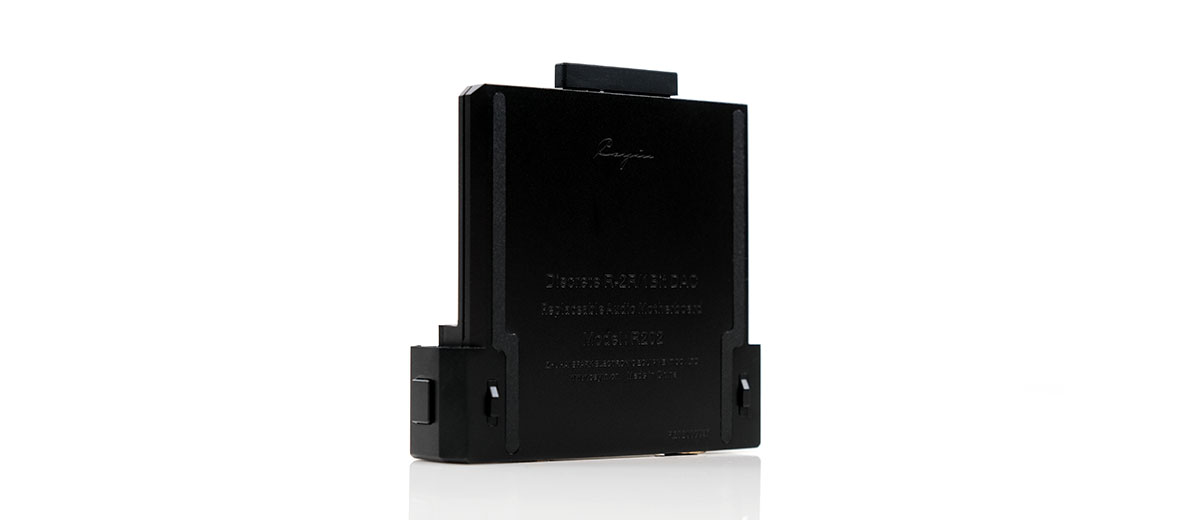
Marcus reviews the Cayin R202, a new motherboard for the N6iii DAP using a discrete dual 1-bit and R-2R DAC with 550mW of balanced output power. It is currently priced at $559.00.
Disclaimer: This sample was sent to me for my honest opinion. Headfonics is an independent website with no affiliate links. I thank Cayin for their support.
You can click here to learn more about Cayin products I have previously reviewed on Headfonics.
This article follows our current scoring guidelines, which you can read in more detail here.
The Cayin R202 is the third release in the company’s latest N6iii-compatible series of motherboards and quite possibly their best yet.
Combining two of the community’s most desirable or romanticized DAC configurations, R-2R and 1-Bit, with some decent output power, the R202 could very well be the “God Tier” motherboard that elevates the N6iii into or beyond the N7 class bracket.
Yes, at $559, you are paying a premium, but one could argue you are paying for two motherboards wrapped up into one chassis.
We have had dual timbre modes and multiple operation modes in Cayin DAPs and portable amps, such as the RU9. I have previously reviewed R-2R motherboards for the N6ii (R01). However, this is the first time I have tested a dual discrete-engineered DAC implementation of this type.
Is it worth the money and everything you hoped it would be when compared to the current E203/C201 motherboard lineup? Is the R202/N6iii combo on the same level as the N7? I found out in my full review below.
Features
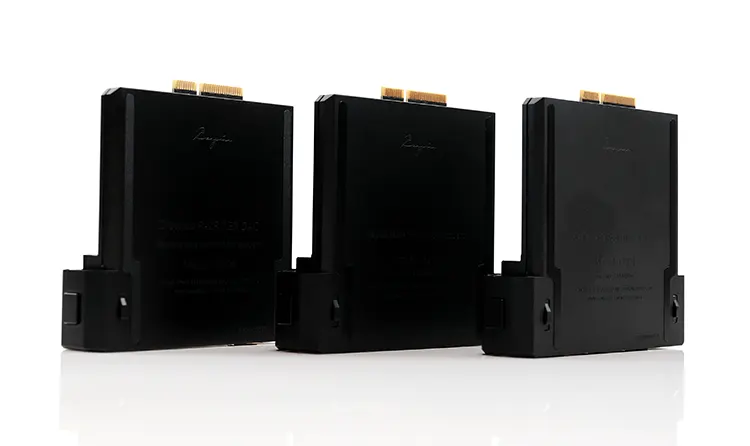
The Cayin R020 is a discrete, engineered dual DAC and fully balanced headphone amplifier, all wrapped into a single motherboard chassis designed to neatly slot into the N6iii DAP.
However, this is not a typical dual DAC design, whereby the manufacturer usually slots in two of the same chipsets. The R202 uses a dual circuit implementation with two different DACs, allowing you to choose which one you prefer to listen to directly from the N6iii’s software UI.
The first DAC is an R-2R PCM DAC, built with 192 pieces of 0.1% high-precision thin-film resistors in a balanced 24-bit DAC configuration. It primarily handles digital PCM streams and supports native PCM decoding up to 384kHz.
The second is a discrete 1-bit DSD DAC built with 128 pieces of 0.1% high-precision thin-film resistors in a balanced 1-bit DAC architecture, supporting up to native DSD256 decoding.
You can choose each one manually, or you can opt for an auto mode, which will determine what DAC to use based on the digital signal input.
Upsampling and conversion will occur if you opt for one format using a DAC that excels in the other format. For example, if you select 1-bit mode, it will convert the PCM stream into DSD and then decode it using the 1-bit architecture.
On the amplification side, the R202 uses a quad dual-channel INA1620 op-amp architecture for a fully balanced output. However, like the E203, there is no lineout or SPDIF capability.
This is a pure fixed operational mode headphone amplifier with a maximum of 550mW into a 32Ω load, balanced, dropping down to 250mW single-ended into the same load.
Both outputs are sub-ohm, meaning the R202 should be a motherboard of choice for IEMs and headphones with moderate impedance and SPL loads.
I/O
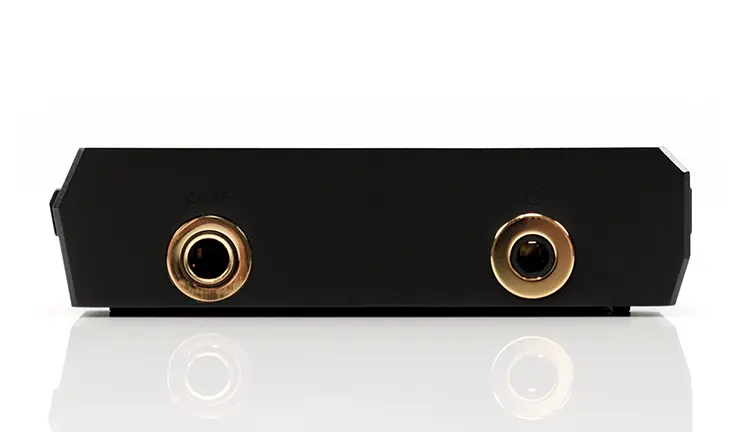
Like the E203, the R202 keeps it simple for inputs and outputs with a single-ended 3.5mm TRS and a 4.4mm balanced equivalent.
There is no dual SPDIF or lineout capability, which some might argue is a missed opportunity, given the N7’s lineout and PRE capabilities are excellent.
Perhaps this is one of the main differentiators between the two platforms; get the N7 if you plan on using the 1-BIT for system integration, or get the N6iii/R202 for pure headphone/IEM use.
One small indirect I/O is the volume controller inside the R202, which is a JRC NJW1195 full-balanced volume control chip. Via the main N6iii volume wheel, you have access to 100 steps of volume control and three levels of gain (low, medium, and high).
The R202 has no hyper mode, which indirectly benefits the superlative battery performance at a maximum of 15 hours in Auto mode, 16 hours in R-2R mode, and 14 hours using the 1-Bit mode.
That is the highest mean rating of any of the N6iii motherboards, with the C201 peaking at 14 hours, the E203 at 11 hours, dropping as low as 6.5 hours when using Hyper Mode.
Bear in mind these are benchmarked battery numbers with a medium gain setting, 44.1k PCM, and DSD64 with the screen and wireless turned off. You can expect a few hours shaved off if you keep the screen and wireless on or use much higher resolution files.
Installing & Updating
The physical installation of the R202 into the N6iii is now very simple, courtesy of the next-generation motherboard’s dual latch release mechanism as opposed to the first-generation card’s screws.
All you have to do is slide the card in, and the latches on either side will lock it into place. Should you wish to take the motherboard out, you press on each side to release the lock and slide it out.
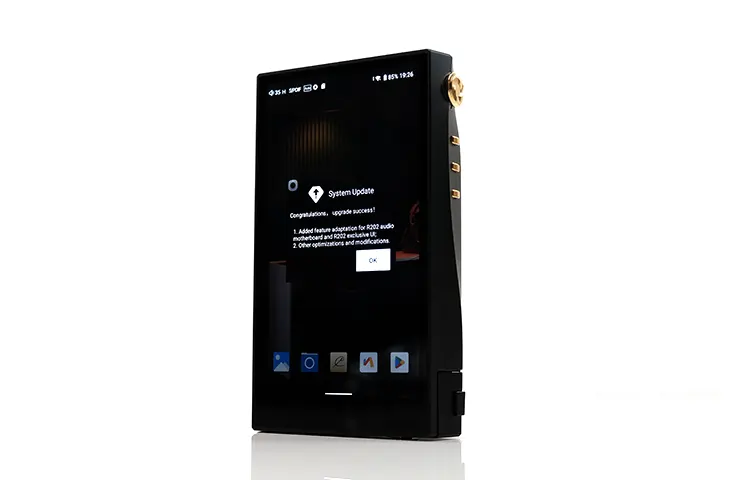
One important note when installing and using the R202 is the firmware. You need to update it to the latest version (via OTA System updates) before it recognizes the R202 and presents you with the DAC mode options.
If you do not, the N6iii will revert to seeing it as the stock C201 motherboard without any DAC mode choices.
Software Controls
The user control layer for the R202 features is software-based, with access to the DAC mode choices placed in the audio settings menu.
One small critique here is the lack of drop-down quick-switching options for the two DAC modes upon initial firmware update. You will have to use the drop-down edit feature to access the DAC icon and move it up into the main icon access menu.
You can also access the DAC modes via the audio setting menu, as well as gain levels, a HiBY-design PEQ system, channel balancing, and MQA decoding, which I would recommend turning off if you do not have a stack of local MQA files.
Packaging & Accessories
I didn’t mention the new motherboard packaging for the E203 as it was part of the main N6iii review.
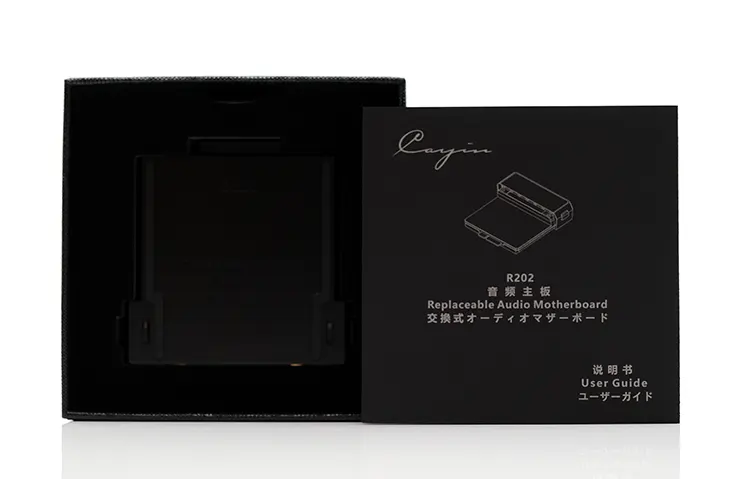
What I can say is that the new boxes are not as wide or as fiddly as the older, flatter 1st-gen series boards. They also come without screwdrivers and spare screws due to the new quick-release latch system.
That means you get a fairly simple but sturdy compact box with protective layers on the inside, a user guide, and the motherboard, which has a small rubber sleeve over the connector for additional protection.
Sound Impressions
The following sound impressions of the Cayin R202 were completed using a mix of the PMG Audio Apx, FIR Audio’s Radon 6, the Noble Audio Ronin, and Vision Ear’s VE10. All were tested in balanced output mode.
R-2R
The R-2R mode is likely to impress the listener more at the outset. It is the more ‘flamboyant’ or colorful of the two sound signatures, creating a fuller low-end, enhanced upper-bass and lower-mids bloom, and a more forward, sweeter sounding vocal timbre from my tested IEMs.
If you have a fairly balanced monitor, such as the Radon 6 or a mid-centric vocal specialist IEM, then the R-2R sound is going to appeal.
Vocals are closer and ‘bigger’ sounding. Backed by a slightly heavier sounding note quality from the mid-bass to the lower-mids that injects a healthy level of PraT and ‘drive’ into performances.
I also found ‘big sounding’ monitors such as the PMG Audio Apx to lap up the immersive and engaging sound signature and benefit from the more liquid presentation of the highs.
Despite the ‘liquid’ descriptor, the R202’s R-2R harmonic balance is not as lush or as soft as the RU6’s R-2R implementation, but it is definitely to the euphonic, warmer side.
Where Cayin has significantly progressed is the improved definition in instrumental note quality over the R202’s R-2R mode. It also has far better dynamic range and resolution to go along with it.
The resulting sound is more ‘joyful’ and exuberant than studied and reserved. However, if you want the absolute best clarity and separation, I would direct you to the 1-bit performance, especially if you crave a stronger level of sub-bass to mids separation.
1-Bit
The 1-bit performance is the grower. Initially, it sounded a bit flat compared to the ‘busier’ sounding R-2R mode, and there is a slight volume difference, which also added to that initially muted response.
However, push up the volume maybe 1-2 dB and pair it with a soundstage king like the Apx or with a warmer monitor such as the VE10, where you need some bass control, and you start to appreciate the 1-bit’s stronger grip on detail and imaging capabilities.
The most noticeable difference across all of my tested gear was the more neutral weight and positioning of the vocals compared to the more upfront and intimate R-2R delivery.
Though still very analog in tone, the vocals are a shade leaner and image further away from the listener’s position, which allows the background instruments a little more presence and space to deliver.
That, in turn, creates a stronger perception of space. Combine that with a less bass bloom and a more linear FR throughout with my tested IEMs, and you will hear a clever mix of that quintessential 1-bit analog timbre combined with enhanced clarity.
What some might miss from the R-2R mode is the sub-bass reach. The R-2R mode has a full-sounding low-end but does not offer quite the same level of control and separation below the mid-bass as the R202’s 1-bit equivalent.
I can hear the sub-bass more when called upon in 1-bit mode, which can make complex recordings sound more holographic and complete.
Synergy
I would classify the R202’s output capability as moderate for headphones and excellent for IEMs. At a maximum of 550mW balanced, it’s not going to offer the same driving power as the E203 Hyper Mode’s 900mW balanced equivalent.
There will be some headphones, such as the 22Ω 112 dB SPL/Vrms Austrian Audio Compose, which will drive just fine and sound gorgeous with the R202.
However, sterner sub-100 dB SPL planars or high impedance headphones will sound more filled-out and dynamic when paired with the E203.
IEM Pairings
There is a lot of flexibility here with the two sound signatures rolled into one motherboard.
I tested the R202 with 4 IEMs, and except for the PMG Audio Apx, which sounded great with both modes, the split largely came down to warm or very mid-forward monitors working best with 1-Bit and more neutral with R2R.
For example, the VE10 sounded more controlled using 1-bit, with less bloom and warmth, but still quite natural sounding. The only quibble with going all in with 1-bit is the vocal performance.
If you are a vocal lover with the VE10, then the R-2R places a bit more emphasis there, whereas the 1-bit sound pulls it back a little more. Going R-2R with the VE10 works better so long as the bass doesn’t get too busy where the bloom can compete a little.
1-Bit doesn’t have that same concern with the bloom stripped out, and a more spacious, detailed sound, but the vocal impact is not as immediate on the VE10.
The 64 Audio Volur is also a fairly thick and smooth sound with lots of bass weight. Again, this is a 1-bit pairing for me to keep a lid on the bass bloom and create some nice space for the vocals to be heard clearly. The R-2R in this pairing felt too warm in the lows with this pairing.
The Noble Audio Ronin was a great R-2R pairing. It’s not so heavy on the lows with a hybrid BA and EST driver configuration and needs a bit of thickening and bloom, which the R-2R delivers.
Also, the R-2R’s richer, fuller sound and more prominent vocal imaging blend well with Ronin’s more mid-centric, airy sound and penchant for speed and detail.
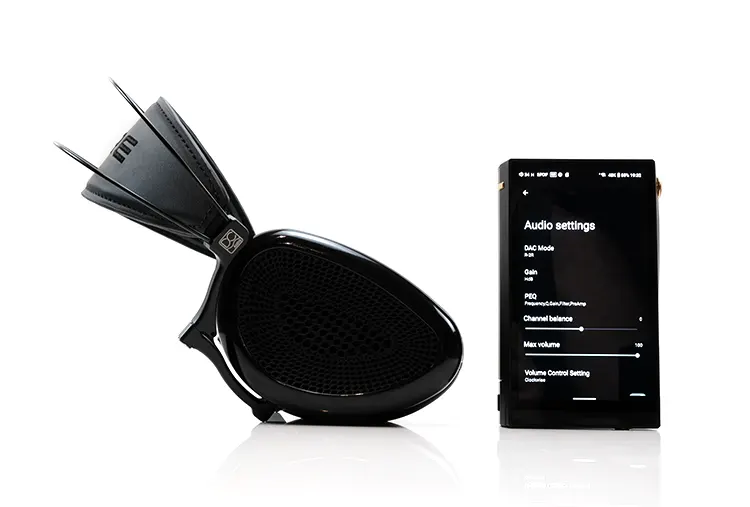
Headphone Pairings
I tested three headphones with the R202 of varying impedance and SPL, including the DCA NOIRE XO, the Austrian Audio Composer, and the ZMF Headphones BOKEH Closed.
This was as much about driving capability as it was about tonal matching, and in the case of the BOKEH and the Composer, the outcome ranged from good to excellent, whereas the NOIRE XO was a poor match.
In truth, I am not surprised. The 550mW (32Ω) output rating should deliver even more power into the 22Ω Composer and just over 200mW into the 80Ω BOKEH, whose dynamic driver normally has a maximum power handling of about 250mW.
The Composer only needed a medium gain setting and sounded excellent with the R202. I had a slight bias to the R-2R mode for its more boisterous and in-your-face warmth and richer, more forward vocal presence.
The Composer is quite neutral to slightly bright and revealing, so the smoother R-2R mode delivered a nice ‘counter’ coloration. The 1-bit sounded more reserved with vocals dropping back, but layering, separation, and detail got a bump up, sounding quite smooth through the mids and highs.
The BOKEH did quite well, though I have heard its low-end sound more authoritative from OTL desktop amplifiers, which is its natural home. The analog/organic tuning from the R202 modes suits the BOKEH treble tuning, which can sound glassy when driven from a clean, delta-sigma DAC or amp.
The NOIRE XO sounded very flat and undercooked with the R202. Not a surprise. The BOKEH XO sounds optimal with 1W or more of power from my testing, so be prepared for a shallower low-end and reduced dynamic range with this pairing.
