

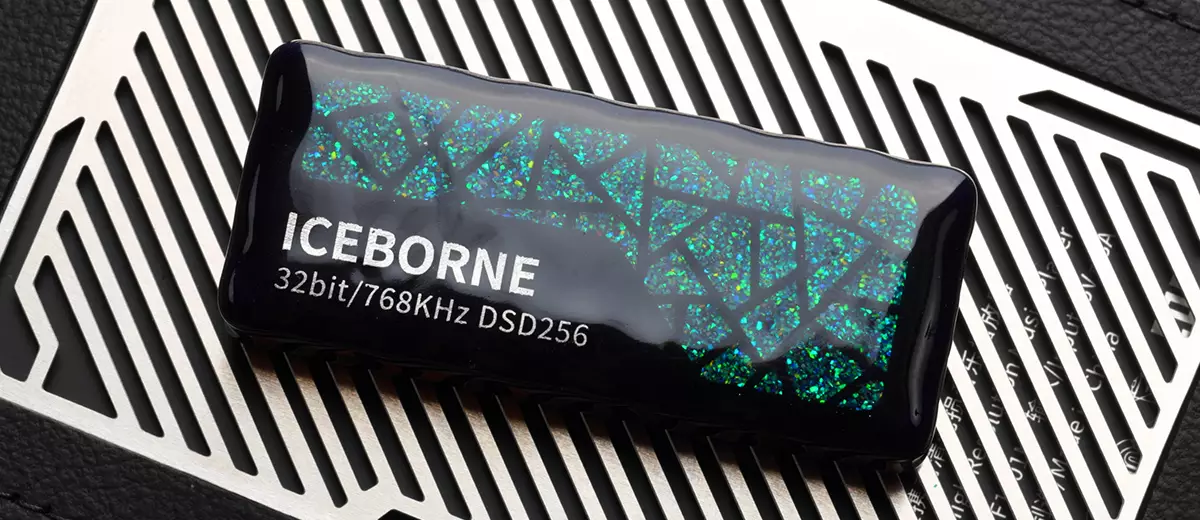
Synergy
Using the ICEBORNE for several days, I experienced no noise issues, popping, or scratching from the headphones or IEMs at any time.
It doesn’t pick up RF interference when placed near my phone.
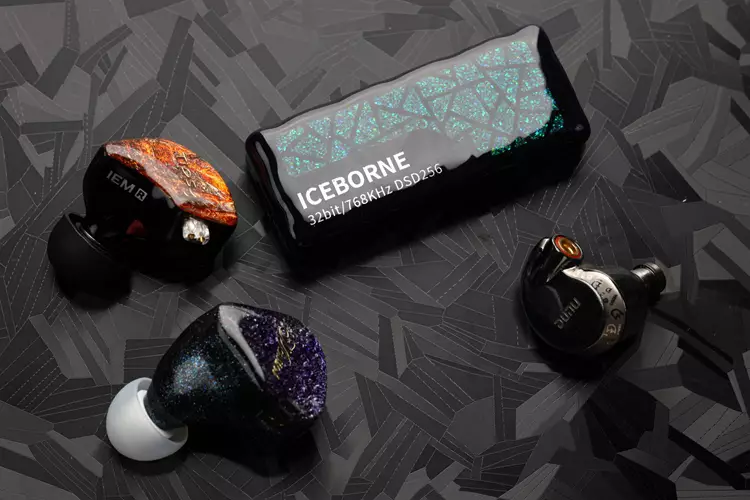
IEM Pairings
Despite the modest 300 mW into 16Ω maximum power output rating for a dongle DAC at the time of this writing, it is totally more than adequate to drive the majority of my available IEMs.
I hear effortless dynamics and reasonable maximum volume levels when paired with all my IEMs, including the DUNU Falcon Ultra, Tipsy M5, and QoA Martini. I hear good, clean sound when the ICEBORNE is paired with any of them.
Headphone Pairing
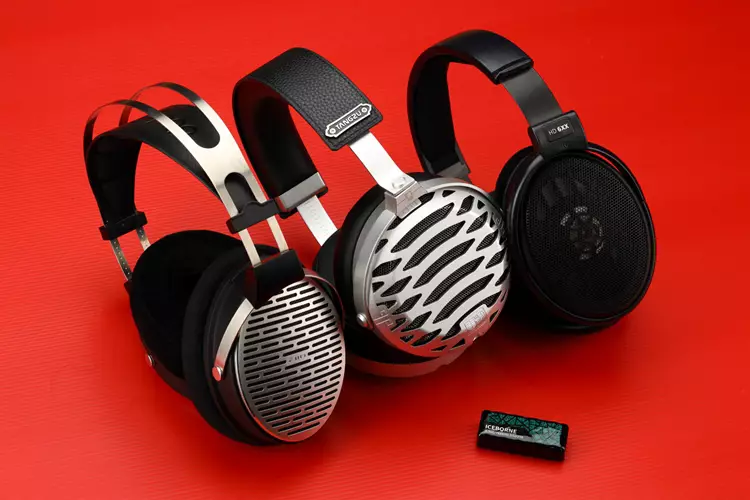
I was expecting the worst when it comes to driving headphones every time I reviewed a dongle DAC similar in size to the ICEBORNE’s. I’m pleasantly surprised when I tried it with the FiiO JT3.
I hear an effortlessly dynamic sound at a safe but loud level, with the volume set to 93% using the JT3’s 3.5 mm cable. The sound is detailed and airy with good bass presence, and the soundstage is spacious with a clean background.
I get a similar experience when the ICEBORNE is paired with the TANGZU Ox Demon King using its 3.5 mm stock cable as the JT3.
Finally, with the difficult-to-drive Sennheiser HD 6XX. I wouldn’t call it a bad pairing, but I wouldn’t recommend it even though it is serviceable.
What made me think so was noticing a slight taming down of dynamics and transients, despite a clean, reasonably detailed sound quality.
Select Comparisons
For this comparison, I mostly used the Tipsy M5, as it is a very neutral and revealing set that helps me pick out minute differences in sound between the sources.
I also use the Sennheiser HD 6XX, which is a well-known, difficult-to-drive headphone, to test their driving capabilities.
Please note that the difference between these dongle DACs is subtle and might not be audible to some.
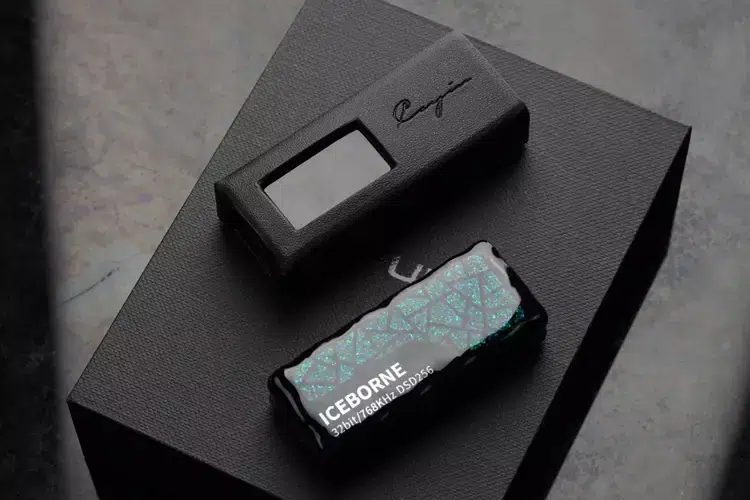
Cayin RU3
Technical & Design
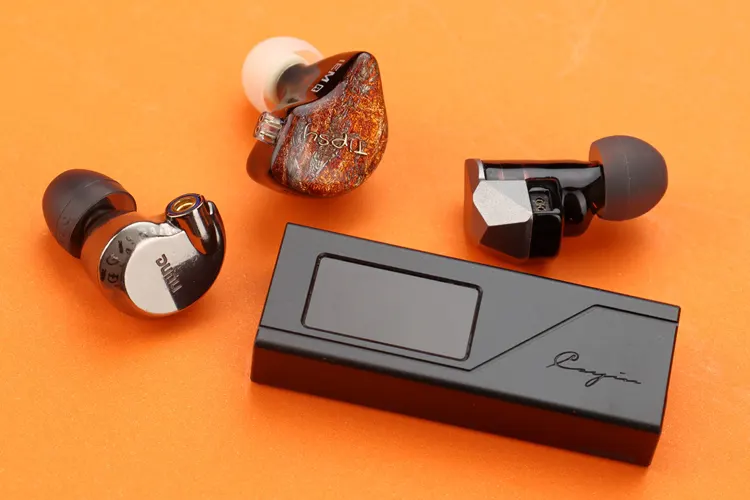
The most glaring feature is the RU3’s 560mW power output, which is the highest I have reviewed in this form factor. It also includes a 0.96“ IPS color display.
The USB input is handled by the SPV5068, a high-performance dual-core processor that serves as a USB bridge for data and digital audio signals.
The digital signal is then passed to the ES9069Q high-resolution dual-channel digital-to-analog converter chip, which uses two OPA1602 dual-op-amp ICs from Texas Instruments for current-to-voltage conversion.
Two SGM8262 stereo headphone amplifier chips then amplify the signal, producing a true balanced output.
The RU3’s 60 x 25.4 x 11mm size is median in its form factor, and it is lightweight at only 24 grams, despite its chassis being CNC-machined from solid aerospace-grade aluminum and finished with a durable anodization process.
My review sample is black, but it is also available in light Cyan and purple colors.
Performance
There is an obvious difference in the perceived frequency response to me.
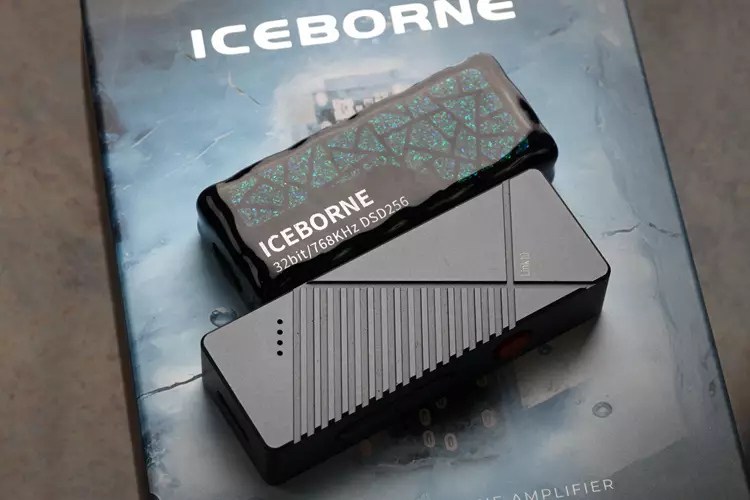
The RU3 sounds more bassy, with punchy bass and a slightly relaxed upper treble, making the overall sound darker compared to the more neutral-sounding ICEBORNE, with its flatter frequency response and an airier, more extended treble.
The RU3 has the CAYIN warm-house sound I heard from their DAPs and more expensive DAC/AMPs at Singapore CanJam in 2025. The ICEBORNE has a more universal, versatile, and transparent sound.
In terms of soundstage, the RU3 has a deeper albeit narrower stage, while the ICEBORNE has a much wider but slightly shallower stage.
Though I wouldn’t call it ideal, I find the RU3 and the HD 6XX a better pairing due to the RU3’s more powerful output than with the ICEBORNE.
xDuoo Link10
Technical & Design
The xDuoo Link10 features two CS43131 DAC chips, one per channel, which serve as both digital-to-analog converters and headphone amplifiers.
It supports PCM 32-bit/384 kHz and Native DSD 256 digital audio signals.
The Link10’s USB input features dual operating modes, supporting both USB 1.0 and USB 2.0. USB 1.0 is used for handheld gaming consoles, while USB 2.0 is used for normal music playback.
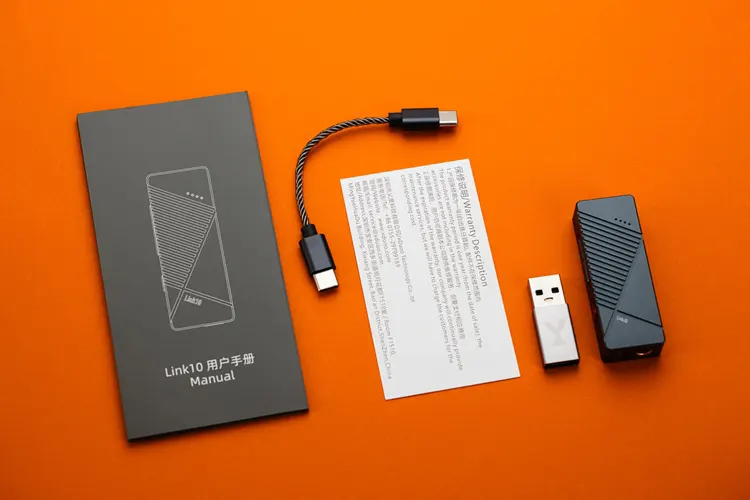
The Link10 body is CNC-machined from a single piece of aluminum alloy and finished with a durable, dark grey anodization, with tempered glass covering the back.
The Link10 is a small, lightweight dongle DAC, measuring only 2.36 x 0.91 x 0.51 in (6.0 x 2.3 x 1.3 cm) and weighing 25 grams, making it easy to fit inside most IEM carrying cases with the IEM inside.
Performance
The Link10 has a warmer, more midrange-centric, analog-style sound with fewer microdetails compared to ICEBORNE’s neutral, more analytical and resolving sound.
When it comes to staging, I find that the Link10 has a narrower stage, while the ICEBORNE has a wider, airier stage.
I also find the Link10 sounds better for driving the HD 6XX; it has a more dynamic and effortless response than with the ICEBORNE pairing.
iBasso DC-Elite
Technical & Design
The DC-Elite features a ROHM BD34301EKV DAC chip with a physical series-resistor stepped-attenuator volume control.
The DC-Elite has a rated power output of 280 mW into 32Ω with the 4.4 mm balanced connection.
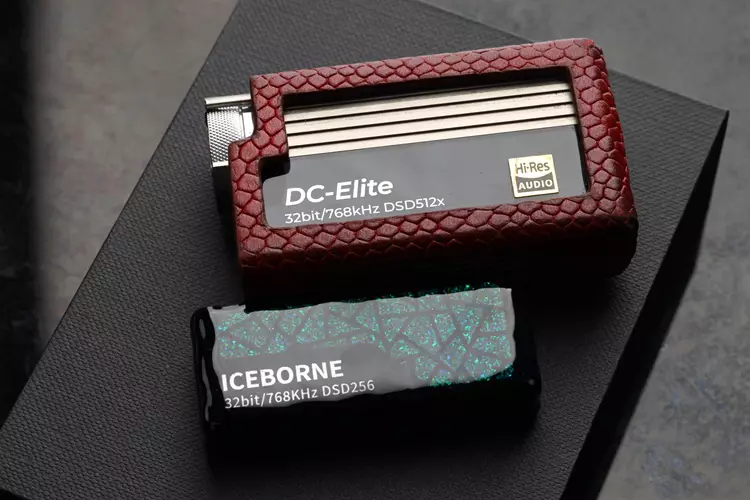
The DC-Elite features an industrial-looking titanium chassis, enhanced by tempered glass on the front and back, and an attractive knurled knob at the top. The DC-Elite is large, while the ICEBORNE is lighter, smaller, and simpler looking.
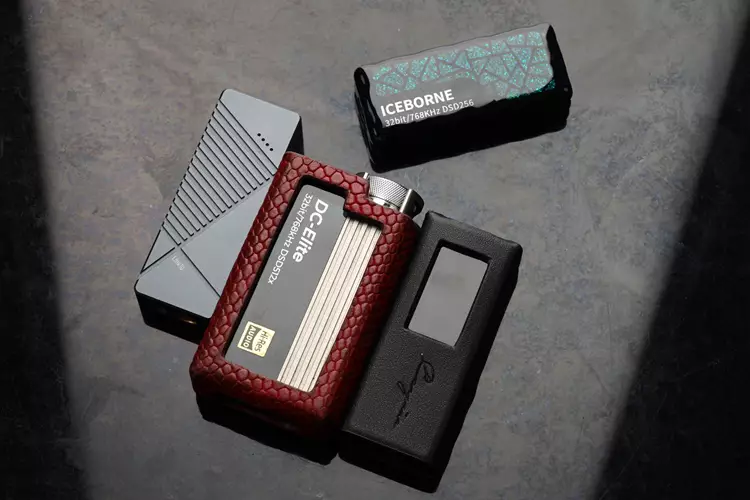
Performance
While both are relatively neutral in tonality, I find the DC-Elite to have a subtly more energetic upper treble and subbass, as well as tighter, punchier bass. The DC-Elite has slightly more forward micro detail presentation.
And while both have a similarly spacious soundstage, the DC-Elite has a slightly deeper stage with better instrument separation and layering. The difference is small, though, and might not be audible to some.
I wouldn’t recommend either the ICEBORNE or the DC-Elite for pairing with HD 6XX, as neither sounds as good as it should compared to driving easier headphones and IEMs. This is due to their modest power output.

My Verdict
I love the AFUL ICEBORNE’s neutral, transparent sound, which is perfect as a reference dongle DAC for review and casual listening.
I also like its simple yet beautiful, wet-looking black ice and the Suzhou garden window lattice-inspired design.
However, I wish the power output were higher, as I find it not too comfortable driving difficult-to-drive headphones like the Sennheiser HD 6XX.
Not a problem for me, though, as I seldom use the HD 6XX, and it sounds effortlessly dynamic with IEMs and other easier headphones that I use often.
I am pleasantly surprised by the AFUL ICEBORNE’s clean, transparent, and neutral sound quality, with a spacious soundstage, which is what I’ve been looking for and is surprisingly difficult to find in a dongle DAC.
That said, music lovers looking for a good-sounding, neutral, and transparent dongle DAC with a spacious soundstage will be happy with the AFUL ICEBORNE as long as they stay within its limitations.
AFUL ICEBORNE Technical Specifications
- Model: AFUL ICEBORNE
- DAC Chip: CS43198 × 2
- Decoder (DAC) Dimensions: 54mm (L) × 14mm (W) × 22mm (H)
- Cable Length: 16cm
- Net Weight With Cable: 25.7g
- Headphone Ports: 3.5mm Single-ended + 4.4mm Balanced
- THD+N: <0.00037%
- Output Level: 2Vrms (3.5mm) / 4Vrms (4.4mm)
- Max Power: 140mW @ 16Ω (3.5mm) / 300mW @ 16Ω (4.4mm)
- USB Spec: Type-C, USB 2.0
- SNR: 125 dB (3.5mm) / 130dB (4.4mm)
- Response: 20Hz – 20kHz
- Noise Floor: 1μV (3.5mm) / 1.5μV (4.4mm)
- Formats: PCM 32-bit/768kHz; DSD256
