

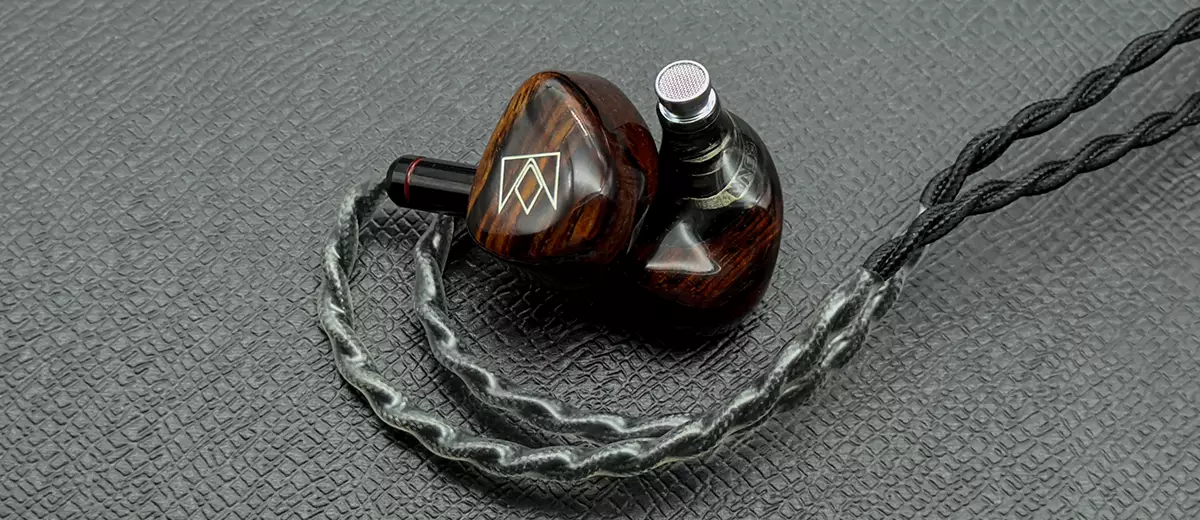
Nihal reviews the Noble Audio Lu Ban, a new high-end hybrid 10mm wooden composite dynamic and dual planar driver universal in-ear monitor. It is currently priced at $1399.00.
Disclaimer: This sample was sent to me in exchange for my honest opinion. Headfonics is an independent website with no affiliate links or status. I thank Noble Audio for their support.
Click here to read more about the Noble Audio products previously featured on Headfonics.
This article follows our latest scoring guidelines, which you can read in more detail here.
Noble Audio is actively building IEMs across different price segments. Most of us know the brand’s identity is built around its high-performing flagship releases.
But there is something in each price segment, such as more budget-friendly IEMs like the Knight, the recently released Van Gogh, and premium releases such as AGIS II, and then moving up to flagship releases such as Onyx, Shogun, and KRONOS.
In terms of design and performance, I cannot deny that they are among the best in the portable audio business.
The Lu Ban was recently teased at CanJam Singapore in early May and released sometime later in May. This IEM sits in the mid-fi tier of the Noble Audio lineup, so it will be interesting to see how the IEM performs in this crowded segment.
Stick with me through the review as I explore what the Lu Ban brings to the table and how it compares with notable releases such as Noble’s AGIS II, the THIEAUDIO Monarch MKIV, and Campfire Audio’s Grand Luna.
Features
The Noble Lu Ban has an interesting hybrid driver configuration. It houses a 10mm wooden composite dynamic driver paired with dual Super-Magnetic planar drivers. There are very few modern IEMs with a wood-composite diaphragm.
The dynamic driver caters to the low end and the midrange, while the planars add speed, clarity, and high-frequency extension. The exact frequency breakdown is not available to me, though.
Noble also uses a Mortise and Tenon Acoustic Chamber inside the Lu Ban to help manage internal driver resonance.
The IEM is rated at a sensitivity of 108 dB SPL/mW and an impedance of 27Ω. It is an easy-to-drive IEM and can easily pair with low-spec sources too. We will talk more about it in the synergy section.
Design
Noble IEMs never compromise on design and looks, and that is a well-known trait.
That is true here with the Lu Ban. Noble Lu Ban takes its name from the Chinese craftsman Lu Ban, a master craftsman also known as the father of carpentry in Chinese history.
Lu Ban carries that influence into the design and rightly has a very striking look. It does not look overdone.
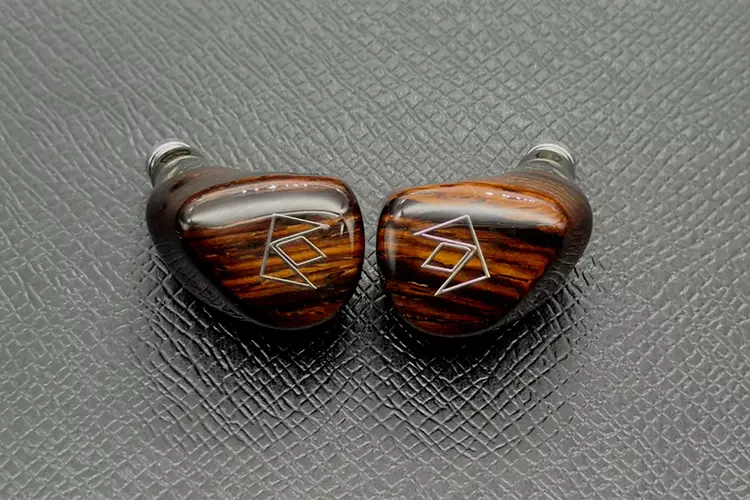
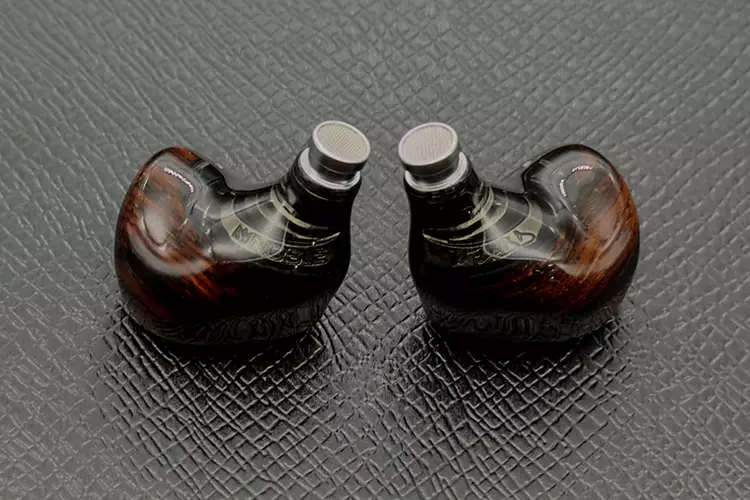
Each shell is crafted from Cocobolo wood and precision 3D-printed resin. Cocobolo is highly sought after for knife handles, musical instruments, and some luxury crafting.
The shells feature a rich, reddish-brown wood-grain finish. What stands out on these shells is the use of transparent housing on the inner part of the shells, which lets you peek into the intricate inner design elements. That gives off a very premium vibe.
The IEM uses standard 0.78mm 2-pin connectors.
Comfort & Isolation
The Lu Ban is small compared to most of the IEMs I see around. The size is slightly larger than that of the Van Gogh, which itself is tiny.
Considering this size and the smooth ergonomic design, I am sure the fit will not be an issue for most users. There are no sharp edges or pressure points once the shells settle; it is just a clean seal every time.
The shell tapers heavily towards the nozzle, giving the nozzle a longer look, but fit-wise, it is easy on the ears. I could use the Lu Ban for hours without any issues.
During my time with the IEM, I did not find any driver flex. However, when I insert the IEMs, I do feel a small pressure, but nothing that bothers me.
Nothing like those IEMs where pressure issues increase with usage. Isolation is quite good, and I take the Lu Ban out a lot for evening walks.
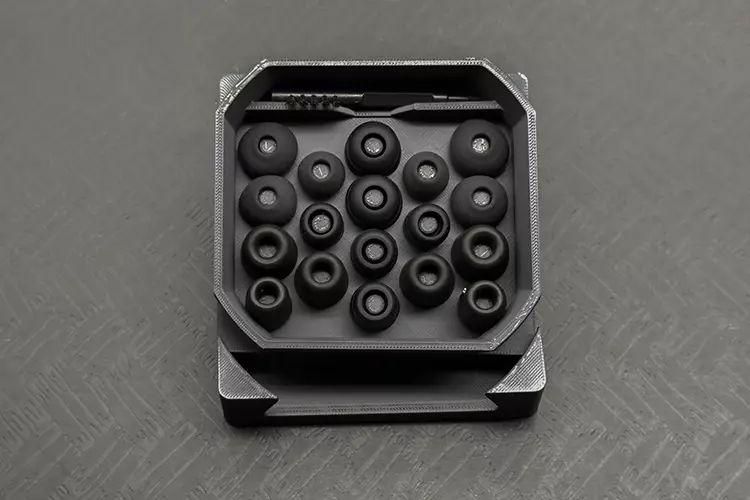
The included ear tips are standard silicone ones, with one of the types being double-flange ear tips. I would suggest trying some aftermarket ear tips as well.
While most ear tips should go well with the IEMs, I would recommend trying slightly wider-bore ear tips. Divinus Velvets, along with Nostalgia Audio’s XWB, fit perfectly well for me.
Stock Cable
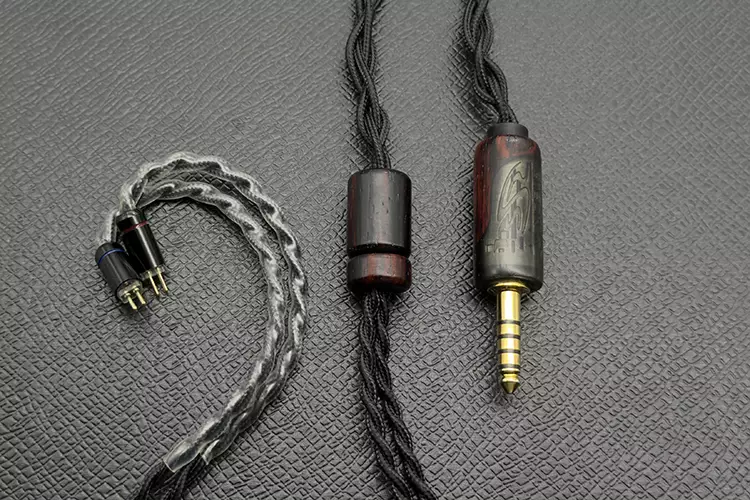
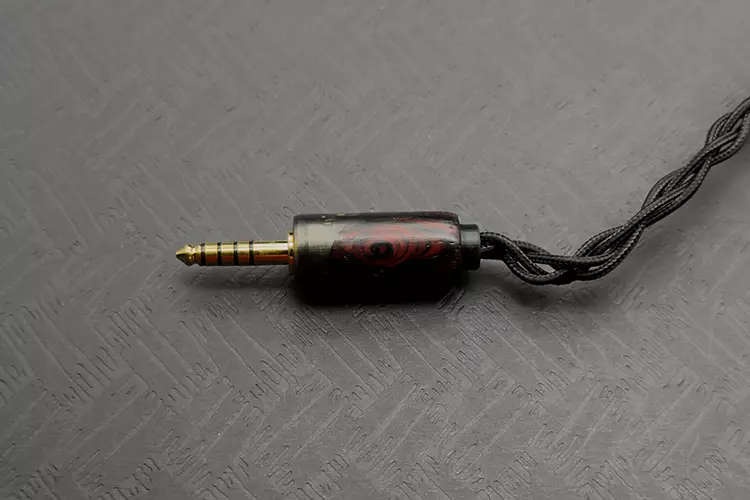
The Lu Ban comes stocked with a premium OCC silver-plated cable with a 4.4mm balanced termination.
This 4-wire cable uses a fiber sleeve and is quite lightweight, so handling is never an issue. The wire is quite thin but does not tangle while in use or otherwise. Storing it is quite easy too.
The hardware elements, including the adapter, chin slider, and surrounding accents on the cable, are built in wood and follow the same handcrafted design language as the IEM itself.
The termination adapter is particularly distinctive and larger than standard plugs. Part of its housing has a translucent resin section, allowing the black internal structure beneath to remain visible through it. This gives it a layered effect, similar to what you get on the IEM shells too.
Overall, the whole package with the cable and the shells feels like one unique design piece and gives off a boutique, artisan-like appeal.
Packaging & Accessories
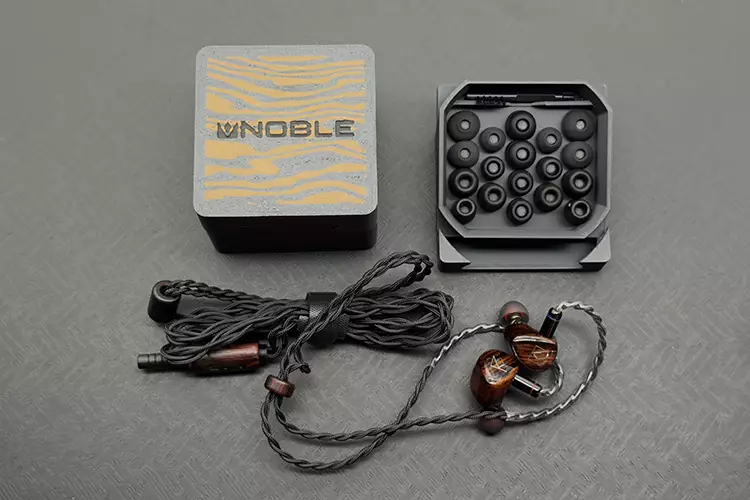
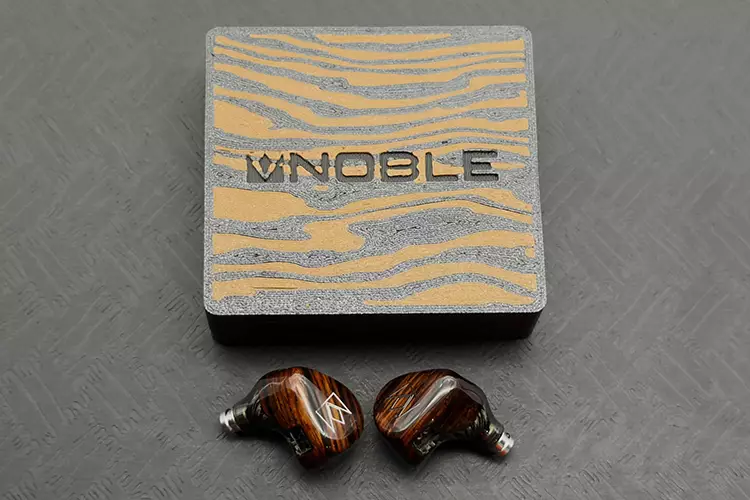
As with other Noble IEMs, the Lu Ban gets impressive packaging. The box it arrives in is quite large, with similar Noble Audio vibes to what I got with the Van Gogh and AGIS II.
As you unbox the package, the presentation feels top-notch. The earpieces sit in snug foam cutouts on the top, while the accessories lie below them.
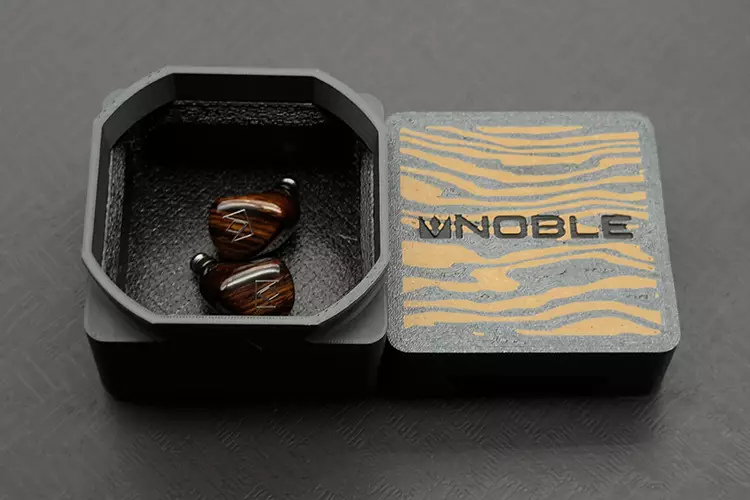
The carry case and the ear tip case deserve extra mention. These plastic cases have a twist-lock mechanism to close the lid, which feels mechanical, and I am sure the Lu Ban inspiration has some role to play here.
The lid has a woodgrain-style pattern matching the overall design scheme, which they carry across the IEM shells and cables too.
The carry case has protective foam padding inside it, which gives some extra protection, but the case itself does not have ample space to fit the IEMs and cable. I wish they had gone for a larger case here.
Overall, the package puts on a good display, but I would have loved less foam and some saved space too.
Sound Impressions
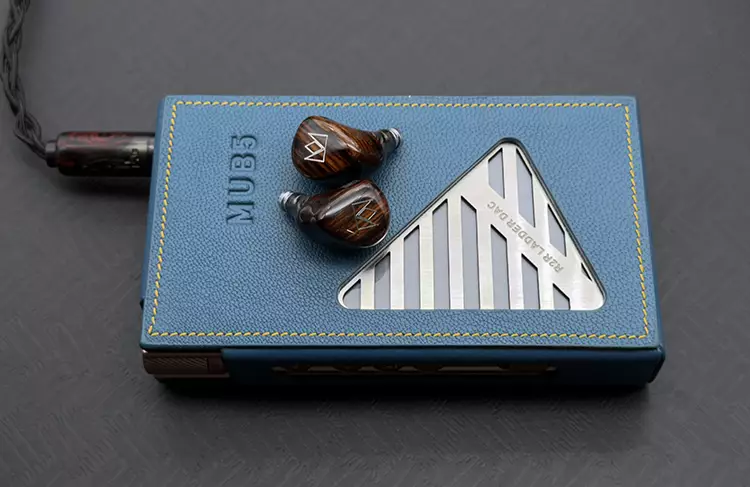
The following sound impressions of the Noble Audio Lu Ban were completed using a mixture of my main source, the Lotoo PAW Gold Touch, the QULOOS MUB5, and the Campfire Audio Relay dongle DAC/amp.
For the review, I paired the IEMs with the stock cable and Divinus Velvet ear tips, size L.
Summary
When I plugged in the Lu Ban for the first time, I really did not have any idea how it would sound.
It did take a while to start fully appreciating Lu Ban’s tuning, partly because the dynamic driver took some time to settle down. And once it did, I was smitten by the very distinct low end it started delivering.
Lu Ban leans into neutral-warm territory, actually less neutral than you would imagine. It goes for a lush, fuller sound with a relaxed top end, a solid bass floor, and a rich midrange. The bass brings in good warmth, which goes all the way up to the lower midrange.
The midrange stays very natural, with good warmth and weight underneath the notes. Vocals are one of the highlights on Lu Ban.
The tuning does not rely heavily on details and technical aspects, but still, you would appreciate the level of detail and resolution here. The treble is polite, and you can miss the shimmers and air here.
Lu Ban’s soundstage feels natural in the sense that it gives enough space to the instruments and avoids cluttering, but at the same time, I do not find it widely stretched.
With its musical and relaxed nature, the IEM feels ideal for those late-night relaxed sessions where you stop checking the time.
Genres such as soft rock, R&B/soul, smooth jazz, etc., go really well with the Lu Ban. The way it adds a good low-end floor to music works out quite well with these mentioned genres.
Bass
Bass is the part that I adore the most on Lu Ban. It’s not a bass-first IEM, but the bass adds a solid foundation here. There is generous sub-bass extension and a healthy amount of mid-bass presence.
The texture is a real standout here. The surprising amount of layering and definition that you get here makes this bass even more pleasant. Distinct bass lines are quite easy to follow. So even if there is a crowded passage, the bass does not turn into one thick wall.
Very interestingly, there is also a certain organic, almost woody character to the bass texture.
Whether that directly comes from the wooden composite dynamic driver is difficult to say, but the presentation does feel different from the usual low-end tuning. This one appears very natural and slightly relaxed despite remaining heavy.
Drum hits land with realistic body and weight rather than a loud, aggressive impact. String instruments such as bass guitars and cellos carry a convincing sense of physicality and timbre. You can easily appreciate their pluck, the rawness, and the grit in the tone.
The bass notes feel rounded and substantial in the way they hit. It’s more of a solid, grounded thump than a pointed or sharp-edged strike.
Thus, this is not an aggressive or hard-hitting style of bass, but one that leans toward warmth, naturalness, and realism. And if you’re a basshead, this bass will surely massage your ears with a satisfying dose of rumble and warmth.
On bass-heavy tracks, it can deliver good weight, but I do not find it spilling over into the rest of the frequency range.
There is a slight bloom, though, which can be pleasant or gloomy depending on the recording. I also believe the bass could use a tighter attack.
Midrange
The midrange has a very natural and organic presentation. The midrange doesn’t feel lost in the bass as it gets enough room on the stage to breathe properly.
The bass does help with a low-key warmth in the midrange, adding a shade of richness without making the mids sound overly thick or colored.
The lower midrange has a good amount of body and weight. String instruments sound convincing and lifelike, carrying plenty of texture and resonance.
Bass guitars, acoustic strings, and cellos have a natural physicality, and vocals benefit a lot from this foundation.
The most interesting part here is that the midrange has an almost analog-like character. This reminds me of the presentation we often associate with tube amplifiers.
I won’t say the warmth only plays a role here; this character comes from the way notes are delivered.
You’ll find a pleasant softness to how the notes land. Their natural texture and organic quality are what make instruments and vocals feel more tangible and natural-sounding.
Beneath all this organic tonality, the details are never sacrificed. At the same time, it never feels like the tuning is trying too hard to impress, throwing off a lot of details. It’s not a very crisp, ultra-lit tuning here.
On complex tracks or tracks with plenty of low end, you may find the midrange a bit less structured. Still, those details are there when you look for them.
Lu Ban is built to impress if you care for female vocals. They sound very natural, avoiding any thinness or those sharp edges. The upper midrange is where the tuning keeps things very smooth, maybe extra smooth.
This enhances the timbral accuracy and expressiveness of the vocals and instruments, but you won’t find it extra lit.
Treble
The treble here is on the smoother side. It isn’t chasing a crisp presentation that grabs you immediately in the first minute and then bothers you later.
The details here aren’t pushed at you or extra-lifted. You hear details, but the delivery is relaxed. You may miss that floating, airy sensation.
What I like is how the transition from the midrange into the treble happens. I never caught myself thinking, ‘okay, now the treble is taking over.’
Planar drivers can be tricky to tune, as you may get a lot of detail, but the coherency can be compromised. This reminds me of the Moritz Audio ENZO, where the planar drivers felt a bit incoherent and slightly detached.
Even in busier tracks, the notes feel separated enough, but they sit further back in the mix and have less sparkle or shimmer than you’d expect from a good top end.
So, even with a complex mix, Lu Ban held itself together well, but don’t expect a lot of detail or solid separation.
Notes still get enough breathing room, and they do not get piled on top of each other. Cymbal strikes and shimmers could sound more natural, as that last bit of accurate tone feels missing.
These do not sound very sharp or hyper-crisp; they’re just a bit toned down. Notes have a natural fade; they do not just vanish and clip the details. The decay feels relaxed too.
There is just enough air and sparkle in the top end, which prevents it from sounding too dark.
It’s good to see that even with the heavy bass and how the midrange has that warm, organic touch, the treble has enough contrast to keep the whole sound from feeling too closed-in.
Staging & Dynamics
The stage gives a decent feeling right from the beginning. I never really got the sense that instruments were fighting for space, even when the track got busier.
It does not have one of those ultra-stretched presentations, but I never sat there wishing for more space either. I wish it were a bit more open, though
There is a nice holographic feel to the presentation. Width feels good, and depth is actually quite decent too. If I had to point out one thing, I think the stage height could have been a bit better.
How this space is being utilized matters a lot here. The space that the stage offers helps the instrument organize more accurately. Imaging also feels more relaxed here. I never struggled to follow where the instruments were sitting, either.
The layering and separation aspects work out well here, but I expected more. Not that it feels congested, but the notes could have more air and space around them.
Background instruments feel less present and extra relaxed. However, on easier tracks, the arrangement feels natural and easy to follow.
Those who do not want to sacrifice the dynamics, Lu Ban is an easy one to appreciate. I think a lot of this comes from the low-end foundation.
It gives the whole presentation solid weight and movement. Forget the modern genre; I very much enjoy listening to the rock numbers from the early 60s and 70s.
The Lu Ban also gives a respectable amount of detail and resolution, but you never start analyzing technical performance.
Most of the time I just ended up listening to the music. One track after the other. It keeps you more engaged rather than constantly running after every little detail. That’s how it’s tuned.
Click on page 2 below for my recommended pairings and selected comparisons.
