

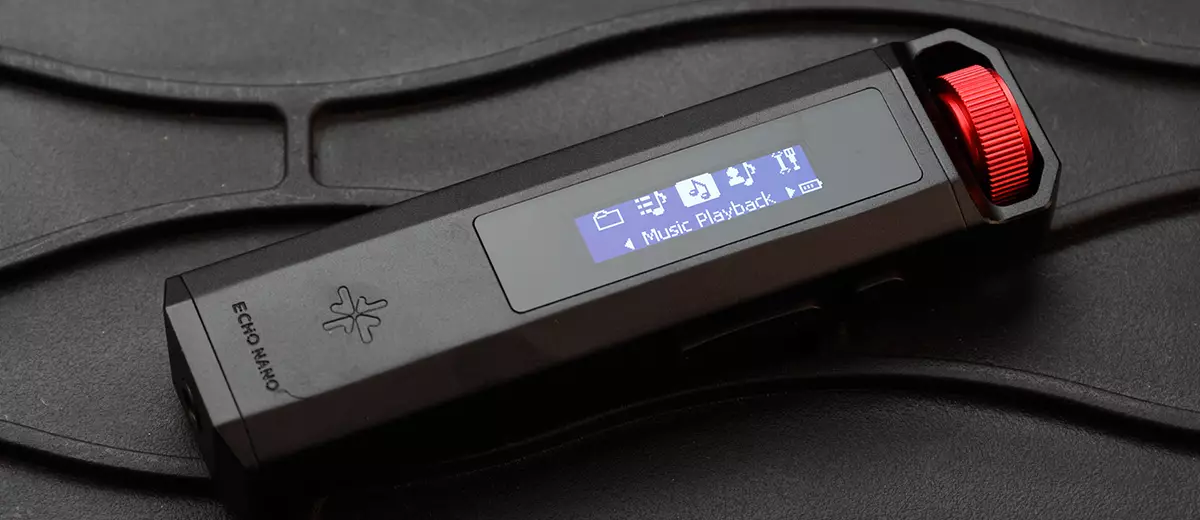
Marcelo reviews the FiiO SNOWSKY ECHO NANO, a retro-styled CS43131-equipped DAP with microSD card expansion and 120mW of output power. It is currently priced at $49.99.
Disclaimer: I received this sample in exchange for my honest opinion. Headfonics is an independent website with no affiliate links or services. I want to thank FiiO for their support.
Click here to learn more about the FiiO audio products previously reviewed on Headfonics.
This post follows our current scoring guidelines, which you can read in more detail here.
I’m not new to tiny DAPs; I used the Apple iPod mini and nano, as well as some small Sony DAPs, a long time ago. Since then, I have owned and reviewed many larger DAPs.
I recently noticed that audio companies have been releasing new small-sized DAPs, some of which I have reviewed here at Headfonics before, like the FiiO SNOWSKY DISC and the TempoTec V1.
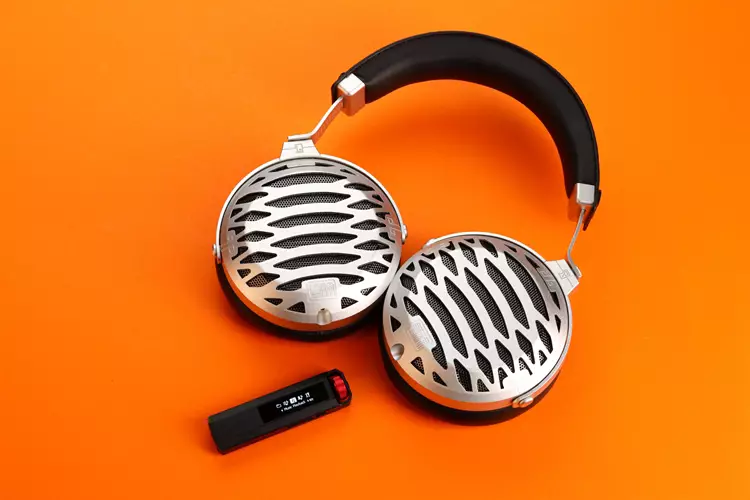
FiiO SNOWSKY ECHO NANO, which sells for $49.99, is one of those small DAPs; in fact, it is even smaller than those mentioned above, except for the iPod nano, making it not only belong to the small or mini size category but to the nano-sized category.
The tiny size means a tiny battery and internal amplification, so I’m very concerned about the compromises to sound quality and battery life.
How will the FiiO SNOWSKY ECHO NANO perform? And how will it fare compared to other small-sized DAPs, including the DISC, Shanling M0 Pura and the TempoTec V1? Let’s find out.
Features
The ECHO NANO is a nano-sized DAP, noticeably smaller than mini-sized DAPs for even easier portability. It measures only 81 x 20 x 11mm and weighs only 33.5g.
The use of the Cirrus Logic CS43131 DAC chip in the ECHO NANO is a very nice choice, as it is, in my opinion, the best-sounding DAC chip now for a DAP in its price category.
The ECHO NANO plays many audio formats, including DSD, WAV, FLAC, APE, MP3, M4A, and OGG, with sampling rates of DSD: 64/128/256; WAV: 24bit/192kHz; FLAC: 24bit/192kHz; APE: 24bit/192kHz.
It can also act as a USB DAC and support PCM sampling rates of 16bit/48kHz; it doesn’t support gapless playback, though.
I plugged it into my laptop to check if it had internal storage. Unfortunately, the ECHO NANO only has 240 MB of internal storage, which is barely usable. Therefore, it must rely on the MicroSD card slot that has a maximum capacity of 256 GB.
The output is moderate by today’s standards but certainly more powerful than nano-sized daps from years ago; it can output 120 mW + 120 mW (32 ohm single-ended) with a signal-to-noise ratio of ≥ 127dB (32A-weighted).
Designs
The ECHO NANO’s retro-with-modern-soul design was inspired by Sony’s classic “perfume bottle” MP3 players.
And according to FiiO, the ECHO NANO revives the charm of the millennium era in a sleek, pocket-sized form, which I would certainly agree with.
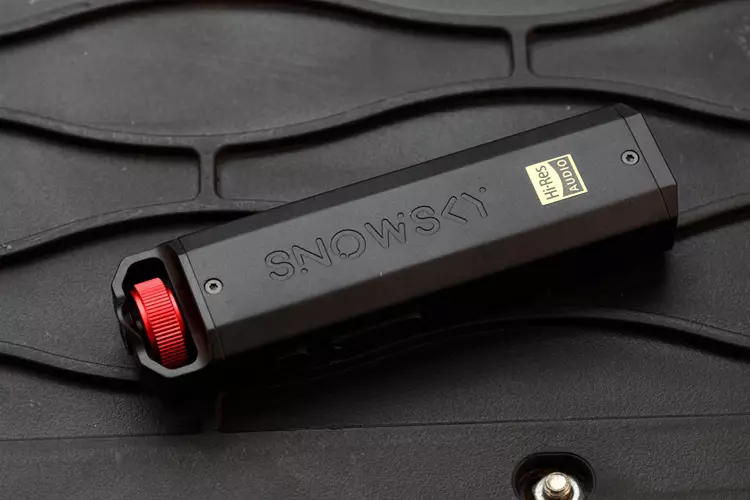
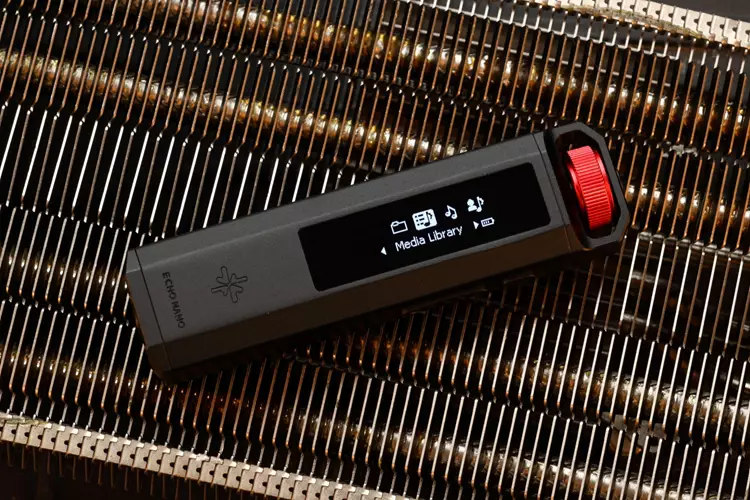
The shell is made of high-grade CNC-machined 6-series aluminum-magnesium alloy with a refined, wear-resistant finish that feels like anodization, one of the most durable finishes in my opinion. The red knob is captive by a metal cage with a lanyard hole at the top.
The ECHO NANO is available in many colors, including Black, White, Sky Blue, Purple, Titanium, Green, and Pink. My review sample is black, which contrasts nicely with the bright red aluminum control knob.
Screen
The use of OLED technology is a big plus to me, and I’m very delighted that the ECHO NANO uses a glass-covered 0.91″ OLED Display.
OLED is a self-emissive, low-power screen technology that delivers a crisp, clear, wide-viewing-angle display while consuming minimal power, helping extend battery life without sacrificing readability.
During use, the screen is very crisp and high-contrast, making it very easy to read, even without my glasses; I can read the tiny screen on the ECHO NANO well.
However, I need to increase the brightness to maximum as I find the default brightness setting too dark.
The screen timeout can be adjusted from 30 seconds to 5 minutes and turned off at will with a single short press of the power button.
I/O
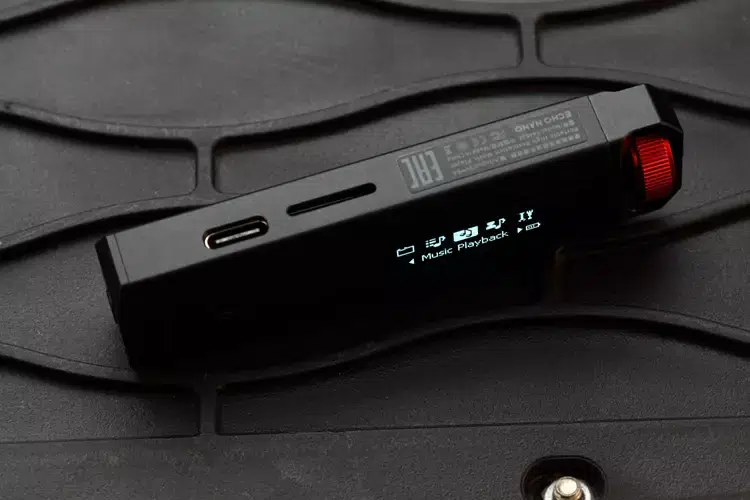
Inputs and outputs are neatly laid out at the top and the left side. The top side is where the USB-C input and charging port are located, as well as the Memory card slot beside it.
As I expected earlier, the ECHO NANO only supports a 3.5 mm single-ended output on the left side, which is understandable given its size.
However, I would have been very impressed if they crammed in a 4.4 mm balanced output.
USB-DAC
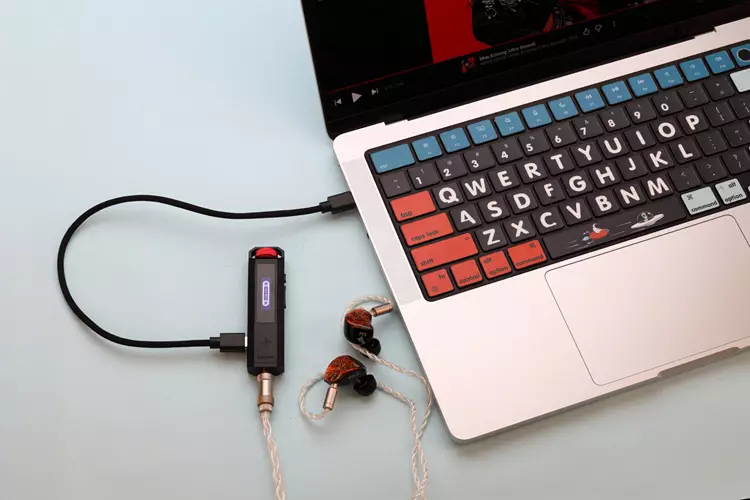
The ECHO NANO can be used as a DAC amplifier or sound card for other mobile devices, computers, and laptops.
When plugged into my OnePlus 13 Android phone, PC, and laptop, ECHO NANO would display a selection between USB DATA and USB DAC. USB DAC must be selected for it to act as a DAC amplifier.
The ECHO NANO is natively a UAC 1.0 device for USB audio, which means it is compatible with older PCs and game consoles.
However, this also means the audio data rate is limited to CD-quality 16-bit/48kHz, which is totally fine for daily use, in my opinion.
Controls
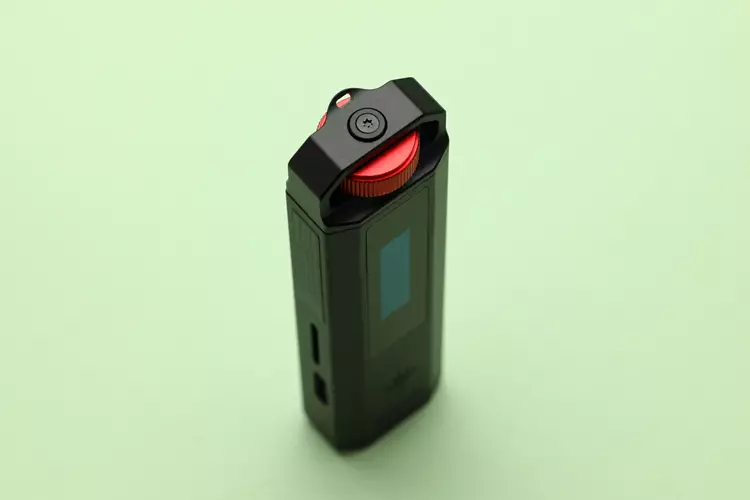
Aside from the lit OLED display, the ECHO NANO’s appearance is dominated by the red knob on the right side, which is physically connected to the power button on its top, outside of the cage.
There are three buttons at the bottom: play/pause, forward, and backward.
The buttons are nicely weighted and feel high quality; the knob is indented and feels good when turned. However, there is a noise of metal-to-metal grinding when the knob is turned; it is negligible, though.
Battery Life
Unsurprisingly, due to its nano size, the ECHO NANO has a nano-sized battery capacity of only 360 mAh.
I was expecting a poor battery life, but when I tested it during the burn-in phase, I got more than 6 hours of playback time with an IEM at moderate volume; I reckon that if I played it at lower volume or with a more efficient IEM, I can get up to 7 hours of playback.
After the battery drain, I charged the ECHO NANO and got an estimated charging time of zero to one hundred percent in almost two hours.
I’m glad to report that the ECHO NANO remains relatively cool during continuous playback and while charging.
Software
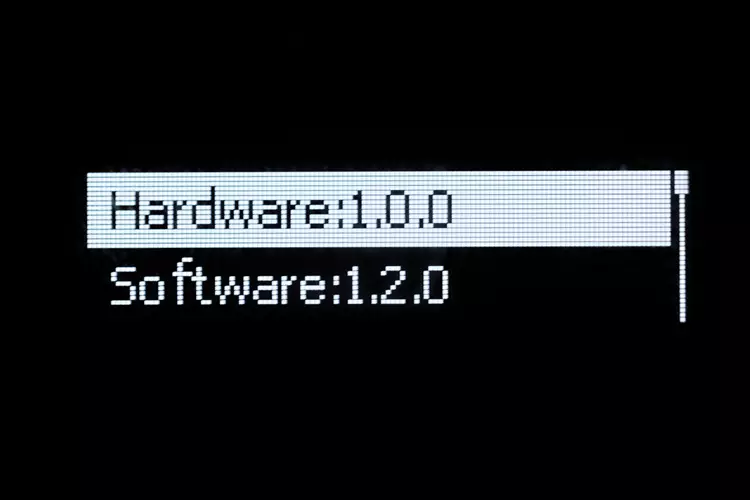
My ECHO NANO review sample came with hardware version 1.0.0 and software version 1.2.0, and so far during the entire review duration, I’m happy to report that I haven’t experienced any bugs. Kudos to FiiO.
I like the operating software design for its ease of use; it is very intuitive, and I didn’t need to consult a manual to use it fully. It is that easy to understand.
I also find that the operating software is full of useful features, such as eight EQ presets, four digital filters, gain adjustments, volume limit, loop settings, and so on.
I like that the gain is set to high, the volume limit to maximum, and the EQ to none by default, which is what I would adjust if they weren’t set that way.
However, I needed to set the language to English during the first boot-up, which is easily done by scrolling down the knob and selecting it with the play button.
I also needed to increase the display brightness to maximum, as I find the default setting too dim, and the screen timeout to 3 minutes, as I find the 30-second default too short.
Boot-up time is fast, taking only 6 to 7 seconds in total, including the 2-second power-button press. Pressing the power button again for 2 to 3 seconds shuts down ECHO NANO.
Automatic power shutdown to save battery when nothing is playing, or no earphones are plugged in, can be changed from disabled to 10 minutes; by default, it is set to 5 minutes.
Navigation
Navigation is very easy and intuitive; it involves the power button to turn on the display, the knob and the forward/backward buttons to scroll through the menu, and the play button to confirm the selection.
The play button is very important, and a little understanding is required to control the ECHO NANO, but once you get used to it, it is very easy to use.
Aside from acting as a play/pause music button, when navigating the menu, it can enter and confirm a selection with a short press; to go back or exit that particular menu, it needs a one-second press; to go back to the main menu page, it needs a long press.
Packaging & Accessories
The ECHO NANO came in a colorful and youthful-looking box with the photo of the ECHO NANO at the front and some graphics and text all around. It has a hanging tab at the top and measures 127 x 80 x 38 mm.
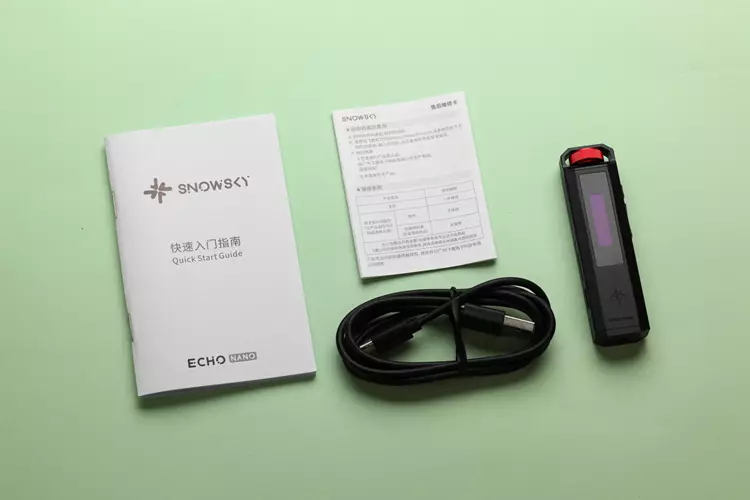
The unboxing is easy, and the packaging is well-designed. Inside the box is the FiiO ECHO NANO Player, USB Cable ×1, Quick Start Guide ×1, and Warranty Card ×1.
Sound Impressions
I did about 24 hours of burn-in to test battery life and charging times, and to observe how the ECHO NANO behaves during prolonged use, and haven’t found anything out of the ordinary.
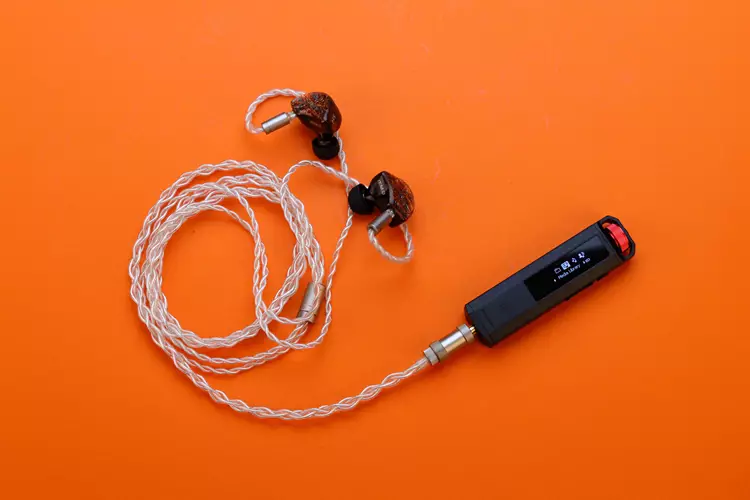
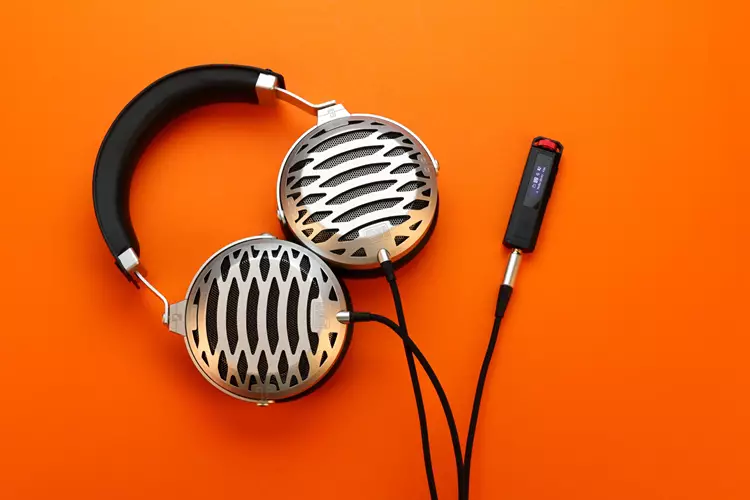
For the IEMs, I use the DUNU Falcon Ultra Ti, Tipsy M5, and the QoA Martini. For the Headphones, I use the FiiO JT3, the TANGZU OX Demon King, and the Sennheiser HD 6XX.
I didn’t use EQ or any other features that enhance the sound; all settings are at default.
Summary
Due to the ECHO NANO’s nano size and small battery, I was expecting a tiny, anemic sound that would struggle at loud volumes.
Because of the low expectations, I was delighted on my first listen to the ECHO NANO, as it greeted me with a clean, natural, full, and loud sound.
I enjoy the ECHO NANO’s neutral tonality and a flat perceived frequency response. I like that there is no exaggeration in any audible frequency range, no artificial warmth or brightness, unlike on other DAPs.
What’s most notable about the ECHO NANO is its clean, quite transparent sound, as if I’m listening to a much more expensive device rather than a budget one.
And because of that, I hear good perceived sound resolution and clarity, with plenty of microdetails.
The bass is neutral, with no exaggeration, warmth, or boosting; when a loud, deep bass hits, there is sharp attack, clean decay, detail, and articulation. The ECHO NANO never boosts the mid-bass and lower midrange to add warmth to the sound.
The ECHO NANO’s midrange sounds neutral and lush, with plenty of instrumental detail. I hear no boost nor recession in the upper midrange, which makes the midrange presentation very accurate.
I find the ECHO NANO’s treble to be very neutral, natural, and airy, with no exaggeration or recession in the lower treble, making the sound quite accurate.
The resolution is good, just not up to the best I’ve heard, but even so, I hear a nicely detailed, extended treble with clean, gentle micro-detail presentation.
Timbre
The ECHO NANO’s neutral tonality, flat perceived frequency response, and good sound transparency give it a very natural-sounding timbre. The attack and decay are acceptably clean, and the micro details are gently rendered.
However, if I must find something to criticize and judge the ECHO NANO based on my overall experience with DAPs, I noticed the bass isn’t as hard-hitting as that of larger DAPs with larger batteries and higher power output.
I also noticed a very negligible intermodulation distortion, indicating that the bass control isn’t the greatest, as I hear the deep bass subtly affecting and modulating the midrange and treble.
These are negligible and don’t bother me during casual listening, though.
Staging & dynamics
Thanks to the ECHO NANO’s neutral tonality and extended treble, the soundstage is quite wide and deep and certainly more spacious than any of the small-sized DAPs that I heard more than 10 years ago, based on my memory.
The ECHO NANO’s staging is very satisfying, as I find the sense of spaciousness is good and feels natural.
Though it’s not the most spacious I’ve heard, quite far from it, I am very satisfied and quite surprised that a small budget DAP can project this kind of soundstage.
Even though the imaging isn’t the most defined, separated, and layered, I’m delighted that the ECHO NANO provides a good semblance of holography within its soundstage. This makes the ECHO NANO a musically satisfying listen to me.
The ECHO NANO will not wow you with the punchiest, hardest-hitting sound, as far as serious audiophilia is concerned.
Still, for casual listening, the sound is dynamic enough, with bubbly energy from the music, and it is never boring or anemic.
Click on page 2 below for my recommended pairings and selected comparisons.
