

Sound Impressions
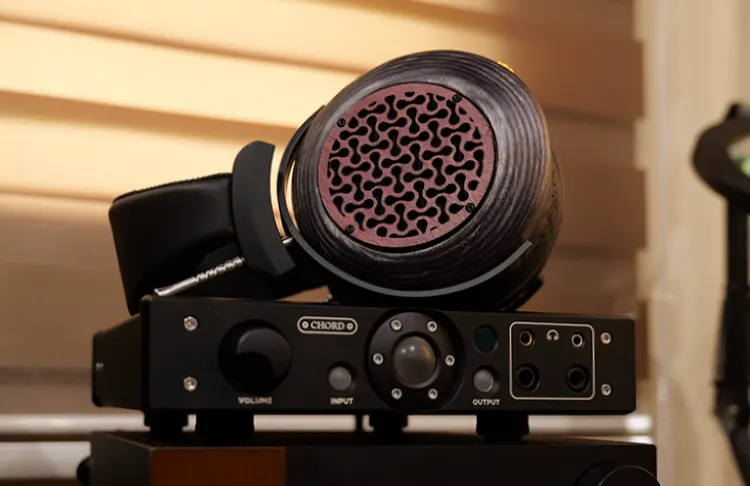
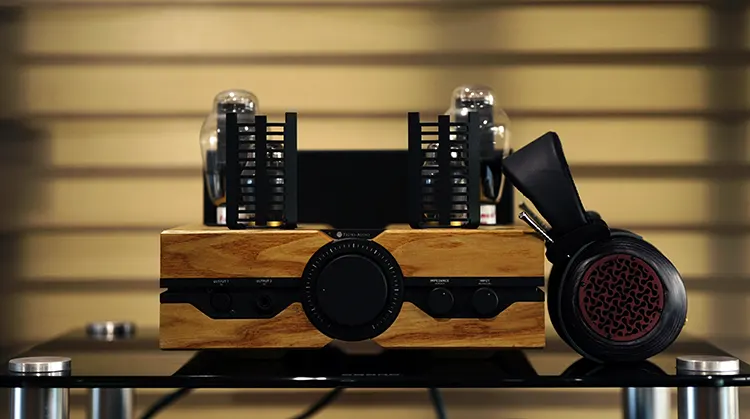
The following sound impressions of the ZMF Headphones BOKEH were completed using a mix of the Feliks Audio Envy and the Chord Electronics Alto amplifiers with the Chord Electronics M Scaler, TT2, and the Ferrum WANDLA GSE for upsampling and DACs.
The initial sound summary was also completed with the BOKEH Open fitted with the stock Caldera Hybrid Ultra Perf pads and the perforated Titan Mesh. Where applicable, alternative pad tuning variations will be highlighted.
Summary
The BOKEH Open delivers a pleasingly balanced and natural-sounding tonal quality with a slight midrange emphasis and excellent staging capability, particularly in terms of width and height.
Of all of the competing headphones at this price point that I have tested, the BOKEH Open is probably the most open and spacious-sounding of the lot.
Like many of ZMF’s creations, the BOKEH Open is more of a mood machine than a technical specialist. The level of detail is very good, but the emphasis is on producing a very agreeable and tonally ‘right’ performance that is amenable to a wide range of recordings.
Bass control and presence with the Caldera Hybrid Ultra Perf pads and the perforated Titan Mesh are excellent but not exaggerated. You can enhance the level and density with your choice of amplifier, pad, or mesh, giving it a high degree of flexibility.
Switching mesh will produce a smoother, denser, and slightly darker sound. Moving to the Caldera Ultra-Perf Suede pad will soften the bass and treble impact and enhance the lower mids and vocal presence.
The BOKEH Open will scale, surprisingly so, with amplifiers such as the Alto and Envy delivering a noticeably heightened level of bass weight and impact. Whereas tube amps such as the HA-300MK2 will expand the soundstage further out and up.
Even more humble dongle pairings will create strong preferences depending on your tastes, so the BOKEH Open is not only easy enough to drive, but its sound signature should not be considered as ‘set in stone’.
Frequency Response
The BOKEH Open stock configuration has excellent bass extension but with a modest level of elevation from 20Hz to 150Hz.
The weight and power are not as emphasized as the BOKEH Closed equivalent, but then again, the 80-300Hz FR suffers from less bloom, so the level of control is superior to my ear.
There is more space for lower-register instruments to shine, with a good fundamental frequency and enough natural warmth for rhythm and bass guitar work to resonate with authority.
From 200Hz-1kHz, the BOKEH Open FR remains largely neutral to slightly elevated as you get closer to the mids. Beyond is where things get a bit spicier with a fairly strong 2-5k lift fleshing out vocal and percussion presence considerably.
Beyond the upper-mids, the BOKEH Open has some lift around 8-10k, sprinkling a gentle upper-harmonic overtone (sheen) on higher-register percussion and vocal performances.
It produces a bit more edge in percussion and vocal note attack, though not something that I would consider distracting or sharp-sounding, just a bit more liveliness in their delivery.
I never really found this effect to come across as shouty or overly intimate, given how spacious the BOKEH Open sounds with the stock Titan mesh and Caldera Hybrid Ultra Perf pads.
It can get a little denser and darker with the closed-back Caldera Thin pad options, a tuning that enhances the bass shelf from 20-60Hz and drops the 4-6k range by 1-2 dB.
You can go even more mid-centric with the Caldera Ultra-Perf Suede pads, which reduce the bass shelf dB level below the stock protein leather pads’ level and soften the treble elevation beyond 5k.
Staging & Dynamics
Absolutely no surprise that the BOKEH Open inherits the ZMF soundstage macro magic typical of a lot of their higher-end open-back headphones.
Even before I played any audio through these headphones, I could tell I was going to get a very open soundstage simply by the amount of background noise I could pick up in my office compared to competing headphones such as the DCA NOIRE XO.
I would say, though, that the BOKEH Open’s depth is not all-consuming. It can sound excellent in part, depending on the amp and pad combo, but overall, it’s supportive rather than overpowering.
If you need a fuller, denser low-end, then the closed-back variant is the better choice. However, if you want a more controlled open sound with better layering, then the BOKEH Open will give you more of that.
Width and midrange spaciousness are fantastic. Despite the overt forwardness of its 4-6k range, it still maintains a decent level of space between you and the vocalist, reducing the level of possible fatiguing whilst retaining impressive focus.
The one critique is the moderate decay level of the BOKEH Open LCP driver, which is not as tight or short as some planar driver alternatives at this price point.
It creates more of a softer analog tone to the presentation, and some will perceive imaging as not quite as precise or fast-paced in dynamic range as competing planar headphones.
You can tighten this up to some extent with the BOKEH Closed top-perforated Caldera thin pads, which enhance contrast and attack emphasis over the fully perforated stock options.
Mesh Grill Variations
The BOKEH Open mesh inserts introduce some noticeable differences in their respective frequency response emphasis.
Overall, I found that the vented mesh delivers a more natural, balanced profile with tighter bass and heightened detail. The solid mesh emphasizes warmth, low-end authority, and a generally darker tonal quality.
The solid mesh offers more elevation over the vented mesh from sub-bass through the mid-bass region and up to the mids at almost 1 kHz.
This adds stronger fundamental frequency and a more robust quality to the BOKEH Open performance, resulting in a warmer, denser sound with more perceived power.
The vented mesh has a slightly lower bass shelf with slightly faster decay and improved separation from the lower mids. While not as full-bodied as the solid mesh performance, it delivers improved articulation and layering in complex mixes.
There isn’t a huge change in response from 1-3k, with perhaps a slight nod to the solid mesh at around 3k.
Beyond, the vented mesh’s enhanced 5-10k region creates cleaner transients and a stronger vocal definition as a result. This gives the presentation a sense of openness and immediacy, with more sparkle and air.
The solid mesh tempers the same range by roughly 1-2 dB, smoothing treble edges and yielding a more relaxed top end from the BOKEH Open. This tuning favors tonal density over clarity, trading the perforated mesh’s airy character for a richer, less fatiguing sound.
Synergy
Portable Pairings
I tested 3 DAPs, 2 dongles, and 2 portable amps with the BOKEH Open. The first impression is that yes, these headphones will perform quite well with a lower-powered dongle.
However, the second impression is that coloration matters. I had a strong preference for an analog-sounding source over a solid-state digital alternative.
For example, with the two portable amps, the ONIX Mystic XP1 and the Cayin C9ii, both delivered excellent bass depth with the stock hybrid pads, perhaps more so with the XP1.
However, you could immediately pick up on the smoother sound of the mids and vocals from the C9ii using Classic Tube mode and Hyper Mode turned off.
The XP1’s vocal treatment was striking and near field with the BOKEH Open, but its presentation of those pushed upper-mids sounded harsher with less treble extension.
It was the same analysis from the DAP impressions. The Cayin N6iii/R202 has less power than the iBasso DX340, so it’s not quite as resolving or offers the same dynamic range, but the tonal coloration better suits the BOKEH Open.
The R202 1-Bit mode has a nice calming effect on the BOKEH Open mids with good depth and a more spacious sound over the boisterous but too mid-centric R2R mode.
It also offers a bit more body on the lows compared to the DX340/AMP15. I would quicker pair the BOKEH Open with the DX340 using the Caldera Thins.
And for dongles, the DC-Elite sounds intense, clean, and superbly defined, but lacks a little smoothness, and vocals can be a little too in your face.
The 1-Bit Cayin RU7 sounded more relaxing for my tastes; vocals sounded smoother, imaging a little further back, with a decent bass performance from the BOKEH Open.
Desktop Pairings
I tested 3 tube amps and 2 solid-state alternatives, and this time, voltage was a factor as well as timbre, with the BOKEH Open showing some unexpected scaling capability.
The theme from the portable pairings largely remains intact, i.e., analog over dry solid-state, but with quality amplification, there seems to be two routes you can go down for the BOKEH pairing, namely, power and staging complexity.
Either output is very satisfying; it just depends on what you want out of the BOKEH Open. For example, the Feliks Audio Envy and the Chord Electronics Alto produced the most satisfying bass performance, with the Envy delivering more depth and the Alto fuller and smoother sounding.
On the flip side, the Cayin HA-300MK2 offered the most holographic soundstage with some gorgeous vocal timbre from the BOKEH Open, but lacked the same depth and power of the Alto and Envy.
The Ferrum OOR (with WANDLA GSE) was overly neutral for my tastes and didn’t project a soundstage as wide or deep as the above alternatives. It’s very resolving, the BOKEH Open did very well for micro-detail and imaging, but it needs something more to sound complete.
You can fiddle with the DSP inside the WANDLA GSE top to enhance the imaging depth and bass power with impressive results, but if you need to pick one solid-state for the BOKEH Open out of those mentioned, I would choose the Alto’s fuller, deeper sound.
The more affordable Cayin HA-2A is a solid little tube amp with respectable results from the BOKEH Open. It delivers decent depth, good vocal weight, and presence with a rich and smooth tone. I would consider this a nice all-rounder with the BOKEH Open.
