

Synergy
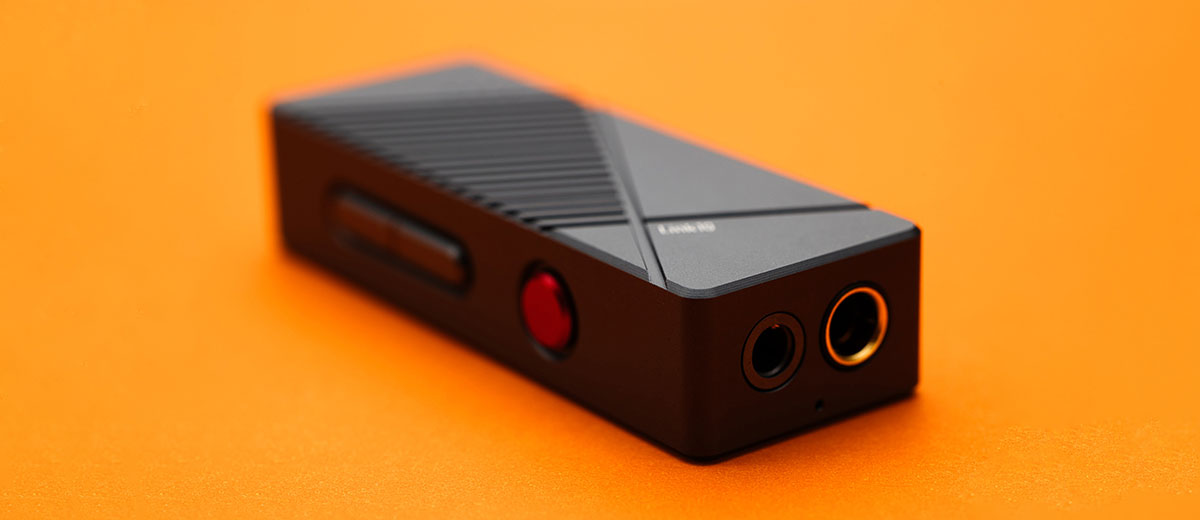
I never experienced any noise issues with the Link10 when using the IEMs and headphones included in this review.
There was no popping or scratching sound with the headphones or IEMs connected while plugging and unplugging the Link10, and the device remained quiet throughout this review. It doesn’t pick up any RF interference when placed near my phone.
The Link10 sounds great and effortless with most IEMs, with a slight exception to the MOONDROP Harmon, which is a difficult-to-properly-drive IEM. I needed to set the volume higher.
It sounds good, but not as effortlessly dynamic and clean as using the Harmon with higher-powered sources, at least a clean 500mW of power.
It is the same with headphones in this review: the 44Ω Kiwi Ears Altruva and the 300Ω Sennheiser HD 6XX.
They don’t sound bad, but I noticed that they don’t have as big a soundstage, as crisp a treble, and as tight and punchy a bass as they do when driven by more powerful sources.
IEM Pairings
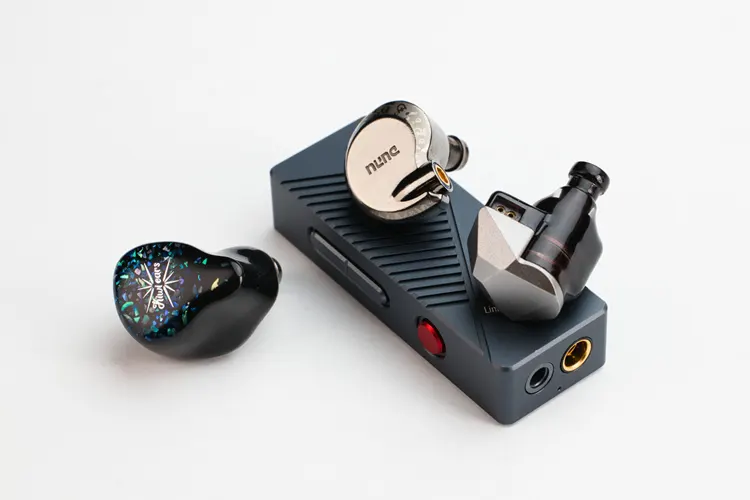
The Link10 pairs well with the DUNU Falcon Ultra and the Kiwi Ears Astral, both of which have average sensitivity and moderate load impedances of 16Ω and 23Ω, respectively.
I sense a dynamic effortlessness, detail, and clarity when paired with both IEMs. They sound as good as they should.
However, there is a slight sense of dynamic compression and reduction in soundstage and instrument separation when paired with the slightly difficult-to-drive and insensitive MOONDROP Harmon.
I had to set the volume much higher, and the sound quality would suffer with loud and complex music.
Headphone Pairings
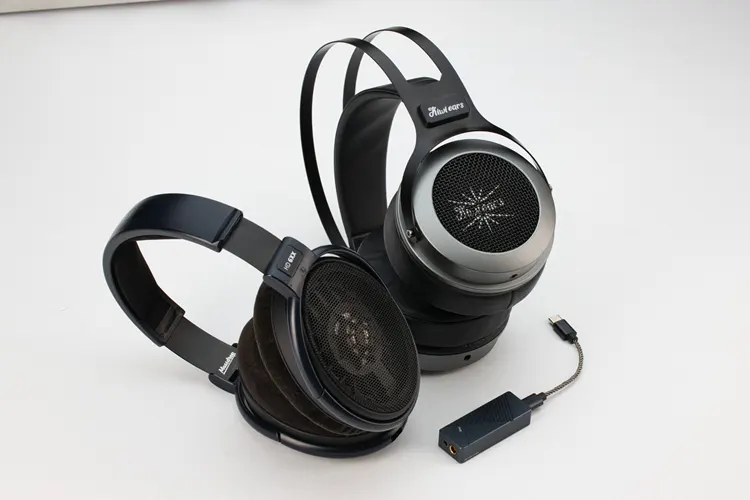
I don’t recommend pairing the Link10 with Kiwi Ears Altruva and Sennheiser HD 6XX. It doesn’t sound bad, especially for casual, non-critical listeners, but it’s a no-go for someone like me.
I noticed the loss of soundstage spaciousness, the bass’s tightness and punch, the treble’s crispness, and details, as well as instrument separation.
Although not a big deal for casual listeners, I know it’s not optimal, as I’ve heard both headphones sound glorious with other, more capable sources, such as powerful DAPs and desktop headphone amplifiers.
Select Comparisons
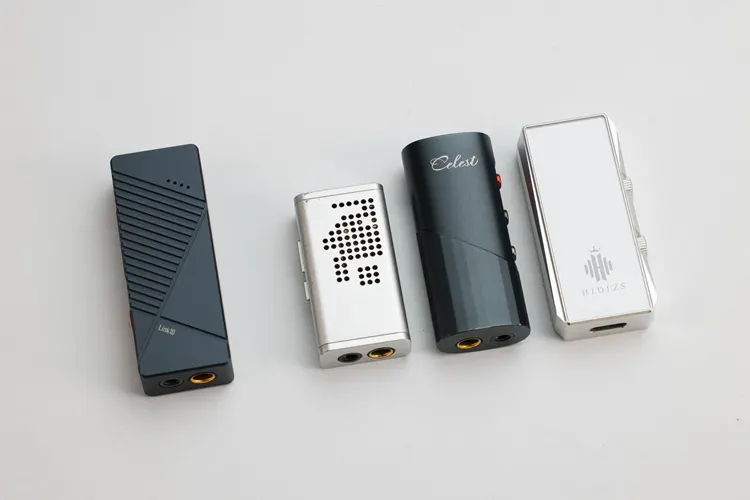
MOONDROP Dawn Pro
Technical
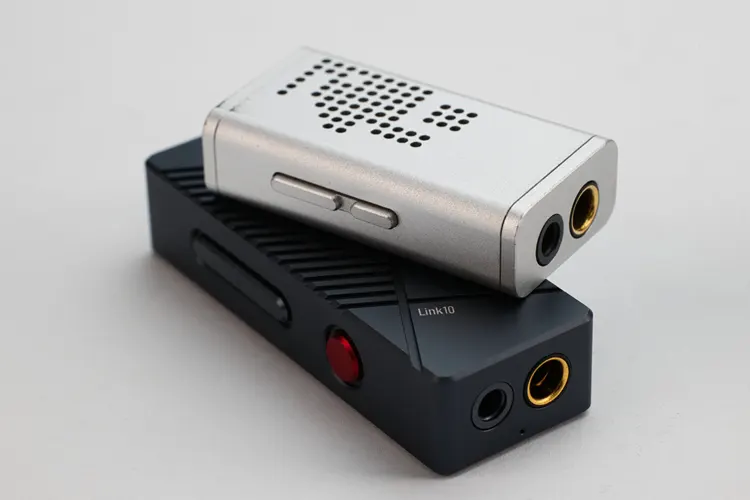
The Dawn Pro utilizes dual CS43131 DAC chips, offering a maximum output of 120mW through its 4.4mm balanced output jack. The device weighs 13g and measures 42 mm x 22.45 mm x 12.39 mm in size.
Design
The Dawn Pro is a smaller dongle with an all-metal construction and a perforated front, finished in an anodized silver color. The design features a sci-fi, space-age aesthetic, with only two control buttons serving as volume controls on its side.
Performance
Both the Link10 and the Dawn Pro have a warm sound since they use the same CS54131 DAC chip. But when compared, the Dawn Pro sounds more neutral.
The Link10 has this darker treble with denser bass, resulting in an overall warmer and thicker musicality. Even though it is warm-sounding, the Dawn Pro is airy and thin by comparison; there is more bass density with the Link10.
There is only a slight difference between the two in sound, but in long listening sessions, I find the Dawn Pro’s more neutral sound boring, compared to the warmer and bassier sound of the Link10.
Regarding the soundstage, the Dawn Pro has a more open and wider soundstage; it sounds airier and more atmospheric, while the Link10 has a more intimate and darker soundstage feel.
The differences are slight, though, as both of them have soundstage sizes that are on the smaller side.
Hidizs S9 Pro Plus
Technical
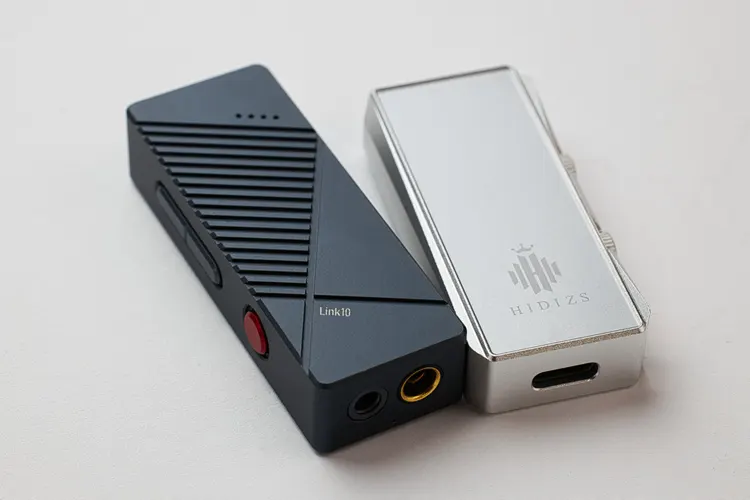
The Hidizs S9 Pro Plus utilizes an ES9038Q2M DAC Chip that supports up to 32-bit/768kHz PCM and Native DSD up to 512.
It features an output power of 138mW+138mW at 32Ω 3.5mm SE and 180mW+180mW at 32Ω 4.4mm BAL. The device measures 55×25×11mm in size and weighs 17 grams.
Design
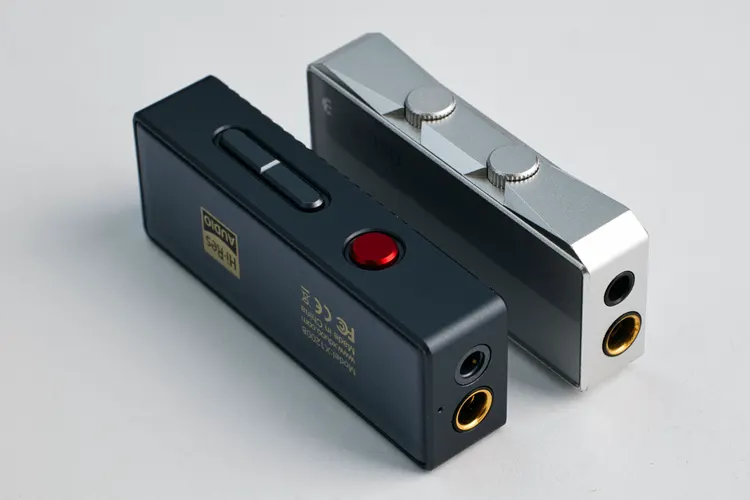
The S9 Pro Plus’s body is CNC machined out of a solid piece of aluminum, sandwiched by tempered glass on the front and back.
Available in black, silver, and blue-colored finishes. It has two buttons on the side, serving as volume control and multifunction control.
Performance
The S9 Pro Plus has a leaner, faster, more forward, and airier sound presentation compared to the Link10’s darker, thicker, and warmer sound.
The difference in sound is mainly influenced by the DAC chip they use, which is the brighter ES9038Q2M of S9 Pro Plus vs the warmer CD43131 of the Link10.
The S9 Pro Plus is on the brighter side, while the Link10 is on the warmer side of absolute neutrality in sound signatures.
The S9 Pro Plus has a tighter bass and a more forward upper midrange and treble presentation, which pushes the details forward and sounds airier than the darker, warmer, less detailed, and more analog sound of the Link10.
In extended listening sessions, the S9 Pro Plus seems to present a colder and more analytical sound, though not fatiguing. I find Link10’s warm tonality to be more comfortable and suitable for long listening sessions.
Regarding soundstage, the S9 Pro Plus is bigger and broader. The Link10 has an intimate and darker soundstage feel, in contrast to the open and airy soundstage presentation of the S9 Pro Plus. Both of which are good, depending on the mood of the listener.
Celest CD-20
Technical
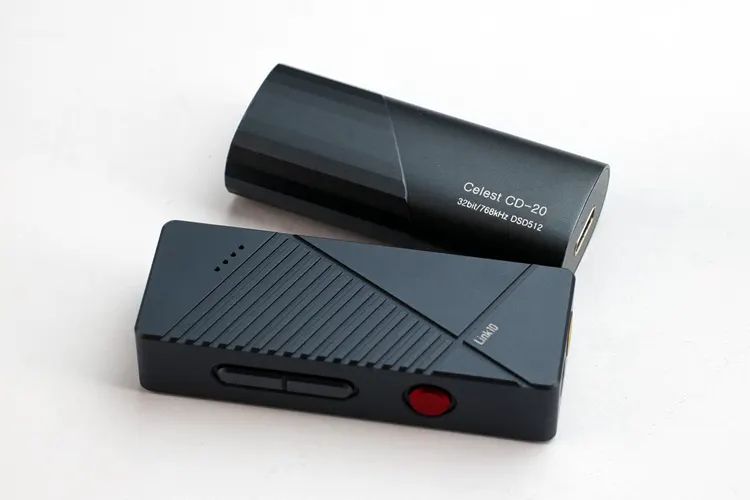
The Celest CD-20 utilizes an ES9039Q2M DAC chip, offering up to 480mW of output power through its 4.4mm balanced output jack. Additionally, it supports UAC 1.0 mode. The CD-20 measures 43x23x14mm in size and weighs 16.2 grams.
Design
The CD-20 features a semi-cylindrical, dark grey design with three control buttons on the side, serving as multifunction, volume up, and volume down buttons. The USB-C port is located at the top, and the 3.5mm and 4.4mm outputs are at the bottom.
Performance
The CD-20 utilizes the latest DAC chip in this comparison, the ES9039Q2M. It fixes the bright tonality of its predecessor, the ES9038Q2M, used in the S9 Pro Plus in this comparison.
The CD-20 is closer to neutral than Link10 regarding tonality. It has a tighter and more accurate bass, slightly leaner and more forward midrange, and a more forward and extended treble presentation than the thicker and less tight bass, warmer midrange, and laid-back treble of the Link10.
The CD-20 offers more details, speed, and transparency, but its sound quality is on the digital side, though not bad; it sounds slightly drier and flatter than the warm and analog-sounding Link10.
Regarding soundstage, they have similar depth, but the CD-20 feels wider due to its brighter sound signature.
The imaging on the CD-20 is more defined due to the neutral upper midrange presentation, as opposed to the laid-back upper midrange presentation of the Link10.

My Verdict
The xDuoo Link10 is very easy to use and features several helpful functions, including switchable UAC modes and digital filters. Additionally, it offers an analog-style sound.
Although the CS43131 DAC chip has been widely used and has become the ubiquitous DAC chip of today, xDuoo did something different.
The xDuoo Link10’s unique analog sound signature, combined with the good implementation of digital filters, including a non-oversampling (NOS) mode, makes it stand out in the sea of CS43131 dongle DACs on the market.
xDuoo Link10 Technical Specifications
- DAC chip: Dual Cirrus Logic CS43131
- PCM decoding: Up to 32-bit/384kHz
- DSD decoding: Native/DoP up to DSD256
- THD+N: 106dB @1kHz (unbalanced), 108dB @1kHz (balanced)
- SNR: ≥126dB (unbalanced), ≥130dB (balanced)
- Crosstalk: ≥75dB (unbalanced), ≥112dB (balanced)
- Output power:
- 250mW @32Ω (unbalanced)
- 300mW @32Ω (balanced)
- 140mW @75Ω (unbalanced)
- 350mW @75Ω (balanced)
- 70mW @150Ω (unbalanced)
- 270mW @150Ω (balanced)
- 45mW @300Ω (unbalanced)
- 170mW @300Ω (balanced)
- Frequency response: 20Hz–20kHz (±0.5dB)
- USB compatibility: UAC 1.0 and 2.0
- Volume control: 60-level digital
- Body material: CNC aluminum
- Size: 2.36 x 0.91 x 0.51 in (6.0 x 2.3 x 1.3cm)
- Weight: 0.88oz (25g)
