

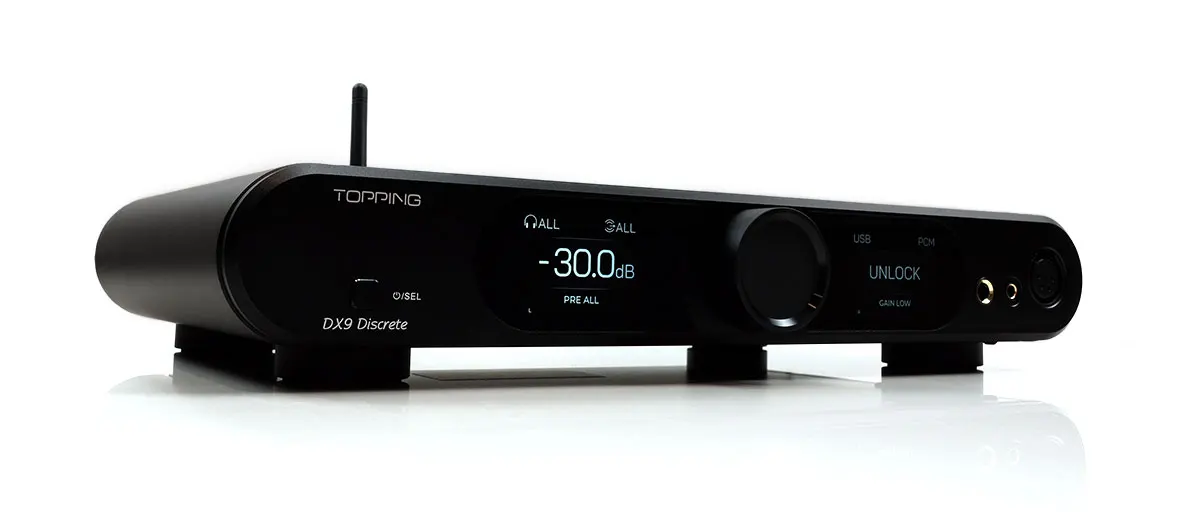
Sound Impressions
The following sound impressions of the Topping DX9 were completed using a pairing mix of the Austrian Audio Composer, Focal Utopia 2022, and the ABYSS JOAL headphones.
For sources, I went with the SMSL PL200 CD Player to test the optical and coaxial inputs, and a Windows 10 PC with Topping Tune to test the USB input.
Summary
I would rate the DX9 Discrete sound signature as superior to the original DX9, which is crazy because I praised the DX9 as one of the finds of 2024.
But hear me out. Over the last year of having the DX9 in constant rotation, there were a few things I wished it had in its locker, aspects which the DX9 Discrete offers.
The DX9 Discrete taps into the current audiophile thirst for analog sound qualities; something more ‘real’, agreeable, and perhaps more colored in the hotspots, namely, vocal impact and low-end ‘authority’.
The switch from the classic AKM chipset to a 1-bit discrete DAC means an end to the polished, neutral tone and punchy, drier sound of the DX9, and the beginning of a deeper, smoother sound from the DX9 Discrete.
And not just with one or two headphones, but with all the tested pairings sounding firmer and ‘juicier’ than with the older model.
Vocal imaging is further forward, with note texture sounding rawer, more real in a way, but definitely loaded with more detail. Enhanced warmth and fullness on the lows stretch the DX9 Discrete’s staging depth pleasingly, enhancing perceived space and separation for those vocals to shine.
Sibilant overtones on brighter headphones, such as the Composer, are subtly subdued, creating a more saturated sound with improved texture.
This is a great amplifier for feisty headphones, those with highs that sit between bright and brilliant. Headphones such as the DCA NOIRE XO sound excellent with a softer note attack and great body.
I would argue that the dynamic range over the original has improved. The DX9 Discrete sounds a little more bombastic and not as restrained, particularly the coaxial output, which has a more ‘musical’ flavor compared to the balanced USB output.
Stock DSP
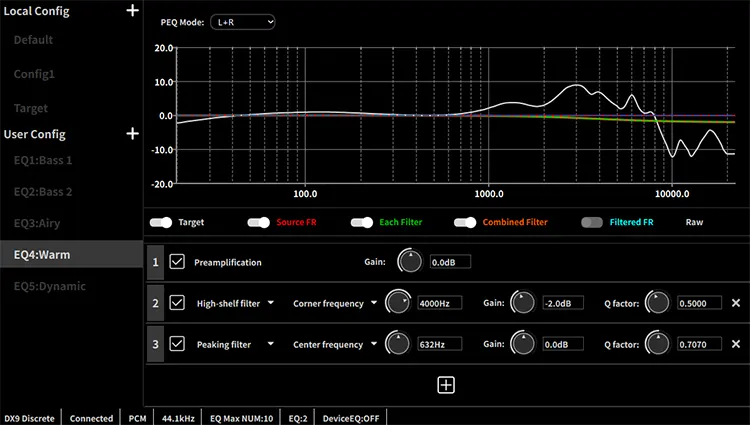
There is some flexibility with the DX9 Discrete’s onboard DSP, combined with Topping Tune. You get 5 presets straight out of the box, including 2 bass profiles, an ‘Airy’ option, Warm, and Dynamic.
You can go further down the rabbit hole with the Topping Tune software and load a ton of frequency response graphs to tweak new profiles based on your headphone of choice.
Just bear in mind that when you switch on the DSP, there is a minor drop in amplitude by 1-2 dB relative to the default level, but a quick flick of the volume dial sorts that disparity out.
In their own right, I preferred Airy, Warm, and Dynamic based on the headphones I tested them with.
Airy places more emphasis on the mids and highs with a +2 dB high-shelf filter combined with a small peaking filter around 700Hz. I found this setting more suitable for warmer headphones such as the Utopia 2022.
One slight critique of the DX9 Discrete is that flagship headphones such as the Utopia 2022 might struggle with micro-detail due to the more rounded, richer tone of the DX9 Discrete stock profile.
The Airy filter introduces more contrast into the mids and highs, creating a taller soundstage and subjectively enhancing resolution.
Warmer pushes everything upfront and creates even more body in a headphone’s performance, a trait I found suited to big-sounding headphones such as the Nur Harmonia. Without which, the Harmonia can sound a little leaner in the mids and highs.
Dynamic is more V-shaped to my ear, pulling the vocal presence back a little and enhancing both ends of the frequency spectrum. It creates a more complex soundstage with enhanced sub-bass depth, one that I found excellent for darker headphones such as the JOAL.
Synergy
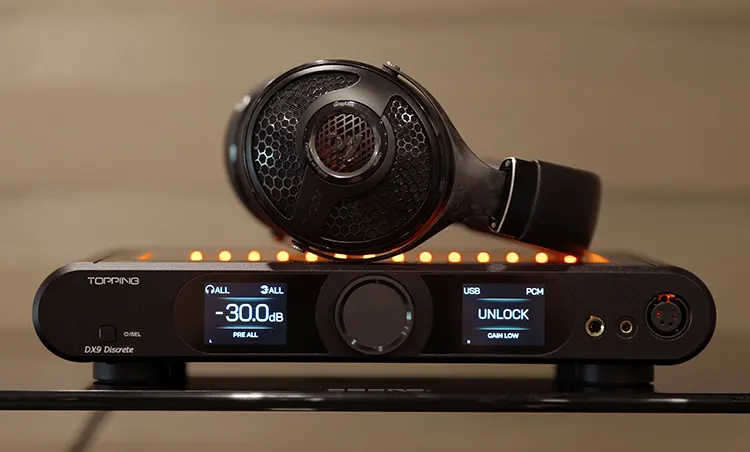
As with the original, the DX9 Discrete has a powerful built-in headphone amplifier with just over 7W into a 32Ω load, combined with an output impedance level below 0.1Ω, making it amenable to IEM pairings should you wish to do so.
However, I did have one subjective observation of a slightly lower dynamic range level or a gain setting that may be enhanced dB-wise when comparing the old with the new.
On numerous occasions, I found myself adding about 2.5 dB of volume to match the perceived listening levels of the DX9 and DX9 Discrete with a balanced output connection to numerous headphones, including the ABYSS JOAL, Focal Utopia 2022, and the Austrian Audio Composer.
Headphones Pairings
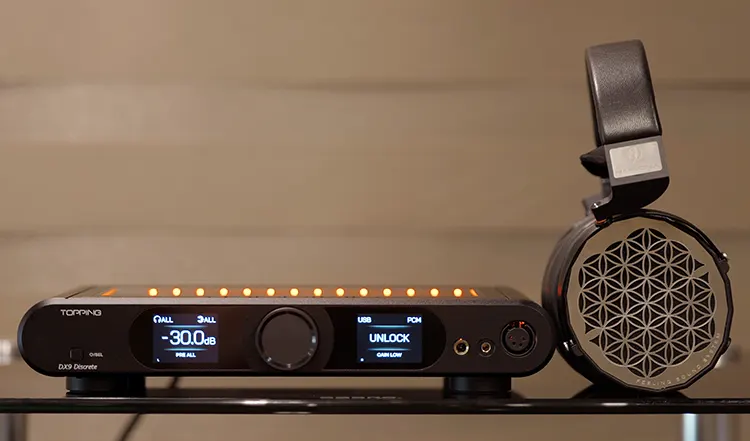
You will be hard-pressed to find a bad pairing with the DX9 Discrete. I tested 5 headphones, including the Focal Utopia 2022, Nur’s Harmonia, the ABYSS JOAL, Austrian Audio’s Composer, and the DCA NOIRE XO, and each one performed beautifully.
The default smooth and rich presentation of the DX9 Discrete found a welcome home with brighter headphones such as the NOIRE XO and the Composer. Whilst DSP could bring some vocal presence to the Utopia 2022 (Airy), or a thicker presentation to the Nur Harmonia (Warm).
Typically, I state a preference, but in this case, given the very different FR’s of each headphone, I honestly could not say this type of headphone works better than the others.
If I were nitpicking, I would have preferred a bit more staging depth from the Harmonia, and it’s not as revealing as I would like it to be with the Utopia 2022.
However, this is relative to the performance I get from a ten-grand amplifier, such as the dCS Lina Network DAC and Lina Headphone amplifier combo or the Headonia 300B tube amp, so it’s perhaps an unfair comparison.
Going back to the DSP, the onboard settings brought something enjoyable to the headphones in case I had a niche preference or a bad recording.
I mentioned the Utopia 2022 with the Airy DSP. This is more about introducing contrast to magnify the micro-detail or accentuate vocal bloom.
The same filter thins out the Harmonia too much, creating a sharp overtone. It works better with the Warm or Dynamic filters, with Warm edging it with sibilant recordings.
Just remember, if you are not happy with the presets, you can create your own via Topping Tune and load them into the DX9 Discrete, creating even more flexibility.
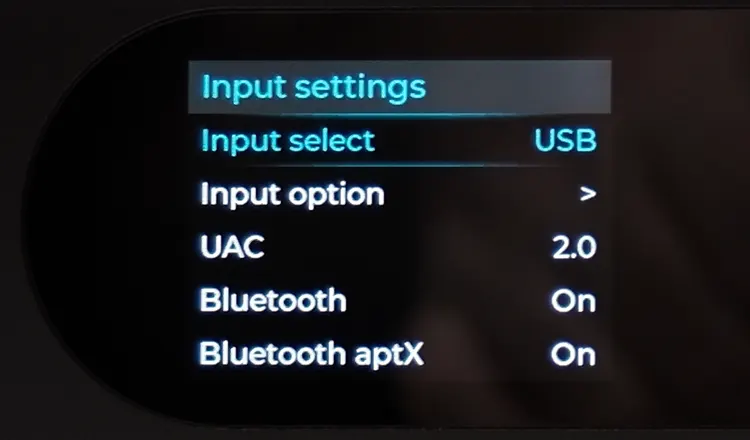
Input Variations
I have to include some subjective commentary on the performance difference between the DX9 Discrete’s USB and coaxial inputs here.
The USB performance sounds relatively restrained and slightly more linear in its presentation, with a cleaner-sounding note timbre. That’s not a bad thing, more from a preference perspective, as it sounds quite balanced overall.
However, I preferred the coaxial performance from the SMSL PL200 with its more rounded and dynamic presentation. It offered more note body on the lows and a firmer, more immediate vocal impact.
To my ears, the coaxial connection sounded livelier with my tested headphones, so much so that I found myself subconsciously pushing up the DX9 Discrete’s volume on the USB connection to try and match the coaxial input performance.
The DX9 Discrete BT performance is very good, so long as you remain in LDAC transmission mode from your source. You get decent extension at both ends of the frequency response and functional DSP.
It’s not quite up to the coaxial standard, though. It lacks the same textured detail and note body as a wired connection, with slightly less staging depth and dynamic range.
I had hoped to discuss the I²S performance also, but given the DX9 Discrete pin change and the lack of compatibility with my Cayin transports, that is sadly not an option.
