

Synergy
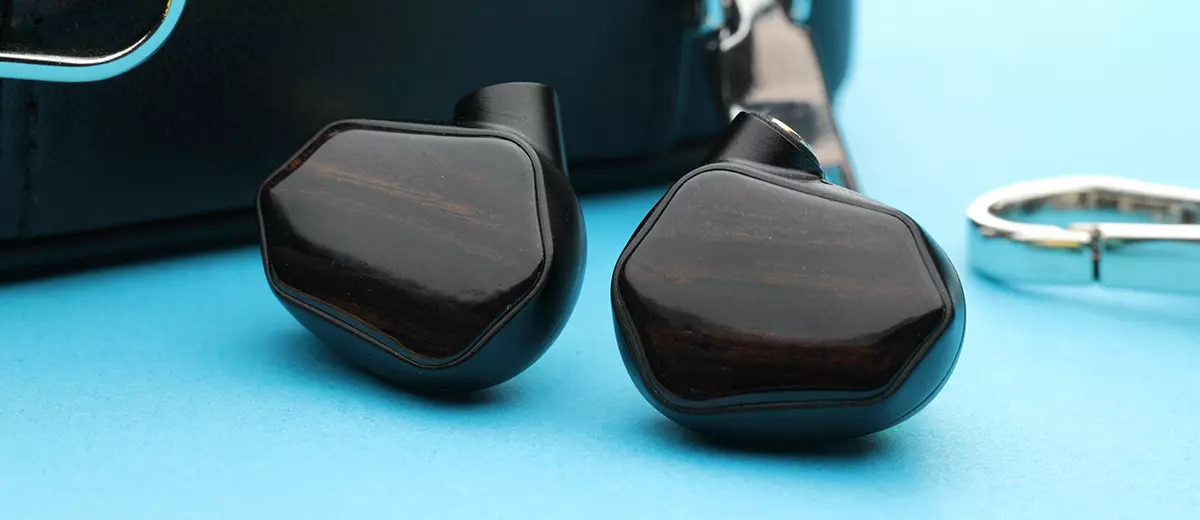
I’ve used the T7 while walking, at home listening, in a coffee shop, etc. The T7 was noise-free across all the sources I paired it with; the cable never picked up any radio-frequency interference, and despite its efficiency and sensitivity, it never picked up the sources’ noise floor.
The T7 is easily driven even by my low-powered tail-style dongle DACs, with no dynamic issues at reasonable volumes.
I never found an audio source in my inventory that would struggle to drive the T7; this is mostly the trait I like in single dynamic driver IEMs.
Pairings
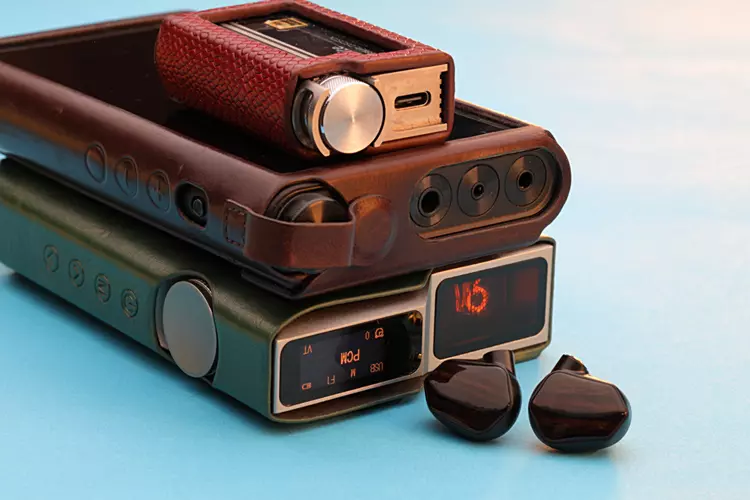
That said, the T7 sounds dynamic and effortless with my iBasso DC-Elite dongle DAC.
I hear no dynamic compression and distortion, even at slightly above my normal listening volume. The sound is bassy, warm, energetic, and moderately V-shaped with good soundstage and resolution.
I notice an increase in dynamics and maximum clean loudness when I switched to the MUSE HIFI M6 Double.
The bass became even more fleshed out, with more body and density, and the treble became finer and airier, as if a loudness switch had been turned on or the bass and treble knobs had been slightly increased.
This makes a very spacious-sounding pairing with good resolution, details, and airiness. However, the presentation became even more laid-back, and the main vocals sound even further on the stage.
Finally, with the FiiO M15S, the bass became much tighter and punchier, and the overall sound signature became closer to neutral but still moderately V-shaped. There is a noticeable increase in bass texture and details, and the midrange has slightly come forward.
The treble became flatter and drier than the M6 Double pairing, but still sounds airy. I also noticed the stage comes closer with the main vocal more forward, still, the presentation is laid-back.
Even though the T7 sounds slightly different with each source pairing, it generally sounds good, and it’s forgiving thanks to its warm sound signature. I must add that the T7 pairs very well with any of my sources.
Selected Comparisons
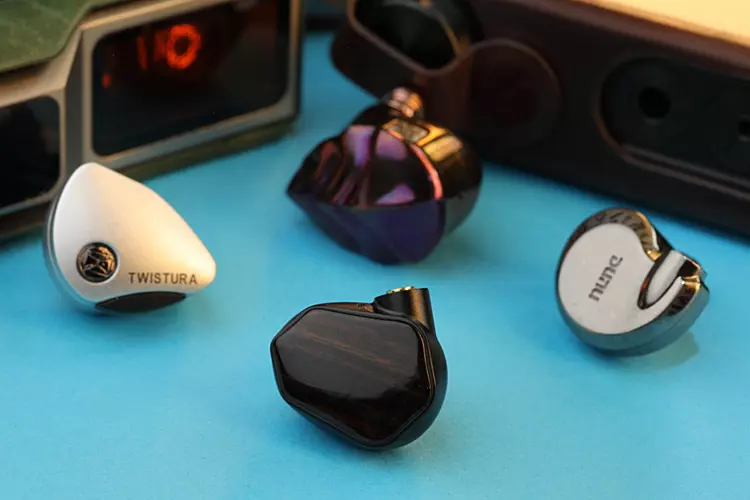
I used my usual sources for this comparison: the iBasso DC-Elite, MUSE HiFi M6 Double, and FiiO M15s, and I often switch between them.
Still, I used the iBasso DC-Elite mostly for this comparison, because I can discern differences more easily with its detailed sound, and none of the IEMs here are difficult to drive.
HIDIZS MK12 Turris Titanium Limited Edition
Technical & Design
The MK12 Turris Titanium Edition features a 12mm dynamic driver with a 91% pure magnesium diaphragm and a powerful motor system that reaches 1.5 Tesla in the magnet gap, driving the larger-than-usual diaphragm.
The MK12 Turris Titanium Edition has an impedance of 32Ω and a sensitivity of 111 dB/mW.
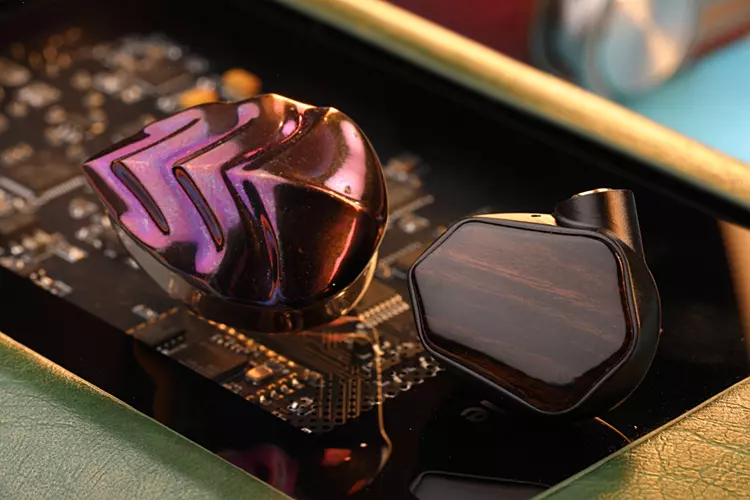
Housed in a sleek titanium housing that went through precision CNC-machining and finished with an exclusive gradient-tint coating inspired by the Turritopsis dohrnii jellyfish—nature’s “immortal marvel”. The faceplate looks like the back of a sea creature.
Finished in a color-shifting chameleon paint, the paint shifts from purple to brown, similar to car paint that changes color depending on the angle of light. Hidizs calls this a Gradient-Tint finish.
Two cables are included: a 3.5mm and a 4.4mm plug. MK12 Turris Titanium Edition features silver-plated twisted-pair cables crafted from high-purity oxygen-free copper, ensuring low resistance and high conductivity.
However, I find the cable to be too thin and prone to tangling.
Performance
While both the T7 and the Turris Titanium Edition fall on the warmer side of the tonality spectrum, the T7 has much more sub-bass presence and a slightly more laid-back midrange presentation.
While the Turris Titanium Edition has much more forward upper midrange and lower treble, what makes it sound warm for me is its slightly dark, laid-back upper-treble presentation.
In terms of staging, they are similar, but I find the T7 has a wider stage with better lateral separation.
In contrast, the Turris Titanium Edition is slightly narrower but has stage depth, with the main vocalist slightly more forward and better front-to-back layering of the images.
I find the T7 to be more detailed and airier in the treble due to its more forward upper treble compared to the Turris Titanium Edition, which has a laid-back upper treble. However, the resolution between the two is about equal.
Both are highly dynamic, energetic, and power-efficient, thanks to their driver’s flagship-level motor system. Both can take a lot of power and can go loud without compressing or distorting.
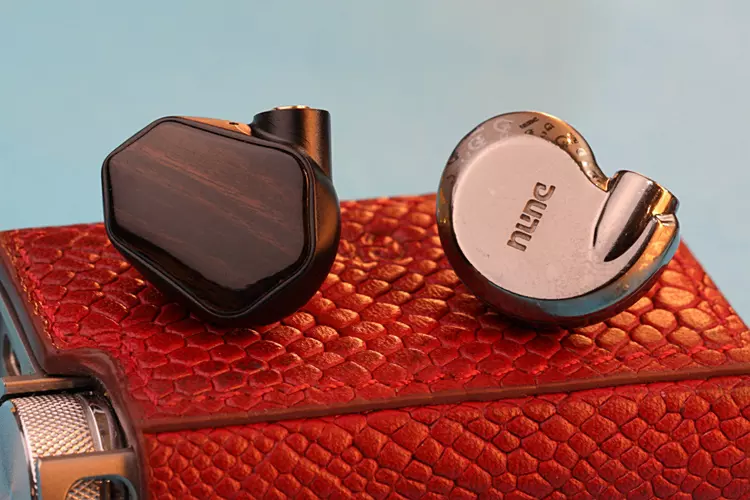
DUNU Falcon Ultra Ti
The DUNU Falcon Ultra Ti is the titanium grey edition of the DUNU Falcon Ultra, featuring a blue finish. Other than the finish, the parts, tuning, and sound are the same for both.
Technical & Design
The DUNU Falcon Ultra uses a 10.7mm lithium-magnesium alloy dome fused to a soft, compliant suspension that forms its diaphragm.
It is supposed to be rigid, but not as rigid as the pure magnesium used in the MK12. Interchangeable tuning nozzles. It has an impedance of 16 Ω and a sensitivity of 108 dB/mW.
The Falcon Ultra has a small shell with a substantial feel, as it is made entirely of stainless steel.
A polished titanium-like finish and a futuristic shape complete the Falcon Ultra Ti’s aesthetics. It includes a high-quality MMCX cable, but it is thin and prone to tangling.
Performance
I’m using the Falcon Ultra with ePro EP00 medium-size ear tips to improve its imaging and upper treble extension.
That said, Falcon Ultra is much more neutral-sounding, with flatter, slightly warm mid-bass, greater midrange and treble presence, but with less upper-treble presence.
Falcon Ultra presents a natural, neutral, and almost monitoring-type tuning that represents the sound evenly across the frequency range.
The T7 has this audiophile-style tuning with a sub-bass-boosted warm low end, a relaxed midrange, and a more extended, airier but less accurate upper treble.
The T7 has a bigger, more spacious soundstage, while the Falcon Ultra, though smaller, has a spherical soundstage.
This allows imaging on the Falcon Ultra to be more precisely placed, resulting in better holography and improved edge definition.
The T7 is more energetic in the bass and upper treble, while the Falcon Ultra is much more even in its energy distribution and sounds more energetic in the midrange than the T7.
Both are efficient and can reach high volume when powered, without sounding compressed or distorted, thanks to their flagship-level drivers.
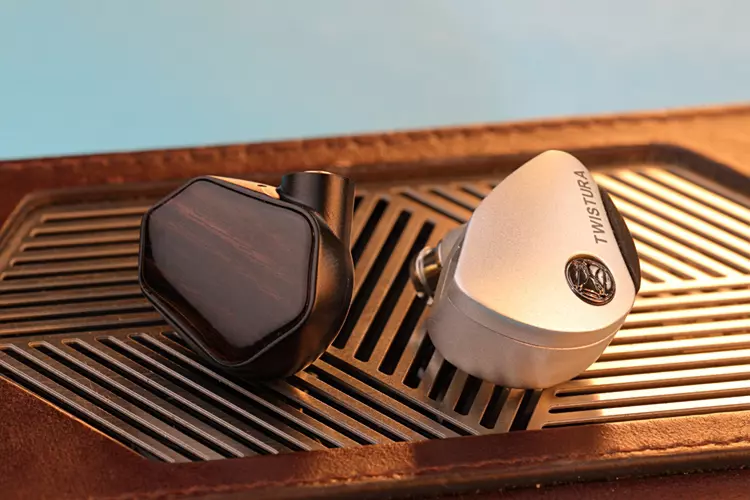
Twistura Woodnote
Technical & Design
The TWISTURA Woodnote features a 10mm dual-magnet, dual-chamber dynamic driver with a wood dome composite diaphragm. It has an impedance of 18Ω and a sensitivity of 125 dB.
The Woodnote uses CNC-machined aluminum alloy ear shells and interchangeable tuning nozzles.
It has a clean, minimal design with little art. It includes a lovely, thick, 2-pin, two-core copper cable with metal parts and interchangeable plugs.
Performance
Using the standard nozzle with the Woodnote, the sound is more neutral and flatter in frequency response. There is a perceived boost in the mid-bass, but the overall bass presence is lower than with the T7.
The T7 has a recessed midrange while the Woodnote has a neutral midrange with a slight elevation in the upper midrange and lower treble.
The TinHiFi T7 has a relaxed upper midrange and an elevated upper treble that sounds very airy, while the upper treble on the Woodnote is neutral and less airy.
The T7 is more spacious-sounding, with a wider, deeper, and higher stage, while the Woodnote has a more intimate stage, like you are in a cozy jazz club.
This makes the imaging in the Woodnote more defined and accurate, while the images on the T7 are more diffused.
Both sound very dynamic, lively, and engaging, with good efficiency that lets them go very loud without compressing or distorting.
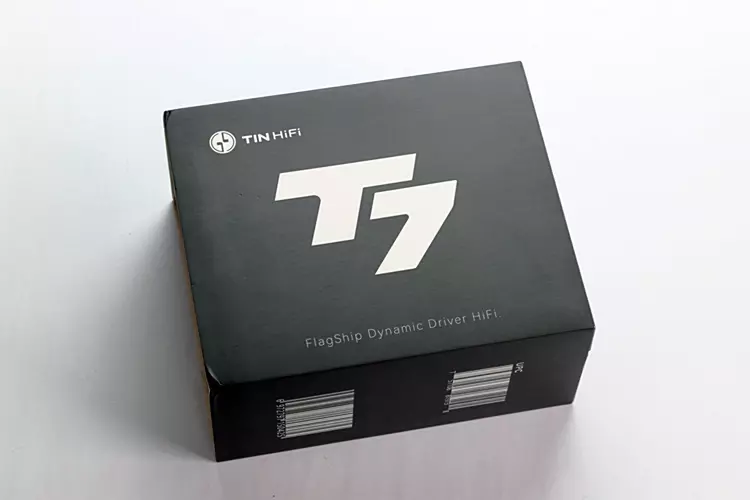
My Verdict
I must commend TinHiFi for producing the T7, with its refined, detailed, and transparent sound. I’m impressed by the gold-plated 10 mm dynamic driver, which delivers good technical performance without sacrificing its pleasant tonality.
I like the small size and the quality feel of the T7, as well as the audiophile-style tuning with the sub-bass boost, relaxed midrange, and a very airy, detailed, and refined treble.
However, as a neutral listener, I find the bass could be too much on some songs. Not a deal-breaker for me personally, as I can still enjoy the T7 with most of my music, but if the bass were more neutral, it would be closer to perfection for me.
The TinHiFi T7 is a delightful-sounding IEM with a warm, boosted sub-bass and refined, airy treble, coupled with a big soundstage.
With that, I recommend that people looking for a high-quality dynamic driver IEM consider the TinHiFi T7 or at least give it a try whenever an opportunity arises.
TinHiFi T7 Technical Specifications
- Driver Unit: 10 mm Ultra-Linear Gold-Plated Diaphragm
Style: In-Ear - Sensitivity: 112 ± 2 dB @1 kHz 0.126V
- Frequency Response: 10 Hz–20 kHz
- Maximum Distortion: ≤1% @1 kHz 0.126V
- Impedance: 22 Ω ± 15 %
- Color: Black
- Rated Power: 3 mW
- Connector Type: MMCX
- Termination Plug: 3.5mm and 4.4mm
- Cable Length: 1.2m
- Weight: 7 grams each
- Nozzle diameter: 1 mm
