

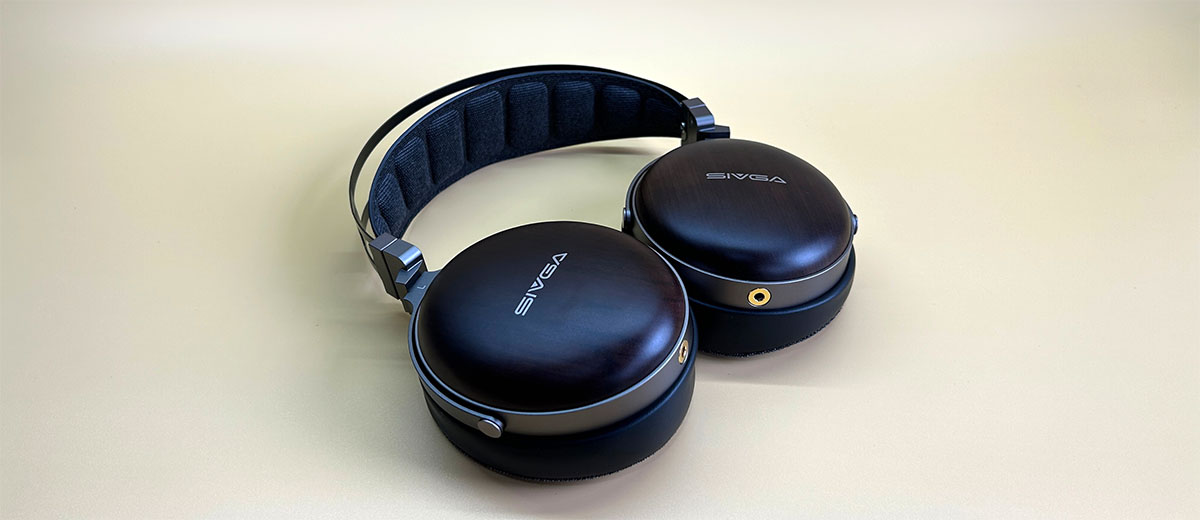
Meldrick reviews the SIVGA Peng, a new set of 50mm dynamic driver closed-back circumaural headphones finished with African Zebrawood cups. It is currently priced at $449.00.
Disclaimer: This sample was sent to me in exchange for my honest opinion. Headfonics is an independent website with no affiliate links or status. I thank SIVGA for their support.
Click here to learn more about SIVGA products previously reviewed on Headfonics.
This article follows our latest scoring guidelines, which you can read in more detail here.
Most listeners may know SIVGA for their high-value audiophile-grade headphones, such as the Robin SV021 and Anser, that sprinkle in a little bit of wooden aesthetics into otherwise standard yet well-built headphones.
Their latest release, the Peng, is a closed-back, high-impedance headphone that retails at approximately $495.
Coming in towards the top of the brand’s headphone lineup, it’s interesting to see if the Peng’s LCP dynamic driver and Zebrawood cups are worth the price premium over their more affordable models.
In this review, I’ll put the Peng through its paces by testing it with different sources and genres. If you’re curious whether the Peng can hold its own against the usual heavy hitters in the sub-$500 category, read on for the full breakdown.
Features
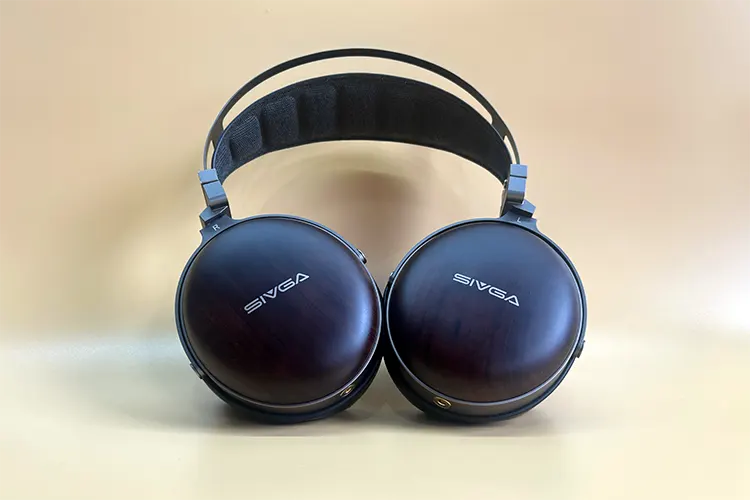
At the heart of the SIVGA Peng is a 50mm dynamic driver utilizing a sapphire composite diaphragm reinforced with a liquid crystal polymer (LCP) surround.
The driver was developed in-house to supposedly combine rigidity with elasticity, which the manufacturer claims leads to faster response and more accurate harmonic reproduction.
The unit’s headband and yokes are made of CNC-machined aviation-grade aluminum. Complementing this is a supple lambskin leather comfort strap for better longevity and comfort.
The African Zebrawood earcups provide a distinct visual flair, rounding out the Peng’s premium and well-executed material choices.
A few unique inclusions help the Peng stand out. It comes equipped with thick, plush earpads that are aggressively angled more than most headphones in this class.
It’s quality stock cable terminates to a 4.4mm balanced connector, but it also comes with accessories to adapt it to 3.5mm and 6.35mm SE.
Design
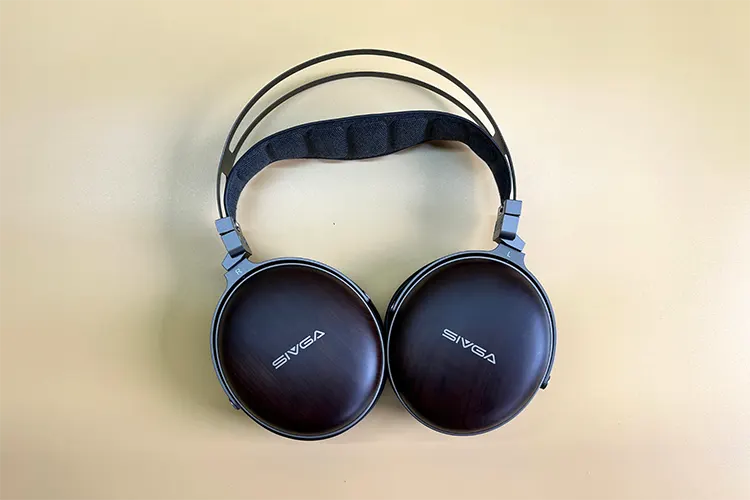
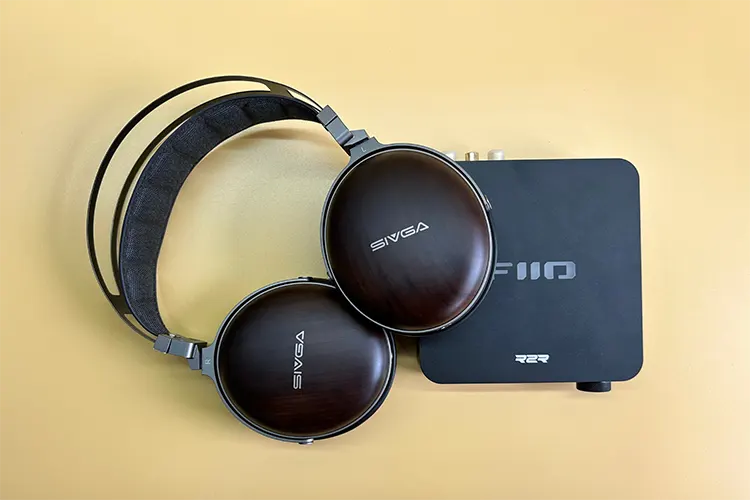
SIVGA headphones consistently balance subtle silhouettes with striking design choices, and the Peng is no exception. Its African Zebrawood cups are coated with a subtle matte sheen, highlighting each with natural wood grain variations that give each pair a unique identity.
The frame is constructed from CNC-machined aviation-grade aluminum, with a steel-reinforced headband for long-term stability. Matte grey accents contrast beautifully with the wood grain, and the entire chassis feels well-balanced and rigid.
The yoke and pivot mechanism allow 180° cup rotation and vertical sliding for a secure fit. The 180° cup rotation was a welcome addition.
During my testing, this made it easy to store in its case, lay flat on a worktable, or just have hanging around my neck when talking to people around me. Attached to the metal headband is the lambskin leather comfort strap.
The underside of the strap is lined with a soft cloth material that feels similar to velour and matches the texture used on the earpads.
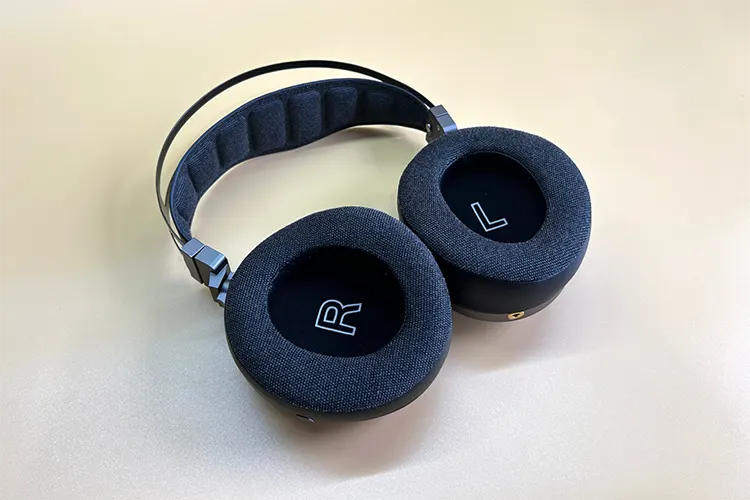
The earpads themselves are among the most unique elements of Peng’s design. They are large, thick, and heavily angled—an uncommon choice even among high-end headphones.
The outer ring is made of synthetic leather, while the face that touches the skin is covered in a soft cloth material that feels similar to velour
The opening at the center of the pads is lined with a fine mesh material with L and R subtly painted on. This ensures that the drivers are not openly exposed and provides a layer of protection.
Comfort & Isolation
At 341 grams, the SIVGA Peng is moderately heavy on paper, but that weight is deceptively well-distributed. The lambskin comfort pads evenly spread pressure across the top of the head, and the clamping force of the pads does a good job of holding some of the weight.
The clamping force is mild, just enough to keep the headphones secure but never too excessive. Even in longer listening sessions, I experienced no hotspots or ear fatigue.
The wide and angled ear pads use thick foam with a gentle rebound and are wrapped in velvet on the contact surface. They do a great job of gently contouring to the side of the face while keeping a solid seal.
However, during my testing, I found that the pads can still get pretty warm, especially on humid afternoons. This only occurs after 2-3 hours of use, but it’s a drawback worth mentioning, since this isn’t too common with other headphones with more breathable pads
Isolation is solid for a closed-back design. While not to the level of ANC headphones such as the Noble Audio FoKus Apollo or IEMs, it’s sufficient for indoor listening and moderate ambient environments.
Even compared to lighter-weight headphones primarily built from plastic, such as the Sennheiser HD 660S, the Peng holds its ground remarkably well. The combination of quality materials, ergonomics, and plush pads makes it suitable for extended indoor work or listening sessions.
Stock Cable
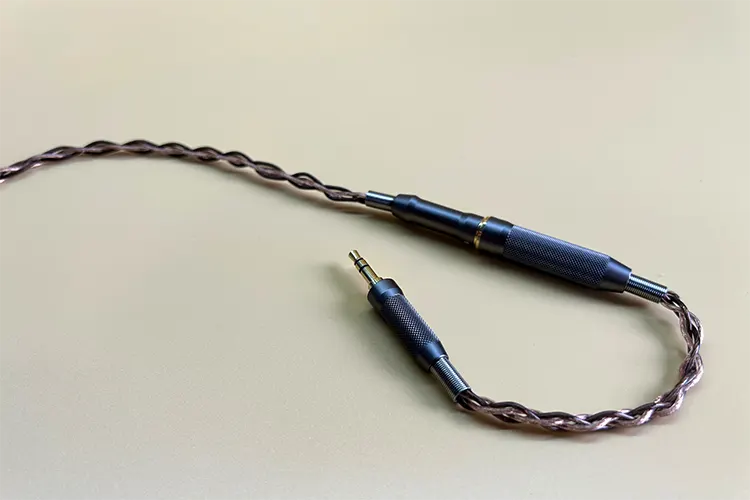
The stock cable included with the SIVGA Peng is a high-purity 6N OCC copper braided unit with dual 3.5mm mono connectors on the headphone end and a balanced 4.4mm plug on the source end.
The outer sleeve is finished in a flexible, clear wrap. It avoids microphonics well, stays relatively kink-free, and drapes comfortably.
At 1.6 meters in length, it’s long enough for desktop use but may feel slightly cumbersome for portable setups.
Thankfully, SIVGA includes both a 4.4mm to 3.5mm adapter and a 3.5mm to 6.35mm adapter, making it easy to plug into DAPs, amps, or pro gear.
Connector housings are made of lightweight brushed aluminum, and while the cable doesn’t scream boutique aftermarket build, it is definitely on the more premium side of stock cables.
Packaging & Accessories
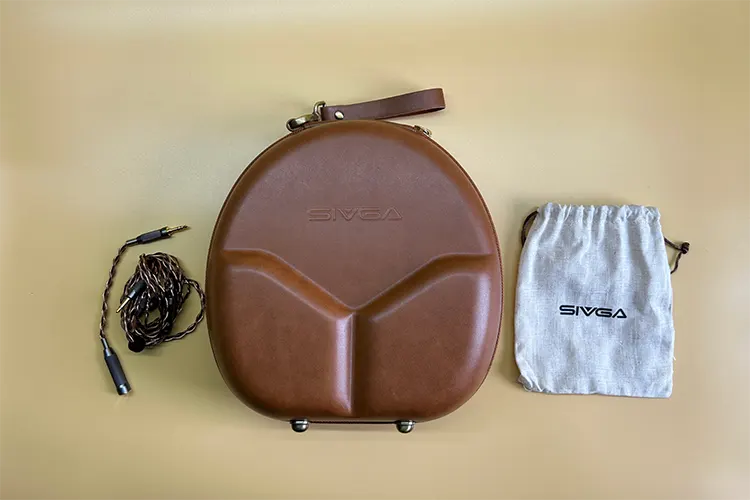
The Peng arrives in a standard brown box, with an embossed line drawing of the headphone on the top. Inside, the headphones rest securely in the high-quality hard shell case.
Aside from the headphones themselves, the Peng comes with the following:
- Detachable stock cable (4.4mm)
- 4mm to 3.5mm adapter
- 35mm to 3.5mm adapter
- Hemp-textile drawstring pouch
- Hard-shell travel case
The case is lined with a soft felt interior and has room for the headphones and some cables. While not ultra-rugged, its synthetic leather-lined exterior is miles ahead of fabric pouches included with similarly priced headphones.
Taking out the case in public caused people to think I was bringing out a designer purse. While I doubt that was the intention of SIVGA, it is a testament to the quality and presentation of the case.
Sound Impressions
Test Setup: The SIVGA Peng was tested using a range of sources, including the Shanling EH2, iFi audio’s ZEN DAC V1, the FiiO K11 R2R, and the 7Hz Artemis39. The stock 4.4mm balanced cable was used for all listening impressions.
Summary
The SIVGA Peng presents a smooth, warm-leaning tonality without adding unnatural emphasis on the bass or treble regions.
It has a lush midrange, subtle yet textured bass, and a non-fatiguing treble that does not sacrifice resolution. Unlike the more energetic and vibrant tuning of more V-shaped or treble-heavy headphones, the Peng has a more mellow and organic presentation.
Bass
The SIVGA Peng offers a controlled yet detailed low end, with an emphasis on mid-bass warmth rather than sub-bass extension.
The sub-bass rumble is present but not dominant. The sub-bass is a bit too lean for my liking, even in mainstream pop tracks. I found myself looking for a bit more kick and slam, but this tuning choice does prevent bloat and contributes to the natural-sounding mid-bass
The mid-bass has a soft-edged punch that gives body to bass guitars. Each strum comes through with thick impact and authority, while having enough resolution and harmonics to prevent it from sounding like a bloated mess
Layering and separation in complex bass passages are adequate, though not class-leading. In busier EDM tracks, the Peng sometimes blends low-frequency textures. Still, for more acoustic or analog-driven tracks, its musical bass tuning fits very well.
Mids
The mid-bass warmth carries over into the midrange, giving it a rich, organic coloration that brings vocals and acoustic instruments forward, placing them right front and center.
The lower mids are full-bodied and slightly warm, lending weight to male vocals and larger stringed instruments.
In classic jazz and blues tracks, male vocal performances are presented with great impact and weight that they automatically grab one’s attention. Acoustic guitars resonate with pleasing roundness, and cello passages have depth without sounding muddy.
The upper mids are moderately elevated but not to the same extent. Female vocals sound intimate and expressive, though never sibilant or sharp, but they do not have the same detail or resolution as more neutrally tune headphones.
Treble
The treble on the Peng is clean and articulate, shaped by the headphone’s overall warm tuning that gently carries over into the upper frequencies. It steers clear of sharpness or harsh peaks, delivering detail in a smooth and controlled manner.
Cymbals, hi-hats, and chimes come through with crisp attacks and a natural decay, never sounding splashy or overly bright. The Peng avoids the kind of upper treble lift that can lead to fatigue, favoring a more relaxed but still clear presentation.
Its forgiving nature extends to less-than-perfect recordings, where it rounds off any sibilance or sharp edges instead of emphasizing them. This makes poorly mastered tracks easier to enjoy.
The treble blends in naturally with the mids, sitting just high enough to bring out a sense of air and shimmer without pulling attention away from the core of the mix.
Harmonics in strings, synths, and acoustic instruments are still present, offering texture and subtle energy without tipping the sound signature into brightness.
Staging & Dynamics
When adequately powered, the SIVGA Peng delivers impressive dynamics across the frequency range. Despite the relatively subdued sub-bass, instruments come through with rich impact and harmonic weight.
Percussive hits, plucks of bass guitar strings, and string section swells retain a sense of physicality and depth.
Imaging performance is another standout feature. Thanks to Peng’s clarity and harmonic richness, especially with stringed instruments and bass guitars, positioning instruments in a mix feels natural and precise. Each element occupies its own space without smearing into neighboring frequencies.
Left-to-right separation is strong, contributing to a coherent stereo image. However, one noticeable quirk is the Peng’s tendency to place vocals and some instruments slightly off-center, skewing slightly to the left or right instead of being firmly anchored in the center.
As for staging, it offers a moderate and intimate soundstage typical of well-executed closed-back headphones. While it doesn’t push boundaries in width or holographic immersion, the level of detail and accurate imaging keeps it engaging and focused.
Click on page 2 below for my recommended pairings and selected comparisons.
