

Synergy
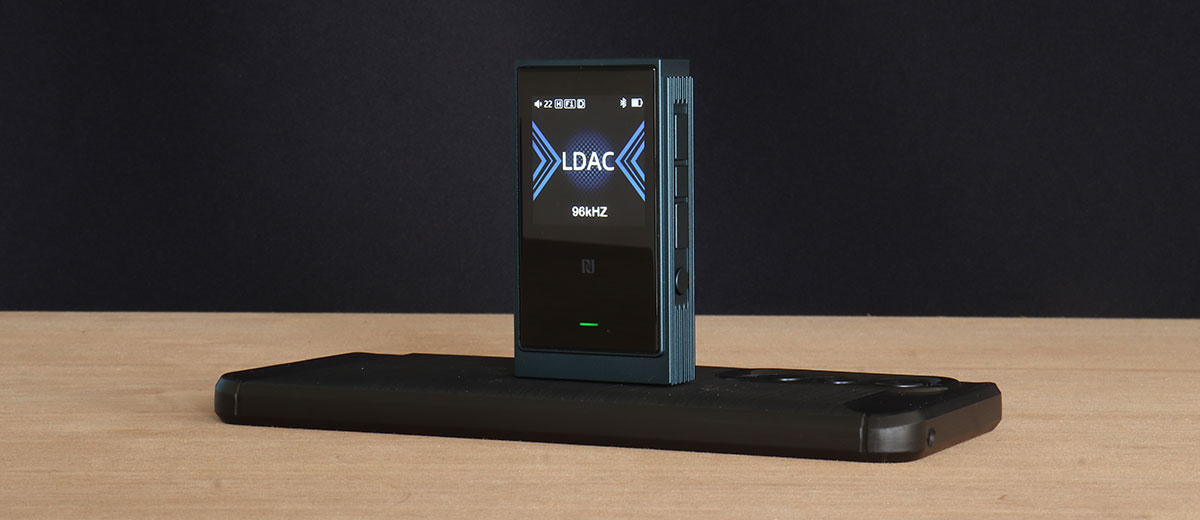
Bluetooth Performance
Bluetooth is handled by the Qualcomm QCC5125. It gives the UP6 the capability to receive LDAC, aptX HD, aptX LL, aptX, AC, and SBC.LDAC is my favorite, and it seems to default to that codec if your device has the capability.
The UP6 does not play the latest aptX Lossless. But, again, the codec seems to have lost steam, and there’s only a handful of gear capable of the codec. LDAC will do for now.
Bluetooth long-range reception was good enough but not stellar, just acceptable. The UP6 is not made for long-range use, but up-close and personal use. While locked into a signal, it was rock solid. It uses the older 5.2 Bluetooth version and not the latest 5.4 version.
Microphone Performance
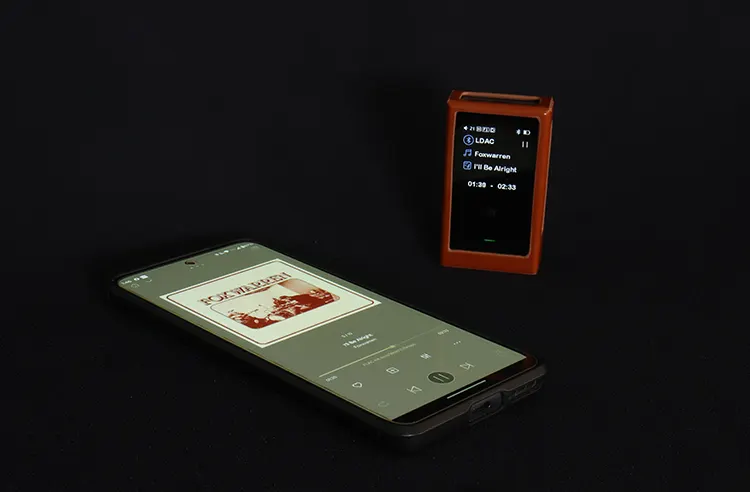
The Shanling UP6 has onboard controls and a built-in SiSonic microphone, enabling the UP6 to be a good companion for mobile device users. The microphone uses cVc 8 noise cancelling and is effective in this set, providing clean pickup capability.
I tested the UP6 with a 3.5mm 4-pin-equipped IEM with an inline microphone, and it didn’t pick up the inline microphone or controls.
But to credit the UP6, the built-in microphone did a good job as far as supplying ample volume and clarity when picking up my voice.
Again, you have to talk closely to the UP6 to obtain optimal results and decent pick-up volume. What alleviates this is the built-in multimedia controls. They enable the user to use the UP6 to pick up phone calls, hang up, pause, play, etc, so you don’t have to use your mobile device.
It would have been nice if the 4-pin mic capability were a feature in dongles nowadays. None are taking advantage of the 3.5mm TRRS anymore.
Then again, I’ve seen cases in which that shared ground causes issues, sonically speaking, and in that sense, it makes sense to omit the feature.

Pairings
The single-ended tap certainly feels less powerful and is tuned for optimal IEM performance. The power output specs say it all: 195mW on single-ended versus 626mW, which is a triplicate number and then some.
The 4.4mm was able to drive the HIFIMAN Sundara with no deficiencies noted. The bass notes were deeply produced and pronounced enough to capture my attention.
V-shaped sets would benefit from the neutral character of the UP6, and that will allow the signature to come through. Meze Audio’s 99 Classics is such a set that remains V-shaped on this neutral dongle.
The UP6 also worked very well with the Sundara. I could also pair the UP6 with the HIFIMAN Ananda Nano with no noticeable power deficiencies.
The biggest question to ask here is, does your full-sized headphone have balanced connectivity? It makes a big difference since the power output on that port seems to be much greater
For example, the Sennheiser HD 505 and the HD 550 pair well with the neutrality of the UP6. But only if you ditch the single-ended stock cables and switch to 4.4mm balanced alternatives.
IEMs that are vocal first, like the FiiO FD15, would fare well, but I felt the FiiO FH7s or even the FD5 performed better since their flatter response will retain a neutral curve.
Some of these IEMs have a small V or U-shaped sonic signature, which was more obvious with the UP6’s more revealing nature.
Select Comparisons
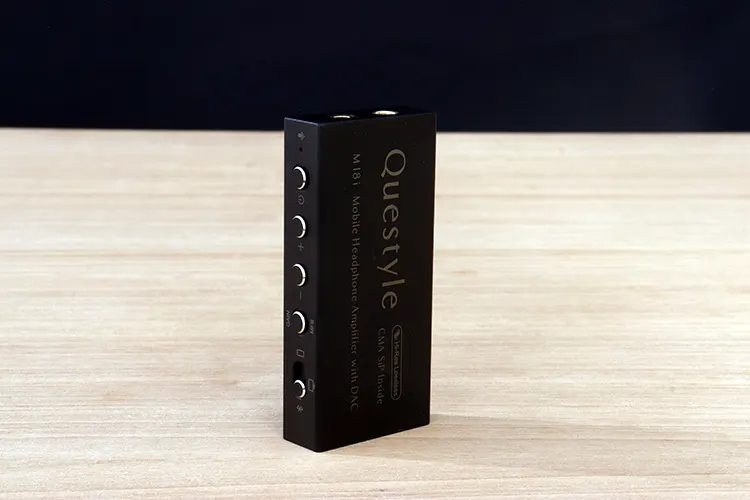
Questyle M18i
Technical
The Questyle M18i is one of the most upscale models in this segment. It carries a higher retail price, and that’s probably the only con I can single out about it because it performs well, sonically speaking.
Hardware-wise, it sounds like another dongle made from commonly used and well-known components. It uses dual ES9219Q and a unique TTA DAC framework that is exclusive to the M18i. An XMOS XU316 handles the USB input stage.
The Questyle M18i has a small arsenal of buttons on the side of the body since it doesn’t come with an app, and the volume has 60 steps versus 64 steps.
The M18i has an internal battery, making it ideal for portable use, but the battery is smaller compared to the UP6. The M18i also has dual USB sockets that, combined, promise more power on tap, ideal for desktop use, but I couldn’t tell the difference.
Design
I don’t mean to sound prejudiced here, but a lot of these dongle DACs are starting to look alike to me. They’re all rectangular with all the buttons placed to one side, and the screen up front.
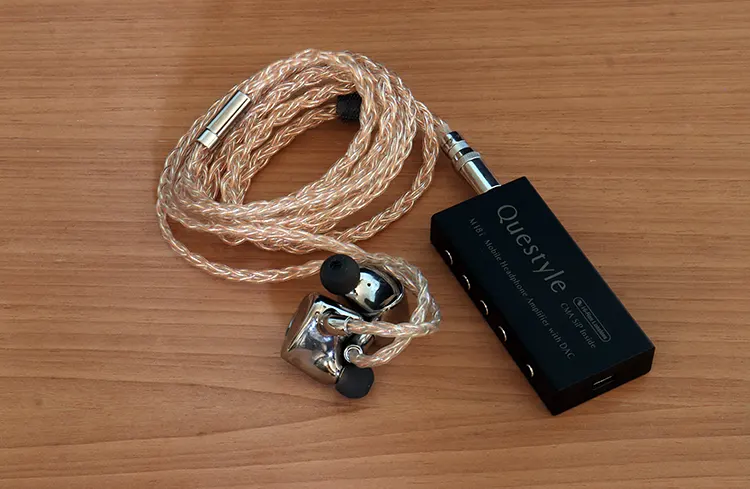
The M18i does have some extra eye candy in areas like the buttons that sport a ring around the border, and by that trim, you can tell extra care was taken during manufacturing. It also denotes that the buttons are made of metal.
Performance
The M18i has an almost unacceptable battery life that holds it down for around three hours or less. However, the UP6 will give you close to six hours. That’s a big difference, and the rule of thumb should be that the more expensive model should have taken that win.
Where the M18i outperforms the UP6 is with the soundstage it produces, which is more precisely done on the M18i. They both have similar frequency response characteristics and SN ratios. The problem will arise, as I said before, when the bill arrives.
It will make the buyer think twice. Especially when they find out that the M18i doesn’t have an app.
Sonically, it’s a well-oiled machine that demonstrates that Questyle knows how to DSP those DAC chips to make them sound sonically superior by a small margin, but the retail price might scare some away.
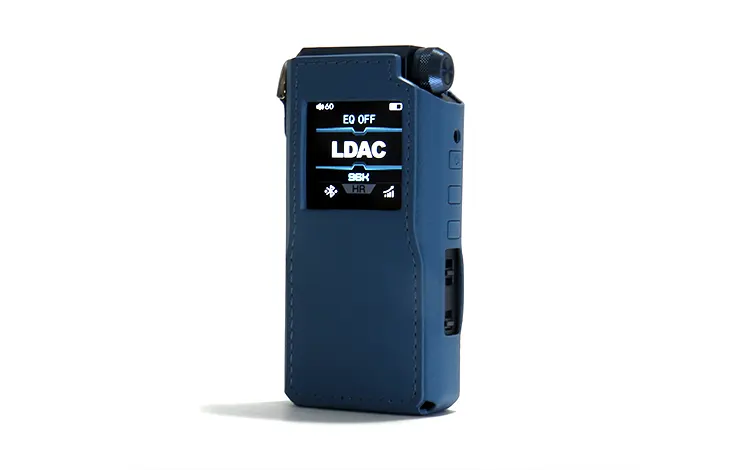
FiiO BTR17
Technical
I honestly think that the FiiO BTR17 is the one to beat in this segment at the moment. It has a current dual ES9069Q chipset with the same XMOS USB, the same PCM, and DSD capability, along with MQA capability, which the other dongles in this comparison don’t have.
The BTR17 Bluetooth is handled by a Qualcomm QCC5181, which is above the QCC5125 and runs on the updated Bluetooth 5.4 platform versus the 5.2 platform.
The amplification is handled by a pair of THX AAA78+ chips that provide up to 650mW of power on the 4.4mm tap. However, to achieve that, you must use a secondary power source connected to the secondary USB-C connection.
I find the dual USB system unnecessary in a portable device. Plus, now you have to worry about having the unit in the right mode for it to charge. Back in the day, you just plugged in the thing.
FiiO doesn’t specify how much power is available in each scenario, but I couldn’t tell the difference since the unit seems to run off battery power most of the time.
This is a common implementation to avoid noisy charging circuits from marring the audio quality. And if that’s the case, the dual USB power implementation is moot.
Design
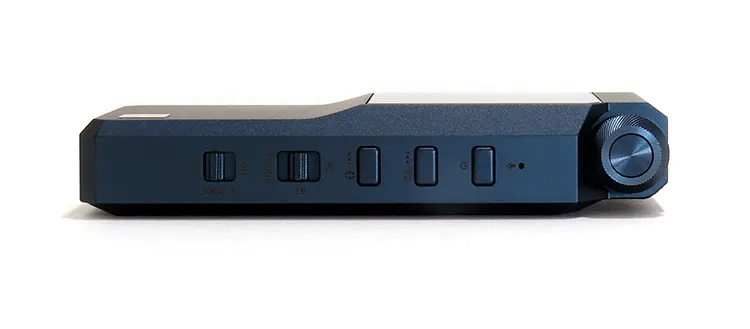
Rotary or pushbutton volume? These two models differ mainly in design, mainly in the volume control implementation, since both models use a solid block of aluminum, CNC shaped and adorned with buttons and a small screen to help you navigate all the features.
I like the rotary control, but in a portable scenario, it would be harder to manage through fine clothing. The rotary knob also doubles up to provide access to the BTR17’s menu system. The features list is almost the same in both of these models in general.
One nice touch was that FiiO includes a cover for the BTR17 inside the box, and it is not a separate purchase item, as with other companies’ dongles. Oh well.
Performance
To generalize the two, I would describe the FiiO BTR17 as neutral and bright, but the UP6 is just neutral. Of the two models, the UP6 is the smoothest of the two, giving detail to the BTR17.
Both these models are vivid sounding. Where they differ is in that the treble response of the BTR17 can be edgy but not overcooked. The highs on the UP6 are vivid but not as strident as on the BTR17.
The bass response on the BTR17 is tight but analytical. Is the bass on the UP6 analytical? It tends to have more body but at the cost of note distinction and definition. That’s it in a nutshell.
My Verdict
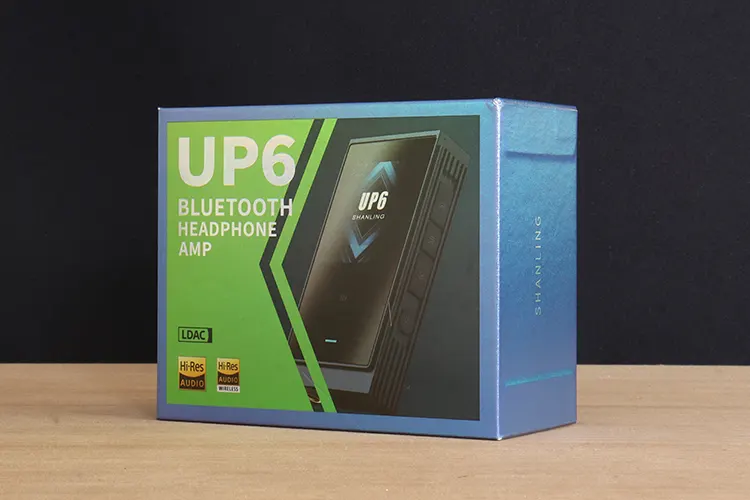
Previous UP models didn’t have the grunt to push planar headphones adequately, but the UP6 can successfully do so. The extra power, plus the additional list of well-known components, raises the UP6’s value at a higher point compared to the rest of the UP line.
The Shanling UP6 provides a clean-sounding DAC and a generous amount of output power, with a list of features including Bluetooth capability, a functioning, good-sounding app, plus portability. Combined, the UP6 is a bargain at this price point.
Shanling UP6 Technical Specifications
- DAC chip: Dual ESS ES9069Q
- Amplifier chip: SGM8262-2
- USB input: XMOS XU316
- Bluetooth module: Qualcomm QCC5125
- Bluetooth version: Bluetooth 5.2
- Bluetooth codecs: LDAC, aptX HD, aptX LL, aptX, AAC, SBC
- Battery life: 6.5hours (single-ended) 4.5 hours (balanced)
- Charging time: 2 hours
- Battery capacity: 950mA
- Recommended charger: DC 5V 500mA
- USB high-res support: PCM 768kHz / 23 bit & DSD512
- Outputs: 3.5mm single-ended & 4.4 mm balanced
- Dimensions: 70 x 39 x 14 mm
- Weight: 51.2g
